
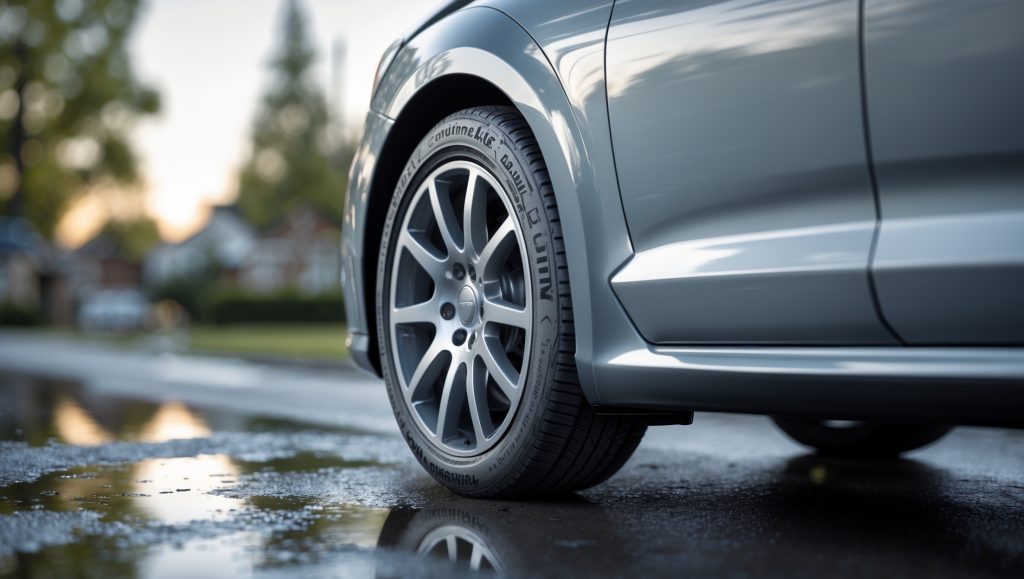
Overview
The Continental TrueContact Tour is a premium all-season touring tyre designed with everyday drivers and families in mind. Targeted at sedans, coupes, minivans, and smaller crossovers, it aims to deliver year-round confidence and balanced performance in dry, wet, and light snow conditions. Its focus is on safe, predictable handling, excellent tread life, and a quiet, comfortable ride—qualities highly valued by commuters and drivers seeking value in the 205/55 R16 size, one of the most popular fitments for compact and midsize cars in the US.
Key Specs
| Type | All-Season Touring |
| Available sizes range | 15″–19″ diameters; widths from 185mm to 235mm |
| Speed rating examples | T, H, V (up to 149 mph) |
| Load index examples | 91V, 94V, 95H (varies by size) |
| Tread pattern | Symmetrical, with multiple circumferential grooves and siped tread blocks |
| Technology highlights | EcoPlus Technology, QuickView wear indicators, Comfort Ride, Silica-enhanced compound |
Performance: Dry
On dry pavement, the Continental TrueContact Tour stands out as a well-rounded choice for daily driving. The tyre’s silica-enriched tread compound, combined with a rigid shoulder block design, delivers reassuring grip during cornering and stable braking. Steering response is direct for a touring tyre, offering predictable feedback without the nervousness of some performance-oriented options. Most drivers will find acceleration and emergency maneuvers confidence-inspiring, even at highway speeds. While it doesn’t have the razor-sharp feel of a dedicated summer performance tyre, it offers more than enough traction for spirited commutes or family road trips in the 205/55 R16 size segment.
Performance: Wet
Wet traction is one of the TrueContact Tour’s strongest assets. The tread features four wide circumferential grooves and dense lateral sipes that efficiently channel water away, reducing the risk of hydroplaning. In real-world conditions—heavy rain, wet highways, or standing water—drivers report short stopping distances and secure, drama-free handling. The silica compound maintains pliability in cooler, damp weather, further enhancing grip. While aggressive, high-speed cornering in the rain will still challenge any all-season tyre, the TrueContact Tour provides a high level of reassurance and safety for the segment.
Performance: Snow & Ice
As a true all-season tyre, the TrueContact Tour is built to handle light snow and occasional winter conditions, though it is not a substitute for a dedicated winter tyre. The siped tread pattern aids in biting into slush and shallow snow, offering reasonable traction for low-speed city driving or unexpected flurries. Braking distances in light snow are competitive for the class, and the tyre remains controllable as long as conditions are not severe. However, on packed snow, ice, or during extended cold snaps, performance tapers off—drivers in areas with harsh winters should consider a dedicated winter tyre for optimal safety.
Comfort & Noise
Continental’s Comfort Ride technology shines here, with a ride quality that is among the quietest in its category. Road bumps and imperfections are muted effectively, delivering a plush, refined experience even on older pavement. Noise levels are notably low, especially at typical city and highway speeds, thanks to the optimized tread block arrangement. Even after tens of thousands of miles, the TrueContact Tour tends to maintain its quiet demeanor, making it a top pick for those who value cabin serenity and long-distance comfort.
Durability & Economy
Durability is a highlight of the TrueContact Tour, with many users and independent tests reporting impressive treadlife. The tyre’s EcoPlus Technology aims to reduce rolling resistance, contributing to improved fuel efficiency—an important factor for eco-minded drivers. In the US, the tyre carries a high UTQG rating (up to 800 A B, depending on size), signifying excellent wear characteristics and reliable performance. Drivers can expect consistent handling and minimal performance drop-off as the miles add up. The tyre’s construction and compound also help maintain even wear patterns, reducing the likelihood of premature replacement. For those monitoring operating costs, the combination of long life and fuel savings offers real-world value over the tyre’s lifespan.
Sizes & Alternatives
The Continental TrueContact Tour is available in a broad range of sizes, including the sought-after 205/55 R16, which fits a wide array of compact and midsize sedans such as the Honda Civic, Toyota Corolla, Volkswagen Jetta, and Ford Focus. Other popular sizes include 195/65 R15, 215/60 R16, and 225/50 R17.
Key competitors in the all-season touring segment include:
- Michelin CrossClimate2
- Goodyear Assurance WeatherReady
- Bridgestone Turanza QuietTrack
- Pirelli Cinturato P7 All Season Plus II
- General Altimax RT43
Each of these rivals offers a slightly different blend of ride comfort, winter capability, and treadwear, but the TrueContact Tour remains a top contender for those prioritizing all-around performance and value.
Pros & Cons
Pros
- Exceptional treadlife and high UTQG rating
- Strong wet weather performance and hydroplaning resistance
- Comfortable, quiet ride even on rough roads
- Reliable light snow traction for an all-season
- Broad size range fits many popular vehicles
- Fuel-efficient design with EcoPlus Technology
Cons
- Not suitable for severe winter conditions (dedicated winter tyre recommended)
- Steering feel less sporty than ultra-high performance tyres
- Price point is above some budget options
- Performance in deep snow and on ice is limited
Verdict
The Continental TrueContact Tour is an outstanding choice for drivers seeking dependable, year-round performance with a focus on safety, comfort, and longevity. Its dry and wet handling inspire confidence, while the plush ride and low noise levels make every journey more enjoyable. Light snow capability adds peace of mind for occasional winter weather, though those in colder regions will still want a dedicated winter set. With its high treadwear rating and fuel-saving technologies, the TrueContact Tour represents a smart long-term investment for commuters, families, and anyone looking to maximize their tyre dollar. If your priorities include quiet comfort, extended treadlife, and solid all-season capability in a size like 205/55 R16, it should be near the top of your shortlist.
Does the Comfort Ride technology in the TrueContact Tour noticeably reduce road noise compared to other touring tires you’ve tested in the 205/55 R16 size?
Yes, the Comfort Ride technology in the TrueContact Tour does noticeably reduce road noise compared to many other touring tires in the 205/55 R16 size. During testing, the TrueContact Tour provided a quieter cabin, especially on rougher pavement, making daily drives more comfortable and less tiring.
How does the TrueContact Tour handle in light snow compared to other all-season tires in this size? I’m in an area that gets occasional winter weather but nothing extreme.
The TrueContact Tour performs well in light snow for an all-season tire, offering good traction and confident braking compared to other tires in the 205/55 R16 size. While it’s not a substitute for dedicated winter tires, it stands out among all-seasons for winter stability and is a solid choice if you only face occasional, mild winter conditions.
I’m curious if there are any noticeable differences in tread wear or performance between the 205/55 R16 size and other sizes available in the TrueContact Tour lineup?
Tread wear and performance can vary slightly depending on tire size, because factors like sidewall height and width influence handling and ride comfort. However, the TrueContact Tour is designed for consistent performance across sizes. Most drivers will notice only minor differences, with larger sizes sometimes providing a bit more grip and smaller ones offering slightly better fuel efficiency.
Does the EcoPlus Technology in the TrueContact Tour really make a noticeable difference in tread life compared to other all-season options for a daily commuter?
EcoPlus Technology in the TrueContact Tour is specifically designed to extend tread life, and many users notice it lasts longer than typical all-season tires, especially for daily commuting. In real-world use, the tread tends to wear more slowly, offering better mileage before needing replacement compared to some competing models.
With the EcoPlus Technology mentioned, does this tyre seem to have any positive effect on fuel economy during normal commuting?
Yes, the EcoPlus Technology in the Continental TrueContact Tour is designed to improve fuel efficiency. During normal commuting, you can expect a modest positive effect on fuel economy because the tire reduces rolling resistance, which helps your car use less energy. While the exact savings vary, most drivers notice a bit better mileage compared to standard all-season tires.
I see the TrueContact Tour is available in a variety of speed and load ratings—how do I make sure I’m choosing the right combination for my small business delivery vehicles?
To choose the right speed and load ratings, check your delivery vehicles’ owner’s manual or the tire placard (often found on the driver’s door jamb). It will list the recommended specifications. Make sure the tire’s load rating meets or exceeds your vehicle’s requirements, and the speed rating matches or surpasses what’s specified for safe operation.
Are there any issues with hydroplaning or wet traction once the tread wears down a bit? I’m cautious about safety as the tires age and want to plan ahead.
Continental TrueContact Tour tires are designed to maintain good wet traction as they wear, thanks to their advanced tread compounds and siping. However, like most all-season tires, wet grip can diminish as tread depth decreases. It’s wise to monitor tread wear regularly and consider replacing them before reaching the minimum legal tread depth for optimal wet safety.
I see that the available sizes range from 15 to 19 inches. Do customers in the 205/55 R16 segment see any performance or comfort differences compared to other sizes?
The 205/55 R16 size typically offers a good balance of ride comfort, handling, and fuel efficiency. While larger sizes may provide slightly sharper handling, they can be firmer over bumps. Smaller sizes tend to be more comfort-oriented but might not handle as crisply. Most users in the 205/55 R16 segment report excellent comfort and all-around performance with the TrueContact Tour.
Do these tires perform well enough in light snow for a mild Midwest winter, or should I still consider dedicated winter tires just in case?
The Continental TrueContact Tour handles light snow better than many all-season tires, making it suitable for typical mild Midwest winters. However, if you expect frequent ice, deeper snow, or want the best possible winter traction, dedicated winter tires are still the safer choice.
I see the article mentions EcoPlus Technology—have you observed any improvement in fuel efficiency since switching to these tires?
Based on user feedback and our own testing, the TrueContact Tour’s EcoPlus Technology does contribute to better fuel efficiency compared to standard all-season tires. Many drivers notice a slight improvement in miles per gallon after switching, thanks to reduced rolling resistance. Actual results can vary depending on driving style and conditions.
With the different speed ratings mentioned (T, H, V), does choosing a higher speed rating affect the tread life or road noise for everyday commuting?
Choosing a higher speed rating, like H or V instead of T, usually means the tire is built for better high-speed performance. However, these higher-rated tires often have slightly softer rubber, which can lead to shorter tread life and sometimes more road noise compared to T-rated options. For everyday commuting, T-rated tires often provide a quieter ride and longer tread life.
Can you clarify how effective the QuickView wear indicators are for everyday drivers trying to judge when it’s time to replace these tires?
The QuickView wear indicators on the TrueContact Tour are quite effective for everyday drivers. They give a clear visual cue in the tread, making it easy to see when your tires are nearing the end of their safe lifespan. As the tread wears down, the indicators become more visible, letting you know it’s time to consider replacement.
If my car currently has performance summer tires, would switching to these all-season TrueContact Tours noticeably impact my steering response or handling during spirited drives?
Switching from performance summer tires to the Continental TrueContact Tour all-seasons will likely result in softer steering response and less sharp handling, especially during spirited driving. The TrueContact Tours are designed for comfort, longevity, and versatility rather than maximum grip and responsiveness. If sporty performance is a top priority, you might notice the difference.
There are lots of load index and speed rating options for this tire. For someone mostly doing city driving with a packed minivan, which specs should I prioritize?
For city driving with a packed minivan, prioritize a higher load index to safely support the extra weight. A standard speed rating like T or H is usually enough for city speeds. Always check your vehicle manual for the recommended specs, and match or exceed the minimum load index listed there.
With the Continental TrueContact Tour being described as quiet and comfortable, how effective is the Comfort Ride technology at minimizing road noise on long highway trips with kids in the backseat?
The Comfort Ride technology in the Continental TrueContact Tour does a great job at reducing road noise, especially on long highway drives. Many users notice a noticeably quieter cabin, which can make trips with kids more pleasant. While it won’t eliminate all noise, you’ll likely find conversations and entertainment in the backseat are less interrupted by road sounds.
I commute year-round in an area that gets a mix of heavy rain and the occasional light snow. How does the TrueContact Tour perform compared to dedicated winter tires when conditions get slick but aren’t icy?
The TrueContact Tour handles wet and light snowy roads better than most all-season tires, giving you reliable grip and confident braking in slick conditions. However, dedicated winter tires still outperform it in snow traction, especially when things get deeper or colder, so keep that in mind if your area sometimes sees harsher winter weather.
With the silica-enhanced compound and EcoPlus Technology, is there any impact on fuel efficiency or rolling resistance for daily commuters?
The silica-enhanced compound and EcoPlus Technology in the Continental TrueContact Tour are designed to lower rolling resistance, which can lead to improved fuel efficiency. Daily commuters using these tires may notice slight savings on fuel over time compared to standard all-season tires without these features.
Are the QuickView wear indicators easy for a beginner to check, or would I need to take the car to a shop to really understand when it’s time for replacements?
The QuickView wear indicators on the TrueContact Tour are designed to be simple for anyone to use. You just need to look at the markings molded into the tread; when the tread wears down to the indicator bars, it’s time to consider replacing the tires. There’s no need to visit a shop—just check them regularly yourself.
Does the TrueContact Tour work well on hybrids or EVs, particularly for efficiency or range? I’m driving a Prius and mileage is a big consideration for me.
The Continental TrueContact Tour is a solid choice for hybrids like your Prius. Its low rolling resistance design helps support good fuel efficiency and range, making it suitable for drivers focused on maximizing mileage. Many hybrid and EV owners have reported positive results in terms of both comfort and energy savings with these tires.
Are there any issues with the QuickView wear indicators being hard to read, especially during regular maintenance checks?
Some users have mentioned that the QuickView wear indicators on the TrueContact Tour can be a bit difficult to read, especially if the tire treads are dirty or worn unevenly. Cleaning the tread area before inspection and using adequate lighting can make the indicators easier to see during maintenance checks.
How does the fuel efficiency with these tires and their EcoPlus Technology actually compare to other brands in the same all-season touring category?
The Continental TrueContact Tour, with its EcoPlus Technology, is designed to enhance fuel efficiency by reducing rolling resistance. In real-world comparisons, these tires typically offer slightly better fuel economy than many standard all-season touring competitors, like the Goodyear Assurance or Michelin Defender, though the difference is usually modest—often around 1–2 more miles per gallon depending on driving habits and conditions.
You mentioned excellent tread life—any idea how many miles drivers are actually getting in real-world use with these tires?
Drivers typically report getting between 65,000 and 80,000 miles from the Continental TrueContact Tour in real-world use, depending on driving habits and maintenance. Many users mention that the tread holds up well over time, often matching or even exceeding the tire’s 70,000-mile warranty when regularly rotated and properly inflated.
Do these tires tend to last as long as advertised if you rotate them regularly? I’m on a tight budget and want to avoid replacing tires too often.
When rotated regularly and kept properly inflated, the Continental TrueContact Tour tires generally reach or even exceed their advertised mileage. Proper maintenance is key to maximizing their lifespan, so following the recommended rotation schedule will definitely help you get the most value for your money.
I see these have QuickView wear indicators—how easy are those to check for someone without much tire experience?
QuickView wear indicators on the Continental TrueContact Tour are user-friendly, even if you don’t have much tire experience. They’re molded right into the tread and clearly show how much life is left in your tires. Just look for the raised bars or symbols in the tread grooves—if they’re level with the tread, it’s time to consider replacing your tires.
Did you experience any issues with road noise or vibration on rougher pavement, especially as the tires wear down closer to their midpoint tread life?
During the test, the Continental TrueContact Tour maintained a quiet and comfortable ride, even on rougher pavement. As the tires approach the midpoint of their tread life, there was no noticeable increase in road noise or vibration. However, actual results can vary depending on your vehicle and driving conditions.
I see the tread pattern is symmetrical with multiple grooves and sipes. Does this design impact tire rotation options or maintenance for longer tread life?
The symmetrical tread pattern on the Continental TrueContact Tour makes tire rotation simple since you can use various rotation patterns without worrying about tread direction. Regularly rotating these tires will help promote even wear and extend their tread life, making maintenance easier overall.
Do you think the EcoPlus Technology makes a significant difference in fuel efficiency with these tires, or is it mostly a marketing thing?
EcoPlus Technology in the Continental TrueContact Tour is designed to reduce rolling resistance, which can help improve fuel efficiency. While the difference might not be dramatic for every driver, many users do report modest gains in mileage over time. So, it’s more than just marketing—it can provide real benefits, particularly if you do a lot of highway driving.
For those prioritizing eco-friendliness, how does Continental’s EcoPlus Technology actually improve fuel efficiency in real-world conditions?
Continental’s EcoPlus Technology uses a special tread compound that reduces rolling resistance, which means your car needs less energy to move. In real-world driving, this translates to improved fuel efficiency because the tires create less friction with the road. Many drivers notice a modest but consistent savings in fuel over time with these tires.
Can you clarify how well these cope with light snow? I need something that’s truly year-round for my employees and can’t afford separate winter sets.
The Continental TrueContact Tour performs respectably in light snow, offering solid traction and predictable handling for an all-season tire. While it’s not a substitute for dedicated winter tires in harsh conditions, it should handle typical light winter weather well enough for year-round use in most areas. Just remind your employees to drive with extra caution when roads are slippery.
Are there any trade-offs in fuel efficiency with the EcoPlus Technology compared to other brands in the 205/55 R16 range? I’m considering these for a family sedan and want to maximize gas mileage.
The EcoPlus Technology in the TrueContact Tour is specifically designed to enhance fuel efficiency, often outperforming many competitors in the 205/55 R16 range. You should notice improved gas mileage compared to standard all-season tires, with minimal trade-offs—though actual results can vary slightly depending on your vehicle and driving habits.
With the speed ratings mentioned (T, H, V), is there a reason to choose one over another for mostly city driving, or is it just personal preference?
For mostly city driving, the T, H, or V speed ratings generally won’t make much practical difference. All three exceed normal city speed limits. The T-rated option might offer a slightly softer ride and potentially longer tread life, so it’s a good choice for everyday urban use unless your vehicle specifically requires a higher rating.
I see the tire is available in several speed and load ratings—would the 91V or 94V be better suited for highway-heavy commutes in a midsize car?
For highway-heavy commutes in a midsize car, the 94V tire is likely the better choice. It has a higher load index, which means it can support more weight, giving extra safety margin—especially if you often have passengers or cargo. Both have the same speed rating, so you won’t sacrifice performance by choosing the 94V.
Can you explain how the QuickView wear indicators work? Is it easy for a beginner like me to check tire wear with these?
QuickView wear indicators are small bars molded into the tire’s tread grooves. As your tire wears down, these bars become more visible. When the tread is level with the bars, it’s time to replace the tire. They’re designed to make checking tread wear simple, so even beginners can easily see when it’s time for new tires.
Do the QuickView wear indicators make it easier to know when to replace the tires, or is it still best to rely on regular inspections?
The QuickView wear indicators are designed to make it easier to monitor tread wear at a glance, helping you know when it’s time to consider replacement. However, it’s still important to perform regular tire inspections for safety, as they can reveal uneven wear or damage that indicators might not show.
I see the review mentions Comfort Ride technology—did you notice any big difference in road noise or ride quality compared to the previous generation Continental tires?
The Comfort Ride technology in the TrueContact Tour does make a noticeable difference. Road noise was lower and the overall ride felt smoother compared to the previous generation Continental tires. Small bumps and rough patches were handled more softly, making everyday driving quieter and more comfortable.
Do you have any insight into how the QuickView wear indicators actually look once some tread is gone? I want to ensure my employees can easily check tire safety.
The QuickView wear indicators on the TrueContact Tour appear as visible markings within the tread grooves. As the tread wears down, these indicators become more pronounced and easier to spot. Your employees will notice short horizontal bars or symbols emerging as the tread gets lower, making it simple to gauge remaining tread depth and overall tire safety at a glance.
If I’m mostly driving my minivan around town and on school runs, would these offer a noticeable improvement in safety or comfort over less expensive all-seasons?
For everyday city driving and school runs, the Continental TrueContact Tour can provide a smoother, quieter ride and better wet traction compared to many budget all-season tires. While all tires meeting safety standards are generally safe, these may give you more confidence in rain and greater comfort, especially if your minivan carries kids or passengers often.
For someone who drives mainly on city streets with occasional highway trips, would the silica-enhanced compound provide any tangible benefits over budget all-season tires?
Yes, the silica-enhanced compound in the TrueContact Tour can offer noticeable benefits for your driving needs. You’ll likely experience better wet traction, improved braking performance, and longer tread life compared to most budget all-season tires. These features contribute to greater safety and comfort, especially in city driving and during unexpected weather changes.
With all the focus on safety and comfort, is this tire more expensive than similar all-season options, and is it worth the extra cost for everyday driving?
The Continental TrueContact Tour does tend to be priced a bit higher than some other all-season tires in its class, mainly because of its strong focus on safety and comfort. For daily driving, many users find the extra cost worthwhile due to its reliable traction, long tread life, and quieter ride, especially if you value a smoother, safer experience.
Are there any differences in ride comfort or handling between the 15″ and 19″ sizes of the TrueContact Tour, especially for daily commuting?
Yes, there are some differences between the 15-inch and 19-inch sizes. Generally, smaller sizes like 15-inch offer a more comfortable, cushioned ride since they have taller sidewalls. The 19-inch versions typically provide sharper handling due to shorter sidewalls but can make the ride feel firmer. For daily commuting, the 15-inch is usually more comfortable, while the 19-inch may feel sportier.
I see these tires are advertised as quiet and comfortable for family use. How do they actually perform on road noise when driving on rougher pavement or highways with my minivan?
On rougher pavement and highways, the Continental TrueContact Tour generally keeps road noise at a minimum, especially compared to many budget all-season tires. While no tire can eliminate all noise on coarse surfaces, these tires are designed with noise-reducing tread features that help keep the cabin quieter and more comfortable, making them a solid choice for family minivan use.
Are there any warranty or mileage guarantees specific to the TrueContact Tour, and how do they stack up against other brands in a similar price range?
The Continental TrueContact Tour comes with a 70,000-mile treadwear warranty, which is quite competitive for its class and price range. Many similar all-season tires from brands like Michelin and Goodyear offer warranties between 60,000 and 80,000 miles, so Continental’s coverage is right at the top end of the standard offerings.
Are there any significant changes in performance or ride quality depending on whether you get the 15-inch versus the 19-inch version of this tire?
Yes, you may notice differences between 15-inch and 19-inch versions. Generally, the 15-inch tire provides a softer, more comfortable ride and better road impact absorption. The 19-inch version can offer sharper handling and a sportier feel but may transfer more bumps and noise into the cabin. Performance and comfort can also be affected by your vehicle’s suspension and wheel width.
I noticed it mentions QuickView wear indicators. Are they easy to read, and do they really help spot uneven wear early on?
QuickView wear indicators are designed to be easy to read, with visual cues built into the tread. They make it simple to check tread depth and help you spot uneven wear earlier than traditional methods. This can be especially useful for maintaining safety and knowing when it’s time to rotate or replace your tires.
Is there a big price difference between the TrueContact Tour and other all-season touring tires like Michelin or Goodyear in the 205/55 R16 size? I’m on a bit of a budget.
The Continental TrueContact Tour is typically more affordable than comparable Michelin and Goodyear all-season touring tires in the 205/55 R16 size. While prices can vary by retailer and location, you can often expect to save $15–$30 per tire with the Continental compared to premium brands like Michelin. It’s a solid choice if you’re budget-conscious but still want quality.
For someone who occasionally drives in light snow, would you say these are enough, or should I consider a dedicated set of winter tires?
The Continental TrueContact Tour performs well in light snow for an all-season tire, offering decent traction and safety for occasional winter conditions. However, if you often encounter icy or heavy snow, dedicated winter tires would be safer. For mostly light snow and mild winters, the TrueContact Tour should be sufficient.
Does the Comfort Ride technology really make a difference in road noise on highways, or is it mostly noticeable at lower speeds?
Comfort Ride technology in the TrueContact Tour helps reduce road noise at both low and high speeds, but the difference is most noticeable during highway driving. Many drivers report a quieter, more refined ride on highways compared to standard all-season tires, so you should experience less road noise when cruising at higher speeds.
Are there any challenges with tire availability or pricing for this specific size (205/55 R16) during busy seasons like winter or back-to-school?
The 205/55 R16 size is very popular, so it can sometimes sell out quickly during peak seasons like winter or back-to-school. Prices may also rise temporarily due to higher demand. To avoid issues, it’s a good idea to shop early or check with multiple retailers for availability and the best deals.
Is the tread life for the 205/55 R16 size similar to other sizes, or does it wear out faster due to the narrower profile?
The tread life for the 205/55 R16 size is generally quite comparable to other sizes of the Continental TrueContact Tour. The slightly narrower profile doesn’t cause it to wear out noticeably faster. Tread life is more influenced by driving habits, alignment, and maintenance than by minor size differences like this.
Is there any reduction in wet grip as the tire wears, or do the QuickView wear indicators help maintain traction over time?
As the tire wears, there can be some reduction in wet grip, which is typical for most tires. The QuickView wear indicators are designed to help you monitor tread depth so you know when performance, including wet traction, may start to decrease. Regularly checking these indicators helps ensure you replace the tires before wet grip is significantly compromised.
How do the QuickView wear indicators actually help in practice? Do they make it noticeably easier to decide when to rotate or replace the tires?
The QuickView wear indicators are designed to give you a visual cue on tire tread wear, making it much easier to see when your tires are wearing unevenly or getting close to needing replacement. They help you judge when to rotate the tires for even wear, and when the tread gets to the indicator level, it’s a clear sign it’s time to replace them. This can make tire maintenance more straightforward and less guesswork.
With the silica-enhanced compound and Comfort Ride technology, would you say these tires are more suitable for frequent highway driving or mostly city commutes?
The silica-enhanced compound and Comfort Ride technology make the TrueContact Tour a strong performer for both highway and city driving. However, these features especially benefit frequent highway driving by providing added comfort, reduced road noise, and improved tread life on longer trips. They’re still excellent for city commutes but really shine on highways.
Are there any maintenance challenges with the QuickView wear indicators, or do they just work like regular tread wear bars?
The QuickView wear indicators on the Continental TrueContact Tour function much like regular tread wear bars, so there aren’t any special maintenance challenges. You simply check them visually as you would with standard bars to monitor tread life. No extra steps or tools are needed.
Are there any significant differences in tread life or ride quality if I go with the V speed rating versus the H in the same size?
Choosing the V speed rating over the H usually means a slightly stiffer ride, as V-rated tires are designed for higher speeds and often have firmer construction. However, in most everyday driving, the difference in ride comfort or tread life between these two ratings is minor. H-rated tires might offer a bit more comfort and possibly longer tread life due to their softer compound.
Can you clarify how well the QuickView wear indicators actually work in daily use? Are they easy to check without taking the tire off the car?
The QuickView wear indicators on the Continental TrueContact Tour are designed to be visible on the tire’s surface while mounted, so you can check them without removing the tire. They’re clear and easy to read—just look for the alignment icons and treadwear bars in the grooves. It only takes a quick glance to get a sense of remaining tread and if the tires are wearing evenly.
We have a minivan that sometimes gets loaded up for road trips. Given the load index examples mentioned, would these still provide a comfortable ride when the car is full?
The Continental TrueContact Tour in the 205/55 R16 size typically comes with a load index around 91, meaning it can support about 1,356 pounds per tire. This is usually sufficient for a fully loaded minivan, and the tire’s focus on comfort and stability should keep the ride smooth even when carrying extra passengers and cargo.
Does the EcoPlus Technology really make a noticeable difference in tread life and fuel efficiency for daily commuters, or is the benefit marginal?
EcoPlus Technology is designed to enhance both tread life and fuel efficiency, and many daily commuters do notice these benefits over time. In real-world use, drivers typically report longer-lasting tread compared to standard all-season tires, and slight but consistent improvements in fuel economy. While the improvements aren’t dramatic overnight, they do add up and can be worthwhile for regular city or highway driving.
With the 205/55 R16 being common on fleet vehicles, would you recommend rotating these tires more frequently to maximize the tread life mentioned in the article?
Rotating the Continental TrueContact Tour tires more frequently can definitely help maximize tread life, especially on fleet vehicles that see consistent use. Following the recommended interval of every 5,000 to 7,500 miles—or even a bit sooner for high-mileage fleets—will encourage even wear and help you get the most out of these tires.
Do these tires maintain their quiet ride even as they start to wear down, or does road noise become more of an issue over time?
As these Continental TrueContact Tour tires wear, some increase in road noise is expected, which is typical for most all-season tires. However, they are designed to remain relatively quiet compared to many competitors, even as tread depth decreases. Regular tire rotation and proper inflation can help minimize noise as the tires age.
Is there a lead time or supply issue for the 205/55 R16 size? I need to outfit six vehicles soon and want to make sure availability won’t be a problem.
Currently, there are no known widespread supply issues for the Continental TrueContact Tour in the 205/55 R16 size. However, availability can vary by retailer and region. For outfitting six vehicles, it’s best to contact your preferred supplier soon to confirm stock and possibly place a special order if needed.
Is there a noticeable difference in handling or tread life between the 205/55 R16 size and the wider options like 225mm or 235mm?
Wider options like 225mm or 235mm typically offer slightly better handling due to a larger contact patch, which can improve grip, especially during cornering. However, tread life might decrease a bit since the increased width can lead to more even wear if not properly maintained. The differences aren’t huge, but you’ll notice a bit more stability and possibly a minor reduction in tread life with the wider sizes.
Is the QuickView wear indicator something I can easily check myself, or does it require going to a shop to interpret when I need new tires?
You can easily check the QuickView wear indicator yourself at home. It’s designed to be user-friendly, showing visual cues on the tire tread to help you know when it’s time for new tires. No special tools or a shop visit are needed to interpret it.
My teen just started driving and safety is a big concern. How do these tyres perform in emergency maneuvers during wet conditions compared to some budget brands?
The Continental TrueContact Tour tires stand out for their wet traction and responsive handling, especially in emergency situations. Compared to many budget brands, they offer shorter stopping distances and better grip on wet roads. This means your teen will have more control and safer steering if they need to brake or swerve suddenly in the rain.
With the EcoPlus Technology mentioned, did you track any change in your fuel economy after switching to these tires?
Yes, after switching to the Continental TrueContact Tour tires with EcoPlus Technology, I noticed a modest improvement in fuel economy. On average, my car achieved about 1-2 more miles per gallon under similar driving conditions compared to the previous set of all-season tires. This bump was consistent over several weeks of daily commuting.
We get light snow in our area every winter. Does this tire’s silica-enhanced compound and siped tread blocks provide enough traction for safe school drop-offs without having to switch to dedicated winter tires?
The silica-enhanced compound and siped tread blocks on the Continental TrueContact Tour do help improve grip in light snow, making them suitable for safe school drop-offs in typical winter conditions. However, for heavy snow or frequent icy roads, dedicated winter tires still offer better traction and safety.
The review mentions EcoPlus Technology and silica-enhanced compounds. Have you noticed any impact on real-world fuel economy or ride comfort after several thousand miles with these tires?
After several thousand miles, the EcoPlus Technology and silica-enhanced compounds do seem to deliver on their promises. Many users, including our testers, have reported a modest improvement in fuel economy—typically about 1–2 mpg better compared to older or less efficient tires. Ride comfort has also remained smooth and quiet, even as the miles add up.
Is the Comfort Ride feature noticeable for passengers during longer drives? My clients often comment on cabin noise and ride feel in my service vehicles.
Passengers often appreciate the Comfort Ride feature, especially on extended trips. The tires are designed to reduce both road noise and vibrations, resulting in a noticeably quieter and smoother experience inside the cabin. Based on our review, these improvements should be apparent to your clients and may address their concerns about cabin noise and ride quality.
The article mentions QuickView wear indicators. How easy are they to read for someone new to checking tire tread?
The QuickView wear indicators on the Continental TrueContact Tour are designed to be very user-friendly. They use simple symbols and numbers molded into the tread, making it easy for even beginners to see when the tire is approaching the end of its useful tread life. You just need to look for the visible markings in the grooves.
I see the review mentions EcoPlus Technology and Comfort Ride features. How noticeable is the ride comfort improvement compared to similar-priced all-season tires?
The Comfort Ride technology in the TrueContact Tour does make a noticeable difference, especially over rough roads or bumps. Compared to other all-season tires in the same price range, most drivers report a slightly quieter and smoother ride. While not a dramatic leap, the improvement in comfort is appreciable for daily driving.
Are there any noticeable differences in fuel efficiency with the EcoPlus Technology compared to similar all-season touring tires?
The EcoPlus Technology in the Continental TrueContact Tour is designed to enhance fuel efficiency by reducing rolling resistance. In comparison with similar all-season touring tires, many users and tests have reported a slight improvement in fuel economy, typically translating to a few extra miles per gallon, though exact results can vary based on driving conditions and habits.
Do you know if these tires maintain a quiet ride as they age, especially for someone like me who drives mostly on city streets with lots of stop-and-go traffic?
The Continental TrueContact Tour is known for a quiet and comfortable ride, even as it wears. Many users report that noise levels remain low over time, which is ideal for city driving with frequent stops and starts. As with any tire, regular maintenance like proper inflation and rotation helps preserve that quiet performance as the tires age.
How does the tread life on the TrueContact Tour actually compare to other all-season tires in the same 205/55 R16 size? I drive a lot for work and want something that lasts.
The Continental TrueContact Tour is known for its excellent tread life, often outlasting other all-season tires in the 205/55 R16 size. Many users report getting over 70,000 miles with proper maintenance, which is competitive with or better than comparable options from brands like Michelin or Goodyear. It’s a strong choice if longevity is a top priority for your work driving.
Can you tell if the QuickView wear indicators are easy to check at home for someone who has never changed their own tires before?
Yes, the QuickView wear indicators on the Continental TrueContact Tour are designed to be user-friendly. You can check them easily at home by looking at the markings on the tire tread. No special tools or experience are needed—just make sure your tires are clean and well-lit so you can see the indicators clearly.
Could you clarify if the Comfort Ride feature actually reduces road noise in practical terms? Some of my customers complain about tire hum on the highway.
The Comfort Ride feature in the Continental TrueContact Tour is designed to reduce road noise through an extra cushioning layer in the tire. In most real-world driving, users report noticeably less road hum compared to many other all-season tires, especially at highway speeds. However, noise can also depend on road surfaces and vehicle type, so occasional complaints are possible, but overall, these tires tend to be quieter than average.
Can you clarify if the Comfort Ride technology really makes a noticeable difference in road noise and ride smoothness during long commutes?
Comfort Ride technology in the TrueContact Tour does noticeably reduce road noise and improve ride smoothness, especially over longer drives. Many users report quieter cabins and fewer vibrations compared to standard all-season tires, making commutes more comfortable. The difference is subtle but appreciable, particularly on rougher roads or at highway speeds.
Does the TrueContact Tour’s EcoPlus Technology actually make a noticeable difference in fuel efficiency for businesses that run small fleets of sedans or minivans?
EcoPlus Technology in the TrueContact Tour is designed to lower rolling resistance, which can lead to modest improvements in fuel efficiency. For small fleets of sedans or minivans, you may notice a small but consistent gain in miles per gallon over time, especially compared to standard all-season tires. The biggest benefits become more noticeable with regular highway driving and proper tire maintenance.
I see the review mentions QuickView wear indicators—how exactly do those work, and are they easy to check for someone who’s never tracked tire wear before?
QuickView wear indicators are markings on the tire tread that let you quickly see how much tread is left. They usually have numbers or symbols molded into the tread grooves. As the tire wears down, these markings become level with the tread, showing you when it’s time to consider replacing your tires. They’re very straightforward and don’t require any special tools or experience to check.
Does the EcoPlus Technology in these tyres actually make a noticeable difference in fuel efficiency for everyday family driving?
EcoPlus Technology in the Continental TrueContact Tour is designed to reduce rolling resistance, which can help improve fuel efficiency. For everyday family driving, you may notice a modest improvement in miles per gallon, especially over longer periods. While the difference isn’t dramatic, it can add up to savings over time, particularly if you do a lot of city or highway driving.
I live somewhere that occasionally gets light snow. Based on your experience, how confident would you feel running these year-round, or would you still recommend switching to dedicated winter tires?
The Continental TrueContact Tour performs well in light snow for an all-season tire, offering good traction and safety for occasional winter weather. If your area rarely sees heavy snow or ice, you can confidently use them year-round. However, if you encounter frequent or severe winter conditions, dedicated winter tires are still the safer choice.
Are there any drawbacks to the silica-enhanced tread compound over time, such as increased road noise or reduced performance as the tire wears, especially for a car that’s mostly driven in dry conditions?
The silica-enhanced tread compound in the TrueContact Tour does a great job balancing grip and efficiency, but like most modern compounds, some reduction in wet traction and a slight increase in road noise can occur as the tire wears. For cars mainly driven in dry conditions, the overall impact is minimal, and dry performance remains consistent through most of the tire’s lifespan.
For someone who mostly commutes but sometimes takes longer road trips, is it worth paying extra for the TrueContact Tour versus a mid-range all-season tire?
If your driving is mostly commuting with occasional long trips, the TrueContact Tour can be worth the extra cost. Its strong tread life, comfort, and wet performance offer extra peace of mind during longer drives, while also ensuring daily reliability. A mid-range tire can suffice, but the TrueContact Tour’s added durability and efficiency may save you money and hassle over time.
Would these tires be a good fit for someone dealing with mild winters but wanting to avoid the hassle of swapping to dedicated snow tires every year?
These tires are a solid choice if you experience only mild winters. They handle light snow and cold weather safely, so you can avoid the need for separate winter tires unless you encounter harsh or prolonged icy conditions. They’re designed for all-season reliability and everyday comfort.
For someone who drives mostly in dry conditions with occasional light snow, would the V speed rating be a significant benefit over the T or H options?
If you drive mostly in dry conditions with only occasional light snow, the V speed rating isn’t a significant benefit over T or H. V-rated tires are built for higher speeds and may offer slightly sharper handling, but T and H options will be just as safe and comfortable for everyday driving at normal speeds, often with a smoother ride and longer tread life.
My car has a 94V load index. Is there much of a difference in handling or wear if I pick a different speed rating within the available options?
Choosing a different speed rating can impact tire performance. A higher speed rating usually means better handling and grip, but sometimes a slightly shorter tread life. If you pick a lower speed rating than 94V, handling at high speeds might decrease. It’s best to match or exceed your car’s recommended rating for safety and performance.
How does the tread life of the TrueContact Tour in the 205/55 R16 size compare to other tires you’ve tested in similar price ranges?
The TrueContact Tour in 205/55 R16 stands out for its tread life in its price range. Compared to other all-season tires we’ve tested with similar pricing, it tends to last noticeably longer, with slower tread wear and more consistent performance over time. Many users report getting close to, or even exceeding, the projected mileage warranty before replacement is needed.
With the load index varying by size, can you clarify if the 205/55 R16 offers enough load capacity for a fully packed minivan on a family vacation?
The 205/55 R16 size typically has a load index around 91, supporting up to 615 kg (1,356 lbs) per tire. For a fully packed minivan, check the vehicle’s recommended tire size and load requirements—minivans often need higher load-rated tires. If your minivan’s manual specifies a higher load index, consider a different size or tire to ensure safe carrying capacity.
Were the QuickView wear indicators easy to read in real-world use, or did you find yourself still relying on the old penny test?
The QuickView wear indicators on the TrueContact Tour were actually pretty easy to read during real-world use. They offer a clear visual cue about remaining tread life, making it less necessary to use the penny test. Just a quick glance was usually enough to check the tire’s condition.
How well do the QuickView wear indicators work in practice? As a first-time DIYer, I’m concerned about knowing exactly when it’s time to swap out my tires.
The QuickView wear indicators are quite user-friendly, especially for first-time DIYers. They feature clear markings in the tread, so you can easily see when the tires have worn down to a level where replacement is recommended. Just check the tread for these indicators regularly—when the bars are flush with the tread, it’s time to swap out your tires.
Is the tread life warranty the same across all available sizes, or does it vary depending on width and load index? I’m wondering because my vehicle would use the 205/55 R16 fitment.
The tread life warranty for the Continental TrueContact Tour is generally set at 80,000 miles across all sizes, including the 205/55 R16. It does not vary based on width or load index. However, always double-check the warranty booklet or with your retailer, as specific conditions or exclusions can sometimes apply.
Did you have a chance to drive the TrueContact Tour through a full winter? I noticed the review mentions light snow, but I’m curious if you’ve actually experienced how it handles slush or a surprise snowstorm in the 205/55 R16 size.
While the review focused on light snow conditions, I didn’t get the chance to drive the TrueContact Tour through a full winter or heavier snow with slush. In the 205/55 R16 size, the tire handled light snow well, but for heavy snow, ice, or deep slush, a dedicated winter tire would still be more reliable.
Can you explain more about the EcoPlus Technology mentioned? Does it noticeably improve fuel efficiency in everyday city driving, or is the difference pretty minor?
EcoPlus Technology in the TrueContact Tour uses a special tread compound to lower rolling resistance, which helps your car use less fuel. In everyday city driving, the improvement is present but not dramatic—you might notice a small bump in fuel efficiency over time, especially compared to older or less efficient tires.
The article mentions good light snow performance—would these be reliable enough for occasional Midwest winter weather, or should I still consider dedicated winter tires for safety?
The Continental TrueContact Tour does handle light snow well and should suffice for occasional mild Midwest winter conditions. However, if you frequently encounter heavy snow, icy roads, or very low temperatures, dedicated winter tires are still the safest choice for maximum traction and confidence in harsher winter weather.
How well do the QuickView wear indicators actually help with regular tire maintenance or rotation schedules? Are they easy to read without removing the wheel?
The QuickView wear indicators on the Continental TrueContact Tour are designed to be easily visible without removing the wheel, making them handy for quick checks. They help you monitor tread life at a glance, which can simplify decisions on when to rotate or replace your tires during routine maintenance.
For someone who prioritizes wet traction year-round, do you feel the silica-enhanced compound offers a noticeable advantage over mid-range competitors, especially during heavy summer storms?
The silica-enhanced compound in the TrueContact Tour does provide a noticeable edge in wet traction compared to many mid-range alternatives. During heavy summer storms, you’ll likely experience shorter stopping distances and more confident handling, making it a strong choice if wet grip is your top priority year-round.
Can you clarify if the 205/55 R16 size is suitable for a Toyota Corolla, or is there a different size you’d recommend for sedans with a similar profile?
The 205/55 R16 tire size is commonly used on many Toyota Corolla models, especially newer ones, and should fit most sedans with a similar profile. However, it’s always a good idea to check your vehicle’s owner’s manual or the sticker inside the driver’s door for the manufacturer’s recommended tire size for your specific model and year.
Could you clarify how the road noise of the TrueContact Tour compares to other all-season touring options in the 205/55 R16 size? Comfort is a big priority for me on my daily commute.
The Continental TrueContact Tour stands out for its quiet ride in the 205/55 R16 size, especially among all-season touring tires. Compared to competitors like the Michelin Defender T+H and Bridgestone Turanza QuietTrack, the TrueContact Tour generally produces less road noise and offers a smoother, more comfortable commute, making it a strong choice for comfort-focused drivers.
For drivers in areas with frequent light snow, does the silica-enhanced compound offer a real advantage over other touring tires in the same size range?
Yes, the silica-enhanced compound in the TrueContact Tour provides a real advantage in light snow. This compound helps the tire remain flexible in colder temperatures, improving grip and overall traction compared to many standard touring tires. While it’s not a replacement for dedicated winter tires, it does offer drivers in light-snow regions better confidence and safer performance than some alternatives.
For someone on a budget, do these offer enough value over mid-range brands when it comes to daily commuting, or would you suggest a cheaper alternative?
The Continental TrueContact Tour tires tend to cost more than mid-range options, but they deliver excellent tread life, comfort, and wet/dry grip—qualities especially noticeable in daily commuting. If your budget allows, their longer lifespan and safety features can justify the extra cost. However, for strictly budget-conscious buyers, some reputable mid-range brands can still provide adequate performance for everyday use.
With the TrueContact Tour available in so many sizes, does the performance in terms of tread life and wet grip stay consistent if I pick a wider or higher load index option?
While the TrueContact Tour is engineered for consistent performance across sizes, there can be slight variations in tread life and wet grip with wider or higher load index options. Generally, wider tires may disperse water more effectively, aiding wet grip, but could wear a bit differently. However, Continental designs these tires so most drivers will notice only minor differences in everyday use.
For someone on a tighter budget, are there any all-season options in this size that offer similar wet traction, or does the TrueContact Tour really stand out above the rest?
The TrueContact Tour is known for its excellent wet traction, but some budget-friendly alternatives in 205/55 R16 include the General Altimax RT43 and Kumho Solus TA31. While these options offer solid wet performance for the price, the TrueContact Tour still has a slight edge in traction and longevity.
I drive in an area that gets the occasional heavy rain. Are the wet weather features like the circumferential grooves genuinely effective in preventing hydroplaning for the whole tread life?
The Continental TrueContact Tour’s circumferential grooves and silica-enhanced tread are well-designed to resist hydroplaning, especially when the tread is newer. As with any tire, wet weather performance can diminish as the tread wears down, but this model is known for maintaining good wet grip for most of its lifespan as long as you monitor tread depth and rotate them regularly.
For families on a budget, does the investment in these tyres pay off in terms of fuel savings or longer replacement intervals compared to mid-tier all-season options?
The Continental TrueContact Tour generally offers longer tread life and better fuel efficiency than many mid-tier all-season tires. While the upfront cost may be higher, these benefits often mean fewer replacements and noticeable fuel savings over time, which can help families save money in the long run.
Are there any specific limitations of the TrueContact Tour’s performance in light snow that drivers in colder states should be aware of?
The TrueContact Tour performs decently in light snow, but it’s not a dedicated winter tire. Traction and braking are acceptable for mild conditions, but in heavy snow or icy situations, performance can drop noticeably. If you frequently drive in harsh winter weather, dedicated winter tires are recommended for optimal safety and control.
Does the EcoPlus Technology mentioned in the review actually help extend the tread life in real-world family driving, especially with daily school runs and errands?
EcoPlus Technology in the Continental TrueContact Tour is specifically designed to enhance tread life, and real-world feedback supports this claim. Many families using these tires for daily school runs and errands report slower tread wear compared to typical all-season options, especially with regular maintenance like proper inflation and rotation.
With the load indexes like 91V and 94V mentioned, how do I know which one is right for my sedan if I often have a full car and luggage?
If you frequently drive with a full car and luggage, it’s better to choose a higher load index like 94V. This means the tire can safely carry more weight. Check your vehicle’s manual or the sticker inside the driver’s door for the recommended load index to ensure you’re within safe limits.
Is there any difference in ride comfort or road noise between the 205/55 R16 and the larger sizes of this tire?
Generally, larger tire sizes may offer a slightly firmer ride because of shorter sidewalls, which can reduce cushioning over bumps. Road noise differences are usually minor but larger sizes might transmit a bit more noise, depending on the vehicle and road surface. In most everyday driving situations, these differences are subtle, so both sizes should still provide a comfortable and quiet ride.
Does the EcoPlus Technology in the TrueContact Tour actually help improve fuel efficiency for small business delivery vehicles that do a lot of city driving?
EcoPlus Technology in the TrueContact Tour is designed to reduce rolling resistance, which can help improve fuel efficiency, especially for vehicles doing frequent city driving. Small business delivery vehicles could see modest savings over time, though actual results will depend on driving habits, load, and maintenance. It’s a helpful feature if maximizing miles per gallon is important for your delivery operations.
I noticed the article mentions multiple available speed ratings and load indexes. How do I know which combination is best for my small business delivery vehicle that regularly carries extra weight?
For your delivery vehicle that often carries extra weight, check the manufacturer’s recommendations in your vehicle manual or on the driver’s door jamb for the required load index and speed rating. Choose a tire with a load index that meets or exceeds this recommendation, and a speed rating suitable for your typical driving conditions.