
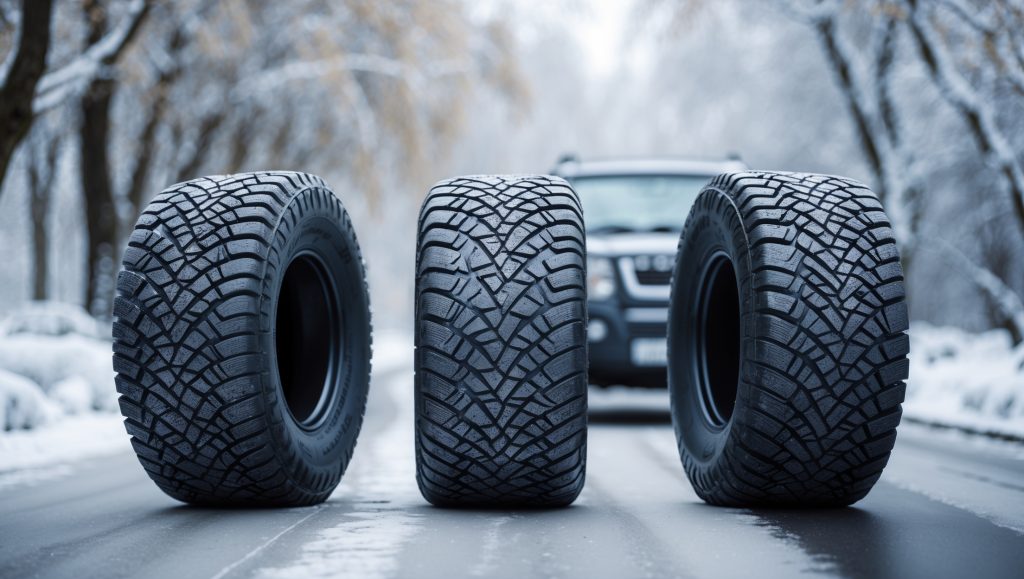
How We Chose
Choosing the best winter tyres for snow grip in the US involves evaluating multiple factors crucial to safe and confident winter driving. Our criteria included:
- Snow and ice traction: Real-world grip and braking performance in snowy and icy conditions.
- Wet grip: Stability on slushy, rainy, or melting surfaces.
- Safety: Braking distance, handling, and predictability under emergency maneuvers.
- Comfort and noise: Road noise and ride comfort for daily use.
- Durability: Tread life and puncture resistance.
- Economy: Price and value for money.
- Labeling: US UTQG where applicable, and EU label scores for international models.
1. Bridgestone Blizzak WS90 — Legendary Snow Confidence
Why it stands out
The Blizzak WS90 is a benchmark for studless winter tyre performance. Its unique Multicell compound and dense sipes excel in snow and ice, delivering outstanding grip and short braking distances. The WS90 also resists hydroplaning on slush, earning top marks for safety and reliability.
Best for
- Drivers in regions with long, harsh winters
- Small to midsize cars and sedans
Key notes
- Season/Type: Winter, studless
- Popular sizes: 15″–18″
- Strengths: Snow/ice grip, wet braking, predictable handling
- Trade-offs: Average treadwear, premium price
2. Michelin X-Ice Snow — Durable, Quiet, and Versatile
Why it stands out
Michelin’s X-Ice Snow delivers reliable traction on snow and ice with a focus on longevity and quiet operation. Its V-shaped tread channels moisture efficiently, while flexible compounds maintain grip in frigid temperatures. Michelin’s reputation for lasting performance makes this a solid investment.
Best for
- Commuters wanting long tread life
- All passenger vehicles, including hybrids and EVs
Key notes
- Season/Type: Winter, studless
- Popular sizes: 14″–20″
- Strengths: Long tread life, quiet ride, low rolling resistance
- Trade-offs: Slightly less sharp on icy turns
3. Nokian Hakkapeliitta R5 — Nordic Snow Mastery
Why it stands out
Nokian’s Hakkapeliitta R5 is engineered in Finland and built for severe snow and ice. Its innovative compound and directional tread deliver exceptional grip, even in deep snow or on polished ice. Low rolling resistance and eco-friendly design add appeal for environmentally conscious drivers.
Best for
- Drivers in northern states or mountainous areas
- Those prioritizing eco-friendliness
Key notes
- Season/Type: Winter, studless
- Popular sizes: 15″–19″
- Strengths: Best-in-class snow/ice grip, low noise, efficient
- Trade-offs: Limited size selection, higher price
4. Continental VikingContact 7 — All-Round Winter Performer
Why it stands out
The VikingContact 7 is praised for its balance of snow, ice, and wet performance. It features a soft compound and high-density siping for confident maneuvering on winter roads. The tyre is also known for its comfort and quietness, making it a favorite among family car owners.
Best for
- Urban commuters facing mixed winter conditions
- Sedans and crossovers
Key notes
- Season/Type: Winter, studless
- Popular sizes: 16″–20″
- Strengths: Wet/snow balance, comfort, low noise
- Trade-offs: May wear faster in warmer climates
5. Goodyear Ultra Grip Ice WRT — American All-Weather Toughness
Why it stands out
Built for North American winters, the Ultra Grip Ice WRT offers excellent snow traction and solid ice control. Its Winter Reactive Technology uses adaptive sipes for maximized grip during turns and braking, while the tread pattern channels away slush and water efficiently.
Best for
- Drivers in the Midwest and Northeast
- Trucks, SUVs, and crossovers
Key notes
- Season/Type: Winter, studless
- Popular sizes: 16″–20″
- Strengths: Snow traction, SUV/truck fitments
- Trade-offs: Slightly firmer ride, moderate road noise
6. General Altimax Arctic 12 — Budget-Friendly Snow Traction
Why it stands out
The Altimax Arctic 12 is a value leader, offering reliable snow and ice performance at a lower price point. Its tread design bites into snow and evacuates slush for confident winter handling. The tyre is also studdable for drivers needing extra grip in extreme scenarios.
Best for
- Budget-conscious drivers
- Older vehicles or secondary cars
Key notes
- Season/Type: Winter, studdable
- Popular sizes: 14″–18″
- Strengths: Price, snow grip, stud option
- Trade-offs: Less refined ride, noisier with studs
7. Pirelli Winter Sottozero 3 — Performance for Sports Cars
Why it stands out
Pirelli’s Sottozero 3 is tailored for high-performance sedans and sports cars that need winter capability without sacrificing driving dynamics. The unique tread compound and pattern ensure precise steering and strong grip in cold, wet, and snowy conditions.
Best for
- Sports cars, luxury sedans
- Drivers prioritizing winter handling
Key notes
- Season/Type: Winter, performance
- Popular sizes: 17″–21″
- Strengths: Handling, responsive steering, snow grip
- Trade-offs: Premium price, shorter tread life
8. Cooper Discoverer Snow Claw — Winter Capability for Trucks and SUVs
Why it stands out
Specifically developed for light trucks and SUVs, the Cooper Discoverer Snow Claw uses Snow Groove Technology for reliable snow traction and a robust construction for winter work. Its tread design is optimized for deep snow and maintains flexibility in subzero temperatures.
Best for
- Pickup trucks, large SUVs
- Drivers hauling or towing in winter
Key notes
- Season/Type: Winter, light truck/SUV
- Popular sizes: 16″–20″
- Strengths: Deep snow traction, tough build
- Trade-offs: Firmer ride, some road noise
9. Hankook Winter i*cept evo3 (W330) — Balanced Winter Versatility
Why it stands out
The Hankook Winter i*cept evo3 combines modern technology with a value-oriented price. The tyre features a directional tread for stable handling and effective slush evacuation, making it suitable for unpredictable winter weather across much of the US.
Best for
- Drivers in regions with variable winter conditions
- Family sedans, crossovers
Key notes
- Season/Type: Winter, studless
- Popular sizes: 16″–19″
- Strengths: Value, balanced performance, wet and snow grip
- Trade-offs: Not the quietest, average treadwear
Buying Tips
Picking the right winter tyre involves more than just snow grip. Consider these tips before buying:
- Check fitment: Use your owner’s manual or tyre placard to confirm size, speed, and load index. Matching OE specs is key to safety and handling.
- Speed & load index: Winter tyres may have lower speed ratings; always choose a tyre that meets or exceeds your vehicle’s needs.
- Rotation: Rotate winter tyres every 5,000–7,000 miles for even wear and longer life.
- Storage: Store tyres in a cool, dry place, preferably on their sides or hung. Avoid exposure to direct sunlight and ozone.
- Alignment: Get a wheel alignment when fitting winter tyres to prevent uneven wear and maximize performance.
Verdict
For US drivers facing heavy snow and ice, the Bridgestone Blizzak WS90 and Nokian Hakkapeliitta R5 are top choices for ultimate grip and safety. Michelin X-Ice Snow is ideal for those seeking longevity and quiet comfort. Budget buyers should consider the General Altimax Arctic 12, while owners of trucks and SUVs get strong performance from the Goodyear Ultra Grip Ice WRT or Cooper Discoverer Snow Claw. For high-performance vehicles, the Pirelli Winter Sottozero 3 delivers sporty handling without sacrificing winter confidence. Always choose tyres that fit your vehicle and driving needs, and remember: the best winter tyre is the one tailored to your local conditions and driving style.
Do all these tires come with the US UTQG rating, or are there some models where only the EU label scores are available for American buyers?
Not all winter tires listed have a US UTQG rating. Many high-performance or dedicated winter tires, especially those imported from Europe, may only display EU label scores and omit UTQG ratings since the test isn’t always applicable to winter compounds. Always check the manufacturer’s specifications for each model.
Could you clarify how the Bridgestone Blizzak WS90 compares to the Michelin X-Ice Snow in terms of treadwear for drivers who put a lot of miles on their tyres each winter?
The Bridgestone Blizzak WS90 is well-known for its excellent grip on snow and ice, but its tread may wear a bit faster under heavy use compared to the Michelin X-Ice Snow. The X-Ice Snow is designed for longer tread life, making it a better choice if you expect to cover a lot of miles each winter.
Are any of these tires particularly better for hybrid or EV owners in terms of rolling resistance and energy efficiency?
Yes, some of the winter tires listed are designed with lower rolling resistance, which benefits hybrid and EV owners by improving energy efficiency and range. Look for models highlighted for their fuel-saving features or marked as having low rolling resistance in the article. These options will help maximize your vehicle’s efficiency during winter driving.
Do the Blizzak WS90 and Michelin X-Ice Snow maintain good grip as they get older, or does performance drop off quickly after a few winters?
Both the Blizzak WS90 and Michelin X-Ice Snow are known for maintaining good grip over several winters, especially if rotated regularly and stored properly. However, like all winter tyres, their performance gradually decreases as tread wears down and the rubber ages. You can expect reliable grip for about 3 to 4 winters, but after that, performance may decline noticeably, especially on ice and snow.
Are there any specific things I should check on my car before installing winter tires for the first time, or can I just swap them in place of my regular all-seasons?
Before installing winter tires, check your wheels for any damage and make sure they’re the correct size for your new tires. Inspect your brakes and suspension for wear, as winter driving can put extra stress on these parts. Also, verify your tire pressure monitoring system works properly, since cold weather can trigger low-pressure warnings. After these checks, you can safely swap your all-seasons for winter tires.
If I mostly drive in milder winters where slush is more common than deep snow, would the Blizzak WS90 still be a good choice, or should I look at something else from the list?
The Blizzak WS90 is excellent in snow and ice, but if you mostly encounter slush and wet roads, you might get better everyday performance from something like the Michelin X-Ice Snow or Continental VikingContact 7. These options still offer good snow grip but also handle well in wet, slushy conditions.
Do these winter tires generally perform well on wet, slushy roads, or are there models in your list that are better suited for rain and melting conditions?
Most winter tires on the list are designed to handle wet and slushy roads in addition to snow, thanks to special tread patterns and rubber compounds. However, some models, like the Michelin X-Ice Snow and Continental VikingContact 7, are especially praised for their wet and slush performance, providing better traction and handling during rain and thawing conditions.
Do these winter tyres require any special maintenance or checks besides regular rotation to maintain their snow and ice traction over time?
In addition to regular rotation, it’s important to frequently check winter tyre pressure, as it can drop in cold weather and affect traction. Inspect tread depth to ensure it remains above the recommended level for winter driving. Also, clear any built-up snow or ice from the tyres and wheels to maintain optimal grip and performance.
Do any of these recommended winter tyres have a notable advantage when it comes to puncture resistance or durability, especially for drivers covering high mileage each season?
Among the winter tyres listed, the Michelin X-Ice Snow and Bridgestone Blizzak WS90 are often highlighted for their durability and longer tread life, making them well-suited for high-mileage drivers. While winter tyres generally prioritize grip over puncture resistance, these two models are known to handle extended use better than most, thanks to their reinforced compounds and robust construction.
I noticed the article mentioned UTQG labeling where applicable—does that mean any of these models are easier to expense or track for business records?
UTQG labeling helps identify tyre specs like treadwear, traction, and temperature, which can make purchase records more precise for business tracking. However, not all winter tyres carry UTQG ratings, since it’s not required for certain categories. If your business needs detailed specifications for expense reports, choose models with clearly listed UTQG info in the article, as this will simplify documentation.
For drivers on a budget, is the premium price of the Blizzak WS90 justified by its performance, or would you recommend one of the other picks for better value?
The Blizzak WS90 is known for its excellent snow and ice performance, but if you’re on a budget, you might find better value in options like the General Altimax Arctic 12 or the Firestone Winterforce 2. These tyres still offer solid winter grip and safety at a more affordable price point.
Does the Bridgestone Blizzak WS90 perform noticeably better than the Michelin X-Ice Snow in deep snow, or is the difference mainly in icy or slushy conditions?
The Bridgestone Blizzak WS90 generally has a slight edge over the Michelin X-Ice Snow in deep snow thanks to its aggressive tread design. However, the difference is more pronounced on icy and slushy roads, where the WS90 tends to offer noticeably better grip and stopping power than the X-Ice Snow.
For someone driving a hybrid, would the low rolling resistance of the Michelin X-Ice Snow noticeably improve fuel efficiency compared to other options on the list?
Yes, the Michelin X-Ice Snow is known for its low rolling resistance, which can help improve fuel efficiency, especially in hybrid vehicles. While the difference may not be dramatic compared to all winter tyres, you could notice slightly better mileage and smoother performance compared to more aggressively treaded options on the list.
If my car takes 17-inch wheels but is an electric, would the recommended quiet and low rolling resistance options like Michelin be noticeably better for EVs than the Blizzak?
For electric vehicles, tires with lower rolling resistance and quieter operation—like certain Michelin models—can help maximize range and reduce cabin noise compared to the Blizzak. While Blizzaks excel in snow grip, Michelins designed for EVs often strike a better balance for efficiency and quietness, which is beneficial for most EV drivers, especially if you drive on mixed roads.
The Blizzak WS90 is called a benchmark for snow grip, but you mention average treadwear as a trade-off. How much mileage can I realistically expect from a set if I’m driving mostly in New England winters?
In typical New England winter conditions, you can expect the Blizzak WS90 to last around 15,000 to 20,000 miles, depending on your driving style and how harsh the seasons are. Since winter tyres generally wear faster than all-seasons, it’s a good idea to monitor tread depth regularly to ensure continued safety.
Are there any winter tyres from your list that balance both a lower price and solid performance for someone on a tight budget?
Yes, from the list, the General Altimax Arctic 12 and Cooper Evolution Winter are both known for offering reliable snow grip and safety without costing as much as some premium brands. They’re good options if you’re trying to balance budget and dependable winter performance.
I’m a first-time tyre buyer and a bit confused about EU label scores versus US UTQG ratings. Should I pay more attention to one over the other when picking winter tyres here in the US?
For winter tyres in the US, focus more on US-specific ratings like the UTQG, but especially look for the Three-Peak Mountain Snowflake (3PMSF) symbol, which shows the tyre meets snow performance standards here. EU label scores are useful for wet grip and efficiency, but the UTQG and 3PMSF are more relevant for US winter conditions.
How do these winter tyres perform on hybrids or electric vehicles compared to regular gas cars, particularly in terms of rolling resistance and tread life?
Winter tyres generally perform well on hybrids and electric vehicles, but there are some differences. Due to the extra weight from batteries, EVs and hybrids can accelerate tread wear a bit faster than gas cars. Also, low rolling resistance is even more important for maintaining driving range. Most of the tyres listed are designed to balance grip and efficiency, but expect slightly shorter tread life and keep an eye on tyre pressure for the best results.
For drivers who only occasionally see snow but want to be prepared, would you prioritize snow grip or overall wet performance from your top picks?
If you only occasionally encounter snow, prioritizing overall wet performance makes sense for most of your driving, while still ensuring the tyre has acceptable snow grip. Several tyres on our list strike this balance, offering good wet handling without sacrificing basic winter safety when unexpected snow arrives.
Since the Blizzak WS90 has a premium price, is it really worth it for someone who has mild winters, or is the Michelin X-Ice Snow a better value?
If your winters are mild, the Michelin X-Ice Snow is likely a better value. It performs very well in snowy and icy conditions but is also known for its longevity and quieter ride. The Blizzak WS90 offers top-tier grip, but its premium features are most noticeable in harsh winter climates.
Are there any budget-friendly options you’d recommend that still offer decent snow grip and safety features?
Yes, the article highlights a few budget-friendly winter tyres that still provide reliable snow grip and safety. The General Altimax Arctic 12 and Firestone Winterforce 2 are both affordable options praised for their solid traction and dependable winter performance. They’re suitable for drivers seeking good value without compromising essential safety features.
If I live in the Midwest where we get a mix of ice, slush, and occasional dry patches, would you recommend prioritizing snow/ice grip or wet braking when choosing between these tyres?
In the Midwest, it’s smart to look for winter tyres that balance both snow/ice grip and wet braking, since you’ll see all those conditions. Focusing solely on one could leave you less safe in mixed weather. Consider tyres that perform well in both areas—many on our list are tested for this balance.
Is the Blizzak WS90 worth the premium price if I mostly drive in a city with moderate snowfall, or would one of the other options give similar safety at a lower cost?
The Blizzak WS90 is excellent for traction and safety, especially in harsh conditions, but for mostly city driving with moderate snowfall, you might find similar safety and handling with more budget-friendly options like the Michelin X-Ice Snow or Continental VikingContact 7. These alternatives can offer strong winter performance without the higher price tag.
For the Blizzak WS90, you mention average treadwear as a trade-off. Compared to the Michelin X-Ice Snow, how much shorter is its typical lifespan for drivers putting on a lot of winter miles?
The Blizzak WS90 typically wears out about 20–30% faster than the Michelin X-Ice Snow when both are used heavily during winter. On average, X-Ice Snow users report getting around 30,000 to 40,000 miles, while WS90 users often see closer to 20,000 to 28,000 miles, depending on driving habits and conditions.
Since the Michelin X-Ice Snow is noted for a quiet ride and low rolling resistance, would it be a better choice for highway commuters who drive mostly on cleared roads during winter?
Yes, the Michelin X-Ice Snow is a strong choice for highway commuters who mostly drive on cleared winter roads. Its quiet ride and low rolling resistance provide comfort and fuel efficiency, making it ideal for daily highway driving, while still offering reliable safety on occasional snow or ice.
Does the Blizzak WS90’s average treadwear mean you’d need to replace them every season, or will they typically last through more than one winter?
The Blizzak WS90 is known for its good winter performance, but its treadwear is considered average. Most drivers can expect them to last for two to three winter seasons with typical use. However, if you drive frequently or in harsher conditions, you might notice faster wear and need to replace them sooner.
For hybrid and electric vehicle owners, is there a meaningful difference in rolling resistance or range impact between the X-Ice Snow and Blizzak WS90?
Between the X-Ice Snow and Blizzak WS90, the Michelin X-Ice Snow is generally known for slightly lower rolling resistance, which can help maximize the range in hybrid and electric vehicles. While both are excellent for snow grip, EV owners may notice a modest range benefit with the X-Ice Snow compared to the Blizzak WS90.
If I mostly drive in a region with slushy winters but not a lot of deep snow, should I prioritize wet grip or snow traction when choosing between these tires?
For regions with mostly slushy winters and little deep snow, prioritizing wet grip is usually the best choice. Slushy roads act more like wet surfaces, so a tire with excellent wet performance and resistance to hydroplaning will give you safer, more confident handling in those conditions.
For US drivers with hybrids or EVs, would you still recommend the Michelin X-Ice Snow, or is there another tyre on your list that’s a better match for electric vehicles?
The Michelin X-Ice Snow is an excellent choice for hybrids and EVs because it offers low rolling resistance, which helps maximize range, along with great snow grip. If you want a tyre specifically designed for EV needs, the Nokian Hakkapeliitta R5 is also worth considering, as it’s known for being particularly quiet and energy-efficient.
Is there a particular reason why the UTQG rating is only mentioned ‘where applicable’? Are there notable winter tyres that lack this labeling in the US?
The UTQG (Uniform Tire Quality Grading) rating isn’t always provided for winter tyres because many winter and snow tyres are exempt from this labeling in the US. This is due to their specialized rubber compounds and tread designs, which aren’t accurately represented by standard UTQG tests. So, several notable winter tyres on the market may not display a UTQG rating.
For drivers in milder US regions where snow is occasional, would you still recommend any of these winter tires, or would all-seasons be sufficient?
For milder US regions where snow is rare, high-quality all-season tires usually provide enough traction and convenience. However, if you occasionally face icy or snowy roads, one of the winter tires in the article can offer extra safety during those periods. Otherwise, most drivers in such climates can stick with all-seasons.
How much difference in tread life can I expect between the Bridgestone Blizzak WS90 and the Michelin X-Ice Snow for daily commuting in a cold Midwest city?
For daily commuting in a cold Midwest city, you can generally expect the Michelin X-Ice Snow to offer a longer tread life than the Bridgestone Blizzak WS90. The Michelin is known for its durable compound and can last one to two winters longer under similar driving conditions, assuming regular rotation and proper inflation.
Are these winter tires suitable for electric vehicles, especially regarding rolling resistance and battery range in freezing weather?
Most of the winter tires listed are suitable for electric vehicles, but it’s important to check the manufacturer’s specifications for each model. Several of these tires are designed with low rolling resistance in mind, helping to reduce the impact on battery range, even in freezing conditions. Always verify compatibility with your EV and look for features like energy efficiency ratings for optimal performance.
Can these winter tyres be safely used through a whole US winter season that includes periods of dry, cold weather, or would that impact their performance or durability?
Winter tyres featured in the article are designed for safe use throughout an entire US winter, including periods of dry, cold weather. Their rubber compounds remain flexible in low temperatures, maintaining grip. However, they may wear faster on consistently dry, warmer roads compared to all-season tyres, so it’s best to switch back to regular tyres once winter conditions end.
Are the test results for snow and ice traction based on US-specific conditions, or do they include international tire testing data as well?
The test results in the article focus on US-specific winter driving conditions, but some tire performance data may reference international tests, especially if a tire is widely available globally. When international data is used, it’s typically relevant to comparable snowy and icy environments.
Can you clarify how the US UTQG rating applies to winter tires? I usually rely on those numbers but I noticed some tires don’t have them listed.
The UTQG rating system isn’t required for winter tires, which is why you’ll often see those numbers missing. Most winter tires are exempt because their tread compounds and designs are specialized for cold weather and snow, making standard UTQG wear, traction, and temperature scores less relevant. For winter tires, it’s better to focus on snow ratings and performance tests instead.
How do these tires perform on wet, slushy roads during early spring when temperatures fluctuate? I’m trying to avoid hydroplaning risks as much as possible.
The winter tires featured in the article are designed to handle wet and slushy conditions well, thanks to deeper treads and specialized rubber compounds. They generally offer better grip and channel water away to reduce hydroplaning risks, especially in temperatures below 45°F. However, as temperatures rise above that, performance may decrease compared to all-season tires, so consider switching to avoid excessive wear.
I see the article mentions both US UTQG and EU labels. For drivers in the US, how important is it to consider the EU label scores when choosing a winter tyre?
For US drivers, the UTQG rating is typically more relevant because it’s designed for US conditions and regulations. The EU label scores can still provide extra insight into wet grip and fuel efficiency, but they’re not mandatory in the US and may not always reflect local road needs. Use EU scores as supplementary info, but prioritize ratings and recommendations tailored for US roads.
Is the average treadwear of the Blizzak WS90 a big issue if I drive mostly in city conditions during winter?
The Blizzak WS90 is known for excellent snow and ice traction, but its treadwear can be faster than some all-season or touring winter tires. In city driving, with shorter trips and less aggressive speeds, treadwear is usually less of a concern, so the WS90 should perform well for several seasons if you drive primarily in urban conditions.
I’m on a pretty tight budget this winter—are there any winter tyre options with good snow and ice traction that offer better value than the premium-priced Blizzak WS90?
If you’re looking for more budget-friendly winter tyres with solid snow and ice performance, consider options like the General Altimax Arctic 12 or the Firestone Winterforce 2. Both offer good traction at a lower price point than the Blizzak WS90, making them popular choices for drivers watching their spending.
For drivers switching between snow and wet slushy roads in places like the Northeast, would the Blizzak WS90 or X-Ice Snow handle changing conditions better?
Both the Blizzak WS90 and X-Ice Snow perform well in snow, but for frequent transitions between snow and wet slushy roads, the Michelin X-Ice Snow offers a slight edge with its superior wet traction and hydroplaning resistance. The Blizzak WS90 is excellent on packed snow and ice, but the X-Ice Snow generally delivers more consistent grip in mixed winter conditions.
Since the article compares US UTQG and EU label scores, is there an easy way for a beginner to check which ratings actually matter most for winter tyres?
For winter tyres, the most important ratings to check are the three-peak mountain snowflake (3PMSF) symbol for snow performance and the EU label’s snow and ice grip icons. In the US, UTQG scores are less useful for winter tyres, so focus on the specific winter markings and real-world reviews.
For a small business van that makes a lot of stops, would you recommend focusing more on tread life or snow grip from your top picks?
For a small business van making frequent stops, snow grip should be your top priority for safety, especially in winter conditions. However, if your van covers a lot of miles, tread life also matters. Ideally, choose a tyre from the list that balances both, but lean towards snow grip to ensure reliable traction during all those stops.
Since the Bridgestone Blizzak WS90 has a premium price, is it really worth the extra cost compared to some of the other top picks for someone on a tight budget?
The Blizzak WS90 stands out for its exceptional snow and ice performance, especially in severe conditions, thanks to advanced tread technology. However, if your budget is limited, there are other options from the list, like the General Altimax Arctic 12 or Michelin X-Ice Snow, which also offer great safety and grip at a lower price point.
If the trade-off for the Blizzak WS90 is average treadwear, how often would you estimate they need to be replaced in a typical New England winter season?
The Blizzak WS90s typically last about 15,000 to 20,000 miles, but in New England winters—with regular use each season—you can expect them to last around 3 to 4 winter seasons before needing replacement. This can vary based on your driving habits and mileage, so check tread depth yearly for best safety.
Is the tread life on the Bridgestone Blizzak WS90 significantly worse than the Michelin X-Ice Snow, or are most drivers unlikely to notice a difference over just one or two winters?
Most drivers using the Blizzak WS90 and Michelin X-Ice Snow for just one or two winters are unlikely to notice a big difference in tread life. The Michelin X-Ice Snow generally edges out the Blizzak WS90 for longevity, but unless you drive high mileage every season, the difference in tread wear over a couple of winters shouldn’t be significant.
Do these tyres require any special maintenance or precautions for optimal tread life during the winter season?
Winter tyres benefit from regular checks to keep them performing well. Make sure to maintain proper tyre pressure, as cold weather can cause pressure to drop. Clean off excess salt and debris after driving on treated winter roads. Rotate your tyres according to your vehicle’s recommended schedule and avoid mixing tyre types for even wear and consistent grip.
Can you clarify what you mean by ‘average treadwear’ for the Blizzak WS90? How many miles can I realistically expect before needing to replace these tires if I drive about 10,000 miles each winter?
Average treadwear refers to how long the Blizzak WS90 tires typically last before their performance drops below optimal levels. For most drivers, these tires can last around 20,000 to 25,000 miles in winter conditions. If you drive about 10,000 miles each winter, you can usually expect to get two to two and a half seasons before needing replacements.
Is there a notable difference in road noise between these top picks for someone who does a lot of highway driving in winter?
Yes, there can be noticeable differences in road noise among winter tyres, especially for highway driving. In general, premium models like the Michelin X-Ice Snow and Bridgestone Blizzak WS90 are often praised for being quieter compared to some budget brands. However, all winter tyres tend to be a bit noisier than all-season ones due to their tread. Choosing a higher-end option from the list should help minimize road noise.
You mention that the Blizzak WS90 has a premium price and average treadwear. Do you think it’s still worth the investment for someone who doesn’t drive a lot in winter?
If you don’t drive much in winter, the Blizzak WS90’s higher price and average treadwear may not offer the best value for you. It excels in performance, but for limited winter driving, a more budget-friendly tyre with good safety ratings could be a more practical choice.
Could you clarify if the Bridgestone Blizzak WS90 is suitable for occasional snow, or is it really only worth it if you get regular harsh winters?
The Bridgestone Blizzak WS90 is excellent in harsh winter conditions, but it also performs very well in occasional snow. If you experience snowfall a few times each winter and want extra confidence and safety when it does happen, the WS90 is a good choice. However, if snow is extremely rare in your area, you might not need such a specialized winter tire.
Does the durability advantage of the Michelin X-Ice Snow mean it’s a better value over time despite the higher up-front cost compared to something like the Blizzak WS90?
Yes, the Michelin X-Ice Snow is known for its long-lasting tread life, which can make it a better value in the long run. While the initial price is higher than the Blizzak WS90, you may get more miles before needing a replacement, potentially saving money over several winters.
I noticed the UTQG rating was mentioned—how much should I weigh that compared to EU label scores when picking winter tyres here in the US?
The UTQG rating isn’t very relevant for winter tyres, since it doesn’t measure snow or ice performance. EU label scores focus more on wet grip and rolling resistance, which can be helpful, but real-world winter tests and reviews are often a better guide. For US winter driving, prioritize user reviews and independent winter tyre tests over UTQG or EU scores.
Do any of these winter tyres provide exceptional grip during sudden emergency maneuvers, especially on icy surfaces?
Yes, several tyres on the list are designed for outstanding grip during emergency maneuvers, even on icy roads. In particular, the Bridgestone Blizzak WS90 and Michelin X-Ice Snow are highlighted for their superior traction and stability, which help maintain control during sudden steering or braking on ice.
You mention the importance of handling in emergency maneuvers. Which of the top picks offers the best balance between predictable handling and overall comfort for daily winter commuting?
Among the top picks in the article, the Michelin X-Ice Snow stands out for its excellent balance of predictable handling and ride comfort, especially for daily winter commuting. It offers reliable grip during emergency maneuvers while maintaining a smooth, quiet ride, making it a strong all-rounder for US drivers facing a range of winter conditions.
For someone in the Midwest who gets both heavy snow and a lot of cold rain, would you recommend prioritizing snow/ice grip over wet grip? How do these tyres balance between those conditions?
In the Midwest, where you face both heavy snow and cold rain, it’s important to find winter tyres that balance snow and ice grip with wet traction. Many top-rated winter tyres are designed to perform well in both conditions, but some lean more toward snow and ice performance, while others excel in wet handling. Look for tyres that rate highly in both areas or are labeled as suitable for mixed winter conditions to ensure safe driving all season.
How does tread life on the Blizzak WS90 compare to the Michelin X-Ice Snow for someone who puts a lot of miles on each winter?
The Michelin X-Ice Snow is generally known to have a longer tread life compared to the Blizzak WS90, especially for drivers who log a lot of winter miles. While both offer great snow performance, the Blizzak is designed for top-tier grip but may wear faster, whereas the X-Ice Snow emphasizes both grip and longevity.
If I’m on a student budget, which tire from this list offers the best value without compromising too much on safety in icy conditions?
The General Altimax Arctic 12 stands out as the best value option for students on a budget. It offers reliable traction and safety in icy and snowy conditions, while usually being more affordable than most premium brands listed. You’ll get dependable performance without stretching your finances.
How much does tread life actually vary between the Bridgestone Blizzak WS90 and the Michelin X-Ice Snow? I’m looking for something that will last a few winters.
The Michelin X-Ice Snow generally outlasts the Bridgestone Blizzak WS90, often providing an extra season or so of use—some drivers report up to 4-5 winters, compared to 3-4 for the Blizzak. Both offer good longevity for winter tyres, but if maximum tread life is your priority, the Michelin tends to be the longer-lasting option.
Are there particular winter tyres from this list you would avoid using on hybrids or EVs, or do all of them perform equally well on those vehicles?
All the tyres listed generally perform well on hybrids and EVs, but it’s a good idea to look for tyres with reinforced sidewalls and low rolling resistance to support the extra weight and torque of these vehicles. Some options may be slightly more efficient or durable, so always check the manufacturer’s recommendations for your specific car model.
Does the Blizzak WS90’s average treadwear mean I’ll have to replace them more often compared to the Michelin X-Ice Snow, or are the differences pretty minor in real-world use?
The Blizzak WS90 generally has a shorter tread life than the Michelin X-Ice Snow, meaning you might need to replace them sooner, especially if you drive a lot each winter. However, for most drivers in typical winter conditions, the difference isn’t huge and may only amount to an extra season or two of use with the Michelin.
Do any of the tyres featured have run-flat capabilities, especially for drivers in rural areas where assistance might be delayed during a snowstorm?
None of the winter tyres featured in the article specifically highlight run-flat capabilities. If run-flat technology is important for you, especially in remote or rural areas, you may want to check directly with tyre manufacturers or your local dealer for available run-flat winter tyre options compatible with your vehicle.
Which of these options would you recommend for EV owners who want both durability and minimal road noise during winter commuting?
For EV owners focused on durability and minimal road noise, the Michelin X-Ice Snow and Continental VikingContact 7 are standout choices. Both have proven tread longevity and are known for quiet, comfortable rides, making them ideal for daily winter commuting in electric vehicles.
For someone driving a hybrid or EV, would there be any noticeable difference in performance or efficiency between the Michelin X-Ice Snow and the Nokian Hakkapeliitta R5?
Both the Michelin X-Ice Snow and Nokian Hakkapeliitta R5 are excellent choices for hybrids and EVs, but the Nokian Hakkapeliitta R5 is more optimized for electric vehicles, offering lower rolling resistance for slightly better efficiency. You might notice quieter operation and a bit more range with the Nokian, while both provide strong winter grip and safety.
How significant is the difference in tread life between the Bridgestone Blizzak WS90 and the Michelin X-Ice Snow for a daily commuter in the Midwest?
The Michelin X-Ice Snow generally offers a longer tread life than the Bridgestone Blizzak WS90, which is important for daily commuting in the Midwest. The Blizzak WS90 is known for excellent traction but tends to wear out faster. If maximizing tread longevity is a priority, the X-Ice Snow would be the better choice for regular use.
If I drive a hybrid sedan, do any of these tyres stand out in terms of low rolling resistance to help maintain fuel efficiency in winter?
For a hybrid sedan, the Michelin X-Ice Snow and Bridgestone Blizzak WS90 from the list are known for their lower rolling resistance, which can help preserve your vehicle’s fuel efficiency in winter conditions. Both offer a good blend of snow grip and efficiency, making them solid choices for your needs.
Can you give more details on how these tyres handle slushy roads, especially in places where snow melts and refreezes often? Is wet grip just as important as snow traction?
On slushy roads, these winter tyres are designed to channel water and slush away from the tread, reducing the risk of hydroplaning. In areas with frequent melting and refreezing, wet grip is just as crucial as snow traction, since you’ll often face a mix of wet, icy, and snowy surfaces. The tyres featured in the article generally perform well in these conditions, balancing both wet and snow grip for safer driving.
How much should I expect to budget for a full set of these winter tires for a midsize SUV, and are there meaningful differences in long-term value between the top picks?
For a midsize SUV, a full set of quality winter tires from the top picks generally costs between $600 and $1,200, depending on brand and size. Some pricier models may offer better tread life, warranty, or improved performance over time, which can make them a better long-term investment despite the higher upfront cost.
For a Prius owner looking for quiet ride and long tread life, would you lean more toward the Michelin X-Ice Snow or the Nokian Hakkapeliitta R5?
For a Prius prioritizing a quiet ride and long tread life, the Michelin X-Ice Snow is typically the better choice. It is well-known for its low road noise and excellent wear characteristics, making it a solid fit for daily commuting. The Nokian Hakkapeliitta R5 also offers good comfort and grip, but the Michelin tends to edge ahead in overall quietness and longevity.
How does the price of the Nokian Hakkapeliitta R5 compare to other top picks, and is the extra snow performance worth it for most US drivers?
The Nokian Hakkapeliitta R5 is usually priced higher than many other top winter tyres mentioned in the article. Its snow grip and ice performance are exceptional, which can justify the cost if you drive frequently in harsh winter conditions. For drivers in milder climates or with only occasional snow, a more affordable option may be sufficient.
How does the tread life of the Blizzak WS90 compare to the Michelin X-Ice Snow for someone who drives around 10,000 miles per winter season?
If you drive about 10,000 miles each winter, the Michelin X-Ice Snow generally lasts longer than the Blizzak WS90. The Blizzak WS90 is known for excellent grip but tends to wear a bit faster, while the X-Ice Snow is designed for improved tread life and can typically give you more seasons of use under similar driving conditions.
Do all the tires listed come with the US UTQG rating, or are some only rated by European standards? How should I interpret this when shopping in the US?
Not all the winter tires listed carry the US UTQG rating. Some, especially those designed primarily for European markets, may only have European labels. In the US, UTQG ratings help compare treadwear, traction, and temperature resistance, but many winter tires are exempt. When shopping, focus on snow traction symbols like the Three-Peak Mountain Snowflake, which signals strong winter performance.
Do these winter tyres hold up well for people who mostly drive in cities, where there’s more slush and wet roads than deep snow?
Yes, most of the winter tyres featured are designed to handle not just deep snow but also slush and wet city roads. They typically have tread patterns and rubber compounds optimized for both traction and safety in a variety of winter conditions, including slushy and rainy surfaces you’ll often find in urban areas.
Do any of these top winter tyres come in sizes suitable for larger SUVs, or are they mostly for smaller vehicles?
Several of the winter tyres featured in the article come in a wide range of sizes, including options suitable for larger SUVs as well as smaller vehicles. It’s a good idea to check specific models’ size charts or consult your preferred tyre retailer to find the right fit for your SUV.
How much of a difference in road noise is there between the Michelin X-Ice Snow and the Bridgestone Blizzak WS90? I do a lot of highway driving with kids in the car.
The Michelin X-Ice Snow is generally a bit quieter than the Bridgestone Blizzak WS90, especially at highway speeds. Many drivers report that the X-Ice Snow produces less road noise, making it a more comfortable choice for long trips with kids. Both are good, but if quietness is a top priority, Michelin may suit your needs better.
Does the Blizzak WS90’s average treadwear mean I’d be replacing them more often if I drive lots of highway miles each winter?
Yes, the Blizzak WS90’s average treadwear means they may wear out a bit faster compared to some other winter tires, especially if most of your winter driving is on highways. If you rack up a lot of highway miles each season, you might need to replace them sooner than a tire with a higher treadwear rating.
For drivers in regions where winter lasts only a few months, is it still worth investing in something like the WS90, or would an all-weather tire from your list make more sense?
If winter conditions in your area are brief and not too severe, an all-weather tire from the list might be a more practical choice. All-weather tires offer solid year-round performance and eliminate the hassle of seasonal tire changes. The WS90 is excellent for harsh winters, but for milder, shorter cold seasons, all-weather options should be sufficient for safety and convenience.
For drivers on a tighter budget, which of the top picks offers the best balance between safety and overall cost?
Among the top picks, the General Altimax Arctic 12 stands out as a great choice for budget-conscious drivers. It offers reliable snow grip and safety while typically being more affordable than premium brands, making it a solid balance between performance and cost.
Do the Blizzak WS90 or Michelin X-Ice Snow perform better on slushy roads where snow is melting? I’m in the Midwest and we often get those conditions.
On slushy, melting snow, both the Blizzak WS90 and Michelin X-Ice Snow offer strong performance, but the Blizzak WS90 tends to have a slight edge in wet and slushy conditions due to its tread compound and design. Midwest drivers typically appreciate the confident handling and braking the WS90 provides when roads are messy and transitions from snow to slush.
How significant is the difference in treadwear between the Blizzak WS90 and the Michelin X-Ice Snow for someone who drives mostly in city conditions?
For mostly city driving, the Michelin X-Ice Snow typically offers better treadwear and longevity compared to the Blizzak WS90, which is known for its outstanding snow grip but may wear faster on dry, urban roads. If maximizing tire life is your main concern, the Michelin is generally the better choice for city use.
The article mentions both the US UTQG rating and EU label scores for some tires. How much weight should I give these labels when choosing a winter tire for Midwest conditions?
The UTQG rating and EU label scores are helpful, but for Midwest winters, focus more on real-world snow and ice performance, which these labels don’t fully capture. Look for tires with the Three-Peak Mountain Snowflake symbol and pay close attention to user reviews and expert tests for cold weather traction.
Is the Bridgestone Blizzak WS90 available for SUVs, or is it really just for smaller cars as you mentioned? I have a midsize SUV and lots of mountain driving in winter.
The Bridgestone Blizzak WS90 is primarily designed for passenger cars and smaller crossovers, not larger SUVs. For a midsize SUV and serious winter conditions, you might want to consider the Blizzak DM-V2, which is specifically engineered for SUVs and offers excellent snow and ice traction.
I noticed the article refers to EU label scores for some tyres. How should I interpret these in a US context, and do these scores match up well with our own UTQG ratings?
EU label scores rate tyres on wet grip, fuel efficiency, and noise. These are useful for comparing specific safety aspects, but they’re based on European standards and conditions. In the US, UTQG ratings focus on treadwear, traction, and temperature resistance. While both offer helpful info, they measure different things and aren’t directly comparable. Using EU scores alongside UTQG ratings can give you a broader understanding of a tyre’s strengths.
Do any of these winter tires perform particularly well for electric vehicles in terms of both grip and maintaining battery range?
Yes, several of the winter tires listed are designed to work well with electric vehicles. The Michelin X-Ice Snow and Bridgestone Blizzak WS90, for example, offer excellent grip while also using low rolling resistance technology, which can help maintain your EV’s battery range. Always check manufacturer specifications to ensure compatibility with your specific EV model.
Are any of these tire picks considered a good value for money, or do you really have to go for the premium price to get decent safety in winter?
You don’t always have to choose the premium-priced options for reliable winter safety. Some tires on the list, like the General Altimax Arctic 12 and Firestone Winterforce 2, offer excellent snow grip at more affordable prices, making them great value picks without compromising on safety.
Do the Bridgestone Blizzak WS90 and Michelin X-Ice Snow maintain their performance as they wear down, or does their snow grip drop off noticeably after a couple of winters?
Both the Bridgestone Blizzak WS90 and Michelin X-Ice Snow are designed to retain good snow grip as they wear, thanks to advanced rubber compounds and tread designs. However, like all winter tyres, their peak performance will gradually decrease after multiple seasons, especially once tread depth drops below recommended levels. Regular checks and replacing tyres before they become too worn helps maintain safety.
I see that the Blizzak WS90 is known for its snow and ice grip, but you mentioned average treadwear as a trade-off. About how long can I expect these tires to last if I drive around 6,000 miles each winter?
For the Blizzak WS90, you can typically expect a lifespan of about 20,000 to 25,000 miles under normal winter driving conditions. If you drive 6,000 miles each winter, these tires should last you around 3 to 4 winter seasons before you’ll need to consider replacing them.
Does the Blizzak WS90 have any significant disadvantages for small business delivery vehicles that rack up a lot of miles each winter?
The Blizzak WS90 is known for excellent winter grip, but its main drawback for high-mileage delivery vehicles is tread life. These tyres tend to wear faster than some all-season or commercial-grade winter tyres, so you may need to replace them more often if your vehicles cover a lot of miles each season.
Can you clarify how the US UTQG and EU label scores help compare tire safety for families that drive in both city and rural areas throughout the winter?
Sure! The US UTQG and EU label scores measure things like treadwear, traction, and braking in wet or snowy conditions. Comparing these ratings helps you choose tires with strong grip and durability, which is especially important for families driving in varied winter conditions, from icy rural roads to wet city streets.
How much of a difference does the price make between these top winter tires, and is the investment in premium models really justified for average urban winters?
The price difference between top winter tires can be significant, with premium models costing more due to advanced tread designs and rubber compounds. For average urban winters, mid-range options often provide reliable grip and safety. However, premium tires may offer better performance in severe conditions, quieter rides, and longer wear. If your winters are mild and roads are well-maintained, mid-level tires are usually a smart, cost-effective choice.