
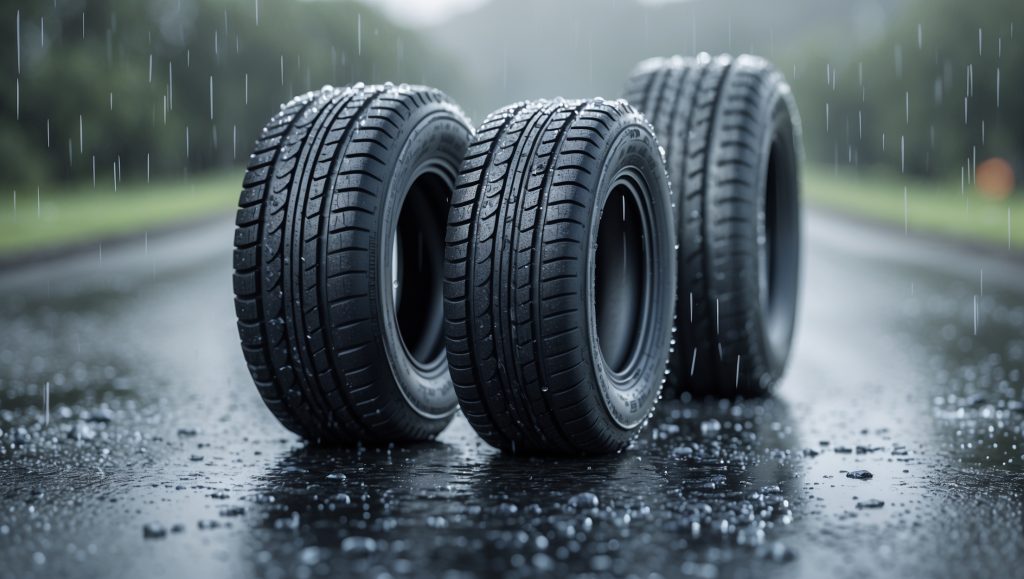
How We Chose
Wet braking is a top priority for American drivers facing unpredictable weather. We selected these tyres based on:
- Safety: Emphasis on short wet braking distances and predictable behavior during emergency stops.
- Wet Grip: Performance in heavy rain, standing water, and hydroplaning resistance.
- Comfort & Noise: Smooth, quiet rides that don’t sacrifice safety.
- Durability & Economy: Long tread life and value for money.
- Region-Specific Ratings: Focus on UTQG traction grades and US market tests.
- Type & Season: Mostly all-season; a few top summer and all-weather options for relevant regions.
1. Michelin CrossClimate2 — All-Weather Standout
Why it stands out
The CrossClimate2 delivers exceptional wet braking in both summer downpours and cold rain, thanks to its unique V-formation tread and advanced compound. It’s engineered for US conditions and consistently tops independent braking tests.
Best for
- Drivers in regions with year-round rain
- Fleet managers seeking all-weather safety
Key notes
- Season/Type: All-weather (3PMSF rated)
- Popular sizes: 195/65R15, 225/60R17, 235/45R18
- Strengths: Wet grip, winter capability, comfort
- Trade-offs: Slightly premium price
2. Continental PureContact LS — Precision in the Wet
Why it stands out
Continental’s tailored tread compound and circumferential grooves give the PureContact LS a best-in-class wet stopping distance for touring tyres. It maintains grip even in heavy rain and resists hydroplaning effectively.
Best for
- Family sedans, coupes, crossovers
- High-mileage commuters
Key notes
- Season/Type: Touring all-season
- Popular sizes: 205/55R16, 215/60R16, 235/60R18
- Strengths: Wet braking, comfort, treadwear warranty
- Trade-offs: Modest winter traction
3. Goodyear Assurance WeatherReady — Hydroplaning Hero
Why it stands out
Designed for changing US climates, the Assurance WeatherReady uses soybean-infused rubber for flexibility and traction, delivering superb confidence when braking on soaked roads. Its open tread evacuates water rapidly.
Best for
- Drivers in the Midwest, Northeast, and Pacific Northwest
- Crossover/SUV owners needing year-round grip
Key notes
- Season/Type: All-weather (3PMSF rated)
- Popular sizes: 225/65R17, 235/60R18, 245/55R19
- Strengths: Wet braking, light snow grip
- Trade-offs: Slightly firmer ride
4. Bridgestone Potenza RE980AS+ — Sporty Wet Control
Why it stands out
This ultra-high performance all-season tyre is engineered for sports sedans and coupes needing maximum wet grip. Large shoulder blocks and full-depth sipes ensure stability and fast stops in wet conditions.
Best for
- Performance enthusiasts
- Daily drivers who value handling and safety
Key notes
- Season/Type: Ultra-high performance all-season
- Popular sizes: 225/45R17, 245/40R18, 255/35R19
- Strengths: Wet braking, cornering grip
- Trade-offs: Slightly increased road noise
5. General Altimax RT45 — Budget Wet Performer
Why it stands out
The Altimax RT45 offers impressive wet braking for the price point, with a symmetrical tread pattern and silica-rich compound. It’s a reliable choice for drivers prioritizing safety on a budget.
Best for
- Compact and midsize car owners
- Value-conscious families, fleets
Key notes
- Season/Type: Standard touring all-season
- Popular sizes: 185/65R15, 205/55R16, 215/60R16
- Strengths: Wet braking, cost-effectiveness
- Trade-offs: Average winter grip
6. Pirelli Cinturato P7 All Season Plus II — Quiet, Secure Rain Stops
Why it stands out
Pirelli’s silica-enhanced tread and optimized grooves give this tyre a quiet ride and excellent wet braking, especially for highway cruising and city commutes. It’s consistently recommended for its balance of comfort and control.
Best for
- Urban commuters
- Highway drivers seeking peace of mind
Key notes
- Season/Type: Touring all-season
- Popular sizes: 205/55R16, 225/50R17, 235/45R18
- Strengths: Wet braking, quietness, fuel efficiency
- Trade-offs: Not for harsh winter use
7. Hankook Kinergy PT (H737) — Long-Lasting Wet Safety
Why it stands out
The Kinergy PT offers a rare combination of long tread life and short wet braking distances for its class. Its high silica tread ensures reliable stops, even as the tyre wears.
Best for
- Drivers logging high annual mileage
- Fleet vehicles, ride shares
Key notes
- Season/Type: Standard all-season
- Popular sizes: 195/65R15, 215/55R17, 225/60R16
- Strengths: Wet grip, tread life, value
- Trade-offs: Average sporty handling
8. Yokohama Avid Ascend GT — Consistent Rain Traction
Why it stands out
With its triple 3D sipes and optimized contact patch, the Ascend GT maintains wet braking performance over many miles, making it a favorite among drivers in rainy states.
Best for
- Rain-prone regions (Pacific Northwest, Gulf Coast)
- Commuters, family cars
Key notes
- Season/Type: Touring all-season
- Popular sizes: 205/55R16, 215/60R16, 225/50R17
- Strengths: Wet braking, ride comfort
- Trade-offs: Tread noise as tyre ages
9. Firestone WeatherGrip — Wet Traction for All Climates
Why it stands out
The WeatherGrip’s directional tread and full-depth grooves help it cut through standing water, minimizing hydroplaning and delivering short wet braking distances even in cooler temperatures.
Best for
- Drivers in mixed climates
- Budget-conscious buyers wanting 3PMSF all-weather
Key notes
- Season/Type: All-weather (3PMSF rated)
- Popular sizes: 205/55R16, 225/60R17, 235/60R18
- Strengths: Wet braking, light snow traction
- Trade-offs: Slightly stiffer ride
10. Vredestein Quatrac Pro — Premium Wet Performance
Why it stands out
Vredestein’s Quatrac Pro is a European import making waves in the US for its exceptional wet braking, sporty handling, and all-weather versatility, especially for premium sedans and crossovers.
Best for
- Luxury car owners
- Drivers wanting a premium all-weather experience
Key notes
- Season/Type: All-weather (3PMSF rated)
- Popular sizes: 225/45R17, 235/50R18, 245/45R19
- Strengths: Wet braking, sporty feel
- Trade-offs: Higher price, limited dealer network
Buying Tips
- Fitment: Always match tyre size, speed, and load rating to your vehicle’s requirements. Consult your owner’s manual or a tyre professional.
- Rotation: Rotate tyres every 5,000–8,000 miles to maintain even wear and consistent wet braking.
- Storage: If you swap between seasonal sets, store tyres in a cool, dry place away from direct sunlight and sources of ozone.
- Alignment: Have your alignment checked at least once a year; poor alignment reduces wet grip and increases wear.
- UTQG & Traction Ratings: Look for an “A” or “AA” traction grade for optimal wet performance.
Verdict
For drivers who face rain year-round and want the ultimate in wet braking, the Michelin CrossClimate2 and Continental PureContact LS are hard to beat. Goodyear Assurance WeatherReady and Firestone WeatherGrip stand out for those needing all-weather and light snow capability. Budget-focused buyers will find the General Altimax RT45 and Hankook Kinergy PT offer strong wet safety without breaking the bank. Enthusiasts will appreciate the Bridgestone Potenza RE980AS+ and Vredestein Quatrac Pro for their sporty wet handling. Match your pick to your driving style, climate, and budget—and always prioritize tyres with top wet braking performance for safety on every journey.
I drive mostly in the Southeast where we get sudden heavy rain and standing water, so I’m curious how the Continental PureContact LS actually resists hydroplaning compared to the Goodyear Assurance WeatherReady.
The Continental PureContact LS has circumferential grooves and traction grooves that effectively channel water away, giving it strong hydroplaning resistance. The Goodyear Assurance WeatherReady also performs well in heavy rain, but in independent tests, the PureContact LS tends to offer slightly better wet handling and confidence in standing water. Both are good, but Continental may give you an extra edge in those Southeast downpours.
I really value wet braking but live somewhere with mild winters. Would I be sacrificing much by picking a more budget option from this list instead of the CrossClimate2?
If your winters are mild and wet braking is your priority, a budget option from the list can still perform well. The CrossClimate2 excels in both wet and winter conditions, but a budget pick may only lose a bit of edge in extreme scenarios. For daily mild climates, you should get reliable wet braking without a major sacrifice.
Could you explain what the 3PMSF rating actually means for the Michelin CrossClimate2? Is it really good enough for occasional snow, or would I need dedicated winter tyres for safe wet braking in colder areas?
The 3PMSF (Three-Peak Mountain Snowflake) rating on the Michelin CrossClimate2 means it meets certain standards for winter traction, including light snow. It’s suitable for occasional snow and cold wet conditions, so you’ll get reliable wet braking. However, if you regularly face heavy snow or icy roads, dedicated winter tyres are safer and provide better performance.
How do these all-weather and all-season options compare in terms of road noise at highway speeds, especially for drivers who prioritize a quiet ride but still want top wet braking?
Among the tyres listed, premium all-season options like the Michelin CrossClimate2 and Continental PureContact LS are well-regarded for their quiet highway performance, balancing low road noise with excellent wet braking. Some all-weather tyres may be slightly noisier due to more aggressive tread patterns, but newer models are closing the gap. Prioritizing a quiet ride, look for tyres emphasizing comfort and noise reduction in their features.
If my car’s current tyres tend to hydroplane easily, is it more likely due to the tyre model or could it just be age and tread wear? How do I know when it’s time to upgrade to something like these?
Hydroplaning can result from both the tyre model and worn tread. Age and tread wear greatly reduce water evacuation, making hydroplaning more likely. If your tread depth is below 4/32 of an inch, or your tyres are over six years old, it’s a good idea to upgrade. Choosing tyres designed for wet braking, like those in the article, will offer better safety in wet conditions.
Are there budget-friendly options with strong wet braking that didn’t quite make your top 10, especially for someone who drives an older sedan?
Yes, a few budget-friendly tyres like the Kumho Solus TA31 and General Altimax RT43 have solid wet braking performance but just missed the top 10. They offer good value and are well-suited for older sedans, balancing safety and price fairly well.
How does the Michelin CrossClimate2 compare in wet braking performance to more budget-friendly options not listed here?
The Michelin CrossClimate2 is widely recognized for its strong wet braking performance, often outperforming many budget-friendly tires. Its advanced tread compound and V-shaped pattern help it stop shorter and maintain better grip in wet conditions compared to less expensive alternatives, which may compromise on these features to keep costs down.
Is the slight premium price for the CrossClimate2 justified mainly by its wet braking, or does the value also come from longer tread life? I’m trying to stretch my tire budget for a family car.
The CrossClimate2’s higher price isn’t just for its wet braking performance. It also stands out for impressive tread life, which means you can expect more miles before needing replacements. For a family car aiming to balance safety and budget, the extra value comes from both its all-season grip and durability.
Are there notable differences in wet braking performance across the popular size options you mention for these tyres, or is performance consistent regardless of size?
Wet braking performance can vary depending on tyre size, even within the same model. Wider tyres may disperse water differently, which can affect grip and braking distance. Manufacturers often optimize performance for certain sizes, so it’s best to check specific test results or manufacturer data for the size you plan to use.
If we wanted to upgrade our fleet before the next rainy season, about how long does it typically take to source popular sizes like 235/45R18 or 225/60R17 from US distributors?
For common sizes like 235/45R18 or 225/60R17, most US distributors can fulfill orders within a few days to a week if the tyres are in stock. However, larger fleet orders or less common brands might take up to two weeks. It’s best to check current availability and place orders a few weeks ahead of your target date.
How often should I expect to replace these top-rated tires if most of our driving is stop-and-go city traffic? Wondering about durability beyond just tread life numbers.
In mostly stop-and-go city driving, even top-rated tires may wear out faster due to frequent braking and acceleration. You might expect to replace them every 25,000 to 40,000 miles, but regular inspections for uneven wear, sidewall damage, and loss of grip are just as important as monitoring tread depth. Urban conditions can shorten tire life compared to mostly highway driving.
We’re in a region with frequent heavy rain but rarely see snow. Is it worth paying the premium for the CrossClimate2’s winter capability, or would one of the other options be more economical?
Given your area’s heavy rain and rare snow, you may not need to pay extra for the CrossClimate2’s winter features. Consider high-performing summer or all-season tyres from the list that excel in wet braking—they can offer strong wet safety at a better price. Save the winter premium unless you expect icy or snowy roads.
If I mostly drive in the Pacific Northwest, would you recommend prioritizing the all-weather options or is an all-season tyre like the PureContact LS sufficient?
In the Pacific Northwest, frequent rain and varying temperatures make all-weather tyres a great choice for year-round safety, especially if you drive in areas that occasionally get snow. However, if you rarely see snow or ice, a high-quality all-season tyre like the PureContact LS offers reliable wet braking and should be sufficient for most conditions.
If I recently bought the Goodyear Assurance WeatherReady and it still hydroplanes on standing water, should I be concerned about installation, alignment, or maybe tire pressure?
If your Goodyear Assurance WeatherReady tires are hydroplaning, first check the tire pressure to ensure it matches the manufacturer’s recommendation. Incorrect pressure can affect grip. Also, inspect the tread depth—worn tires hydroplane more easily. While installation and alignment are less likely to cause hydroplaning, improper installation can sometimes play a role, so a professional check might be worthwhile.
Could you elaborate on how US-specific UTQG traction grades influenced your rankings, especially for the more popular tyre sizes you listed?
We gave considerable weight to UTQG traction grades (A or AA) when evaluating tyres, as these are standardized tests reflecting wet braking performance in the US. For the most popular sizes, tyres with higher traction grades consistently ranked higher, provided their real-world wet braking tests matched the UTQG rating. This approach ensured our rankings stayed relevant to US drivers’ needs and conditions.
If my car uses a less common tire size, is it usually possible to find the CrossClimate2 or PureContact LS, or are their popular sizes pretty much all that’s available in the US?
Both the CrossClimate2 and PureContact LS are available in a wide range of sizes, but rare or unusual tire sizes might not be stocked as commonly. It’s a good idea to check directly with tire retailers or the manufacturers’ websites to see if your specific size is offered. If not, they may recommend a close alternative.
How do the Michelin CrossClimate2 and Continental PureContact LS compare for long-term durability if I run a delivery service in a region with frequent rain?
Both the Michelin CrossClimate2 and Continental PureContact LS are strong choices for wet conditions, but for long-term durability in a demanding delivery service, the CrossClimate2 generally has the edge. It’s known for excellent tread life and consistent wet performance even as it wears. The PureContact LS also lasts well but may show tread wear a bit sooner under heavy use.
Does the Michelin CrossClimate2’s V-formation tread make it noticeably better on wet roads compared to the Continental PureContact LS, or is the difference pretty small for regular drivers?
The Michelin CrossClimate2’s V-formation tread does provide strong wet braking and grip, especially in heavy rain. However, for most regular drivers, the difference between it and the Continental PureContact LS in wet conditions is relatively small. Both perform well, so unless you drive in very wet climates often, either will give you good confidence on wet roads.
Do the tyres listed have noticeably different road noise levels when driving in heavy rain, especially the Continental PureContact LS versus the others?
Yes, there are some differences in road noise among the tyres listed. The Continental PureContact LS is often praised for its quiet ride, even in heavy rain, compared to several competitors. While all the featured tyres perform well in wet conditions, user reviews and tests suggest the PureContact LS generally produces less road noise than most others on the list.
Are there specific US regions or climates where the Continental PureContact LS outperforms the Michelin CrossClimate2 on wet roads, based on your research?
Based on our research, the Continental PureContact LS generally excels in regions with moderate to heavy rain and milder winters, such as the Pacific Northwest and parts of the Midwest. In these climates, its wet braking and hydroplaning resistance can edge out the Michelin CrossClimate2, which is better suited for areas with more varied temperatures or occasional snow.
If most of these are all-season tyres, do they hold up just as well in summer storms as they do in colder rain? I drive long distances year-round and want consistent safety.
All-season tyres featured in the article are designed to perform reliably in both summer storms and colder rain, offering good grip and shorter braking distances in wet conditions. However, in very heavy summer downpours, dedicated summer tyres might provide slightly better performance. For year-round long-distance driving, high-quality all-season tyres remain a safe and convenient choice.
We mostly drive a family sedan in the Midwest with lots of sudden rainstorms. Would you recommend the PureContact LS over the CrossClimate2 for us, or is the winter capability of the Michelin worth the higher price?
If you often face sudden rainstorms but also need some winter traction, the CrossClimate2 is a great all-season option with reliable wet and light snow performance. The PureContact LS excels in wet braking and comfort but isn’t as strong in winter. If winters are moderate but you want maximum wet grip, the PureContact LS is a solid choice. For mixed wet and winter needs, the CrossClimate2 justifies its price.
I see the Goodyear Assurance WeatherReady uses soybean-infused rubber for wet traction. Does that material impact tread life or performance in hot southern states?
The soybean-infused rubber in the Goodyear Assurance WeatherReady is designed to improve flexibility and grip in wet conditions. In hot southern states, the tread life and dry performance remain comparable to other premium all-season tires, as the compound is engineered for a wide temperature range. You can expect reliable durability and handling, even in warmer climates.
How do these top picks perform on older, less maintained roads where standing water and rough surfaces are frequent?
The tyres featured in the article are chosen for strong wet braking, and many perform well on rough, older roads with frequent standing water. Premium models like the Michelin Pilot Sport 4 and Continental ExtremeContact DWS 06 are designed to channel water away and maintain grip, even on uneven or worn surfaces. However, actual performance can still vary depending on the tyre’s tread depth and the severity of road damage.
For drivers mostly dealing with heavy rain but rarely snow, would it be smarter to stick with a dedicated summer or all-weather tire from this list?
If you mostly encounter heavy rain and not much snow, a high-quality summer tire from the list will likely offer the best wet braking and overall performance. All-weather tires are a good compromise if you might see occasional light snow, but for primarily wet and warm conditions, dedicated summer tires are generally the smarter choice.
For a business on a tight budget, are there any more affordable options that still offer reliable wet braking, or are these top picks the only good choices in heavy rain?
You can definitely find more affordable tyres that still provide solid wet braking, though they may not match the absolute top performers from the article. Look for reputable mid-range brands known for safety, such as Hankook or Kumho. Always check independent test results and reviews to ensure the tyres perform well in wet conditions before purchasing.
If I need to order tyres quickly for multiple vehicles, which brands from your list typically have the best US availability and fastest delivery to small businesses?
Michelin, Goodyear, and Continental are usually widely available across the US and often offer quick delivery, even for bulk orders to small businesses. These brands have large distribution networks, so you’re likely to find the sizes you need in stock with major suppliers for fast turnaround.
My customers sometimes complain about road noise. Between the tyres listed, which would be the quietest while still offering top wet braking?
Among the tyres featured in the article, the Michelin Primacy MXM4 and the Continental PureContact LS are both known for low road noise while maintaining excellent wet braking performance. These options should help address your customers’ concerns about noise without sacrificing safety in wet conditions.
How do these tyre recommendations hold up for someone driving mostly in the Southeast where rain is frequent, but temps rarely go below freezing?
These tyre recommendations are very relevant for Southeast drivers since the region sees frequent rain and rarely experiences freezing temperatures. Just focus on the tyres that score highest in wet braking and avoid those optimized primarily for snow or ice. The top performers listed will offer strong grip and safety on wet roads typical of the Southeast.
Do you have any insight into how the Michelin CrossClimate2 holds up in really heavy summer downpours versus a typical dedicated summer tire? I’m in the Southeast where intense rains hit hard and fast.
The Michelin CrossClimate2 is excellent for wet braking and resists hydroplaning well, even in heavy rain. However, compared to a dedicated summer tire, it may have slightly less grip and responsiveness in extreme wet conditions. In the Southeast’s intense downpours, a top-rated summer tire will likely offer the best possible wet-weather performance, but the CrossClimate2 is a strong all-season choice.
For someone doing a lot of highway commuting in the Pacific Northwest, would the Michelin CrossClimate2’s premium price really pay off in terms of longer tread life and year-round wet traction versus a more budget-friendly option?
For frequent highway commuting in the Pacific Northwest, the Michelin CrossClimate2 does justify its higher price. It offers excellent wet traction year-round and a longer tread life compared to many budget options, which means fewer replacements and greater safety in rainy conditions. If you drive a lot in wet weather, the investment can really pay off over time.
Do the tyres listed differ much in price, and are there more budget-friendly options that still offer strong wet braking for everyday commuters?
Yes, the tyres listed do vary in price, with some premium models costing more due to advanced materials and technology. However, there are budget-friendly options included that still provide reliable wet braking for daily commuting. When shopping, look for tyres labeled as all-season or with strong wet grip ratings, as these often balance affordability and safety.
I noticed some tyres are better at resisting hydroplaning. Are there specific tread patterns or compounds in these models that work best for standing water on highways?
Yes, tyres that excel in resisting hydroplaning usually feature directional or V-shaped tread patterns, which channel water away from the contact patch quickly. Additionally, they often use silica-rich rubber compounds to maintain grip on wet surfaces. These design elements help tyres maintain better contact with the road, especially in standing water on highways.
Do the tyres listed here generally have a big difference in how long they last, especially if I’m mostly commuting on highways in wet conditions?
The tyres listed vary somewhat in tread life, but most high-performing wet-weather tyres are designed for a good balance of longevity and grip. Highway commuting in wet conditions can slightly reduce tread life compared to dry use, but you shouldn’t see a huge difference between the top options here. Rotating tyres regularly and maintaining correct pressure will help maximize their lifespan.
Our customers drive mainly in the Pacific Northwest where wet roads are common but winters are mild. Would you stick to all-weather options like CrossClimate2, or is the PureContact LS enough for those conditions?
Since winters are mild in the Pacific Northwest and wet roads are common, both the CrossClimate2 and PureContact LS are suitable. The CrossClimate2 offers excellent wet and light snow performance, making it ideal if there’s occasional snow or colder temperatures. If your customers rarely see snow but want strong wet braking and comfort, the PureContact LS will be enough. Consider how often you expect snow to help decide.
You mention the Continental PureContact LS has modest winter traction. If I live somewhere with occasional sleet or light snow, would you still recommend it, or should I look for something with a stronger all-weather rating?
If you frequently encounter sleet or light snow, you might want to consider a tire with a stronger all-weather or all-season winter rating, since the Continental PureContact LS prioritizes wet braking but only offers modest winter traction. For occasional light snow, it could suffice, but for added safety and confidence, a tire with certified winter performance may be a better fit.
Is the higher price of the CrossClimate2 really justified for year-round rainy regions, or would the Continental PureContact LS be a better value?
If you drive in year-round rainy conditions, the CrossClimate2 offers exceptional wet traction and all-season versatility, which can justify its higher price for added safety and peace of mind. However, the Continental PureContact LS also performs very well in wet braking and is generally more affordable, making it a strong value option if budget is a top concern.
If I want to switch to the Michelin CrossClimate2 for year-round rain safety, can I swap them in before my current all-seasons are fully worn, or will that affect my car’s handling?
You can switch to the Michelin CrossClimate2 before your current all-season tyres are fully worn. Installing new tyres early won’t negatively impact your car’s handling—if anything, you’ll likely notice improved wet braking and traction, since the CrossClimate2 is specifically designed for year-round and rainy conditions.
If I get tyres like the CrossClimate2 or PureContact LS now, how long should I expect them to last before needing replacements, given typical highway and city driving?
For tyres like the CrossClimate2 or PureContact LS, you can typically expect a lifespan of around 60,000 to 70,000 miles with regular highway and city use. Actual mileage may vary depending on factors like driving habits, maintenance, and road conditions, so checking tread wear periodically is always a good idea.
Are there any noticeable differences in road noise between the top three tyres on your list, especially for highway driving in the rain?
Yes, there are some differences in road noise among the top three tyres listed. Generally, the Michelin Pilot Sport 4 excels at minimizing noise, even on wet highways. The Continental ExtremeContact DWS06 Plus is also relatively quiet but can produce a bit more hum at higher speeds. The Bridgestone Potenza RE980AS tends to have slightly more noticeable road noise, particularly during heavy rain on highways.
How does the wet braking performance of the Michelin CrossClimate2 compare with its winter capability in real-world US conditions, especially for regions that experience both heavy rain and occasional snow?
The Michelin CrossClimate2 offers excellent wet braking, making it a strong performer in heavy rain. While it’s not a dedicated winter tire, its tread design provides reliable traction and braking in light to moderate snow. For US regions with both heavy rain and occasional snow, it offers a good balance, though for frequent or severe winter conditions, a true winter tire would still be superior.
Which of these tires offers the best balance between wet braking performance and affordability? I’m trying to keep the cost reasonable but not compromise on safety.
Among the tires listed, the General Altimax RT43 stands out for its strong wet braking performance while still being budget-friendly. It consistently receives positive reviews for safety in wet conditions and offers good value compared to some of the higher-priced premium brands.
I noticed the Continental PureContact LS is recommended for family sedans, but does its wet braking remain strong as the tread wears down? We tend to keep our tyres for several years.
The Continental PureContact LS is known for maintaining good wet braking performance even as it wears, thanks to its advanced tread compounds and siping. However, like all tyres, performance will gradually decrease as the tread depth diminishes, especially after several years. Regularly checking tread depth and rotating tyres can help ensure consistent safety.
For an all-season tire like the Continental PureContact LS, how much compromise is there on winter traction? Would I need dedicated winter tires in colder Midwest states?
The Continental PureContact LS offers good all-season performance, but it can’t match the grip and safety of dedicated winter tires in icy or snowy Midwest conditions. If you regularly face cold temperatures and significant snow or ice, switching to winter tires is highly recommended for optimal traction and safety.
Are any of these recommended tires available for minivans, or is the list mostly aimed at sedans and crossovers?
Several of the tires listed are available in sizes suitable for minivans, not just for sedans and crossovers. It’s a good idea to check the specific model and size compatibility with your exact minivan make and model before purchasing.
How often do tyres like the CrossClimate2 or PureContact LS need to be replaced if they’re mostly used in wet, urban conditions? Any signs I should watch for that indicate replacement sooner?
For tyres like the CrossClimate2 or PureContact LS used mainly in wet, urban conditions, you’ll typically need to replace them every 40,000 to 70,000 miles, but heavy city driving and frequent wet roads can accelerate wear. Watch for reduced tread depth (below 4/32”), uneven wear patterns, cracking, or a noticeable drop in traction—these are signs you should replace your tyres sooner.
Is the slightly premium price of the CrossClimate2 justified for daily commuting, or would one of the all-season options like the Assurance WeatherReady offer enough wet braking confidence for a budget-conscious driver?
The CrossClimate2 shines in wet braking and overall safety, which can be reassuring for daily commuting, especially in unpredictable weather. However, the Assurance WeatherReady also performs well for its price. If budget is a top concern, the Assurance WeatherReady should provide solid wet braking confidence for most commuters.
For a sedan primarily driven in the Southeast US where it rains often but rarely gets snow, would you recommend the Michelin CrossClimate2 over the Continental PureContact LS, or is the price difference not justified?
For frequent rain and mild winters in the Southeast, both tyres are solid choices. The Michelin CrossClimate2 excels in wet braking and light winter traction, but if snow is rare for you, the Continental PureContact LS offers excellent wet performance at a lower price. Unless you value occasional light snow capability, the PureContact LS is likely the better value for your needs.
Does the UTQG traction grade directly indicate how well a tyre will perform in standing water, or should I focus more on user reviews and wet braking test results?
The UTQG traction grade primarily reflects a tire’s ability to stop on wet asphalt and concrete, but it doesn’t fully represent performance in standing water or resist hydroplaning. For the best picture of wet braking, check independent test results and user reviews alongside the UTQG rating.
Are there any all-season options on your list that balance top wet braking with lower road noise for highway commutes?
Yes, the article mentions the Michelin CrossClimate2 and Continental PureContact LS as all-season options that combine excellent wet braking with notably low road noise. Both are well-suited for highway commuting, offering a good balance of safety and comfort.
How do these tyres perform after a couple of years in terms of wet braking? Do the wet grip and safety features hold up well as they wear down?
Tyre performance, especially wet grip, generally declines as the tread wears down and rubber ages. Most tyres on the list are designed for durability, but after a couple of years, you may notice reduced wet braking performance. Regularly checking tread depth and replacing tyres when they get worn is important for maintaining safety features and wet grip.
Are there any specific sizes or models in this list that tend to be noisier or less comfortable, especially for someone who drives mostly on highways?
Some ultra-high-performance tyres on the list, like the Michelin Pilot Sport 4S and Bridgestone Potenza RE980AS, can be a bit noisier and firmer, especially in low-profile sizes. Touring tyres, such as the Continental PureContact LS or Michelin Premier A/S, usually offer a quieter, more comfortable ride for frequent highway driving.
For a small retail fleet mainly driving on urban roads in the Midwest, is it better to go with an all-weather tyre like the CrossClimate2 or stick with a traditional all-season like the Goodyear Assurance WeatherReady?
For a small retail fleet in the Midwest, the CrossClimate2 all-weather tyre offers stronger wet braking and better performance in unexpected winter conditions compared to traditional all-seasons like the Goodyear Assurance WeatherReady. If your fleet sometimes faces snow or severe rain, the CrossClimate2 is likely the safer, more versatile choice for urban driving.
If I need to replace tyres before the start of the rainy season, are any of these options typically more available or faster to source in the US market?
Brands like Michelin, Goodyear, and Continental, which are included in the list, are usually more widely stocked and quicker to source at most US tire retailers. Specialty or less common brands might take longer to arrive, so choosing a major brand typically speeds up the replacement process before the rainy season.
For drivers on a tighter budget, are there lesser-known brands or models that still offer strong wet braking performance but at a lower price point?
Yes, there are some budget-friendly tyre brands that provide reliable wet braking. Brands like Kumho, Hankook, and General Tire often offer models with good wet performance at a lower cost. Look for specific tyres like the Kumho Solus TA31 or General AltiMAX RT43, which tend to balance safety and affordability well.
How long can I expect the Goodyear Assurance WeatherReady to last in terms of treadwear, and does it require any special maintenance compared to other all-season tyres listed here?
The Goodyear Assurance WeatherReady typically offers a treadwear warranty of up to 60,000 miles, which is similar to other premium all-season tyres. It doesn’t require any special maintenance beyond what’s standard for all-season tyres: regular rotation, balancing, proper inflation, and routine alignment checks will help maximize its lifespan.
Does the UTQG traction grade directly relate to real-world wet braking performance, or are there other factors I should pay closer attention to when picking tyres from this list?
The UTQG traction grade gives a general idea of a tire’s ability to stop on wet surfaces, but it’s not the only factor to consider. Real-world wet braking also depends on tread design, rubber compound, and even your vehicle’s weight. For the best results, look for independent wet braking tests in addition to UTQG ratings.
If most of my wet driving happens during the colder months, would it be safer to choose an all-weather tyre like the CrossClimate2 over a standard all-season, or is the difference really noticeable?
If you often drive in wet, colder conditions, an all-weather tyre like the CrossClimate2 would generally offer better grip and shorter braking distances than a standard all-season tyre. The difference can be quite noticeable, especially in temperatures below 45°F, because all-weather tyres are designed to stay flexible and maintain traction when it’s cold and wet.
I live in the Midwest where summers get heavy rain but winters aren’t super harsh. Would you suggest the all-weather Michelin CrossClimate2 or stick with a regular all-season tire like the PureContact LS?
Given your Midwest climate with lots of summer rain and mild winters, the Michelin CrossClimate2 could be a great fit. Its all-weather compound offers excellent wet braking and better winter grip than a typical all-season like the PureContact LS, so you’ll have more year-round confidence without sacrificing comfort or tread life.
Is spending extra on a premium tire like the CrossClimate2 worth it for a college student on a budget, or are there more affordable options that still provide solid wet braking?
If you’re on a tight budget, there are definitely more affordable tires that still offer reliable wet braking. While the CrossClimate2 excels in performance, some mid-range options from brands like General Tire or Kumho perform well in wet conditions and cost less. Prioritize tires with strong wet braking ratings and good reviews, even if they’re not the most premium choice.
How does the real-world comfort and noise of the Michelin CrossClimate2 compare to the Continental PureContact LS, especially on rougher US highways?
The Michelin CrossClimate2 is generally praised for a quiet and comfortable ride, even on rougher highways, but some users report a slightly firmer feel over bumps compared to softer touring tires. The Continental PureContact LS tends to offer a softer, smoother ride with less road noise, especially on patched or coarse pavement. Overall, the PureContact LS has a slight edge in comfort and noise over the CrossClimate2 on rough surfaces.
How does the Michelin CrossClimate2 compare to the Continental PureContact LS when it comes to road noise and overall ride comfort on long drives?
The Michelin CrossClimate2 is known for delivering a quiet and smooth ride, especially on highways, which makes it a popular choice for long drives. The Continental PureContact LS also offers low road noise and excellent comfort, but some users find the CrossClimate2 slightly quieter overall. Both are strong performers, but the Michelin may edge out a bit in ride comfort for extended trips.
Are there any noticeable differences in road noise between the Continental PureContact LS and Goodyear Assurance WeatherReady, especially on longer highway drives with kids?
Yes, there are some differences. The Continental PureContact LS is generally quieter than the Goodyear Assurance WeatherReady, especially noticeable during long highway drives. Many drivers find the PureContact LS produces less road noise, which can be helpful if you have kids in the car and want a more peaceful ride.
You mentioned the UTQG traction grades were a factor. Can you explain how those grades relate to real-world wet braking for these tires?
UTQG traction grades (like AA, A, B, or C) indicate how well a tire can stop on wet surfaces during standardized government tests. A higher grade (AA or A) usually means better grip and shorter wet braking distances. However, actual performance can vary depending on tread design, rubber compounds, and tire maintenance, so while UTQG grades are helpful, they’re just one aspect to consider.
Do these recommendations change at all if you mostly drive on highways rather than in the city, especially in terms of wet grip and comfort?
If you mainly drive on highways, wet grip remains essential, but comfort and noise levels at higher speeds become more important. Most tyres on the list perform well in both city and highway conditions, but you might prefer options known for quieter rides and better high-speed stability, such as touring or grand touring tyres. Checking specific tyre reviews for comfort and noise ratings can help you decide.
How do the Continental PureContact LS and the Goodyear Assurance WeatherReady compare in terms of real-world hydroplaning resistance during sudden downpours on highways?
Both the Continental PureContact LS and Goodyear Assurance WeatherReady perform well in wet conditions, but the PureContact LS generally offers slightly better hydroplaning resistance. In real-world highway downpours, users often report the PureContact LS maintains more stable contact and inspires greater confidence, while the WeatherReady is still reliable but can feel less secure at higher speeds during heavy rain.
You mention the CrossClimate2 is slightly more expensive. Does its tread life make up for the upfront cost compared to the others, especially for high-mileage drivers like me?
Yes, the CrossClimate2 typically offers excellent tread life, often outlasting many competitors. For high-mileage drivers, the longer lifespan can help offset the higher upfront cost, making it a cost-effective choice over time if you plan to keep your tyres for many miles.
For drivers who mostly encounter heavy rain rather than cold conditions, would you still recommend the CrossClimate2 over a dedicated summer tire?
If you mainly deal with heavy rain and rarely face cold temperatures, a high-quality dedicated summer tire designed for wet performance would likely offer better grip and handling than the CrossClimate2. The CrossClimate2 is excellent for variable weather but is more of an all-season choice, while top summer tires can outperform it in wet braking and cornering during warm conditions.
You mention that the Continental PureContact LS has a best-in-class wet stopping distance, but how does its tread life compare to the Michelin CrossClimate2 over several seasons?
The Continental PureContact LS offers excellent wet braking, but its tread life typically averages around 70,000 miles, which is good. The Michelin CrossClimate2 is known to last a bit longer, often reaching up to 80,000 miles under similar driving conditions. So, while both are durable, the Michelin generally has a slight advantage in tread longevity over several seasons.
When it comes to tread life, how do the top all-season options here compare if I’m averaging about 20,000 miles a year with lots of wet weather driving?
Among the top all-season tyres listed, most should offer tread life between 45,000 and 70,000 miles, even with wet weather driving. Premium options like the Michelin CrossClimate2 and Continental PureContact LS tend to last toward the higher end of that range. With 20,000 miles annually, you can expect about 2–3 years of use before replacement, depending on driving habits and maintenance.
Do any of these tyres require a break-in period before they achieve their best wet braking performance, or are they effective right out of the shop?
Most modern tyres, including those on our list, perform well right out of the shop and do not require an extensive break-in period for wet braking. However, it’s a good idea to drive cautiously for the first 100 miles to allow any mold release agents to wear off and ensure optimal grip.
If my commute includes older, grooved concrete highways, do any of these tyres stand out as being quieter or offering better ride comfort in those conditions?
On older, grooved concrete highways, tyres like the Michelin Primacy MXM4 and Continental PureContact LS from the list are known for their quieter performance and smoother ride. Their tread patterns and rubber compounds help reduce road noise and absorb vibrations, making them a solid choice for your daily commute.
Are there particular sizes or models from your top picks that are easier to source quickly for small businesses, especially during peak rainy seasons when demand spikes?
Popular models like the Michelin Pilot Sport 4 and Continental ExtremeContact DWS 06 are widely stocked in common sizes such as 205/55R16, 225/45R17, and 245/40R18. These sizes tend to be more readily available from wholesalers, making them easier for small businesses to source quickly during high-demand rainy periods.
If most of my driving happens on highways during heavy rain, which tyre on your list would offer the best mix of wet grip and low road noise?
For frequent highway driving in heavy rain, the Michelin Pilot Sport 4 is an excellent choice from our list. It consistently ranks high for wet grip and has a reputation for quiet, comfortable rides at speed, making it ideal for your needs.
Do any of these recommended tires have known issues with treadwear or road noise after a year or two, especially in high-mileage scenarios?
Among the recommended tires, some users have noted that ultra-high-performance models like the Michelin Pilot Sport 4 and Continental ExtremeContact DWS06 may develop increased road noise as they wear, especially with high mileage. Treadwear varies by driving style, but touring tires generally retain quieter performance and longer tread life.
Does the slight premium price of the CrossClimate2 translate to noticeably longer tread life or better performance over time, or would I get similar value from a more budget-friendly alternative on this list?
The CrossClimate2 does tend to offer better tread life and consistent wet performance over time compared to many budget options. While upfront costs are higher, you might find the investment worthwhile if you prioritize durability and long-term peace of mind. Some budget tyres perform well initially but may wear faster or lose grip sooner under wet conditions.
I run a small delivery fleet in an area with frequent heavy rain. Between the Michelin CrossClimate2 and Continental PureContact LS, which would you recommend for maximizing both wet braking and long tread life?
For your delivery fleet facing frequent heavy rain, the Michelin CrossClimate2 stands out for its excellent wet braking performance and impressive tread life. It’s designed for all-season reliability and durability, making it a strong choice if you want both safety in wet conditions and long-lasting tires.
The article mentions the PureContact LS has modest winter traction. Would that be an issue if I drive in an area that occasionally gets sleet or early-season snow, or should I stick to something more all-weather like the CrossClimate2?
If you occasionally face sleet or early-season snow, the PureContact LS can manage light winter conditions but isn’t optimized for consistent winter traction. The CrossClimate2 is more capable in mixed weather, including light snow, so it would be a safer and more versatile choice for unpredictable conditions.
I noticed that some options are described as all-weather while others are touring all-season. Could you elaborate on the main differences in wet braking between those two types?
All-weather tyres are designed to handle a wider range of conditions, including cold, rain, and light snow, often providing better wet braking than touring all-season tyres, especially in cooler temperatures. Touring all-season tyres focus more on comfort and tread life, offering good wet braking for mild climates but may not perform as well as all-weather options in severe or changing weather.
Do you have any insights on budget-friendly alternatives for small business owners who need solid wet braking performance but can’t afford premium tyres like these?
For small business owners seeking reliable wet braking without the premium price tag, look for mid-range brands such as Hankook, Kumho, or General Tire. These often offer strong wet performance at a lower cost. Checking for well-reviewed all-season tyres from these brands can help you balance safety and budget.
I see the Michelin CrossClimate2 is slightly more expensive. For a busy family car mostly driving in rainy conditions, do you think the extra cost is justified over something like the Continental PureContact LS?
Given your focus on wet conditions and family safety, the Michelin CrossClimate2 is worth the extra investment. It offers exceptional wet braking performance, longer tread life, and reliable year-round traction. While the Continental PureContact LS is also excellent in wet weather, the Michelin edges it out for consistent grip and durability, which is valuable for your use case.
For a business fleet primarily operating on city roads year-round, would you recommend prioritizing wet grip or comfort based on your findings?
Based on the article’s findings, prioritizing wet grip is recommended for a business fleet that operates year-round on city roads. City driving often involves sudden stops and frequent braking, so wet grip is essential for safety in unpredictable weather. Comfort is important too, but safety should come first, especially for a fleet.
Can you explain what the 3PMSF rating means for the Michelin CrossClimate2, and how important that is for wet braking compared to regular all-season tyres?
The 3PMSF (Three-Peak Mountain Snowflake) rating on the Michelin CrossClimate2 means it meets specific standards for severe snow traction, so it performs better in winter conditions than regular all-season tyres. While 3PMSF is focused on snow, Michelin designs the CrossClimate2 to also provide strong wet braking. However, the rating itself doesn’t guarantee better wet braking—it’s the tyre’s overall tread and compound that deliver that benefit.
I drive a family sedan mostly in the Midwest, where we get a lot of rain but not much snow. Would the Continental PureContact LS or the Goodyear Assurance WeatherReady make more sense for me?
For a Midwest family sedan with lots of rain and little snow, the Continental PureContact LS would be an excellent choice. It’s known for outstanding wet braking and comfort. The Goodyear Assurance WeatherReady offers more all-weather capability, especially for occasional snow, but if snow is rare, the PureContact LS should suit your needs very well.
For someone on a tight college budget, are there any more affordable tyres that still do well in wet braking, even if they didn’t make the top 3 here?
Absolutely, there are several budget-friendly tyres that still offer good wet braking. Options like the General Altimax RT43, Kumho Solus TA31, and Hankook Kinergy ST may not be in the top 3, but they consistently perform well in wet conditions and are usually more affordable for college budgets.
How do these recommendations hold up for someone on a tighter budget? Are there any more affordable alternatives that still offer solid wet braking confidence for US drivers?
If you’re on a tighter budget, you can still find tyres with strong wet braking performance. Brands like General Tire, Kumho, and Hankook often offer more affordable models that perform well in wet conditions. Look for tyres with good tread patterns and positive user reviews about wet grip. While premium brands may lead, mid-range options can still provide reliable safety without breaking the bank.
For someone living in the Pacific Northwest with constant rain, is there a specific tyre from this list you’d recommend over the others for long-term durability and wet grip?
Given the Pacific Northwest’s rainy climate, the Michelin Pilot Sport 4 and the Continental PureContact LS from the list are excellent choices. Both are known for strong wet grip and long-term durability. If you want the absolute best wet performance with a balance of tread life, the Continental PureContact LS stands out for daily driving in consistently wet conditions.
How do these top picks perform as they age? Do any of them show a noticeable drop-off in wet braking after a few years of use?
Most of the tyres on the list maintain good wet braking for the first few years, as long as they’re properly maintained and not excessively worn. However, tyres like the Continental PureContact and Michelin Premier A/S are noted for retaining better wet performance as they age, while some budget options may show a more noticeable decline after significant mileage or tread wear.
For someone living in the Pacific Northwest with constant drizzle and some light snow, would you go with the Michelin CrossClimate2 or the Continental PureContact LS, given their different ratings for wet and winter traction?
Given your Pacific Northwest conditions, the Michelin CrossClimate2 would be a better choice. It offers strong wet traction and is rated for light snow with the three-peak mountain snowflake symbol. The Continental PureContact LS is excellent on wet roads but isn’t as capable in winter conditions as the CrossClimate2.
You mention UTQG traction grades—could you list the traction ratings for the top three tyres?
Certainly! The top three tyres mentioned in the article and their UTQG traction grades are: 1) Michelin Pilot Sport 4 – AA, 2) Continental ExtremeContact DWS 06 Plus – AA, and 3) Goodyear Eagle F1 Asymmetric 5 – AA. These AA ratings indicate the highest level of wet traction according to UTQG standards.
For drivers most concerned with budget, are there options on your list that offer similar wet braking confidence at a lower price point, or are the premium models always the best bet?
Several options on the list balance wet braking confidence with affordability. While premium models usually deliver the top performance, brands like General Tire and Kumho offer strong wet braking at a more budget-friendly price. These might not match the very best in every category, but they provide excellent value for money without sacrificing safety in wet conditions.
For families on a tighter budget, which tyre from your list offers the best balance of wet braking safety and overall value without compromising too much on durability?
The General Altimax RT43 is a strong choice for budget-conscious families. It consistently performs well in wet braking tests, offers reliable all-around value, and has a reputation for good tread life, making it a balanced option without significant compromises on durability.
For drivers in the Pacific Northwest facing both winter slush and summer storms, would the all-weather Michelin CrossClimate2 be preferable over the Goodyear Assurance WeatherReady, or does one excel in certain conditions?
For the Pacific Northwest’s mix of winter slush and summer rain, both tyres perform well, but the Michelin CrossClimate2 generally offers slightly better grip in winter slush and cold, while the Goodyear Assurance WeatherReady is strong in wet summer conditions. If you prioritize winter performance, the CrossClimate2 would be preferable; for balanced year-round wet handling, the WeatherReady is a solid choice.
Are there specific signs of wear to watch for on these wet-optimized tires that could signal a drop in wet braking performance before reaching the treadwear limit?
Yes, look for signs such as uneven tread wear, shallow tread depth in the main grooves, visible cracking, or worn-down sipes. These features are crucial for channeling water and maintaining grip. If you notice reduced groove depth or blunted sipes—even before reaching the treadwear limit—wet braking performance can decrease and it’s wise to consider replacement.
We get sudden downpours in our area. For a crossover mainly used for school runs, would you recommend one of these top all-season tyres over a dedicated all-weather option like the CrossClimate2?
For frequent sudden downpours, a dedicated all-weather tyre like the CrossClimate2 usually provides superior wet braking and year-round grip compared to standard all-season tyres. While some all-season models in the article perform very well, the CrossClimate2 stands out for wet safety and would be a strong choice for school runs in unpredictable weather.
Can you clarify if the Michelin CrossClimate2’s higher price is justified by its longer tread life compared to the Continental PureContact LS, especially for business fleets?
The Michelin CrossClimate2 generally offers longer tread life than the Continental PureContact LS, which can help offset the higher upfront cost, especially for business fleets looking to minimize downtime and replacement frequency. While initial investment is greater, the extended durability and all-season performance can make it more cost-effective over time for fleet operations.
Are any of these tires particularly good for regions that get sudden summer thunderstorms but not much winter weather?
Yes, several of the tyres listed are designed to handle heavy rain and sudden downpours, making them ideal for areas with summer thunderstorms and mild winters. Look for tyres on the list with high wet braking ratings and strong hydroplaning resistance, as these features help maintain grip and safety during intense rainfall.