
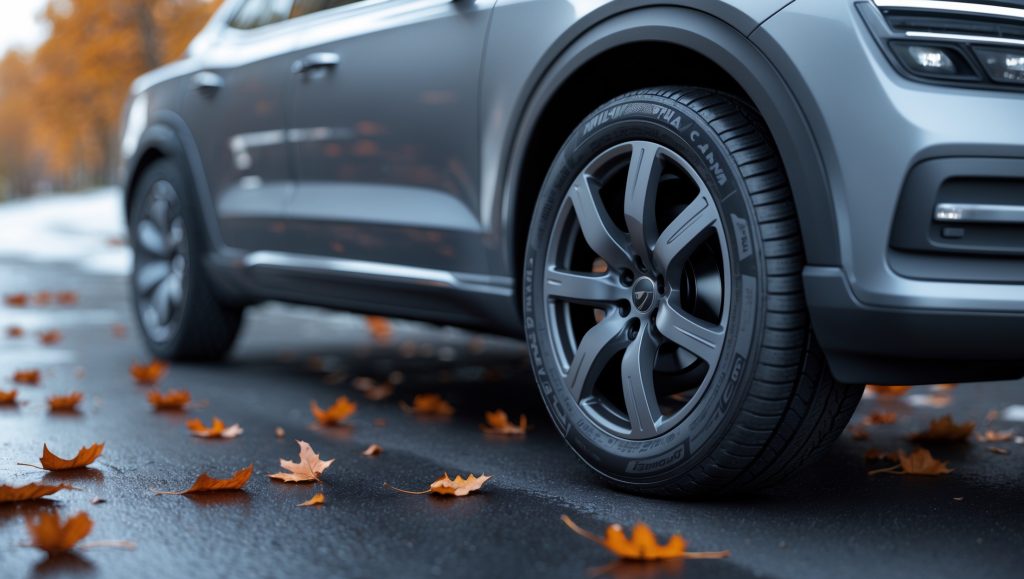
Overview
The Michelin CrossClimate2 is a premium all-season tyre designed for drivers who demand year-round performance, safety, and comfort. Ideal for compact and midsize cars—including popular models like the Honda Civic, Toyota Corolla, Volkswagen Golf, and Mazda3—this tyre is particularly well-suited for those living in regions with unpredictable weather. Its unique focus is on providing reliable dry and wet grip, confident light snow traction, and a smooth, quiet ride. For drivers who want to avoid the hassle of seasonal tyre swaps but still need genuine winter capability, the CrossClimate2 stands out as a leader in its segment.
Key Specs
| Type | All-Season (3PMSF-certified) |
| Available Sizes Range | 16″–20″ rim diameters; widths from 185mm to 255mm |
| Speed Rating Examples | H (130 mph), V (149 mph) |
| Load Index Examples | 91 (615 kg), 94 (670 kg) |
| Tread Pattern | Directional V-shaped with deep, full-depth sipes |
| Technology Highlights | Thermal adaptive tread compound, 3PMSF (Three-Peak Mountain Snowflake) certified, P-edge technology for snow grip |
Performance: Dry
The CrossClimate2 delivers impressive stability and grip on dry roads, close to the best summer touring tyres in its class. Steering response is precise and reassuring, with a linear feel that gives drivers confidence during cornering and lane changes. Braking distances remain short, and the tyre resists understeer well, even during spirited driving in everyday conditions. While ultimate dry grip for aggressive driving doesn’t quite match dedicated ultra-high performance summer tyres, the CrossClimate2’s balanced approach makes it a strong choice for daily drivers who prioritize safety and all-weather capability without sacrificing much dry performance.
Performance: Wet
Wet weather is where the CrossClimate2 truly shines. Its V-shaped tread and extensive siping efficiently channel water away, minimizing the risk of hydroplaning. Drivers report consistently high levels of traction during rainstorms, with predictable handling and short stopping distances on both damp and fully wet surfaces. In independent tests, the CrossClimate2 often matches or outperforms many all-season rivals in wet braking and cornering. The tyre inspires confidence in sudden downpours, making it a top pick for regions with frequent rain. The only slight caveat: on standing water at highway speeds, outright aquaplaning resistance is excellent but not quite at the level of some dedicated rain-focused tyres.
Performance: Snow & Ice
Unlike many all-season tyres that struggle in winter, the CrossClimate2 is one of the few with the 3PMSF (Three-Peak Mountain Snowflake) certification, meaning it meets a minimum standard for snow traction. In light to moderate snow, the tyre provides secure starts, confident braking, and stable handling. The V-shaped tread blocks bite into loose snow, and the rubber compound remains flexible at low temperatures. For icy roads, performance is above the average all-season but still a notch below full winter tyres—expect longer stopping distances and less grip on polished ice. If you live in an area with frequent, heavy snow or prolonged icy conditions, a dedicated winter tyre remains the safer bet. But for occasional snow and slush, the CrossClimate2 is among the best all-seasons available in the US today.
Comfort & Noise
Michelin has engineered the CrossClimate2 to deliver a refined, comfortable ride. On typical road surfaces, the tyre absorbs bumps and imperfections well, resulting in a smooth, composed feel inside the cabin. Road noise is impressively subdued for an all-season tyre, thanks to variable pitch tread blocks and a well-designed carcass. Even at highway speeds, there’s only a mild hum—noticeably quieter than many rivals. Some drivers may detect a slight increase in noise over rough concrete or as the tyre wears, but overall, comfort and acoustic refinement are clear strengths.
Durability & Economy
Wear resistance is another standout trait of the CrossClimate2. Michelin backs the tyre with a 60,000-mile limited treadwear warranty, reflecting its robust tread life. Many users report reaching well over 50,000 miles with even wear patterns when properly maintained. The tread compound is designed to resist heat and abrasion, making it suitable for mixed urban and highway use. In the US, the CrossClimate2 typically carries a UTQG rating of 640 B A (205/55 R16), indicating excellent treadwear, solid traction, and average temperature resistance for the class.
Rolling resistance is on par with other premium all-season tyres, providing reasonable fuel economy. While not the lowest rolling resistance in the segment, any difference in MPG is minor for most drivers. The focus here is on balanced performance rather than maximizing efficiency above all else.
Sizes & Alternatives
The Michelin CrossClimate2 is available in a vast range of sizes, including two of the most popular for compact and midsize cars:
- 205/55 R16
- 215/55 R16
Other common sizes include 195/65 R15, 225/50 R17, and 225/60 R18, making it suitable for many sedans, hatchbacks, and crossovers. If you’re considering alternatives, here are several key competitors in the US all-season segment:
- Goodyear Assurance WeatherReady
- Continental PureContact LS
- Vredestein Quatrac Pro
- Bridgestone WeatherPeak
- Pirelli Cinturato All Season SF2
Each of these rivals has its own strengths, but few match the CrossClimate2’s blend of dry, wet, and snow capability with comfort and tread life.
Pros & Cons
Pros
- Outstanding wet and dry grip for an all-season tyre
- Confident light snow performance (3PMSF-certified)
- Quiet, comfortable ride
- Long tread life with 60,000-mile warranty
- Wide size availability for compact and midsize cars
Cons
- Slightly higher price point than many rivals
- Ice performance below full winter tyres
- Not as sporty as dedicated summer UHP tyres
- Rolling resistance is average, not exceptional
- Limited off-road capability
Verdict
The Michelin CrossClimate2 is a standout choice for US drivers seeking a true all-season tyre that doesn’t compromise on safety or comfort. Its unique combination of wet and dry grip, genuine snow performance, and long-lasting tread makes it exceptionally versatile for both everyday commuting and unpredictable weather. While it commands a premium price, the value is clear in its durability, low noise, and all-weather confidence. It’s especially recommended for those who experience occasional winter conditions but don’t want to switch to dedicated snow tyres.
Enthusiasts seeking maximum dry grip or drivers in areas with frequent, severe winter weather may still prefer specialized tyres. For the vast majority of compact and midsize car owners, however, the CrossClimate2 is one of the strongest all-season options in the 205/55 R16 and 215/55 R16 sizes. If you value year-round safety and a refined ride, it’s well worth your consideration.
The article mentions the 3PMSF certification and P-edge technology for snow grip. How does the CrossClimate2 handle icy conditions compared to a dedicated winter tire in the 205/55 R16 size?
The CrossClimate2 performs well on light snow and cold roads, thanks to its 3PMSF certification and P-edge technology. However, on pure ice, a dedicated winter tire in 205/55 R16 still offers better grip, control, and braking. If you frequently drive on icy roads, winter tires are the safer choice, but for occasional snow and mostly dry or wet conditions, the CrossClimate2 is a strong all-season option.
Is the CrossClimate2 noticeably better for wet traction than something like the Continental TrueContact, especially in downpours? I’m trying to decide between the two for my Toyota Corolla.
The CrossClimate2 stands out for its wet traction, especially during heavy rain, thanks to its unique tread design and compound. While the Continental TrueContact performs well in wet conditions, many drivers notice the CrossClimate2 provides more confidence and shorter stopping distances in downpours. For frequent wet weather driving, the CrossClimate2 is often the preferred choice.
I noticed the CrossClimate2 is 3PMSF-certified—does that mean I can skip switching to winter tires completely in the Midwest, or are there situations where you’d still recommend swapping seasonally?
The CrossClimate2’s 3PMSF certification means it’s capable in winter conditions, including snow, so many Midwest drivers use it year-round. However, if you frequently drive in areas with deep snow, ice, or very harsh winters, dedicated winter tires will still offer the best traction and safety. For moderate Midwest winters, the CrossClimate2 is usually sufficient.
Is there a significant price difference between the CrossClimate2 and other 3PMSF-certified all-seasons in the same 205/55 R16 size? I’m trying to figure out the most cost-effective choice for my small fleet.
The CrossClimate2 often comes at a premium compared to other 3PMSF-certified all-season tires in the 205/55 R16 size. Typically, you’ll find a difference of $20–$40 per tire. Some alternatives may offer decent performance at a lower price point, but the CrossClimate2 stands out for durability and overall performance, which could influence long-term fleet costs.
I noticed the 3PMSF rating and P-edge technology—how do these features impact real-world safety for employees using their own cars for business errands?
The 3PMSF (Three-Peak Mountain Snowflake) rating means the CrossClimate2 performs reliably in severe winter conditions, not just light snow. The P-edge technology improves grip on slippery roads. For employees using their own vehicles, these features help ensure safer driving in varied weather, reducing the risk of accidents during business errands.
Can you share any insights on the tread life of the CrossClimate2 for someone who drives mostly on highways with a 205/55 R16 setup?
For mostly highway driving with a 205/55 R16 setup, the Michelin CrossClimate2 tends to offer excellent tread life. Many users report getting close to or even exceeding the 60,000-mile warranty, thanks to the tire’s durable compound and even wear characteristics on highways. Regular rotation and proper inflation will help you maximize its longevity.
For a small business with a fleet of compact cars, does the tire’s 3PMSF certification meet the winter tire regulations in northern states, or would we still need chains in some areas?
The Michelin CrossClimate2’s 3PMSF certification means it meets winter tire regulations in most northern states. However, in certain areas or during severe conditions, local laws may still require tire chains regardless of the tire type. It’s best to check the specific regulations for each state where your fleet operates.
Is the CrossClimate2 noticeably quieter than typical all-season tyres when driving on highways, especially in a Honda Civic or Toyota Corolla?
The Michelin CrossClimate2 is generally quieter than many standard all-season tyres, especially at highway speeds. Many drivers of Honda Civics and Toyota Corollas report a noticeable reduction in road noise, making for a more comfortable ride. While some noise is still present, the CrossClimate2 tends to dampen harsh sounds better than typical all-seasons.
You mention that the CrossClimate2 offers short braking distances and resists understeer well. Has anyone noticed if this remains true as the tire approaches the end of its tread life?
Drivers have generally reported that the CrossClimate2 maintains good braking performance and predictable handling even as tread wears down. Some users noticed a slight reduction in wet grip near the very end of tread life, but overall, the tire remains consistent until it gets close to needing replacement.
Is there a noticeable difference in road noise with the CrossClimate2 compared to other all-season tires? I have a Honda Civic and do a lot of highway driving.
The Michelin CrossClimate2 is known for being quieter than many other all-season tires, especially at highway speeds. Many users find road noise to be minimal, which should make your Honda Civic rides smoother and more comfortable during long drives.
Is there a noticeable difference in road noise or ride comfort when moving from a standard all-season to the CrossClimate2, especially during highway driving?
Drivers often report that the CrossClimate2 is noticeably quieter than many standard all-season tires, particularly at highway speeds. Ride comfort is also generally improved, thanks to the tire’s advanced tread design which helps absorb road imperfections. You should find both less road noise and a smoother ride compared to typical all-seasons.
Could you elaborate on how the P-edge technology specifically improves snow grip compared to other all-season tires that are also 3PMSF-certified?
P-edge technology in the CrossClimate2 uses a unique, saw-tooth tread edge design that cuts into snow more effectively than standard straight-edge treads. This helps the tire create additional biting edges, improving traction and grip on snowy surfaces beyond what many other 3PMSF-certified all-season tires achieve. The enhanced snow-to-tread contact increases stability and shortens stopping distances in winter conditions.
Is the 3PMSF certification on these tyres enough for safe winter driving in regions with moderate snowfall, or should I still consider switching to full winter tyres in harsher conditions?
The 3PMSF certification on the CrossClimate2 means they’re suitable for moderate winter conditions and should handle occasional snow well. However, if you regularly face harsher winters with heavy snow and ice, switching to dedicated winter tyres will give you better traction and safety.
For someone driving mostly city miles with occasional highway trips in rainy conditions, do you think the CrossClimate2’s wet grip and quiet ride are noticeably better than other all-seasons in the 205/55 R16 range?
For city and occasional highway driving in the rain, the CrossClimate2 stands out for its excellent wet grip—many users report it brakes and handles better than most other all-season tires in this size. It’s also praised for being quieter on the road, so you should notice a real improvement in both grip and ride comfort compared to many alternatives.
The directional V-shaped tread pattern sounds interesting. Is there anything special I need to know about rotating these tyres to get the longest service life?
With the directional V-shaped tread on the CrossClimate2, tyres should only be rotated front to back on the same side of the car, not crossed from left to right. This keeps the tread facing the correct direction for optimal performance and wear. Always check the rotation arrows on the sidewall when your tyres are being rotated.
I see the CrossClimate2 is 3PMSF certified for light snow, but does it meet winter tire requirements for states like Colorado or Vermont, or would I still need separate winter tires for business travel?
The CrossClimate2 is 3PMSF certified, which means it is legally acceptable as a winter tire on most Colorado and Vermont roads during winter tire restriction periods. However, if you frequently drive in severe winter conditions or mountainous areas, dedicated winter tires may still offer better traction and safety.
How does the CrossClimate2 handle after several winters in areas with frequent snow and ice? Do you notice any change in snow traction or tread performance over time?
After several winters in snowy and icy areas, the CrossClimate2 typically maintains good performance, but some gradual loss in snow traction is normal as the tread wears down. Most drivers report reliable grip for two to three winters, after which snow performance may decline noticeably, especially if the tread depth approaches 4 mm or less. Regularly checking tread depth can help ensure continued safety.
I noticed the CrossClimate2 is available in different speed and load ratings. Is there a big price jump between the 91 and 94 load index for a 205/55 R16 tire?
For the 205/55 R16 size, the Michelin CrossClimate2 with a 94 load index (XL) usually costs only a little more than the 91 load index version. The price difference is generally modest—often just a few dollars per tire—but this can vary by retailer and promotions.
For drivers in regions with unpredictable weather, how does the CrossClimate2 handle quick temperature changes, especially during the transition between fall and winter?
The CrossClimate2 is designed to maintain reliable grip and performance even as temperatures fluctuate rapidly, such as when moving from fall into winter. Its tread compound remains flexible in cold snaps, ensuring good traction and braking, while also resisting excessive wear if temperatures temporarily rise. This makes it a solid choice for areas with unpredictable seasonal shifts.
I’m considering these for my VW Golf, but is there a noticeable difference in dry performance versus regular summer tires during spirited driving?
The CrossClimate2 offers impressive dry grip for an all-season tire and feels stable in most situations. However, if you enjoy spirited driving, you might notice less sharpness and ultimate grip compared to dedicated summer tires, especially during aggressive cornering. For everyday driving, the difference is minor, but for high-performance scenarios, summer tires will still outperform.
What kind of road noise can I expect compared to something like the Continental PureContact LS in the same 205/55 R16 size?
The Michelin CrossClimate2 is generally quite quiet for an all-season tire, but the Continental PureContact LS tends to be even quieter in most reviews. Expect the CrossClimate2 to have a bit more noticeable road noise on certain surfaces, but it should still offer a comfortable ride for daily driving.
Does the thermal adaptive tread compound affect the tire’s tread life or wear pattern if used year-round in areas with hot summers?
The thermal adaptive tread compound is designed to perform well in both hot and cold conditions, maintaining flexibility and grip. Using the tire year-round, even in areas with hot summers, should not negatively impact tread life or cause uneven wear as long as you maintain proper tire pressure and alignment. The compound is engineered for durability across all seasons.
With a speed rating up to V, is there any impact on tread longevity or wet traction for drivers who regularly travel at higher highway speeds?
Driving regularly at higher highway speeds can slightly reduce tread longevity, as heat and friction increase with speed. However, the CrossClimate2’s V speed rating means it’s designed to handle these conditions safely without a significant loss in wet traction. Just be sure to maintain proper tire pressure and alignments for the best performance and wear.
If I typically run dedicated winter tires but want to switch to these for convenience, is there any major drop-off in snow braking or acceleration versus a true winter tire?
You will notice some drop-off in snow braking and acceleration compared to dedicated winter tires. The CrossClimate2 performs better than most all-season options in winter, but true winter tires still offer superior grip and stopping power on snow and ice, especially in extreme conditions. For milder winters, though, the difference may be less noticeable.
For someone who drives fewer than 10,000 miles a year mostly in the city, would the CrossClimate2’s higher price be worth it, or are there better budget-friendly alternatives?
If most of your driving is in the city and under 10,000 miles a year, you might not need all the premium features of the CrossClimate2. While it’s excellent for safety and all-weather grip, there are more budget-friendly all-season tires that should meet your needs well for everyday urban driving.
Could you clarify if the 205/55 R16 size has the same tread depth and features as the larger sizes, or are there any compromises for compact cars?
The 205/55 R16 CrossClimate2 offers the same tread pattern and key features as larger sizes, including the advanced rubber compound and V-shaped tread. Tread depth is very similar across sizes, with only minor variations due to manufacturing. There are no significant compromises for compact cars, so you get the same all-season performance and safety benefits.
Does the directional V-shaped tread pattern make tire rotation more complicated or expensive over time compared to a non-directional pattern?
The V-shaped directional tread means you can only rotate the CrossClimate2 tires front-to-back on the same side, not side-to-side. This slightly limits your rotation options compared to non-directional tires, but it doesn’t make the process more complicated or expensive—your installer will simply follow the correct pattern for directional tires.
For a 205/55 R16 driver on a budget, do you think the advanced technologies in the CrossClimate2 justify its higher price compared to standard all-seasons without the 3PMSF rating?
If you drive in regions with snow or unpredictable weather, the CrossClimate2’s advanced tech and 3PMSF winter rating can offer safer year-round performance, which justifies the higher cost for many. However, if you rarely face snow or harsh conditions, a standard all-season tire may be more budget-friendly and still suitable for your needs.
Is the CrossClimate2 noticeably quieter on city streets compared to other all-seasons in this price range? Noise levels are important for me since I often make calls from my vehicle between jobs.
The CrossClimate2 is considered quieter than many other all-season tires in its price range, especially on city streets. Users report reduced road noise, which should help with call clarity during your drives. While no tire is completely silent, many find the CrossClimate2’s noise levels pleasantly low for daily commuting and work calls.
For someone on a tighter budget, are there alternative all-season options in 205/55 R16 that offer similar winter traction but might cost less than the Michelin CrossClimate2?
If you’re looking for a more budget-friendly all-season tire in 205/55 R16 with good winter traction, consider options like the Goodyear Vector 4Seasons Gen-3, Continental AllSeasonContact, or Uniroyal AllSeasonExpert 2. While they may not quite match the Michelin in every aspect, they generally offer solid winter grip and a lower price point.
Is the CrossClimate2 noticeably more expensive than other all-season tires for compact cars, or does its performance justify the price for a college student on a budget?
The CrossClimate2 does tend to cost more than many standard all-season tires for compact cars. However, its strong performance in wet and winter conditions, longer tread life, and safety features might mean fewer replacements and better reliability. If you often deal with varied weather and want a tire that can handle almost anything, the extra cost could be worthwhile in the long run.
You mention the 3PMSF certification—does that mean these tires are legal to use on mountain passes that require snow-rated tires in winter?
Yes, the 3PMSF (Three-Peak Mountain Snowflake) certification means the Michelin CrossClimate2 meets the legal requirements for snow-rated tires on mountain passes where such certification is mandated in winter. You should be able to use them legally in those conditions unless specific local rules state otherwise.
I have a 2017 Honda Civic with the 205/55 R16 tire size listed here, but I don’t do much winter driving. Would these offer a noticeably quieter ride than standard all-seasons?
The Michelin CrossClimate2 is designed for a quieter and smoother ride compared to many standard all-season tires, thanks to its advanced tread design and rubber compounds. Even if you don’t drive much in winter, you should notice reduced road noise and improved comfort on your 2017 Honda Civic with these tires.
You note the CrossClimate2 offers a quiet and comfortable ride. Is there any noticeable difference in road noise or ride quality between this tire and other popular all-season options in the 205/55 R16 size?
Yes, the CrossClimate2 stands out for its quietness and overall ride comfort compared to many standard all-season tires in the 205/55 R16 size. Users often report less road noise and a smoother feel, especially on rougher surfaces. While some premium all-season tires might come close, the CrossClimate2 generally offers a more refined driving experience.
You mention the CrossClimate2 performs well on both dry and wet roads. How does its tread wear compare to other all-season options, especially for someone driving mostly highway miles?
The CrossClimate2 generally has excellent tread wear, with many drivers reporting longevity comparable to or better than other premium all-season tires. For mostly highway driving, you’ll likely see even longer life due to consistent speeds and fewer sharp turns. Compared to other all-season options, it stands out for maintaining performance as it wears, making it a strong choice for high-mileage users.
I see the CrossClimate2 is available with different speed and load ratings for 205/55 R16. For daily city and highway driving, is it worth paying extra for a higher speed rating?
For typical daily city and highway driving, a standard speed rating like H (up to 130 mph) is sufficient and safe. Paying extra for a higher speed rating, such as V, usually isn’t necessary unless you frequently drive at very high speeds. Higher speed ratings can slightly improve handling, but for most drivers, the difference isn’t noticeable in everyday use.
Is the 3PMSF certification enough to meet legal winter tire requirements in states like Colorado or Vermont, or would I still need dedicated winter tires?
The 3PMSF (Three-Peak Mountain Snowflake) certification on the Michelin CrossClimate2 is recognized in states like Colorado and Vermont as meeting legal winter tire requirements. You would not be required to use dedicated winter tires, but for severe winter conditions, dedicated winter tires may still offer better traction and safety.
Is the CrossClimate2 a good value for the price compared to other premium all-seasons for the 205/55 R16 size, or are there more budget-friendly options that offer similar performance?
The Michelin CrossClimate2 is priced at the higher end, but it stands out for its strong wet and dry performance, winter capability, and long tread life. While there are more budget-friendly all-season options, they usually don’t match its all-weather versatility and durability. If top-tier performance and safety are priorities, the CrossClimate2 is a solid value. For basic commuting, a mid-range tire may suffice.
I noticed the tread pattern is V-shaped with deep sipes. Will this design cause any extra road noise compared to standard all-season tires? I’m a bit sensitive to cabin noise on longer drives.
The V-shaped tread and deep sipes on the Michelin CrossClimate2 are designed for improved grip and water evacuation, but they do tend to generate a bit more road noise than some traditional all-season patterns. However, many users and tests report that the noise level is still quite moderate and generally not bothersome, even for those sensitive to cabin noise.
Can you clarify if the CrossClimate2 maintains its wet and snow grip even after, say, 15,000 to 20,000 miles, or does performance drop off significantly with wear?
The CrossClimate2 generally maintains strong wet and snow grip even after 15,000 to 20,000 miles, thanks to its advanced tread compounds and design. However, like all tires, there will be some gradual reduction in performance as the tread wears down, but users and tests report that it remains noticeably above average compared to many all-season competitors.
I live somewhere that only sees a couple of light snowfalls each winter. Would these be overkill, or is there another Michelin tire that might be a better fit for mostly dry conditions?
The CrossClimate2 performs very well in dry conditions and offers extra peace of mind for occasional snow, so it’s not overkill for your climate. If you want a tire that’s more focused on dry and mild weather, you could also consider the Michelin Primacy or Energy Saver lines, which are optimized for dry grip and fuel efficiency.
Is there any noticeable difference in ride comfort or road noise when switching from standard all-season tires to these on a compact car like the Mazda3?
When switching to the Michelin CrossClimate2 on a compact car like the Mazda3, most drivers report a slight improvement in ride comfort and a noticeably quieter cabin compared to many standard all-season tires. The tread design helps reduce road noise, and the tire absorbs bumps well, making daily driving smoother and more pleasant.
Could you elaborate on how the load index differences, like 91 versus 94, might impact comfort or handling for compact cars running these tires?
A higher load index like 94 means the tire can carry more weight compared to a 91, but it often comes with a slightly stiffer sidewall. For compact cars, this can translate to firmer handling and potentially a less cushioned ride. A 91-rated tire may offer a bit more comfort, while a 94 might provide better support if the car is heavily loaded.
If I mainly drive a Toyota Corolla in a region with unpredictable weather, would these tyres eliminate the need to keep separate sets for winter and summer?
The Michelin CrossClimate2 tyres are designed for year-round use, performing well in both summer and winter conditions, including light snow. For most Corolla drivers in areas with unpredictable weather, these tyres can effectively replace the need for separate summer and winter sets, simplifying your tyre management.
I drive a Mazda3 in the Northeast—do these hold up well after a couple of harsh winters, or does the winter performance drop off quickly?
The Michelin CrossClimate2 maintains strong winter performance over several seasons, even in harsh Northeast conditions. Drivers report they handle snow and ice reliably for at least two to three winters before any noticeable drop-off. Regular rotation and proper tire care will also help preserve their grip and performance.
Does the V-shaped tread design impact tire longevity or uneven wear patterns over time for people who do a lot of city driving?
The V-shaped tread on the CrossClimate2 is designed to promote even pressure distribution and efficient water evacuation, which can help reduce uneven wear patterns. For city driving, this means you should see good longevity, provided you keep up with regular tire rotations and maintain proper air pressure.
For drivers who see mostly wet and dry conditions but only occasional light snow, would you still recommend the CrossClimate2 over a traditional all-season tire without 3PMSF certification?
Yes, the CrossClimate2 is a strong choice even for areas with mostly wet and dry conditions and only occasional light snow. Its wet and dry grip is excellent, and the 3PMSF rating adds extra confidence if you do encounter snow. Compared to a traditional all-season without 3PMSF, you’ll likely notice better traction in unexpected wintry conditions without sacrificing everyday performance.
If I drive mostly in dry and rainy conditions with only occasional light snow, would the CrossClimate2 be overkill or worth it for long-term reliability?
The CrossClimate2 is actually well-suited to your needs. Its performance shines on both dry and wet roads, offering strong grip and braking, while the occasional light snow capability is a useful bonus. Its long tread life also means you won’t be replacing tires as often, making it a solid long-term choice, not overkill.
How does the CrossClimate2 handle sharp potholes or rough roads often found in Midwest cities? Is the sidewall stiff enough to prevent damage, considering it’s a premium tire?
The CrossClimate2 features a reinforced sidewall that balances ride comfort and durability, offering good protection against typical potholes and rough city roads. While no tire can guarantee absolute immunity to sidewall damage, its premium construction makes it more resilient than many standard all-season tires in this size.
Is the directional V-shaped tread pattern more prone to uneven wear, or does it stay quiet and comfortable as the tire ages?
The V-shaped directional tread on the CrossClimate2 is designed for even pressure distribution, which helps resist uneven wear over time. It also helps keep the tire quiet and comfortable as it ages, so drivers typically experience consistent performance throughout the tire’s lifespan if it’s rotated regularly and kept properly inflated.
I like the idea of not having to do seasonal tire changes, but are there any drawbacks to using the CrossClimate2 year-round in areas with hot summers and cold winters?
The CrossClimate2 handles year-round conditions well, but there are some trade-offs. In very hot summers, its tread might wear faster compared to summer-specific tires. In extremely harsh winters, it performs better than most all-seasons but still isn’t a full winter tire. For moderate climates, the convenience usually outweighs these minor drawbacks.
With the range of available load indexes and speed ratings, is there any notable difference in performance or road noise between the H and V rated versions?
Between the H and V rated versions of the Michelin CrossClimate2 in 205/55 R16, you likely won’t notice a significant difference in road noise or everyday performance. The V rating is designed for higher speeds, but both versions use similar tread patterns and compounds, so comfort and noise levels remain comparable for most drivers.
You mention these are great for light snow, but how would they compare to a dedicated winter tire in harsh Northeast winters?
While the Michelin CrossClimate2 performs very well in light snow and cold temperatures, a dedicated winter tire will provide noticeably better traction, braking, and control in harsh Northeast winter conditions, especially on ice or deep snow. If you regularly face heavy snowfall or icy roads, winter tires are the safer choice for peak winter performance.
For drivers dealing with occasional, but not extreme, snow, is the P-edge technology effective enough or would you still recommend separate winter tires?
The P-edge technology in the Michelin CrossClimate2 does provide improved snow grip for occasional winter conditions, so it should be sufficient if you only encounter light or moderate snow. However, if you expect frequent or severe winter weather, dedicated winter tires are still the safer choice for maximum traction and control.
For a 205/55 R16 size, do these tyres impact fuel efficiency compared to standard all-seasons on a Toyota Corolla?
The Michelin CrossClimate2 in 205/55 R16 size is designed for low rolling resistance, which can positively affect fuel efficiency. Compared to many standard all-season tyres, you should notice similar or slightly improved fuel economy on your Toyota Corolla. Actual results may vary depending on driving habits and conditions, but overall, these tyres are not known to decrease fuel efficiency.
How does the Michelin CrossClimate2 compare in ride comfort and noise levels to other all-season options in the 205/55 R16 size, especially for longer highway drives?
The Michelin CrossClimate2 stands out for its ride comfort and low noise levels in the 205/55 R16 size. Many drivers report a smooth, quiet experience, especially on highways, with less road noise than most other all-season options. If long-distance comfort is a priority, the CrossClimate2 tends to outperform typical all-seasons in this regard.
The article mentions impressive wet grip, but do these tires lose that performance as the tread wears down, or do they maintain most of their safety features over time?
The Michelin CrossClimate2 is designed to maintain good wet grip throughout its lifespan, thanks to its advanced tread compounds and pattern. However, like all tires, some reduction in wet performance can occur as the tread wears down. That said, these tires are engineered to retain most of their safety features even as they age.
If my teenager is a new driver using a Toyota Corolla, would you recommend the CrossClimate2 for added confidence in wet and snowy conditions?
The CrossClimate2 is a great choice for a new driver in a Toyota Corolla. Its strong grip in wet and snowy conditions can provide extra safety and reassurance, especially for someone still building driving experience. It also handles well in dry weather, making it a reliable all-season option for peace of mind year-round.
How does the road noise level on the CrossClimate2 compare to other all-season tires? I want something quiet for long highway drives.
The Michelin CrossClimate2 is generally quieter than many other all-season tires in its class. It uses a tread design that helps reduce road noise, which makes it a good choice if you want comfort on long highway drives. While no tire is completely silent, most owners notice a smooth and quiet ride compared to budget all-season options.
The article mentions a strong wet grip, but are there any trade-offs in terms of fuel efficiency with the V-shaped tread and full-depth sipes design on these tires?
The V-shaped tread and full-depth sipes on the Michelin CrossClimate2 do enhance wet grip and all-season performance. However, these features can create slightly higher rolling resistance compared to some dedicated low-rolling-resistance tires, which may result in a minor reduction in fuel efficiency. Most drivers find the trade-off worthwhile for the added safety and versatility.
Does the directional V-shaped tread mean I have to rotate these tires differently compared to typical all-season tires? I’m new to tire maintenance.
Yes, the directional V-shaped tread on the CrossClimate2 means the tires must always rotate in one direction. When rotating, swap fronts to rears on the same side only—don’t cross sides. This keeps the tread facing the right way for water evacuation and performance.
I notice the CrossClimate2 is 3PMSF-certified, but how does it handle icy conditions versus just wet or snowy roads? Is the snow grip mainly for light dustings or heavier accumulations too?
The CrossClimate2’s 3PMSF certification means it’s built for real winter conditions—not just light dustings. While it handles wet and snowy roads very well, its winter compound and tread design also offer decent grip on icy surfaces. However, like most all-season tires, it won’t match the traction of dedicated winter tires on heavy ice, but it’s capable in both moderate and heavier snow.
Does the thermal adaptive tread compound affect the expected lifespan or warranty of the tyre? My business needs tyres that can last through high annual mileage.
The thermal adaptive tread compound in the CrossClimate2 is actually designed to enhance durability, helping the tyre handle temperature changes while maintaining consistent performance. This technology supports a long tread life, and Michelin backs the CrossClimate2 with a treadwear warranty (typically around 60,000 miles, but check your region’s specifics). It’s a strong choice for businesses with high mileage needs.
Could you elaborate on how the thermal adaptive tread compound actually performs in extreme summer heat? Do you see any impact on grip or tread life in those conditions?
The thermal adaptive tread compound in the CrossClimate2 is designed to maintain flexibility and grip even in very hot summer conditions. In practice, drivers have reported secure traction and stable handling during extreme heat. Additionally, the compound resists rapid wear, so tread life remains consistent and reliable, even with regular summer driving.
How does the CrossClimate2 handle icy conditions compared to its performance in light snow, since it’s 3PMSF certified but not a true winter tire?
The CrossClimate2 performs well in light snow thanks to its 3PMSF certification, offering reliable grip and braking. However, on icy surfaces, its traction is more limited compared to dedicated winter tires. While it’s safer than typical all-seasons on ice, for frequent or severe icy conditions, a true winter tire would deliver better control and safety.
Does switching to the CrossClimate2 usually require any changes in wheel alignment or tire pressure settings compared to standard all-seasons, especially when running them through multiple weather changes?
Switching to the CrossClimate2 typically doesn’t require special wheel alignment or different tire pressure settings compared to standard all-seasons. It’s always best to follow your vehicle manufacturer’s recommended tire pressure and check it regularly, especially as temperatures change. If you notice uneven tire wear or handling issues, a wheel alignment check is a good idea.
For a 205/55 R16 tire, do you have any data or feedback about average mileage lifespan before replacement, especially for drivers who cover a lot of highway miles?
For the Michelin CrossClimate2 in 205/55 R16, most users report an average lifespan of 50,000 to 60,000 miles, with some reaching closer to 70,000 miles when primarily driving on highways. Actual results will vary based on driving habits, tire maintenance, and road conditions, but high-mileage drivers tend to see longer tread life with regular rotation and proper inflation.
Is there any noticeable difference in fuel economy when switching to these tires from a standard touring all-season, given their thermal adaptive tread compound?
The Michelin CrossClimate2’s thermal adaptive tread compound is designed for improved traction in varying temperatures, but in most cases, the difference in fuel economy compared to a standard touring all-season tire is minimal. Some drivers may notice a slight decrease in efficiency due to the tire’s enhanced grip, but it’s generally not significant for everyday use.
Does the directional V-shaped tread have any impact on road noise over time, especially as the tire wears down?
The directional V-shaped tread on the CrossClimate2 is designed to reduce road noise and maintain performance as the tire wears. However, like most tires, some increase in noise may occur as the tread depth decreases, but the design helps keep this to a minimum compared to non-directional tread patterns.
I noticed the article mentions 3PMSF certification and P-edge technology for snow grip. For customers in unpredictable weather zones, how do these features impact long-term traction and safety, especially after 20,000 miles?
The 3PMSF certification ensures the CrossClimate2 meets winter traction standards, which is especially reassuring in areas with unpredictable weather. The P-edge technology maintains effective snow grip, even as the tire wears. After 20,000 miles, most users still report dependable traction and safety, though it’s wise to monitor tread depth regularly to ensure optimal performance.
With the range of available sizes, are there particular speed or load ratings you’d recommend for a Mazda3 hatchback that’s often fully loaded?
For a Mazda3 hatchback that’s often fully loaded, it’s best to choose CrossClimate2 tires with at least a 91V rating. The ’91’ load index ensures the tire can handle the car plus extra cargo or passengers, and the ‘V’ speed rating provides a good balance between performance and capability. Always double-check your vehicle’s manual for any specific recommendations.
For someone on a tighter budget, do you think the premium features in the CrossClimate2 are worth the extra cost over more basic all-season tires, especially for a 205/55 R16 daily driver?
If you value strong wet and snow performance, long tread life, and a quiet ride, the CrossClimate2 can justify its higher price, especially for daily use. However, if your driving is mostly in mild weather and you prioritize savings, a reputable but more basic all-season tire could serve well for a 205/55 R16. It really depends on your priorities and local climate.
Given the speed rating of H and V, would it be a problem if I occasionally drive above 100 mph on long highway trips?
The H speed rating supports up to 130 mph, while V supports up to 149 mph. If your tire has an H rating, occasionally exceeding 100 mph is within its limit, but prolonged high speeds can affect tire lifespan and safety. Always ensure your tires are properly inflated and in good condition before high-speed journeys.
The article mentions P-edge technology for snow grip. Can you explain how this works and if it makes a big difference for people who see only occasional snow each year?
P-edge technology in the Michelin CrossClimate2 involves specially designed tread edges that help grip snow more effectively. For drivers who only encounter snow a few times a year, this tech can provide extra confidence and safer handling during those rare snowy days, though it’s not a full substitute for dedicated winter tires in areas with frequent or heavy snow.
How does the CrossClimate2 perform in heavier snow or icy conditions compared to a dedicated winter tire, since it’s only 3PMSF-certified for light snow?
The CrossClimate2 offers good traction and control in light to moderate snow, thanks to its 3PMSF rating. However, in heavier snow or on icy roads, a dedicated winter tire will provide significantly better grip, braking, and handling. If you regularly drive in harsh winter conditions, a true winter tire is the safer choice.
How does the road noise of the CrossClimate2 in real-world use compare to other all-seasons like the Continental TrueContact Tour, especially on highways?
The CrossClimate2 is generally quieter than many all-season tires and offers good comfort at highway speeds. Compared to the Continental TrueContact Tour, both are well rated for low road noise, but some users report the CrossClimate2 can be just a touch louder on certain road surfaces. Overall, both perform well in terms of noise, with only minor differences noticeable to most drivers.
For drivers in areas with frequent icy mornings but not a lot of deep snow, would you recommend these over a dedicated winter tire, or is there still a trade-off with ice traction?
The CrossClimate2 delivers impressive traction on cold, icy mornings compared to most all-season tires, making it a strong option for mild winter climates. However, dedicated winter tires still provide superior grip and safety on ice. If you regularly face icy roads, especially untreated ones, winter tires remain the best choice, but for mostly dry or lightly icy conditions, the CrossClimate2 could be a practical compromise.
If I mostly drive in areas with mild winters and rarely see any snow, would a different Michelin model be a more cost-effective choice than the CrossClimate2, or is its versatility still worth the investment?
If you rarely encounter snow and mostly drive in mild winter conditions, a Michelin touring all-season tire like the Primacy or Energy Saver could be more cost-effective and provide a smoother, quieter ride. However, the CrossClimate2 remains a great choice if you value extra safety in unpredictable weather, thanks to its superior wet and light snow performance.
For someone using a 205/55 R16 size on a Honda Civic, did you notice any drop in fuel efficiency or changes in road noise after switching to the CrossClimate2?
Drivers switching to CrossClimate2 on a 205/55 R16 Honda Civic generally report little to no noticeable drop in fuel efficiency, as the tire is designed to be quite efficient. Road noise is often mentioned as being very moderate for an all-season tire—some users even find it quieter than their previous set. Overall, most Civic owners are satisfied with the ride and noise levels.
I’m on a bit of a budget—are there any more affordable alternatives that still offer the same kind of wet grip and light snow traction as the CrossClimate2 for 205/55 R16 size?
If you’re looking for more budget-friendly options in 205/55 R16, consider the Goodyear Vector 4Seasons Gen-3 or the Hankook Kinergy 4S2. Both provide good wet grip and decent light snow traction, though the CrossClimate2 still leads in overall performance. Always check local prices, as deals can make a difference.
I noticed the CrossClimate2 has 3PMSF certification. Does this mean it’s fully legal for use during mandatory winter tire periods in places like Quebec?
Yes, the CrossClimate2’s 3PMSF (Three-Peak Mountain Snowflake) certification means it meets the winter tire requirements for places like Quebec during mandatory winter tire periods. This makes it legal for use in those regions when winter tires are required by law.
I drive a lot on highways with my Honda Civic—does this tire stay quiet at higher speeds, or is there noticeable road noise over time?
The Michelin CrossClimate2 is known for its quiet ride, even at highway speeds. Many drivers report that road noise remains minimal over time, making it a good fit for your Honda Civic if you value a calm, comfortable drive during long trips.
Could you explain how the thermal adaptive tread compound actually works in hot versus cold temperatures? Does it impact ride comfort or noise levels?
The thermal adaptive tread compound in the CrossClimate2 is designed to remain flexible in cold weather for better grip, while staying firm enough in heat to prevent excessive wear. This means it adapts to seasonal changes without compromising performance. Importantly, this compound doesn’t negatively affect ride comfort or noise levels—drivers typically report a smooth, quiet ride regardless of temperature.
If I’m planning to keep the same set of tires for at least three years and do about 15,000 miles annually, would the CrossClimate2’s tread life be sufficient, or should I expect to replace them sooner?
Based on your driving habits—about 45,000 miles over three years—the Michelin CrossClimate2 should be a good fit. Its tread life is typically rated around 60,000 miles, so you likely won’t need to replace them before your three-year mark if you maintain proper tire care and rotations.
Is the tread life of the CrossClimate2 similar to Michelin’s other all-season models? As a small business, I need to know how often I’d be replacing these tires on my company car.
The CrossClimate2 is designed to last as long as Michelin’s other all-season tires, with a treadwear warranty of up to 60,000 miles. Many users report similar or even better longevity compared to other Michelin all-season models, so you can expect a reliable lifespan before needing replacements for your company car.
For a Mazda3 mostly used on highways with some spirited driving, does the CrossClimate2 compromise much on handling compared to dedicated summer tires?
The CrossClimate2 delivers strong all-season performance, but compared to dedicated summer tires, there is a trade-off in sharpness and grip during spirited driving, especially in dry conditions. For mostly highway use with occasional sporty driving, the CrossClimate2 offers a good balance, but it won’t match the handling precision of a true summer tire.
What is the typical real-world tread life for these tires when used year-round, especially in regions with frequent temperature swings?
In real-world use, the Michelin CrossClimate2 typically lasts between 40,000 and 55,000 miles when used all year, even in areas with frequent temperature changes. Factors like driving style, road type, and regular maintenance (like rotation and alignment) can affect this, but most drivers report good longevity under varied conditions.
Is the thermal adaptive tread compound prone to getting noisy as the tires age, especially after a couple of Northeast winters?
The CrossClimate2’s thermal adaptive tread compound is designed to maintain flexibility and grip in various temperatures, which helps keep noise levels lower than some all-seasons, even as they age. While any tire may get somewhat noisier over time, user reports suggest the CrossClimate2 remains relatively quiet after a couple of Northeast winters compared to similar all-season options.
I see the CrossClimate2 is 3PMSF-certified—does that make it legal and safe for winter driving in states where chains or true winter tires are usually required?
The CrossClimate2’s 3PMSF certification means it meets the minimum snow traction standards and is legally accepted as a winter tire in many states and provinces. However, in areas with strict chain or studded tire requirements during severe winter conditions, you should still check local regulations, as chains or dedicated winter tires may sometimes be mandatory.
Is the directional V-shaped tread pattern noticeably louder at highway speeds compared to standard all-seasons? I do a lot of long commutes and quietness is a priority for me.
The CrossClimate2’s directional V-shaped tread pattern is designed to balance grip and noise. While V-shaped treads can sometimes be noisier, most users report that the CrossClimate2 is impressively quiet, even at highway speeds. If your current standard all-seasons are particularly quiet, you may notice a slight difference, but it shouldn’t be disruptive for long commutes.
With the V-shaped tread and deep sipes, does road noise become an issue as the tire wears down or does it stay quiet throughout its life?
The CrossClimate2 is engineered to stay relatively quiet even as it wears, thanks to its V-shaped tread pattern and advanced rubber compounds. Some slight increase in road noise is normal as any tire ages, but most drivers report that this model remains quieter than many competitors throughout its lifespan.
Does the CrossClimate2’s 3PMSF certification mean it’s as effective as traditional winter tires in icy conditions, or does it perform better in just light snow?
The CrossClimate2’s 3PMSF certification means it meets a minimum standard for snow traction, making it better than regular all-season tires in winter conditions. However, it’s generally not as effective as dedicated winter tires on icy roads. Its strength is in handling light to moderate snow rather than severe ice or deep snow situations.
I drive a 2018 Honda Civic mostly in the Northeast. Should I expect any noticeable road noise or ride comfort differences if I switch from my current standard all-seasons to these CrossClimate2s?
Switching to the Michelin CrossClimate2 on your 2018 Honda Civic, you may notice a slight improvement in ride comfort thanks to the tire’s flexible sidewalls. Road noise is generally low and should be similar to or quieter than many standard all-seasons. Overall, most drivers in the Northeast find these tires comfortable and well-suited for varied conditions.
The tread is described as V-shaped with deep sipes. Do you find that this design has any impact on road noise or ride comfort over time, especially as the tire wears?
The V-shaped tread with deep sipes helps channel water and maintain traction, which generally keeps road noise moderate at first. Over time, some users have reported a slight increase in noise as the tire wears down, but overall ride comfort remains good. The tread design does a solid job balancing performance and comfort throughout most of the tire’s life.
I drive a Mazda3 mostly in the Midwest with a mix of rain and occasional light snow. Does the CrossClimate2 maintain its wet and snow grip as it wears down, or does performance drop off?
The Michelin CrossClimate2 is designed to offer consistent wet and light snow grip throughout its tread life. Its tread pattern and rubber compound help maintain good performance even as it wears, though like any tire, there is a gradual decline as tread depth decreases. You can expect reliable traction on your Mazda3 for most of the tire’s lifespan.
The directional tread pattern looks interesting. Have you had any issues with uneven wear or increased road noise as the tires age, especially on rougher Midwest roads?
The directional tread on the CrossClimate2 helps with even wear and good traction, and most users report that wear remains uniform if the tires are rotated regularly. Road noise is generally low at first, but it can increase slightly as the tires wear, particularly on rough pavement. Keeping proper tire pressure and regular rotations will help minimize both issues.
Does the tread pattern on the CrossClimate2 wear out quickly if I mostly drive in hot, dry conditions here in Texas?
The CrossClimate2 is designed to handle heat and resist rapid tread wear, even in hot, dry Texas conditions. While all tires will wear faster with aggressive driving or extreme heat, Michelin’s tread compound and pattern are built for durability. Regular rotation and keeping your tires properly inflated will help maximize their lifespan.
Can you clarify if the CrossClimate2’s V-shaped tread leads to faster wear on highways, or does the full-depth siping help extend tread life?
The V-shaped tread on the CrossClimate2 is designed for traction and stability, not faster wear. The full-depth siping actually helps maintain grip as the tire wears and contributes to even tread wear, which can help extend tread life on highways. Most users report good longevity with regular highway use.
The article mentions the CrossClimate2 has a thermal adaptive tread compound. How does this technology impact tread life for drivers who put a lot of highway miles on their compact cars?
The thermal adaptive tread compound in the CrossClimate2 helps the tire stay flexible in a wide range of temperatures, which means it wears more evenly over time. For drivers who do a lot of highway miles, this technology can actually help extend tread life by reducing premature wear, especially under high-speed and varying temperature conditions.
For someone with a Honda Civic who mostly sticks to city driving but occasionally does long highway trips, would the 3PMSF certification really matter, or is it only beneficial in heavy snow situations?
If you mostly drive in the city and only occasionally take highway trips, the 3PMSF certification won’t matter much unless you regularly encounter snowy or icy conditions. The badge mainly indicates strong winter traction, which is most useful in areas with frequent or heavy snow. For mostly mild climates, it’s not essential but can offer peace of mind during occasional winter weather.
I live in an area where winter can get pretty unpredictable with a mix of rain, ice, and occasional snow. Would these CrossClimate2s be good enough to skip dedicated winter tires, or would I compromise too much on traction during ice storms?
The CrossClimate2s are among the best all-season tires for handling a mix of rain and light to moderate snow. However, during severe ice storms or persistent icy conditions, they still can’t match the traction of dedicated winter tires. For occasional ice, they’ll perform decently, but if ice storms are common, winter tires remain the safest choice.
Would these tires work well for someone who does mostly highway driving but occasionally takes longer road trips in varying weather?
The Michelin CrossClimate2 tires are a solid match for mostly highway driving and are particularly good for long road trips in changing weather. They offer dependable grip in both dry and wet conditions, and their all-season design handles light snow as well, making them versatile for varied climates you might encounter on the road.
For a driver on a budget, are there any alternative all-season tires in the 16-inch range that offer similar light snow performance and safety features as the CrossClimate2?
If you’re looking for more budget-friendly alternatives to the CrossClimate2 in the 205/55 R16 size, consider options like the Goodyear Assurance WeatherReady or the General Altimax 365 AW. Both offer solid light snow traction and good safety features but may not match the premium feel and longevity of the CrossClimate2.
For a Honda Civic owner considering these tires, are there any specific maintenance or rotation guidelines to maximize their lifespan, given the directional V-shaped tread?
For the CrossClimate2’s directional V-shaped tread, always rotate them front-to-back on the same side rather than criss-crossing. Stick to a rotation schedule of every 6,000 to 8,000 miles. Keep tire pressures at Honda’s recommended levels and check for uneven wear regularly to ensure you get the longest life from your tires.
If I have a Honda Civic with the 205/55 R16 size, would the wet and light snow performance mean I can skip carrying chains for occasional mountain trips?
The CrossClimate2 does offer strong wet and light snow performance in the 205/55 R16 size, which is great for most conditions. However, if you’re heading to mountain areas where chains are legally required or where heavy snow is possible, you should still carry chains just in case. Local regulations and weather can change quickly.
Does the CrossClimate2’s snow performance with the 3PMSF rating hold up in real-world Midwest winters, or would you still recommend dedicated winter tires for heavy snow and ice?
The CrossClimate2 with its 3PMSF rating does a solid job in Midwest snow and outperforms most all-season tires on winter roads. However, for frequent heavy snow and icy conditions, dedicated winter tires still offer superior traction and safety. If you regularly drive in harsh winter weather, winter tires are the better choice.
Is there a noticeable difference in wet braking performance between the H and V speed rated versions of the CrossClimate2?
The wet braking performance for both the H and V speed rated versions of the CrossClimate2 is very similar. Michelin designs both variants to meet high safety standards, so most drivers won’t notice a significant difference in everyday conditions. The main differences between the two are speed capability and sometimes slight ride comfort variations, not wet braking performance.
Is there a noticeable drop in fuel efficiency with these tyres compared to typical summer or touring tires, since the tread looks pretty aggressive?
You might see a slight decrease in fuel efficiency with the CrossClimate2 compared to standard summer or touring tires, mainly due to the more aggressive tread pattern and all-season compound. However, for most drivers, the difference is quite minimal and often outweighed by the added all-weather safety and versatility these tires provide.
You mention the CrossClimate2 has a directional V-shaped tread pattern—are there any specific rotation patterns or maintenance considerations drivers should keep in mind with this design?
With the directional V-shaped tread on the CrossClimate2, tires should only be rotated front-to-back on the same side of the vehicle, not side-to-side. Always ensure the tread arrow matches the rolling direction. Regularly check tire pressure and alignment to maintain even wear and performance.
Does the CrossClimate2’s 3PMSF certification mean it can fully replace dedicated winter tires in areas that see heavy snow and ice, or are there limitations I should be aware of?
The CrossClimate2’s 3PMSF certification means it performs better than regular all-season tires in winter but it still has limitations. In areas with heavy snow and ice, dedicated winter tires offer superior grip and safety. The CrossClimate2 is a versatile option for moderate conditions, but for harsh winters, traditional winter tires are recommended.
Given the tire’s V-shaped tread pattern and adaptive compound, is there a noticeable impact on road noise or comfort compared to standard all-seasons when driving highways for long commutes?
Drivers often notice that the CrossClimate2’s V-shaped tread and adaptive compound make for a quieter and smoother ride compared to many standard all-season tires, especially on highways. The tread helps reduce road noise, while the compound absorbs small bumps, improving comfort during long commutes.
With prices usually higher for Michelin, are there more budget-friendly all-season options for compact cars that still offer comparable wet traction and snow grip?
Yes, there are some budget-friendly all-season tires with good wet and snow performance for compact cars. Options like the General Altimax RT43, Hankook Kinergy 4S2, and Kumho Solus TA31 are often more affordable than Michelin, while still providing reliable traction in wet and light snowy conditions. While they may not match Michelin in every category, they offer solid value for the price.
Does the deep, full-depth siping on the CrossClimate2 affect treadwear compared to other premium all-seasons in the 205/55 R16 size? I’m curious about longevity, especially for high-mileage drivers.
The deep, full-depth siping on the CrossClimate2 is designed for consistent grip throughout the tire’s life and does not accelerate treadwear compared to other premium all-seasons in the 205/55 R16 size. Many users report excellent longevity, making it a strong choice for high-mileage drivers who want durability alongside year-round traction.
Does the CrossClimate2’s winter performance truly handle occasional snow, or would I still need dedicated winter tires for peace of mind in heavy snowfall areas?
The CrossClimate2 manages light to moderate snow very well and is a strong all-season performer, even in colder weather. However, if you regularly face heavy snowfall or icy roads, dedicated winter tires are still the safer choice, as they offer superior grip and braking in extreme winter conditions.
The article mentions different speed and load ratings for these tires. For a daily driver Honda Civic mostly used for commuting, is the 91 load index sufficient or should I look for a higher rating?
The 91 load index is perfectly suitable for a daily driver Honda Civic, especially if you’re mostly commuting and not carrying heavy loads. This rating covers the weight of your car plus passengers and typical cargo. There’s no need to go higher unless you often transport heavy items or regularly have a full car.
Is there a big performance drop-off for the 205/55 R16 size as the tires approach the end of their life, or do they maintain grip pretty well until the tread is gone?
For the Michelin CrossClimate2 in 205/55 R16, grip generally stays strong through most of the tire’s life, especially on dry roads. However, like most tires, there’s a noticeable drop in wet performance as tread depth gets low. It’s best to replace them before reaching the minimum tread to maintain safe traction, particularly in rain.
Is the thermal adaptive tread compound prone to wearing faster in hot southern climates, or does it hold up well during long summer road trips?
The thermal adaptive tread compound of the Michelin CrossClimate2 is designed to handle both heat and cold, providing good durability even in hot southern climates. Most users report that it holds up well during long summer road trips without excessive wear. Of course, driving habits and road conditions can still affect overall tread life.
Are there any noticeable performance differences in wet braking or hydroplaning resistance between the 205/55 R16 and wider CrossClimate2 sizes?
Wider CrossClimate2 sizes generally offer better hydroplaning resistance due to their broader contact patch, which helps displace water more effectively. However, in terms of wet braking, the 205/55 R16 can sometimes perform similarly or even slightly better because its narrower profile cuts through water more efficiently, improving grip. So, performance differences exist but are usually modest and depend on specific driving conditions.
I’m in an area with mild winters but occasional snow. Will the CrossClimate2’s 3PMSF rating be enough, or should I still consider switching to full winter tires?
The CrossClimate2’s 3PMSF rating means it performs well in light to moderate snow, making it a solid choice for areas with mild winters and only occasional snowfall. If you rarely face heavy snow or ice, these tires should be sufficient, so switching to full winter tires likely isn’t necessary unless conditions worsen.
Since you mention performance close to summer touring tires, how does the CrossClimate2 compare in terms of road noise and comfort, especially on rougher pavement or highways?
The CrossClimate2 is generally quieter and smoother than many other all-season tires. On rough pavement, it does a great job absorbing bumps and keeps road noise at a minimum—comparable to, and sometimes better than, typical summer touring tires. On highways, most drivers find the ride comfortable and the noise level pleasantly subdued.
I noticed the load index mentioned goes up to 670 kg. Are these tires suitable for a small delivery vehicle that’s always carrying extra weight, or should I be looking at something else?
The Michelin CrossClimate2 in 205/55 R16 with a 670 kg load index is suitable for regular passenger cars, but if your delivery vehicle is frequently at or near maximum payload, you might want to consider tires with a higher load index or commercial (C-type) tires specifically designed for heavier, constant loads to ensure safety and durability.
You mention that the CrossClimate2 is 3PMSF certified. Have you found it able to handle icy road patches in addition to light snow, especially for a daily commuter?
The CrossClimate2 does a solid job on icy patches for an all-season tire, thanks to its 3PMSF certification. While it handles light snow admirably, on ice it offers better grip than most standard all-seasons but can’t fully match dedicated winter tires. For daily commuting, it should give you confident traction on occasional icy spots, though extra caution is still wise.
With the available speed and load ratings, could these work safely on a Mazda3 that’s occasionally driven with a full load of passengers and luggage for road trips?
Yes, the Michelin CrossClimate2 is available in 205/55 R16 size with speed and load ratings that suit a Mazda3, even when carrying full passengers and luggage. Just make sure to select a model with the correct load index (usually 91 or higher) and speed rating recommended for your Mazda3, and you’ll be set for safe road trips.
I own a small shuttle service using several Honda Civics, and I’m looking for a tyre that can handle unexpected snow but still stay quiet for my passengers. Have customers noticed any difference in road noise or ride comfort after switching to the CrossClimate2?
Customers who switched their Honda Civics to the CrossClimate2 often mention that road noise is impressively low, and most find ride comfort to be excellent, even with frequent driving. The tyre is designed to stay quiet and smooth while still performing well in unexpected snow, making it a suitable choice for your shuttle service.
I drive a Mazda3 mostly on highways—does the CrossClimate2 maintain its comfort and quiet ride at higher speeds, or does it tend to get noisier over time?
The CrossClimate2 is known for maintaining a comfortable and quiet ride even at highway speeds, which should suit your Mazda3 well. Some minimal road noise may develop as the tread wears down over time, but most drivers still find them quieter than many other all-season tires, even after extended use.
Are there any trade-offs in fuel efficiency when using these tires, given their emphasis on grip and all-weather performance?
Yes, there can be a slight trade-off in fuel efficiency with the Michelin CrossClimate2 tires. Their enhanced grip and all-weather capabilities add some rolling resistance compared to pure eco-focused tires, which might result in marginally lower fuel economy. However, for most drivers, the difference is minimal and often outweighed by the improved safety and versatility.
Is the 3PMSF certification enough for safe winter driving in areas that occasionally experience ice and slush, or would dedicated winter tires still be safer in those conditions?
The 3PMSF certification means the CrossClimate2 performs better in winter than regular all-season tires, especially in snow and slush. However, for areas that regularly get ice or heavy winter conditions, dedicated winter tires still offer better traction and overall safety, particularly on ice. For occasional light winter weather, the CrossClimate2 should be sufficient, but winter tires are the safer choice for harsher conditions.
Are these available in 205/55 R16 with both H and V speed ratings? I’m trying to figure out which one to get for my Mazda3.
Yes, the Michelin CrossClimate2 is offered in 205/55 R16 with both H and V speed ratings. For your Mazda3, either could work, but the V-rated tire is typically better for higher-speed driving or sportier handling, while the H-rated version is suitable for everyday use and may offer a slightly smoother ride.
Is there any noticeable difference in ride comfort or road noise when stepping up from a 16-inch to a larger rim size with the CrossClimate2?
Moving from a 16-inch to a larger rim size with the CrossClimate2 typically means a lower-profile tire, which can make the ride feel firmer and transmit a bit more road noise into the cabin. Ride comfort may decrease slightly, and bumps might feel sharper. However, noise differences are usually minor, since the CrossClimate2 is known for being quiet across sizes.