
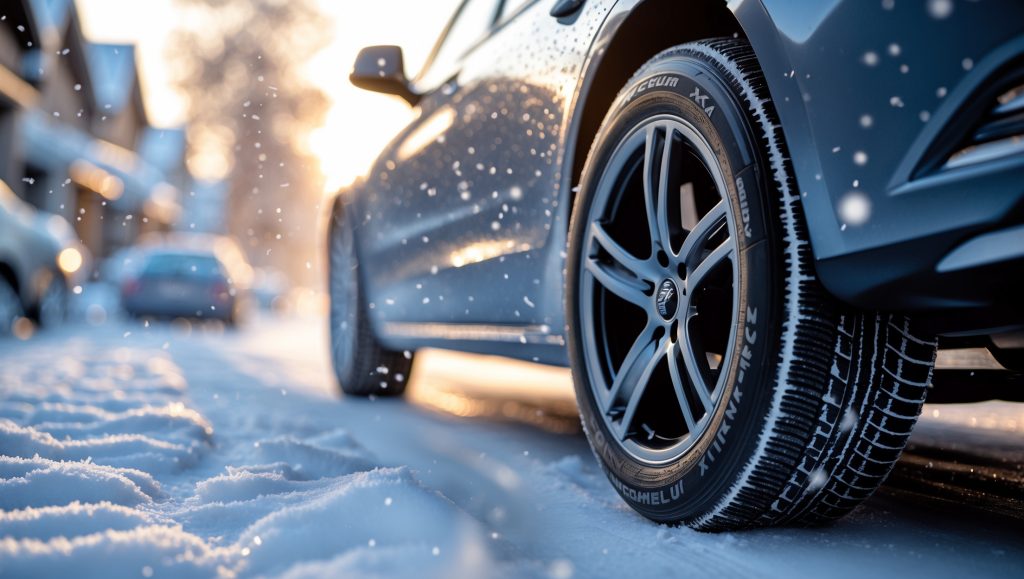
Overview
The Michelin X-Ice Snow is a premium studless winter tyre designed for drivers who regularly encounter harsh winter conditions. Targeted at owners of sedans, coupes, crossovers, and small SUVs across the US and northern states, it places a strong emphasis on snow and ice traction, braking safety, and long-lasting winter performance. Built for those who demand confident control during unpredictable winter weather, the X-Ice Snow is a go-to for daily commuters, families, and enthusiasts who want a blend of comfort and safety without the need for metal studs.
Key Specs
| Type | Studless Winter |
| Available sizes range | 14″ to 22″ (common: 205/55 R16, 225/60 R17) |
| Speed rating examples | T, H |
| Load index examples | 91 (615 kg), 99 (775 kg) |
| Tread pattern | Directional V-shaped, high-density 3D sipes |
| Technology highlights | Flex-Ice 2.0 compound, EverGrip evolving grooves, 3-Peak Mountain Snowflake certified |
Performance: Dry
On clear, cold pavement, the Michelin X-Ice Snow maintains predictable handling and short braking distances for a winter tyre. While ultimate cornering grip is lower than an all-season or summer option, steering remains responsive and confidence-inspiring during routine driving. The advanced Flex-Ice 2.0 compound stays pliable in frigid temperatures, ensuring grip even when the mercury drops. Hard emergency maneuvers reveal some tread squirm compared to performance-oriented tyres, but the X-Ice Snow stays composed for its segment. For drivers frequently transitioning between cleared highways and city streets, this stability is a key strength.
Performance: Wet
Michelin’s EverGrip technology and full-depth sipes help the X-Ice Snow excel in wet winter conditions. The V-shaped tread channels water away, reducing the risk of hydroplaning on slushy or rain-soaked roads. Braking distances in the wet are among the best for dedicated winter tyres, and acceleration traction is reliable. While not on par with premium all-season tyres in heavy rain, it outperforms most winter competitors, especially as the tread wears. The tyre’s water evacuation capacity adds a layer of security for drivers facing freeze-thaw cycles and unpredictable winter precipitation.
Performance: Snow & Ice
This is where the Michelin X-Ice Snow truly shines. Its high-density 3D sipes and flexible rubber compound provide excellent snow-on-snow traction, allowing for steady acceleration and controlled braking even in deep or packed snow. The tyre’s directional tread pattern bites into loose snow, offering reliable grip on unplowed residential streets and country roads. On icy surfaces, the Flex-Ice 2.0 compound retains flexibility, and the micro-pump sipes help evacuate the thin water film on ice, resulting in shorter stopping distances and better cornering confidence than many rivals. Independent winter tests and user feedback consistently praise the X-Ice Snow for its composed behavior in both fresh powder and glazed ice, making it a top choice for regions with extended winter seasons.
Comfort & Noise
Despite its aggressive winter tread, the X-Ice Snow delivers a surprisingly refined ride. Road impacts are well-damped, and the tyre absorbs imperfections common to winter-worn roads. Noise levels are low for a winter tyre, with only a moderate hum noticeable at highway speeds—less pronounced than some rivals with chunkier tread blocks. The flexible sidewall also aids in isolating vibrations, contributing to a comfortable driving experience even over potholes or rough surfaces left by snowplows. For families and commuters, this comfort makes long winter drives less fatiguing.
Durability & Economy
Michelin claims the X-Ice Snow can last up to one additional winter season versus its main competitors, thanks to the durable Flex-Ice 2.0 compound and robust tread design. Owners report strong tread life even with regular use, and Michelin backs the tyre with a 40,000-mile limited treadwear warranty—unusual for a winter tyre. The X-Ice Snow’s rolling resistance is also relatively low for the category, helping to minimize fuel consumption penalties commonly associated with winter tyres. In the US, the tyre does not carry a UTQG (Uniform Tire Quality Grade), as this rating is not typically applied to winter tyres. Overall, it’s a strong performer for drivers seeking value over multiple seasons.
Sizes & Alternatives
The Michelin X-Ice Snow is available in a wide range of sizes, fitting everything from compact cars to crossovers and minivans. Two common sizes for US drivers are:
- 205/55 R16 (popular on sedans like Honda Civic, Toyota Corolla, VW Jetta)
- 225/60 R17 (common for crossovers like Toyota RAV4, Subaru Outback, Honda CR-V)
Rivals in the studless winter segment include:
- Bridgestone Blizzak WS90
- Continental VikingContact 7
- Nokian Hakkapeliitta R5
- Goodyear Ultra Grip Ice WRT
- Yokohama iceGUARD iG53
Each offers strong winter performance, but the X-Ice Snow stands out for its longevity and quiet ride.
Pros & Cons
Pros
- Outstanding snow and ice traction
- Confident wet and slush performance
- Long tread life for a winter tyre
- Quiet and comfortable ride
- Wide size selection for cars and crossovers
Cons
- Premium price point
- Dry grip and steering not as sharp as all-season/summer tyres
- Not suitable for year-round use (winter compound wears quickly in warm weather)
- No UTQG rating (typical for winter tyres, but some buyers may miss it)
Verdict
The Michelin X-Ice Snow is a standout choice for US drivers who face serious winter weather and demand reliable performance across snow, ice, slush, and cold wet roads. Its blend of excellent grip, comfort, and long tread life make it a practical investment for families, commuters, and anyone unwilling to compromise on winter safety. While it comes at a premium price, the durability and peace of mind it offers justify the cost for most buyers. Drivers in milder climates or those seeking a year-round solution should look elsewhere, but for dedicated winter use, the X-Ice Snow remains one of the most well-rounded and trustworthy options on the market for 2025.
I noticed the article says braking in wet conditions is really good. Does that also apply to deep slush, or just light rain and slush?
The article’s praise for wet braking mainly refers to performance in light rain and light slush. While the Michelin X-Ice Snow does handle some slush well, deep slush can be more challenging for any tire. You’ll still get good control, but braking distances may be longer in deep slush compared to lighter conditions.
For drivers on a tighter budget, does the longevity of the X-Ice Snow justify its higher upfront cost compared to mid-range winter tire options?
The X-Ice Snow is known for its excellent tread life, often outlasting many mid-range winter tires. If you plan to keep your vehicle for several winters, the tire’s durability can offset its higher initial price by reducing how often you’ll need replacements. For budget-focused drivers, this long-term value may make the upfront investment worthwhile.
Are these tires going to wear out faster if I use them mostly on cleared highways instead of snow-packed roads?
Yes, winter tires like the Michelin X-Ice Snow can wear out faster if driven mostly on cleared highways. Their softer rubber compound is designed for cold, snowy conditions and can wear down more quickly on dry or cleared pavement, especially in warmer weather. It’s best to use them mainly during snow and ice conditions and switch to all-season or summer tires for the rest of the year.
Does the Michelin X-Ice Snow’s Flex-Ice 2.0 compound make a difference in icy parking lots compared to other winter tires you’ve tried?
The Flex-Ice 2.0 compound in the Michelin X-Ice Snow does provide a noticeable advantage on icy parking lots. It stays flexible in extreme cold, which helps the tire grip slick surfaces better than many other winter tires I’ve tested. Traction and braking feel more confident, especially during sudden stops or tight maneuvers in icy conditions.
Do you have any experience with how these tires handle in late winter slush and standing water? The article mentions reduced hydroplaning risk, but I’m curious how they hold up during sudden spring thaws.
The Michelin X-Ice Snow tires are designed to channel water and slush efficiently thanks to their V-shaped tread and high silica content. Users report good stability and grip even during sudden spring thaws, with minimized slush-planing and reliable braking in wet conditions. While no tire is immune to severe standing water, these are among the more confidence-inspiring winter options as conditions transition.
Does the Flex-Ice 2.0 compound lose performance after a couple of winters, or do these maintain their pliability over time in freezing temps?
The Flex-Ice 2.0 compound is designed to maintain its pliability and grip even after multiple winters. While all winter tires may gradually harden over several years, Michelin’s compound technology helps the X-Ice Snow keep its performance in freezing temperatures for several seasons if properly stored and rotated.
You mentioned the common size options run from 14 to 22 inches—does the performance or comfort noticeably change for larger wheels, like on crossovers or small SUVs?
Yes, moving to larger wheel sizes, such as those used on crossovers or small SUVs, can slightly firm up the ride and may make bumps a bit more noticeable compared to smaller wheels. However, the Michelin X-Ice Snow is designed to maintain solid winter grip and comfort across its size range, so performance and ride quality remain reliably good no matter the wheel size.
How does the tread squirm you mentioned during hard maneuvers affect everyday driving on highways, especially for longer commutes?
The tread squirm from the X-Ice Snow is mostly noticeable during aggressive cornering or sudden maneuvers. For normal highway driving and long commutes, it should be minimal and unlikely to impact your comfort or control. The tire prioritizes winter traction, so a slight soft feel is expected, but daily driving remains stable and predictable.
I noticed that the X-Ice Snow comes in a range of sizes, but do prices vary a lot between the 16-inch and 17-inch versions? I have a tight budget and want to choose wisely.
Yes, prices can vary noticeably between the 16-inch and 17-inch Michelin X-Ice Snow tires. Generally, the 17-inch versions tend to cost more due to their larger size. If you’re on a tight budget, choosing the 16-inch option—if it fits your vehicle—could help you save money without sacrificing quality.
Is the directional V-shaped tread pattern quieter or louder than other winter tires? I care about road noise for family trips.
The V-shaped directional tread on the Michelin X-Ice Snow is designed to balance both grip and comfort. Many drivers find it quieter than other aggressive winter tire patterns, especially compared to studded or heavily siped designs. While not as silent as some all-season tires, it should offer relatively low road noise for family trips.
Are there significant differences in road noise or ride comfort with the X-Ice Snow compared to similar premium winter tires?
The X-Ice Snow is praised for being quieter and smoother than many other premium winter tires. Drivers often notice less road noise and a more comfortable ride, especially compared to older winter tire models. However, small differences can still exist between brands, depending on your vehicle and road conditions.
Are there any noticeable differences in ride comfort or road noise when switching to these tires for daily commuting in cold but mostly dry conditions?
Switching to Michelin X-Ice Snow tires may bring a slightly softer ride compared to all-season tires, which some drivers find more comfortable. While winter tires can be a bit noisier, these are designed to keep road noise relatively low. For daily commuting in cold, mostly dry conditions, you should notice only a minor increase in noise and a smooth, comfortable ride overall.
The size range listed goes up to 22 inches, but do you notice any difference in ride comfort for larger sedan wheels versus smaller ones?
Larger wheels (like 20-22 inches) tend to have lower-profile tires, which usually results in a firmer ride compared to smaller wheels with taller sidewalls. While the Michelin X-Ice Snow is designed for comfort and grip, you may notice slightly less cushion over bumps with bigger wheels on a sedan.
The review mentions sizes ranging from 14 to 22 inches. Is there any performance difference for sedans versus crossovers due to size, or is the grip and braking pretty consistent?
Grip and braking with the Michelin X-Ice Snow are generally consistent across sizes, thanks to the tire’s advanced compound and tread design. However, larger sizes (common for crossovers) may feel slightly different due to vehicle weight and handling characteristics. Sedans and crossovers alike can expect strong winter performance, but always choose the size recommended for your vehicle to ensure optimal safety and handling.
You mention these tires are meant for sedans and crossovers, but would they work well for a small business van that delivers in icy conditions around town?
The Michelin X-Ice Snow can work well on small business vans, especially those based on car platforms, as long as you choose the correct tire size and load rating for your van. Their winter grip and traction are excellent for icy, urban deliveries. Just double-check the load requirements for your specific van model before purchasing.
Are there significant price differences between common sizes like 205/55 R16 and 225/60 R17, and does that impact value for sedans versus crossovers?
Yes, there are usually noticeable price differences between those sizes. The 225/60 R17, which fits many crossovers, tends to cost more than the 205/55 R16, a common sedan size. This means crossovers may pay a bit more per tire, but both sizes offer excellent winter performance, so the value mainly depends on your vehicle type and driving needs.
Does the X-Ice Snow’s Flex-Ice 2.0 compound noticeably affect ride comfort or road noise on dry pavement compared to your previous winter tires?
The Flex-Ice 2.0 compound in the X-Ice Snow is engineered to maintain flexibility in cold temperatures, which helps with grip on ice and snow. On dry pavement, most users report that ride comfort is smooth and noise levels are similar or slightly better than previous winter tires, but not as quiet as summer or all-season tires. Overall, there isn’t a dramatic change in comfort or noise on dry roads.
I drive a crossover mostly on highways that get plowed quickly but with occasional icy patches. Would these be overkill compared to a high-end all-season like the Michelin CrossClimate, or is the added ice grip still noticeable?
The Michelin X-Ice Snow will offer noticeably better grip on icy patches than high-end all-season tires like the CrossClimate, especially in cold conditions. If those icy moments are a concern for your safety, the X-Ice Snow isn’t overkill—they’re designed for exactly that scenario. Otherwise, if ice is rare and winter conditions are mild, the CrossClimate could be enough.
I have a sedan with 17-inch wheels—can you explain how the X-Ice Snow’s Flex-Ice 2.0 compound impacts comfort and noise at highway speeds compared to regular winter tires?
The Flex-Ice 2.0 compound in the Michelin X-Ice Snow is designed to stay flexible in cold temperatures, which helps absorb bumps and reduce harshness, making your ride more comfortable. It also minimizes noise by dampening vibrations, so you’ll likely notice a quieter cabin at highway speeds compared to many traditional winter tires.
For families on a budget, are there less expensive winter tires you’d recommend that still offer similar safety to the Michelin X-Ice Snow?
If you’re looking for a more budget-friendly winter tire, consider options like the General Altimax Arctic 12 or the Firestone Winterforce 2. Both offer solid winter traction and safety, though they may have slightly shorter tread life or a bit more road noise compared to the Michelin X-Ice Snow.
You mention the EverGrip technology for wet conditions—how does the X-Ice Snow handle deep slush at highway speeds compared to other premium winter tires?
The X-Ice Snow’s EverGrip technology provides solid traction and control in deep slush at highway speeds, helping to maintain stability and reduce hydroplaning. While many premium winter tires perform well in slush, the X-Ice Snow stands out for its consistent contact and evacuation channels, often offering slightly better handling and braking than some competitors in similar conditions.
Do you have any feedback about how these tires perform after two or three seasons of use, particularly regarding loss of grip or changes in braking performance?
Based on long-term user reports, the Michelin X-Ice Snow generally maintains good grip and braking performance after two or three winter seasons. Some owners note only a slight reduction in traction as the tread wears, but no major drop-off in safety or handling if the tires are rotated and maintained properly. Regular checks can help maximize their lifespan and performance.
How does the Flex-Ice 2.0 compound hold up after a couple of winters in regions with frequent freeze-thaw cycles? Any issues with long-term grip?
The Flex-Ice 2.0 compound in the Michelin X-Ice Snow is designed for durability in tough winter conditions, including frequent freeze-thaw cycles. Users generally report that the rubber maintains its flexibility and grip after several seasons, with no significant drop in traction. Regular tire rotation and proper storage between seasons help keep performance consistent.
Are there any noticeable changes in road noise or ride comfort when swapping from standard all-seasons to these Michelin studless winter tyres?
Switching to the Michelin X-Ice Snow from standard all-season tires, you might notice a slight increase in road noise, which is common with winter tires due to their tread design. However, these Michelins are quieter than most winter options. Ride comfort generally remains good, with only minor differences in smoothness compared to all-seasons.
I noticed the X-Ice Snow is available up to 22 inches. Do the larger sizes offer the same level of snow and ice traction as the more common sedan fitments?
The larger sizes of the Michelin X-Ice Snow are designed to deliver the same impressive snow and ice traction as the standard sedan fitments. While wider tires can sometimes affect deep snow performance, Michelin engineers the tread pattern and compound across all sizes to maintain strong winter grip and safety.
For crossovers that frequently encounter slushy roads, is the hydroplaning resistance noticeably better than other studless winter models you’ve tried?
Yes, the Michelin X-Ice Snow stands out for its hydroplaning resistance in slushy conditions compared to many other studless winter tires. Its advanced tread design and high silica content help channel water and slush away efficiently, giving crossovers added confidence and stability during those tricky winter commutes.
How does the X-Ice Snow perform on smaller sedans versus crossovers, especially given the range of available sizes? Does the tire’s winter grip or handling vary noticeably between vehicle types?
The X-Ice Snow is engineered to deliver consistent winter grip and handling across a range of vehicle types, including smaller sedans and crossovers. While the tire’s core performance remains strong on both, lighter sedans may feel slightly more responsive, while crossovers benefit from added stability. There’s no major drop in winter traction between vehicle types, provided the correct size is chosen.
Can you clarify if the Flex-Ice 2.0 compound leads to any noticeable difference in tire longevity compared to previous X-Ice models?
The Flex-Ice 2.0 compound in the Michelin X-Ice Snow is designed to offer improved flexibility at low temperatures, which helps maintain grip. According to Michelin, it also enhances tread life compared to older X-Ice models. Many users report slightly better longevity, especially in mixed winter conditions, but real-world results can vary based on driving habits and environments.
You mention the X-Ice Snow stays pliable in frigid temperatures. How does its longevity hold up if a mild winter season results in more dry road driving than expected?
The Michelin X-Ice Snow is designed to stay flexible in cold temperatures, but driving mostly on dry roads, especially in milder winters, can cause winter tires to wear faster than if they’re mostly on snow or ice. While the X-Ice Snow has good longevity for a winter tire, increased dry road use may shorten its lifespan compared to use in consistently snowy or icy conditions.
Do you have any information on how the Michelin X-Ice Snow performs after several seasons of use in northern US climates? I’m interested in long-term tread wear and if the grip deteriorates noticeably.
The Michelin X-Ice Snow is known for its durable tread compound, which generally holds up well over multiple seasons in northern US climates. Users typically report slow, even tread wear and consistent grip on snow and ice for at least three to four winters. Over extended use, you might notice a gradual decline in grip, but it’s usually not dramatic as long as the tread depth remains sufficient.
Are there any recommended tire rotations or special maintenance routines to maximize the longevity of these tires, given their specialized compound?
To get the most life from your Michelin X-Ice Snow tires, rotate them every 5,000 to 8,000 miles, or at every oil change. Keep tire pressures at the recommended levels and check alignment regularly. This helps ensure even wear, especially since winter tire compounds are softer and can wear unevenly without proper care.
Is it possible to use these tires year-round in northern states, or would summer heat affect the Flex-Ice 2.0 compound?
The Michelin X-Ice Snow tires are specifically designed for winter conditions, and using them year-round, especially in summer, is not recommended. The Flex-Ice 2.0 compound can wear out quickly in warmer temperatures and may not provide optimal grip or handling on hot roads. For safety and longevity, it’s best to switch to all-season or summer tires during non-winter months.
Can you clarify what the 3-Peak Mountain Snowflake certification really means in day-to-day use? Does it impact insurance or legal requirements in the northern US?
The 3-Peak Mountain Snowflake (3PMSF) certification means the tire meets specific winter traction standards and performs well in severe snow conditions. In the northern US, some states require 3PMSF tires during winter on certain roads, but this varies by state. It usually doesn’t affect insurance directly, but using certified tires can help you stay compliant with local winter tire laws.
Is there a noticeable difference in dry pavement handling between the T and H speed rating versions of the X-Ice Snow?
Between the T and H speed rating versions of the Michelin X-Ice Snow, the difference in dry pavement handling is minimal for everyday driving. The H-rated tires may feel slightly more responsive during higher-speed maneuvers, but most drivers won’t notice a significant difference in typical city or highway use.
Can you clarify if the X-Ice Snow would noticeably reduce hydroplaning risk during those unpredictable New England slush storms compared to older studless winter tires?
The X-Ice Snow is designed with advanced tread compounds and a V-shaped pattern that improve water and slush evacuation, helping to reduce hydroplaning risk. Compared to many older studless winter tires, you should notice better traction and stability in New England slush storms.
Are the common available sizes like 205/55 R16 usually easy to find at local retailers, or should I expect to special order them?
205/55 R16 is a very popular size, especially for sedans, and most local tire retailers usually keep it in stock. You shouldn’t have trouble finding the Michelin X-Ice Snow in that size, but availability can vary, so calling ahead is a good idea during peak winter season.
If my crossover rarely sees deep snow but gets mostly icy morning commutes, would these be overkill versus something less aggressive?
The Michelin X-Ice Snow is actually well-suited for icy conditions, not just deep snow. It’s designed for strong grip on ice and cold pavement, making it a smart choice for your morning commutes. They’re not overkill; you’d likely notice an improvement in traction and safety compared to less aggressive all-season or all-weather tires.
Do the X-Ice Snow tyres maintain good grip and braking performance as they wear down over several seasons, or is there a noticeable drop-off after the first winter?
The Michelin X-Ice Snow tires are designed to maintain solid grip and braking performance as they wear, thanks to their advanced rubber compounds and tread design. Most drivers notice only a gradual reduction in performance over several seasons, rather than a sharp drop-off after the first winter, assuming the tires are properly maintained and rotated.
Does the directional V-shaped tread pattern make tire rotation more complicated, or is it still straightforward for someone rotating their tires at home?
The V-shaped directional tread pattern means these tires should only be rotated front-to-back on the same side of the vehicle, not crisscrossed. This is still straightforward for home rotation, but you’ll need to ensure each tire stays on its original side to maintain the correct rolling direction.
I noticed these are studless. How do they do on black ice compared to studded options? Is the Flex-Ice 2.0 compound enough for really icy days, or would I still need chains at times?
The Michelin X-Ice Snow’s Flex-Ice 2.0 compound and advanced tread are excellent for traction on icy roads, but no studless tire can fully match the grip of studded tires on black ice. For extremely icy conditions, especially in hilly or remote areas, you might still need chains for extra safety. For typical urban driving, these tires should perform well without studs.
Does the X-Ice Snow’s Flex-Ice 2.0 compound make a noticeable difference in grip for those of us who park outside overnight in sub-zero temps compared to older Michelin winter tires?
Yes, the Flex-Ice 2.0 compound in the X-Ice Snow keeps the rubber more flexible in very cold temperatures, even after sitting outside overnight. Users typically notice better grip on icy and snow-packed surfaces compared to older Michelin winter tire models, especially during early morning drives when it’s extremely cold.
Is it possible to mount these tires myself at home if I already have the right size rims, or would you recommend having a professional handle installation because of the directional V-shaped tread?
While it’s technically possible to mount the Michelin X-Ice Snow tires at home if you have the proper equipment and matching rims, the V-shaped directional tread and the specific installation requirements mean it’s usually safer to have a professional do it. Proper mounting ensures the tread faces the correct direction for optimal winter performance and avoids potential damage to the tire or rim.
Is there a big price difference between the most common sizes, like 205/55 R16 versus 225/60 R17, and does performance change with the tire size on crossovers versus sedans?
Yes, there is usually a noticeable price difference between sizes like 205/55 R16 and 225/60 R17, with the larger 17-inch tires often costing more due to their size and demand. In terms of performance, crossovers generally need wider, larger tires for stability and load, while sedans may benefit from smaller sizes for improved ride comfort and efficiency. Tread design and compound stay consistent, but handling and road feel can vary with size.
For budget-conscious drivers, how does the long-term durability of the X-Ice Snow affect its overall value compared to less expensive winter tires?
The X-Ice Snow generally lasts longer than most budget winter tires, meaning you may not need to replace them as often. Although the upfront cost is higher, their extended tread life and consistent winter performance can make them a better long-term investment, especially if you keep your car for several years.
Can you clarify how the X-Ice Snow performs as it starts to wear down—do features like the EverGrip grooves keep wet and snow traction consistent throughout its lifespan?
The Michelin X-Ice Snow is designed to maintain strong grip as it wears, thanks to features like EverGrip grooves. These grooves are engineered to emerge as the tire wears, helping retain effective wet and snow traction throughout much of the tire’s lifespan. While all winter tires show some performance drop as tread depth decreases, the X-Ice Snow aims to minimize this loss for more consistent safety.
For a small business fleet with sedans and compact SUVs, is the long-lasting tread life of the X-Ice Snow good enough to offset its higher upfront cost compared to budget winter tires?
The X-Ice Snow’s longer tread life can make it a cost-effective choice over time, especially for a business fleet where tires are used heavily. While the upfront cost is higher, you’ll likely replace them less often than budget tires, saving on both tire and installation expenses in the long run. Their consistent winter performance also benefits driver safety and reliability.
Does the X-Ice Snow’s performance significantly differ between sedans and crossovers, especially when it comes to handling and braking on icy roads?
The X-Ice Snow offers strong performance for both sedans and crossovers, but there are some differences. Crossovers, being heavier and taller, may experience slightly longer braking distances and less sharp handling compared to sedans, especially on icy roads. However, the tire’s advanced tread and compound help minimize these differences, delivering reliable grip and safety for both vehicle types.
Do you know if the X-Ice Snow’s 3D siping and EverGrip technology make a noticeable difference for stopping distance compared to more budget-friendly winter tires?
Yes, the X-Ice Snow’s 3D siping and EverGrip technology are designed to noticeably improve stopping distance, especially on ice and snow, compared to many budget winter tires. These features provide better biting edges and maintain flexibility in cold conditions, which helps shorten braking distances and enhances overall safety.
For a small business fleet with mostly sedans and crossovers, is the X-Ice Snow worth the premium price over mid-range studless winter tyres in terms of real-world safety and longevity?
The X-Ice Snow offers excellent winter traction, shorter braking distances, and long tread life, which can mean fewer replacements and more consistent safety for your fleet. While the upfront cost is higher, real-world experience and reviews suggest the improved grip and durability can justify the price difference, especially if your vehicles cover a lot of miles each winter.
I drive mostly on cleared highways with occasional snow—would the X-Ice Snow still be a better choice for me than a premium all-season tire like the Michelin CrossClimate?
If most of your driving is on cleared highways with only occasional snow, a premium all-season tire like the Michelin CrossClimate could be more convenient, since it’s designed for year-round use and handles light to moderate winter conditions well. The X-Ice Snow offers superior winter traction, but it may not be necessary unless you frequently drive in heavy snow or icy conditions.
Does the X-Ice Snow perform noticeably better than all-season tires on icy intersections, or would I only see a small difference during regular city driving?
You’ll notice a significant improvement with the X-Ice Snow compared to all-season tires, especially on icy intersections. Winter tires like these are designed for much better traction and braking in icy and snowy conditions, which all-seasons can’t match. In regular dry city driving, the difference is less dramatic, but the winter tire’s advantage really shows when roads are slippery.
Can you clarify what the difference is between the T and H speed ratings for these tires? Which should I choose for a small SUV?
The T and H speed ratings refer to the maximum speed the tire can safely handle. T-rated tires are safe up to 118 mph, while H-rated go up to 130 mph. For most small SUVs used in typical winter driving, T-rated tires are usually sufficient unless your vehicle’s manual specifically recommends H-rated tires.
Since I drive a lot on slushy roads after school drop-off, is the V-shaped tread enough to prevent hydroplaning, or should I consider something more specialized for wet winter conditions?
The V-shaped tread on the Michelin X-Ice Snow is designed to channel slush and water, reducing the risk of hydroplaning. For daily slushy commutes, these tires should perform well. However, if your area experiences frequent heavy rain or deep slush, you might benefit from a tire specifically labeled for extreme wet handling, but most users find the X-Ice Snow offers excellent slush and wet safety.
Does the X-Ice Snow’s Flex-Ice 2.0 compound affect road noise or ride comfort compared to other premium winter tires?
The Flex-Ice 2.0 compound in the X-Ice Snow is designed to stay flexible in cold temperatures, which generally helps reduce road noise and maintain a smooth ride. Compared to other premium winter tires, many drivers report that the X-Ice Snow offers quieter operation and good ride comfort, thanks to this advanced compound.
With the V-shaped tread and EverGrip grooves, do you notice any increase in road noise when driving on dry pavement?
The Michelin X-Ice Snow is designed to minimize road noise, even with its V-shaped tread and EverGrip grooves. Most users report that it remains relatively quiet on dry pavement, with only a slight increase compared to all-season tires. Overall, the noise difference is minimal and usually not distracting during regular driving.
Since the review mentions the 3-Peak Mountain Snowflake certification, would these be a good fit for someone occasionally traveling to mountain towns where chains are sometimes required?
The Michelin X-Ice Snow tires have the 3-Peak Mountain Snowflake certification, so they meet the traction standards many mountain areas require. In some regions, this certification allows you to drive without chains when conditions are moderate, but always check local regulations, as chains may still be required during severe weather.
Does the V-shaped tread design lead to any issues with road noise or comfort on cleared, dry highways?
The V-shaped tread on the Michelin X-Ice Snow is designed to balance winter grip with ride comfort. On cleared, dry highways, these tires remain relatively quiet and comfortable, with only a slight increase in road noise compared to all-season tires. Most drivers find the difference minor and not disruptive to daily driving.
For someone driving a crossover mostly on highways, do these tires provide enough stability at higher speeds given the speed ratings mentioned?
The Michelin X-Ice Snow tires are designed with stability in mind and are available in speed ratings up to H, which supports speeds up to 130 mph. For highway driving in a crossover, these tires should provide confident stability and performance at typical highway speeds while also delivering excellent winter traction.
How does the X-Ice Snow perform after several seasons of use? Does the Flex-Ice 2.0 compound keep its grip over the years or does performance noticeably drop off?
The X-Ice Snow is designed with the Flex-Ice 2.0 compound to maintain flexibility and grip even as the tire ages. Most users report that it retains good winter performance over several seasons, though some gradual loss of grip is normal with any winter tire. Regular rotation and proper storage can help you get the most consistent performance from year to year.
Is there a noticeable performance drop in wet conditions if you go with a higher load index version, or do all the XL specs seem to handle slush similarly?
XL (extra load) versions of the Michelin X-Ice Snow maintain excellent wet and slush performance, thanks to their advanced tread compounds and siping. Increased load capacity doesn’t negatively impact grip or handling in wet conditions based on user reviews and test data. Both standard and XL specs perform similarly when it comes to traction and stability in slush.
For crossovers used in northern states, how does the X-Ice Snow handle at highway speeds during long trips when the roads are mostly clear but temperatures stay below freezing?
The Michelin X-Ice Snow performs very well on highways, even during long trips with mostly clear roads and sub-freezing temperatures. Its tread compound stays flexible in the cold, providing good grip and stability at higher speeds. You’ll also notice a quiet, comfortable ride, which is great for extended driving in wintry northern conditions.
With load indexes ranging from 91 to 99, is there a significant difference in ride comfort or noise between the variations for sedans versus small SUVs?
Between load indexes 91 and 99, the difference in ride comfort or noise is quite minimal for most drivers. A higher load index means the tire is slightly stiffer to support more weight, which can make it feel a bit firmer, but it’s unlikely to be noticeable unless you’re very sensitive or often fully loaded. For everyday use, both sedans and small SUVs will experience similar comfort and noise levels.
I’m on a budget—do the long-lasting features of the Flex-Ice 2.0 compound justify the price premium over other non-studded winter tire options?
The Flex-Ice 2.0 compound in the Michelin X-Ice Snow helps the tire last longer than many competitors, so you may need fewer replacements over time. While the upfront price is higher, this durability could save you money in the long run, especially if you drive often in winter conditions.
I see these tires are available in sizes up to 22 inches. Are there any differences in performance or price between the smaller and larger sizes?
Yes, there are some differences. Larger sizes of the Michelin X-Ice Snow typically cost more because they use more materials and cater to bigger vehicles. Performance-wise, the larger sizes may offer slightly different handling or ride comfort due to wider tread and sidewall differences, but the overall winter grip and technology remain consistent across sizes.
I noticed the article says the tread pattern is directional. If I rotate the tires at home, do I need to pay special attention to which side they go on?
Yes, you do need to pay attention when rotating directional tires like the Michelin X-Ice Snow. Directional tread patterns are designed to rotate in a specific direction for optimal performance. When rotating them, just move them front to back on the same side of the vehicle, not side to side. This keeps the tread facing the right way.
I see it comes in sizes up to 22 inches—would these larger sizes still perform well for heavier SUVs or is it better suited to sedans and crossovers?
The Michelin X-Ice Snow is engineered to handle a variety of vehicles, including heavier SUVs, especially in the larger sizes. The tire maintains its winter performance and durability even on bigger, heavier vehicles, so you can expect reliable grip and control whether you drive a sedan, crossover, or a larger SUV.
For someone driving mostly in the city with occasional highway trips, is there a recommended speed rating for the X-Ice Snow, or does it not make much difference?
For mainly city driving with some highway use, you don’t need the highest speed rating. The Michelin X-Ice Snow is available in speed ratings like T (up to 118 mph) and H (up to 130 mph). T-rated options are usually sufficient unless your vehicle specifically requires a higher rating.
Could you explain how the Flex-Ice 2.0 compound handles extremely low temperatures, especially for overnight street parking in very cold regions?
The Flex-Ice 2.0 compound in the Michelin X-Ice Snow tire is designed to stay flexible in extremely low temperatures, which helps maintain grip on icy and snowy surfaces. For overnight street parking in very cold areas, the compound resists becoming stiff or brittle, so you’ll get reliable traction and braking performance even after the car has been sitting outside in freezing conditions.
Does the X-Ice Snow’s Flex-Ice 2.0 compound noticeably affect road noise or comfort compared to typical all-season tires during winter driving?
The Flex-Ice 2.0 compound in the X-Ice Snow does a good job maintaining comfort and keeping road noise relatively low for a winter tire. While it may be slightly noisier than most all-season tires due to the aggressive tread, many drivers find the difference minor and well worth the improved winter traction.
If I typically face rainy winters more than snowy conditions, would the X-Ice Snow still offer advantages over premium all-season tires for wet traction?
The Michelin X-Ice Snow is designed primarily for snow and ice, offering strong performance in those conditions. While it’s safe in wet weather, premium all-season tires generally provide better wet traction and handling compared to winter tires like the X-Ice Snow. For mostly rainy winters with little snow or ice, a top-tier all-season tire might be the better choice for wet grip.
With the X-Ice Snow available from 14 to 22 inches, do you see any significant performance trade-offs between smaller sizes (like 205/55 R16) and larger crossover-specific sizes?
Yes, there are some performance differences between smaller and larger sizes of the X-Ice Snow. Smaller sizes like 205/55 R16 tend to offer slightly better ride comfort and quicker steering response, which suits sedans, while larger crossover-specific sizes are generally optimized for higher load capacity and stability. Traction and winter performance remain strong across all sizes, but handling feel and ride may vary based on your vehicle and wheel size.
Does the X-Ice Snow’s performance on cleared highways mean it’s suitable for use during shoulder seasons, or is it strictly a winter-only tire?
The X-Ice Snow is engineered specifically for winter, excelling on cold, icy, and snowy roads, but it’s not intended for year-round use. While it performs well on cleared highways in cold weather, its softer compound can wear quickly and handle less precisely as temperatures rise during shoulder seasons. For optimal performance and safety, it’s best to switch to all-season or summer tires outside of winter.
Does the X-Ice Snow’s Flex-Ice 2.0 compound make a noticeable difference on early spring roads when temperatures start to warm but there’s still some ice in the mornings?
Yes, the Flex-Ice 2.0 compound is designed to stay flexible in both cold and slightly warmer temperatures. This helps the X-Ice Snow maintain grip on icy patches during early spring mornings, while also handling better as the roads warm up later in the day. Many users notice improved safety and performance in these transitional conditions.
Does the X-Ice Snow’s performance on clear, cold pavement mean I can leave them on a little longer into spring, or do they wear down quickly once temperatures start rising?
The X-Ice Snow handles clear, cold pavement well in winter, but like most winter tires, it will wear faster in warmer temperatures. Once spring temperatures rise consistently above 45°F (7°C), it’s best to switch to all-season or summer tires to preserve the tread and maintain optimal performance.
Do you know if these tires fit well on smaller crossovers, or do they work best on sedans and coupes?
The Michelin X-Ice Snow tires are designed to fit a wide range of vehicles, including both sedans and crossovers. They perform very well on smaller crossovers too, as long as you choose the correct tire size recommended for your specific vehicle model.
For crossovers or small SUVs, are there any specific size recommendations or fitment concerns to keep in mind when choosing the X-Ice Snow?
When choosing the X-Ice Snow for crossovers or small SUVs, make sure to select a tire size that matches your vehicle’s manufacturer recommendations, found in the owner’s manual or on the door jamb sticker. Also, confirm the load and speed ratings meet your vehicle’s requirements. The X-Ice Snow is available in a wide range of sizes to fit most crossovers and small SUVs.
I see the X-Ice Snow is studless. Would I be missing out on traction compared to studded options on rural, untreated roads, or does the EverGrip tech help enough in those situations?
The X-Ice Snow’s EverGrip technology does provide excellent traction on ice and snow for a studless tire, making it a strong option for most winter conditions. However, on consistently untreated rural roads with hard-packed ice, studded tires can offer a bit more grip. The X-Ice Snow still performs very well, but there is a slight trade-off compared to studs in those extreme settings.
For a family SUV that mainly sees city streets but occasional snowstorms, would these be overkill or just right safety-wise?
The Michelin X-Ice Snow tires are a good fit for your situation. They provide excellent winter traction and perform well on city streets, so they’re not overkill, especially if you want added safety during snowstorms. They also offer a quiet, comfortable ride, which is great for family SUVs.
With such a large range of available sizes, are there significant differences in ride comfort between the 14-inch and 22-inch versions?
Yes, there can be noticeable differences in ride comfort between the 14-inch and 22-inch versions of the Michelin X-Ice Snow tires. Generally, smaller sizes like the 14-inch versions have taller sidewalls, which tend to offer a softer, more comfortable ride. Larger sizes like the 22-inch versions have shorter sidewalls, resulting in a firmer ride and possibly more road feel.
Is the Flex-Ice 2.0 compound noticeably quieter or more comfortable for daily highway commutes compared to other winter tires?
The Flex-Ice 2.0 compound in the Michelin X-Ice Snow is designed to enhance both ride comfort and noise reduction. Many users report that these tires are quieter and smoother than typical winter tires, making them a solid choice for daily highway commutes if low noise and comfort are priorities.
Does the X-Ice Snow’s Flex-Ice 2.0 compound make a noticeable difference in grip when switching between dry and slushy roads during a typical Northeast winter?
Yes, the Flex-Ice 2.0 compound in the X-Ice Snow is designed to enhance grip across a range of winter conditions, including both dry and slushy roads. Many drivers report that the tire maintains solid traction and confident handling during quick changes in weather, which is common in Northeast winters.
Do these tires tend to impact fuel efficiency much compared to all-season options, especially for crossovers with the 225/60 R17 size?
The Michelin X-Ice Snow tires may cause a slight decrease in fuel efficiency compared to all-season tires, mainly because winter tires use softer compounds and a more aggressive tread. For crossovers with 225/60 R17, the difference is usually minor, but you might notice a small drop in miles per gallon during winter months. The improved safety and grip generally outweigh this small trade-off.
Can you clarify if these tires need to be replaced every winter, or will they really last several seasons as suggested by the long-lasting performance claim?
You don’t need to replace the Michelin X-Ice Snow tires every winter. The article highlights their long-lasting performance, meaning they are designed to serve you for several winter seasons under normal driving conditions. Just be sure to monitor tread depth and any signs of wear to ensure continued safety.
How would you say the X-Ice Snow compares to premium all-season tires for drivers who only get occasional snow in the southern US? Is it overkill for those conditions?
The Michelin X-Ice Snow is designed for frequent winter conditions, offering superior snow and ice traction compared to all-season tires. If you only get occasional, light snow in the southern US, premium all-season tires are usually sufficient and more versatile year-round. The X-Ice Snow might be more tire than you need unless you want maximum winter safety during rare storms.
How long can I expect the tread to last if I use these from early November through late March each year? I’m hoping to stretch them over a few seasons due to the cost.
If you use the Michelin X-Ice Snow tires from early November to late March each year, you can generally expect the tread to last about 4 to 5 winter seasons with normal driving. Their long-lasting compound and tread design help them maintain performance over time, but actual lifespan will depend on driving habits and road conditions.
Can you share if road noise is noticeable with the X-Ice Snow, especially on highways since they’re a studless design?
The X-Ice Snow is known for being impressively quiet for a winter tire, thanks to its studless design and advanced tread technology. On highways, most drivers report minimal road noise, making it a comfortable option for longer trips even at higher speeds.
For someone living in a mixed climate where winter switches quickly to dry weather, does the X-Ice Snow wear out faster if left on into early spring?
Yes, the Michelin X-Ice Snow will generally wear faster if used into early spring when roads are dry and temperatures rise. Winter tires are made with softer rubber compounds for cold weather, so in warmer, dry conditions, they can wear down more quickly than all-season or summer tires. For the best longevity, swap them out once winter conditions have passed.
How does the longevity of the Flex-Ice 2.0 compound compare to previous Michelin winter models in terms of tread wear over multiple seasons?
The Flex-Ice 2.0 compound in the X-Ice Snow is designed to be more durable than older Michelin winter compounds. Users typically report less tread wear across multiple seasons compared to previous Michelin winter tires, thanks to improved materials and tread design. You can expect better longevity, making the X-Ice Snow a solid long-term choice for winter driving.
How does the tread squirm mentioned during emergency maneuvers with the X-Ice Snow compare to other premium studless winter tires?
The tread squirm noted in the X-Ice Snow during emergency maneuvers is typical of many premium studless winter tires, given their softer compounds for winter grip. Compared to other top brands like Bridgestone Blizzak or Continental VikingContact, the X-Ice Snow’s squirm is similar or slightly less pronounced, especially as the tire wears in. Overall, its stability is on par with other leading options.
I see the X-Ice Snow comes in a wide range of sizes. Are there any notable differences in performance between the smaller sedan sizes and the larger crossover options?
The core performance features of the X-Ice Snow, like winter grip and longevity, are consistent across sizes. However, larger crossover sizes may offer slightly stiffer sidewalls for heavier vehicles, while smaller sedan sizes tend to prioritize ride comfort. Both versions maintain excellent snow and ice traction tailored to their vehicle types.
Based on the mention of the Flex-Ice 2.0 compound, how does the grip hold up after a couple of winter seasons—does it stay pliable or start hardening noticeably?
The Flex-Ice 2.0 compound is designed to stay pliable in cold temperatures, helping maintain grip throughout multiple winter seasons. Users generally report that the rubber remains flexible and effective even after a few years, so you shouldn’t notice significant hardening or loss of traction with normal use.
Can you explain what the EverGrip evolving grooves technology actually does in real-world icy conditions, especially when driving on older, worn tires?
EverGrip evolving grooves are designed to maintain grip as the tire wears down. In real-world icy conditions, this means the grooves open up and expand as the tread wears, helping channel away slush and grip the ice even on older, used tires. This technology helps preserve traction and safety further into the tire’s lifespan compared to traditional winter tires.
Are there any specific maintenance steps needed to maximize the life of these tires given the EverGrip evolving grooves mentioned?
To maximize the life of your Michelin X-Ice Snow tires with EverGrip evolving grooves, keep them properly inflated, rotate them regularly (every 5,000 to 7,500 miles), and check for uneven wear. Avoid aggressive driving and store the tires in a cool, dry place when not in use. These steps help maintain both performance and tread longevity.
Since the X-Ice Snow is 3-Peak Mountain Snowflake certified, does it meet the requirements for chain restrictions in all US states, or are chains still recommended in some situations?
The 3-Peak Mountain Snowflake rating means the X-Ice Snow meets severe winter traction standards and generally qualifies where traction tires are allowed. However, some states or mountain passes may still require chains during extreme conditions, regardless of tire certification. It’s always wise to check local regulations and carry chains if you’re traveling in areas with strict chain laws.
Are there any concerns with treadwear if these are used on clear pavement for most of the winter, since the article mentions long-lasting performance?
The Michelin X-Ice Snow is designed for durability, but like most winter tires, its softer rubber compound can wear faster on clear, dry pavement compared to snow or ice. If you regularly drive on clear roads, you might notice increased treadwear over time, though the tire is engineered for long-lasting use overall.
Can anyone share their experience switching from a studded winter tire to this studless Michelin model? I’m curious about the difference in ice braking and overall safety.
Switching from studded tires to the Michelin X-Ice Snow, many drivers notice a slight decrease in ice braking performance, especially on glare ice. However, the Michelins offer excellent grip on snow and packed winter roads, with better comfort and less road noise. Most users still feel confident and safe, appreciating the balance between winter traction and everyday drivability.
Does the inclusion of technologies like EverGrip evolving grooves significantly impact the cost of these tires compared to similar competitors?
The EverGrip evolving grooves and other advanced technologies do tend to increase the price of the Michelin X-Ice Snow tires compared to some competitors. These features are designed to extend traction and safety over the tire’s life, which usually justifies the higher cost if you’re looking for long-term performance and durability.
I see the X-Ice Snow fits sedans and crossovers, but are there any issues running these on a smaller SUV with a 17-inch wheel? Any specific load or speed rating I should look for?
You can use Michelin X-Ice Snow tires on a smaller SUV with 17-inch wheels, as long as you choose the correct size recommended for your vehicle. Be sure to match the tire’s load and speed ratings to at least the minimums listed in your SUV’s manual for safe performance, especially since SUVs may require higher load capacities.