
Overview
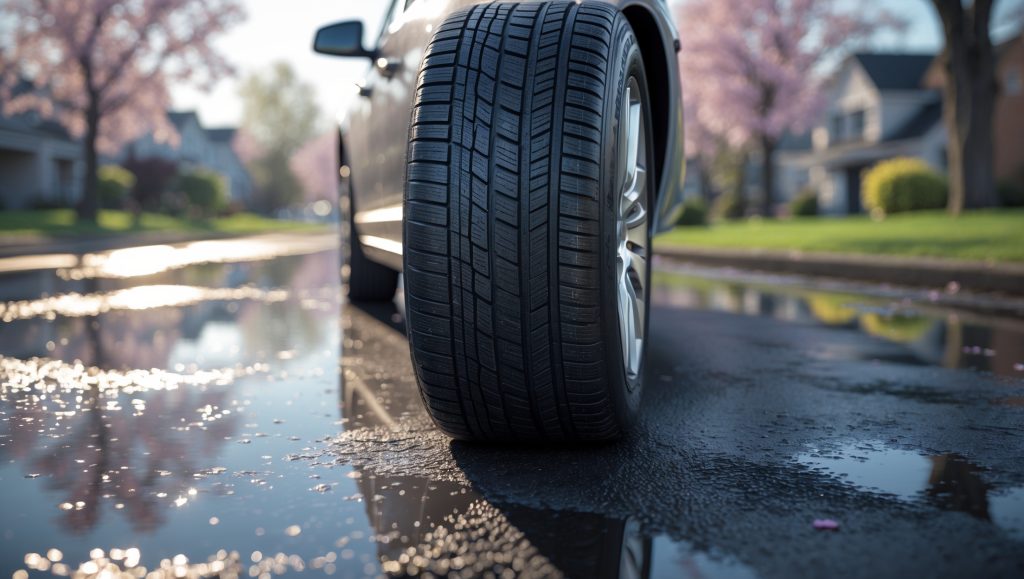
The Goodyear Assurance WeatherReady is an all-season touring tyre designed for everyday US drivers seeking year-round confidence without the hassle of seasonal changeovers. Engineered for sedans, coupes, minivans, and crossovers, it’s especially popular in regions where drivers face a mix of rain, light snow, and dry conditions—but rarely encounter deep snow or harsh winter extremes. The WeatherReady aims to balance traction, comfort, and longevity, making it an appealing choice for families, commuters, and fleet vehicles prioritizing safety and value. Its positioning sits between traditional summer tyres and dedicated winter options, promising dependable grip throughout changing seasons.
Key Specs
| Type | All-Season Touring |
| Available sizes range | 15″–20″ diameters |
| Speed rating examples | T, H, V, W |
| Load index examples | 91 (615 kg), 99 (775 kg) |
| Tread pattern | Asymmetric with sweeping grooves and 3D TredLock Technology |
| Technology highlights | Weather Reactive Technology, Evolving Traction Grooves, 3-Peak Mountain Snowflake (3PMSF) rated |
Performance: Dry
On dry roads, the Assurance WeatherReady delivers reassuring stability and linear steering. Its tread compound is optimized for flexibility, but it still provides crisp turn-in and reliable braking for daily driving. Compared to a pure summer tyre, outright grip is modestly lower, but for most drivers, the difference is more academic than practical—especially in typical urban and highway use. The tyre resists squirm and maintains its composure during emergency maneuvers, inspiring confidence in everyday traffic and on winding backroads. Enthusiasts will notice the slightly softer sidewall and less direct feedback than performance-focused summer models, but the trade-off is a more forgiving, smoother ride.
Performance: Wet
Wet traction is a true strong point for the Assurance WeatherReady, thanks to its deep, sweeping circumferential grooves and Evolving Traction Grooves that widen as the tyre wears. Hydroplaning resistance is above average for the segment, making it well-suited to the heavy rainstorms common in many parts of the US. During wet braking and cornering, the tyre remains predictable, with progressive breakaway and good stability. While ultimate wet grip trails the newest high-end summer tyres, the WeatherReady’s performance is among the best in the all-season touring class. For drivers who often face wet commutes or sudden downpours, it’s a standout choice.
Performance: Snow & Ice
The WeatherReady is one of the few all-season tyres to earn the industry’s 3-Peak Mountain Snowflake (3PMSF) certification, signaling a higher level of winter capability than standard M+S (Mud and Snow) rated tyres. On light to moderate snow, the tyre delivers surprisingly secure traction for starting, stopping, and cornering. Its 3D TredLock blades interlock to provide extra biting edges as the tyre flexes, helping navigate slushy intersections and icy patches. However, in deep snow or on pure ice, it cannot fully match a true winter tyre—drivers in northern climates with regular heavy snow should still consider a dedicated winter solution. For most US regions with occasional snow events, the WeatherReady offers a strong balance of year-round confidence.
Comfort & Noise
Ride comfort is a high point for the Assurance WeatherReady. The tyre absorbs bumps, expansion joints, and minor road imperfections with poise, making for a relaxing drive on both city streets and highways. Cabin noise is well-controlled: the tread pattern is designed to minimize pattern noise, resulting in a quiet, unobtrusive hum even as the tyre wears. At higher speeds, wind and road noise remain subdued, although some drivers may detect a slightly firmer edge over larger potholes—common for tyres with robust winter-oriented siping. Overall, the comfort level meets or exceeds expectations for a premium all-season touring tyre.
Durability & Economy
The WeatherReady is built for long life, with a durable tread compound and Goodyear’s advanced wear technologies. In real-world use, drivers often report tread life approaching the manufacturer’s warranty (up to 60,000 miles for many sizes). The Evolving Traction Grooves help maintain wet and winter grip even as the tyre wears, extending usable life. Rolling resistance is moderate: it doesn’t quite reach the low levels of a pure eco-tyre, but fuel economy remains competitive for its class. US drivers will note a typical UTQG (Uniform Tire Quality Grading) rating of 700 A A—solid for an all-season tyre focused on balanced performance and longevity.
Sizes & Alternatives
The Assurance WeatherReady is widely available across popular sizes for sedans, minivans, and crossovers. Two frequently chosen sizes in the US include 205/55 R16 (compact/midsize sedans like Honda Civic, Toyota Corolla, Volkswagen Jetta) and 225/60 R17 (larger sedans, crossovers, and family SUVs).
Key competitors include:
- Michelin CrossClimate2 – Renowned for winter capability, comfort, and tread life.
- Continental PureContact LS – Known for quietness and wet braking.
- Bridgestone WeatherPeak – Newer all-season with 3PMSF and balanced wet/snow performance.
- Pirelli Cinturato WeatherActive – Focused on wet and wintry grip.
- General AltiMAX RT45 – Value-oriented all-season with good ride comfort.
Shoppers should compare pricing, size availability, and specific performance needs when choosing among these alternatives.
Pros & Cons
Pros
- Excellent wet weather performance and hydroplaning resistance
- Strong light snow traction, 3PMSF certified
- Smooth, quiet ride for daily driving
- Long tread life and consistent grip as tyre wears
- Wide range of sizes for most mainstream vehicles
Cons
- Dry grip and steering response not as sharp as summer tyres
- Moderate rolling resistance—not a pure fuel-saver
- Performance in deep snow and pure ice still trails dedicated winter tyres
- Premium pricing compared to some value-focused rivals
- Slightly firmer ride over large potholes
Verdict
The Goodyear Assurance WeatherReady stands out as a top-tier all-season touring tyre for US drivers who demand year-round safety, comfort, and value. Its wet and light snow performance surpasses most conventional all-seasons, making it a smart pick for regions with unpredictable weather or occasional winter storms. While it does not quite match the razor-sharp feel of dedicated summer tyres or the deep-snow mastery of a true winter tyre, it delivers an outstanding compromise for the vast majority of everyday drivers—especially those who want to avoid seasonal tyre swaps. Fleet owners and families will appreciate its durability, quiet comfort, and consistent grip as it ages. If you prioritize all-weather confidence over ultimate cornering limits, the WeatherReady deserves a spot at the top of your shortlist. For drivers facing frequent, heavy snow, a dedicated winter tyre remains the gold standard—but for everyone else, this Goodyear delivers on its all-season promise.
How does the Assurance WeatherReady actually perform in early spring when roads can be wet in the daytime but temperatures still drop below freezing at night? Does the tread compound stay flexible enough in these borderline conditions?
The Assurance WeatherReady is designed to handle exactly those mixed early spring conditions. Its tread compound stays flexible even when temperatures dip below freezing at night, which helps maintain grip. It also channels away water well during wet daytime conditions, so you can expect reliable traction across the temperature swings of early spring.
Is the slightly softer sidewall noticeable when carrying a full load, like a packed minivan on a family trip?
With a packed minivan, you might notice the softer sidewall a bit more, especially on sharp turns or bumpy roads. The tires are designed for comfort and grip, so the ride will stay smooth, but there could be a slight increase in body roll compared to stiffer tires. It’s generally not a problem for everyday family trips.
For someone who mainly drives in the Southeast where winters are mild but rainy, would you say the wet traction justifies the price over other Goodyear all-seasons?
If you drive mostly in the Southeast and face frequent rain, the Assurance WeatherReady stands out for its strong wet traction—better than many other Goodyear all-seasons. The price is higher, but the added safety and confidence in heavy showers could be worth it if wet grip is your main concern.
If I mostly drive in warmer climates but take occasional trips to areas with light snow, would these tyres still be a good fit or should I consider a different Goodyear option?
The Assurance WeatherReady tires are designed to handle both warm weather and occasional light snow, making them a solid choice for your needs. They offer reliable traction in rain and mild winter conditions, so you shouldn’t need to switch unless you plan on frequenting areas with heavier snow or ice.
How do these compare pricewise and mileage warranty-wise to dedicated summer or winter tires? With a couple of kids in activities, I need value and low hassle.
The Goodyear Assurance WeatherReady tires typically cost less than many premium dedicated summer or winter tires, making them a good value if you want one set for all seasons. Their mileage warranty is usually around 60,000 miles, which is comparable to many all-season tires but sometimes less than the longest-warrantied summer tires. You’ll save time and money by not swapping tires for each season.
Do you have any information on how the Assurance WeatherReady fares in terms of road noise and ride comfort after 20,000 miles or more, especially for families prioritizing quiet rides?
Owners report that the Goodyear Assurance WeatherReady maintains good ride comfort and keeps road noise fairly low even after 20,000 miles. While some tire wear is normal, most families find the cabin stays reasonably quiet, making it a solid choice for those who prioritize peaceful drives on both highways and city streets.
Does the slightly softer sidewall mentioned in the review make the ride noticeably less sporty for someone who values responsive steering in a daily driver?
The slightly softer sidewalls on the Goodyear Assurance WeatherReady do prioritize comfort and absorb bumps well, but you might notice a bit less sharpness in steering response compared to sportier all-season tires. For most daily driving, it’s subtle, but if you really value a sporty, connected steering feel, this tire may feel a touch less responsive.
How well does the Assurance WeatherReady hold up in places that get occasional ice but not a lot of snow? Does the 3-Peak Mountain Snowflake rating really make a difference for safety in those conditions?
The Assurance WeatherReady performs better than typical all-season tires on icy roads, thanks in part to its 3-Peak Mountain Snowflake rating. This rating means it meets higher standards for winter traction, offering improved grip and safety on ice, even if your area doesn’t see much snow. While not a substitute for dedicated winter tires, it does offer extra confidence in slippery, icy conditions.
I see these tires offer sizes up to 20 inches. Are there any differences in comfort or road noise for larger versus smaller sizes on crossovers or minivans?
Larger tire sizes, like those up to 20 inches, usually have a lower sidewall profile compared to smaller ones. This can result in a slightly firmer ride and potentially more road noise, especially on rougher roads. However, the Assurance WeatherReady is designed to minimize noise and maintain comfort, so most drivers still find it very pleasant on crossovers and minivans.
How does the ride comfort compare on these tires for long highway trips versus something with a stiffer sidewall? I drive a lot for work and don’t want to sacrifice too much smoothness.
The Goodyear Assurance WeatherReady is designed with ride comfort in mind, particularly for long highway drives. Compared to tires with a stiffer sidewall, you’ll likely notice a smoother, quieter ride and less vibration. While performance tires with stiff sidewalls offer sharper handling, they usually feel firmer over bumps. The WeatherReady strikes a good balance, prioritizing comfort without sacrificing stability.
Does the slightly softer sidewall impact the tire’s performance during quick lane changes or emergency maneuvers at highway speeds?
The slightly softer sidewall on the Goodyear Assurance WeatherReady can result in a bit more flex during quick lane changes or emergency maneuvers, especially at highway speeds. This may translate to less immediate steering response compared to sportier tires, but overall grip and stability remain reliable for everyday driving situations.
For someone who mostly drives in rain and rarely sees snow, is the WeatherReady overkill or does its wet traction make it worth the price?
The Goodyear Assurance WeatherReady is well-suited for rain thanks to its strong wet traction, so even if you rarely see snow, you’ll still benefit from its grip and safety. While it is designed to handle some winter conditions, its performance in rainy weather alone can justify the price if you value confidence and handling on wet roads.
Has anyone run the Assurance WeatherReady through a full winter in a place that occasionally gets ice and not just light snow? I see it’s 3PMSF rated, but how does it handle those surprise icy mornings compared to a true winter tire?
The Assurance WeatherReady handles light to moderate ice decently for an all-season tire, thanks to its 3PMSF rating, but it won’t match the grip and stopping power of a dedicated winter tire on real icy mornings. If you face frequent or severe ice, a true winter tire is still the safer choice.
Are these tires cost-effective in the long run given their promised longevity, or should budget-focused drivers consider a different all-season option?
The Goodyear Assurance WeatherReady tires are designed for good longevity and year-round performance, which helps offset their higher upfront cost. Over time, the durable tread can reduce replacement frequency, making them cost-effective for many drivers. However, if your top priority is minimizing initial expense, there are less expensive all-season tires available, though they might not last as long or offer the same all-weather reliability.
Does the 3-Peak Mountain Snowflake rating mean the Assurance WeatherReady will work well for occasional mountain trips with moderate snow, or would a dedicated winter tire be much safer in those situations?
The 3-Peak Mountain Snowflake rating means the Assurance WeatherReady performs well in moderate snow and is suitable for occasional mountain trips. However, if you frequently drive in heavy snow or icy conditions, dedicated winter tires will provide better traction and safety. For occasional moderate snow, these tires should be sufficient.
Do the Evolving Traction Grooves actually make a noticeable difference as the tire gets older, or is it just a marketing feature?
The Evolving Traction Grooves are designed to help maintain traction as the tire wears by changing shape to keep biting edges effective over time. Many users and some independent tests have noted that wet and light snow performance stays more consistent as the tire ages, so it’s more than just marketing—it does contribute to sustained grip compared to some standard all-season tires.
Can you clarify how these perform after a few years of wear, especially with the Evolving Traction Grooves? I’m mostly worried about safety in heavy rain as the tires age.
The Evolving Traction Grooves in the Goodyear Assurance WeatherReady are designed to maintain grip as the tire wears by exposing new tread patterns. This helps preserve wet weather performance over time. Even after several years, drivers have reported good wet traction, though it’s wise to monitor tread depth regularly for optimal safety in heavy rain.
I drive a minivan with a 17-inch wheel, mostly around New England. Would you recommend these over a dedicated summer and winter tire swap given our unpredictable weather?
The Goodyear Assurance WeatherReady tires are great for unpredictable New England weather, offering solid grip in rain, light snow, and cold. However, if you often face heavy snow and icy roads, dedicated winter tires still outperform all-seasons in extreme conditions. For typical minivan use and convenience, WeatherReady is a strong choice, but tire swaps provide the best performance in each season.
I drive a minivan mostly around town and a bit of highway, and I notice you listed different load indexes and speed ratings. How do I decide which combination is best for my needs?
For mostly city driving and occasional highway use in a minivan, choose a load index that meets or slightly exceeds your vehicle’s recommended capacity, found on your driver’s door sticker or manual. For speed rating, an H or T is usually sufficient, as higher ratings are only needed for frequent high-speed travel.
If I live in an area with frequent heavy rain but rarely any snow, would the WeatherReady still be the best all-season option, or should I look for something more specialized for wet conditions?
The WeatherReady performs very well in wet conditions due to its tread design and grip, making it a solid choice for rainy climates. However, if snow is almost never an issue where you live, you might also consider all-season tires specifically optimized for wet traction or even some performance-oriented summer tires, which can provide even better handling and hydroplaning resistance in heavy rain.
Are there any noticeable differences in ride comfort or road noise when stepping up from a 15-inch to a 20-inch size with the WeatherReady?
Moving from a 15-inch to a 20-inch Goodyear Assurance WeatherReady tire, you’ll likely notice a firmer ride and a bit more road noise. The lower-profile, larger-diameter tires usually have stiffer sidewalls and less cushioning, which can transmit more bumps and sound into the cabin compared to the 15-inch size.
How quickly do the Evolving Traction Grooves make a difference as the tire wears, and does it impact wet traction significantly after a couple of years of use?
The Evolving Traction Grooves start to make a noticeable difference as the tire tread begins to wear, typically within the first 10,000 to 15,000 miles. They help maintain good wet traction by revealing new biting edges as the tread wears down. Over a couple of years, you should still see consistent wet performance, provided the tires are properly maintained and rotated.
I’m curious how the Weather Reactive Technology compares to what other all-season tires in this price range offer for handling sudden downpours on the highway. Can you elaborate?
Weather Reactive Technology in the Assurance WeatherReady uses evolving tread grooves and a unique tread compound to enhance grip during sudden downpours. Compared to most all-season tires in this price range, it provides a more adaptive contact patch and better water evacuation, which helps reduce hydroplaning and maintain handling stability. Many competitors offer decent wet traction, but Goodyear’s technology stands out for its responsiveness in changing conditions.
How would these perform on a minivan frequently carrying heavy loads? I’m wondering about their longevity given the load index examples you mentioned.
The Goodyear Assurance WeatherReady tires are designed to handle daily driving needs, including frequent use on a loaded minivan. Their available load indexes can support heavier vehicles and cargo, but for optimal longevity, choose a tire with a load index that matches or exceeds your minivan’s requirements. Maintaining proper tire pressure and rotating them regularly will also help maximize their lifespan under heavy loads.
I see it’s available in a wide size range from 15 to 20 inches. Are there any noticeable performance differences between smaller and larger sizes for minivan versus crossover use?
Yes, tire size can affect performance. Larger sizes, often used on crossovers, may offer better handling and cornering stability, while smaller sizes, common on minivans, can provide a smoother, more comfortable ride. The Assurance WeatherReady maintains good all-season grip across sizes, but you may notice these subtle differences depending on your vehicle type and driving preferences.
With the range of sizes from 15 to 20 inches, do prices for the WeatherReady vary a lot depending on size and speed rating, and is it usually worth upgrading to the higher speed options for regular highway driving?
Prices for the Goodyear Assurance WeatherReady definitely vary by size and speed rating—larger diameters and higher speed ratings tend to cost more. For regular highway driving, standard speed ratings are usually sufficient, so upgrading to a higher speed rating is only worth it if your vehicle or driving habits require it.
Can you clarify how the softer sidewall affects handling when driving a loaded minivan on long road trips? Is there any noticeable sway or instability at highway speeds?
The softer sidewall of the Goodyear Assurance WeatherReady can lead to slightly more flex, especially when your minivan is fully loaded. This may result in a bit of body sway or less precise handling at highway speeds compared to tires with stiffer sidewalls, but most drivers find it manageable. Proper tire pressure is important to help maintain stability on long trips.
You mention that the Assurance WeatherReady is 3-Peak Mountain Snowflake rated, but you also say it’s not for deep snow. How well does it actually perform during unexpected heavier snowfalls in the Midwest?
The Assurance WeatherReady does a solid job in moderate snow and slush, which is why it earned the 3-Peak Mountain Snowflake rating. However, for heavier or deep Midwest snowfalls, traction and braking won’t be as strong as with dedicated winter tires. It’s safe for occasional storms but may struggle if heavy snow is frequent in your area.
For a family vehicle mostly driving in suburban areas, how does the ride comfort with this tire compare to standard all-season options from other brands?
The Goodyear Assurance WeatherReady is known for its smooth and quiet ride, making it a comfortable option for family vehicles in suburban settings. Compared to standard all-season tires from other brands, it generally offers similar or slightly better ride comfort, with good road noise control and effective cushioning over bumps.
Do you have any real-world feedback about how well the Weather Reactive Technology maintains grip as the tyre gets older or after a couple years of use?
Many users report that Goodyear’s Weather Reactive Technology helps the Assurance WeatherReady tire maintain good grip even as it wears. However, some long-term users notice a gradual decline in wet traction after a couple of years, especially if the tread gets low. Regular rotation and proper tire maintenance can help preserve performance over time.
The article mentions the softer sidewall and more comfort, but does that affect how the tires handle if I’m towing a small trailer with my crossover?
The softer sidewall in the Goodyear Assurance WeatherReady tires does improve ride comfort but can lead to slightly more flex when towing, which may result in a less firm or responsive feel compared to stiffer tires. For light towing with a crossover, they should still perform well, but you might notice a bit more sway during cornering or quick maneuvers.
For someone driving mostly in the Pacific Northwest with lots of rain and the occasional light snow, would this be a better option than the Michelin CrossClimate 2?
Both tires handle wet and light snowy conditions well, but the Michelin CrossClimate 2 generally offers slightly better traction and handling in rain and light snow, which fits the Pacific Northwest climate. The Goodyear Assurance WeatherReady is still a solid option, especially if you value a quieter ride or might find them at a better price.
The article mentions Evolving Traction Grooves that widen as the tire wears. Can you elaborate on how this affects long-term wet traction and overall tread life?
Evolving Traction Grooves are designed to keep the tread channels open as the tire wears, which helps maintain effective water evacuation and wet traction throughout the tire’s life. This means you’ll experience more consistent wet grip even as the tread gets lower, and it can also help the tire wear more evenly for potentially longer tread life.
Does the softer sidewall you mentioned affect the tire’s handling much when driving with a fully loaded minivan?
The softer sidewall of the Goodyear Assurance WeatherReady can lead to a slightly less firm feel, especially when your minivan is fully loaded. You might notice a bit more side-to-side movement during sharp turns or quick maneuvers, but overall traction and safety remain strong. For most family driving, it should still feel stable and comfortable.
I drive a minivan mostly for family errands. Is there any noticeable road noise or comfort difference compared to other all-season touring tires in this range?
The Goodyear Assurance WeatherReady provides a comfortable and quiet ride on most roads, similar to other premium all-season touring tires. Some users report slightly more road noise on rougher pavement compared to the quietest touring options, but it’s generally well-controlled and should be suitable for family errands in a minivan.
If my minivan uses 18-inch wheels, would I need to get these installed at a Goodyear shop, or can most local tire shops handle this size and type with the special technology features?
Most local tire shops can handle 18-inch Goodyear Assurance WeatherReady tires, including their special technology features. You don’t have to go to a Goodyear shop specifically—just double-check the shop is familiar with installing modern all-season tires, and they should be able to help you without any issues.
For drivers who occasionally travel into areas with heavier snowfall, would you recommend switching to true winter tires or are these sufficient?
If you regularly travel into areas with heavy snowfall or icy conditions, true winter tires would be a better choice for maximum safety and grip. The Assurance WeatherReady is excellent for light to moderate winter weather, but dedicated winter tires provide superior traction in deep snow and extreme cold.
If I drive mostly on highways and only occasionally in light snow, would the Assurance WeatherReady be a better choice than just a standard summer tire?
Yes, the Assurance WeatherReady would be a better choice for your needs. Unlike standard summer tires, the WeatherReady offers reliable traction in both wet and light snow conditions, which adds safety during occasional winter weather. It’s well-suited for highway driving while giving you extra confidence if you encounter unexpected snow.
How does the ride comfort of these tires hold up on rougher roads or during longer highway trips, since the article mentions a softer sidewall?
The softer sidewall of the Goodyear Assurance WeatherReady tires helps absorb bumps and imperfections, so you’ll likely experience a smoother ride on rough roads. During longer highway trips, the comfort remains consistent, with reduced vibration and noise. However, if you frequently drive on very rough surfaces, the softer sidewall may feel a bit less responsive compared to stiffer performance tires, but most drivers appreciate the added comfort.
Do the available sizes cover most crossovers, or should I be worried about fitment if my rims are on the bigger side?
The Goodyear Assurance WeatherReady comes in a wide range of sizes, including options for larger rims commonly found on crossovers. However, if your rims are particularly large—20 inches or more—it’s a good idea to double-check the specific size availability to ensure they’ll fit your vehicle.
How does the softer sidewall affect ride comfort on rough roads or potholes? I’m mainly using my minivan for family trips and want a smooth ride.
The softer sidewall on the Goodyear Assurance WeatherReady generally helps absorb bumps and rough surfaces, giving your minivan a smoother, more comfortable ride. This can be especially noticeable on rough roads or when driving over potholes, making it a good choice for family trips where comfort matters.
With the speed ratings available (T, H, V, W) and load index options, is there a particular spec you’d recommend for crossovers frequently loaded with family and gear?
For crossovers regularly carrying family and gear, choosing a Goodyear Assurance WeatherReady tire with at least an H or V speed rating is wise, as these handle higher speeds and heavier loads well. Also, select a load index that matches or exceeds your vehicle’s original tire spec—usually in the mid-to-high 90s or above for crossovers—to ensure safety and performance when fully loaded.
Can you clarify if the 3-Peak Mountain Snowflake rating actually means these would be enough for a surprise snowstorm, or are dedicated winter tires still a better investment for that?
The 3-Peak Mountain Snowflake rating means these tires meet a minimum standard for winter traction and can handle a surprise snowstorm better than regular all-season tires. However, if you often drive in severe winter conditions or heavy snow, dedicated winter tires will still offer superior performance, especially for braking and handling on ice and deep snow.
Does the WeatherReady’s slightly softer sidewall noticeably affect highway stability or cause that ‘floaty’ feeling on long trips compared to a regular touring tire?
The WeatherReady’s softer sidewall is designed for comfort, so you might notice a slightly cushier ride compared to firmer touring tires. Most drivers won’t find it overly ‘floaty’ or unstable at highway speeds, but if you’re used to very stiff sidewalls, the difference can be noticeable, especially during quick lane changes or on winding roads.
My family drives mostly in the Midwest where winters can get unpredictable. Would the Assurance WeatherReady be enough for occasional deep snow, or should I still consider swapping to true winter tires?
The Assurance WeatherReady performs well in light to moderate snow and is designed for unpredictable Midwest weather, but for frequent or deep snow, dedicated winter tires still provide better traction and control. If deep snow is only occasional, the WeatherReady should suffice, but swapping to winter tires would give you added safety in harsher conditions.
The article mentions a load index of 91 and 99—how do I know which load index is right for my minivan? Is it more about passenger count or cargo?
The right load index for your minivan mainly depends on the vehicle’s specifications, not just passenger or cargo count. Check your owner’s manual or the sticker inside the driver’s door for the recommended load index. Using tires with at least that index ensures safe support for your minivan, whether you’re carrying people or cargo.
I noticed these tires feature an asymmetric tread with 3D TredLock Technology. How does this compare to Goodyear’s other all-season models in terms of cornering stability?
The asymmetric tread combined with 3D TredLock Technology on the Assurance WeatherReady offers noticeably improved cornering stability, especially in wet and slippery conditions, compared to many of Goodyear’s other all-season models. These features help the tread blocks lock together during turns, providing better grip and more confident handling through corners than conventional tread designs.
I’m planning to use these year-round in the Pacific Northwest. How well do the Evolving Traction Grooves actually hold up after 20,000 miles in mostly rainy conditions?
The Evolving Traction Grooves are designed to maintain grip as the tread wears, especially in wet conditions like those in the Pacific Northwest. After 20,000 miles, users typically report that wet traction remains strong, with the grooves helping channel water effectively. Regular rotation and maintenance will help maximize their performance and longevity in your region’s rainy weather.
My business has a small fleet of minivans—does this tire’s softer sidewall impact highway fuel efficiency or load handling for everyday deliveries?
The Goodyear Assurance WeatherReady’s slightly softer sidewall is designed for comfort and grip, so while it provides a smoother ride, it may result in a minor loss of fuel efficiency and slightly softer handling under heavy loads compared to stiffer tires. For most everyday delivery use, these effects should be minimal, but if your minivans regularly carry very heavy loads, a tire with a stiffer sidewall might offer better support.
Does the Goodyear Assurance WeatherReady really handle light snow well enough for occasional Midwest winters, or should I consider a dedicated winter tire for peace of mind?
The Goodyear Assurance WeatherReady performs well in light snow and is a solid choice for drivers who only occasionally face wintry conditions. However, if you often encounter heavy snow or icy roads, a dedicated winter tire will provide better traction and safety during severe Midwest winters.
Are there any trade-offs in terms of tread life or road noise because of the Evolving Traction Grooves and softer sidewall design mentioned?
The Evolving Traction Grooves and softer sidewall design enhance grip and comfort, especially in wet conditions, but they can lead to some trade-offs. The softer sidewalls may slightly reduce tread life compared to firmer options and could allow a bit more road noise, though most users still find the tire relatively quiet and durable for an all-season model.
Are there any notable differences in tread life or performance between the lower and higher load index versions of the WeatherReady?
The tread compound and overall design stay consistent across load index versions of the WeatherReady, so tread life and core performance are generally similar. However, higher load index tires may have slightly stiffer construction, which can result in a firmer ride, but this has minimal effect on tread wear or everyday grip.
For drivers who swap their tires seasonally, would sticking with the Assurance WeatherReady be more cost-effective over several years or are there long-term downsides to skipping dedicated summer and winter tires?
Sticking with the Assurance WeatherReady tires can save time and money on seasonal tire changes and storage. However, compared to dedicated summer and winter tires, you might notice slightly less grip in extreme heat or heavy snow, and the all-seasons may wear out a bit faster if used year-round in tough conditions. For moderate climates and average driving, they’re a cost-effective long-term choice.
My car is a crossover with 18-inch wheels. Are there noticeable differences in performance or comfort between the 15-inch and 20-inch versions of the WeatherReady?
Yes, there can be some differences. Smaller 15-inch versions usually offer a softer ride and better comfort, while larger 20-inch ones provide sharper handling but might feel a bit stiffer over bumps. The 18-inch WeatherReady is a good balance, giving you both comfort and responsive handling, which suits most crossovers well.
Is the WeatherReady available in sizes suitable for minivans with higher load requirements, or would another model be better for heavy family use?
The Goodyear Assurance WeatherReady is available in a wide range of sizes, including options with higher load ratings suitable for many minivans. However, if your minivan regularly carries heavy loads or lots of passengers, you might also consider models specifically designed for higher load capacity, such as Goodyear’s Assurance MaxLife or certain touring tires made for enhanced durability.
If my daily drive is mostly dry highways but I do see some rain and light snow each winter, would these be a better value than just swapping between summer and winter tires?
If most of your driving is on dry highways and you only encounter occasional rain and light snow, the Goodyear Assurance WeatherReady tires can be a convenient and cost-effective choice. They eliminate the hassle and expense of seasonal tire swaps, while still offering reliable traction for your typical weather conditions.
For a small fleet manager on a tight budget, are there often rebates or incentives available when buying multiple sets of Assurance WeatherReady tires at once?
Manufacturers like Goodyear and tire retailers sometimes offer rebates or bulk purchase incentives, especially for fleet managers. These deals can vary by region and time of year. It’s a good idea to check directly with Goodyear and local authorized dealers, and also ask about fleet programs—they may provide discounts or special pricing on multiple sets of Assurance WeatherReady tires.
I’m in the Midwest and we get some pretty heavy snow a few times each winter. Would these WeatherReady tires still be safe enough, or should I really consider getting dedicated winter tires?
The Goodyear Assurance WeatherReady tires handle light to moderate snow quite well and are a solid all-season option for Midwest conditions. However, if you regularly drive in areas with heavy or frequent snowfall, dedicated winter tires will give you noticeably better traction, braking, and control when conditions are at their worst.
Could you explain what kind of ride comfort I can expect compared to more budget-oriented all-season tires for family use?
The Goodyear Assurance WeatherReady is designed to offer a smoother and quieter ride than most budget all-season tires. Its tread and rubber compound help absorb road imperfections, making it comfortable for family trips. You’ll likely notice less road noise and better handling compared to entry-level options, especially on rough or wet roads.
My minivan sometimes sees a bit of snow in the winter, but nothing extreme—would these tires be enough, or should I still think about a set of winter tires just in case?
The Goodyear Assurance WeatherReady tires are designed for all-season use and perform well in light to moderate snow, making them a solid choice for your minivan if your winters are mild. If you occasionally see snow but not extreme conditions, these should be sufficient without needing separate winter tires.
Is the 3-Peak Mountain Snowflake rating good enough for occasional trips to the mountains in winter, or would I still need to keep a dedicated set of winter tyres?
The 3-Peak Mountain Snowflake rating means the Assurance WeatherReady can handle moderate winter conditions, including snow and ice, better than standard all-season tires. For occasional mountain trips, they should be sufficient, as long as conditions aren’t extreme. However, if you expect frequent travel in deep snow or very icy roads, a dedicated winter tire set would provide extra safety and traction.
I noticed these are available in sizes up to 20 inches, but do they perform noticeably differently on smaller sedans versus larger crossovers?
The Goodyear Assurance WeatherReady tires are engineered to deliver all-season traction across different vehicle types. On smaller sedans, you’ll likely notice a quieter, more responsive ride, while on larger crossovers, the tires focus more on stability and handling with heavier loads. Performance remains consistent, but ride feel and handling characteristics can vary depending on your vehicle’s size and weight.
How does the comfort and ride smoothness of the Assurance WeatherReady compare with something like the Michelin CrossClimate2 for someone prioritizing less road harshness?
The Assurance WeatherReady is generally comfortable, but the Michelin CrossClimate2 tends to offer a slightly smoother and quieter ride, especially over rough pavement. If minimizing road harshness is your top concern, the CrossClimate2 is often favored for its softer sidewalls and better absorption of bumps.
I live in an area that gets a few big snowfalls each winter, not just light snow. Would the Goodyear Assurance WeatherReady still be safe enough, or should I think about dedicated winter tires?
The Goodyear Assurance WeatherReady performs well in light to moderate snow, but for areas with heavy or frequent snowfalls, dedicated winter tires are a safer choice. Winter tires offer superior traction and braking on icy and snowy roads compared to any all-season tire.
With the WeatherReady sitting between summer and dedicated winter tires, do you think it’s worth the extra cost compared to a standard all-season tire if I rarely see any snow?
If you rarely encounter snow, the extra investment in the WeatherReady might not be necessary. Standard all-season tires should perform well for mild climates without frequent winter conditions. The WeatherReady is best for drivers who expect to face occasional snow or want added wet traction, so you might save money with a regular all-season if snow is seldom an issue for you.
If I have a minivan mostly used for city driving and occasional road trips, would these be a big upgrade over typical OEM all-seasons?
Yes, the Goodyear Assurance WeatherReady tires would likely be an upgrade over many standard OEM all-seasons, especially for city driving and road trips. They offer better wet and light snow traction, improved handling, and a more comfortable ride, making them a solid choice if you want extra confidence and versatility throughout the year.
Can the Weather Reactive Technology in these tires help with sudden downpours, or would a set of full-wet tires still be safer in severe rainstorms?
The Weather Reactive Technology in the Goodyear Assurance WeatherReady tires does improve traction and control during sudden downpours compared to standard all-season tires. However, in extremely severe rainstorms, a dedicated full-wet tire will generally provide even better water evacuation and grip. For most everyday driving, these tires offer solid safety, but full-wet tires are the top choice for the harshest wet conditions.
For those living in regions with frequent heavy rainfall, do the Evolving Traction Grooves make a real difference in resisting hydroplaning over time?
Yes, the Evolving Traction Grooves are designed to help maintain grip on wet roads, even as the tire wears. Over time, these grooves widen, which helps channel water away and reduces the risk of hydroplaning, making them effective for drivers in areas with frequent heavy rainfall.
You mention these are a good fit for commuters and fleet vehicles prioritizing value. How does tread life compare to other all-season touring tires in the same price range?
The Goodyear Assurance WeatherReady typically offers tread life that’s on par with or slightly above average for all-season touring tires in its price range. Many users report getting around 60,000 miles, which is competitive compared to similar options from brands like Michelin or Continental. Rotating them regularly and maintaining proper pressure will help you get the best longevity.
Since the tire offers sizes up to 20 inches, is there any difference in performance or ride comfort between smaller and larger diameters of the Assurance WeatherReady?
Yes, there can be differences. Larger diameter Assurance WeatherReady tires usually provide sharper handling but may transmit more road bumps, making the ride a bit firmer. Smaller diameters often deliver a smoother, more cushioned ride. Performance and comfort can also depend on your vehicle type and the specific tire size chosen.
How does the Weather Reactive Technology in this tire differ from the weather-handling features in other Goodyear models, like the Assurance ComfortDrive?
Weather Reactive Technology in the Assurance WeatherReady uses evolving traction grooves and specialized tread compounds that adapt to changing road conditions, including snow and rain. While the Assurance ComfortDrive focuses more on ride comfort and quietness, its tread design isn’t as specifically engineered for all-season grip in extreme weather. The WeatherReady is more optimized for varying climates, especially winter performance, compared to the ComfortDrive.
I noticed the WeatherReady has a slightly softer sidewall for comfort—does that translate to more body roll on a heavier SUV, or is it mainly noticeable on smaller sedans?
The softer sidewall of the WeatherReady is designed to enhance ride comfort, and you may notice a bit more body roll on heavier SUVs compared to stiffer tires, especially during sharp turns. However, the effect is generally more pronounced and noticeable on lighter vehicles like sedans, where the suspension and chassis don’t compensate as much for sidewall flex.
Do the WeatherReady tyres maintain good performance after a few years of use, especially with the 3D TredLock and Evolving Traction Grooves? I drive mostly in an area with wet winters but not much snow.
The Assurance WeatherReady tires are designed to maintain good performance over time, thanks to features like 3D TredLock and Evolving Traction Grooves. These help the tread adapt as it wears, preserving grip in wet conditions. For areas with wet winters and little snow, you can expect reliable performance for several years, provided you rotate them regularly and keep an eye on tread depth.
Can you clarify if the WeatherReady is recommended for vehicles that routinely carry heavier loads, given the different load index examples provided?
The Goodyear Assurance WeatherReady does come in a range of load index ratings, so some versions are suitable for vehicles carrying heavier loads. When choosing a tire, check that its specific load index meets or exceeds your vehicle’s requirements, especially if you often carry extra weight. Always consult your vehicle’s manual or a tire specialist if you’re unsure.
For a family sedan primarily used in urban areas with some highway trips, is the increased wet traction of the WeatherReady really noticeable, or would a less expensive model be good enough?
For everyday urban driving and occasional highway trips, you’ll likely notice the WeatherReady’s improved wet traction most during heavy rain or sudden stops. If you rarely face severe weather, a less expensive all-season tire can still perform well, but the WeatherReady does offer extra peace of mind in challenging conditions. It’s a trade-off between cost and added safety in wet situations.
If my family usually encounters occasional heavy rain but almost never any snow, would the Weather Reactive Technology still offer an advantage over a regular all-season tire?
Yes, the Weather Reactive Technology in the Goodyear Assurance WeatherReady tire can still be beneficial for your situation. It helps channel water away from the tire to reduce the risk of hydroplaning, which is especially useful during heavy rain. Even if you rarely see snow, this feature can provide added confidence and improved traction in wet conditions compared to some standard all-season tires.
Our family minivan mainly stays in the Midwest, so we get plenty of rain and some ice but rarely deep snow. Would this tire handle black ice situations reasonably well, or is a dedicated winter tire safer?
The Assurance WeatherReady is designed to handle wet roads and light winter conditions better than many all-season tires, thanks to its traction features. However, for black ice, no all-season tire—including this one—matches the safety of a dedicated winter tire. If black ice is a common concern, a true winter tire remains the safer choice.
Does the WeatherReady’s 3-Peak Mountain Snowflake rating mean it’s truly capable in moderate snow, or would I still need dedicated winter tires for safe travel around the Midwest?
The WeatherReady’s 3-Peak Mountain Snowflake rating does mean it’s certified for better traction in severe winter conditions compared to standard all-season tires. For moderate Midwest snow, it should perform well for most drivers. However, if you regularly face heavy snow or icy roads, dedicated winter tires will still offer superior grip and overall safety.
I’m curious how the ride comfort compares to more performance-oriented all-season options, considering the article mentions a softer sidewall for smoother driving.
The Assurance WeatherReady is designed for comfort, so its softer sidewall helps absorb bumps better than performance-oriented all-season tires. While performance models often have stiffer sidewalls for sharper handling, they can feel firmer over rough roads. The WeatherReady prioritizes a smoother, quieter ride but may offer slightly less steering precision compared to sportier options.
With sizes ranging up to 20 inches, are there any compromises in ride comfort or road noise for larger vehicles like crossovers compared to sedans using the Assurance WeatherReady?
Larger diameters, like those used on crossovers, may slightly reduce ride comfort and introduce a bit more road noise compared to smaller sizes on sedans. This is mostly due to shorter sidewalls and increased weight, but the Assurance WeatherReady is engineered to keep these effects minimal, offering a balanced ride for both vehicle types.
Can anyone comment on how the ride comfort changes as the Evolving Traction Grooves wear down over time? Does it get noticeably noisier or rougher as the tire ages?
As the Evolving Traction Grooves on the Assurance WeatherReady wear down, most drivers report only a slight increase in road noise or firmness, but nothing dramatic. The grooves are designed to maintain traction as the tire ages, so comfort and noise levels generally remain quite consistent throughout most of the tire’s life, unless the tire is extremely worn.
I’m interested in the Evolving Traction Grooves technology—have you seen whether this feature actually helps maintain wet grip as the tire wears down over time?
The Evolving Traction Grooves are designed to expose new channels as the tire wears, which helps maintain effective water evacuation and wet grip. According to user feedback and test results, this feature does make a noticeable difference in preserving traction on wet roads as the tread ages, compared to tires without this technology.
With tire prices going up lately, do these offer good value considering both their lifespan and year-round performance, or would I be better off with a cheaper option?
While Goodyear Assurance WeatherReady tires cost more upfront, they’re designed to last longer and handle a wide range of weather conditions, which can save you money and hassle over time. Cheaper tires might not perform as well in rain or light snow, or may wear out faster, so you may end up replacing them sooner.
Can you talk a little more about how the 3-Peak Mountain Snowflake rating translates to real-world winter performance? Is it really enough for safe winter driving?
The 3-Peak Mountain Snowflake rating means the tire meets a standard for snow traction set by the industry. In real-world use, this gives you better grip than regular all-season tires on snowy roads. However, it’s not a substitute for dedicated winter tires in very harsh conditions or on ice, but it’s definitely a solid choice for moderate winter driving.
For drivers mainly in southern states where snow is rare, would the WeatherReady still be a better choice than a traditional all-season like the Goodyear Assurance Fuel Max, or is it overkill?
If you drive mostly in southern states with little to no snow, the Assurance Fuel Max could be a better fit. The WeatherReady is designed for enhanced winter grip, which might be more than you need. The Fuel Max focuses on fuel efficiency and everyday all-season use, making it a practical choice for milder climates.
Since this tire is positioned between summer and winter options, would you recommend it for drivers who frequently visit mountain regions in winter, or is a dedicated winter tire still a safer bet?
For drivers who often travel in mountain regions during winter, a dedicated winter tire is still the safer choice. The Goodyear Assurance WeatherReady performs well in light to moderate snow, but for frequent harsh winter conditions or steep, icy roads, winter tires offer superior grip and safety.
Considering its emphasis on comfort and longevity, can you share how the ride quality changes as the tire wears down over several years of use?
As the Goodyear Assurance WeatherReady tire wears over several years, you may notice a gradual decrease in ride comfort and slightly more road noise. However, the tire is designed to maintain good performance and a comfortable ride for most of its lifespan, thanks to its tread design and durable compound. Regular maintenance, like proper rotation and inflation, will help preserve ride quality as the tire ages.
Is there any noticeable difference in tread wear or performance between the 15-inch and 20-inch versions of these tires?
The main difference between 15-inch and 20-inch versions of the Goodyear Assurance WeatherReady is their handling and ride characteristics, not the tread wear. Both sizes use the same tread compound and pattern, so tread life and performance in wet, dry, and snowy conditions should be very similar. However, larger sizes may feel a bit firmer and offer slightly sharper handling.
With the 3-Peak Mountain Snowflake rating, is there any benefit in using these over standard all-seasons when traveling to areas that require winter-rated tires?
Yes, the 3-Peak Mountain Snowflake (3PMSF) rating means the Goodyear Assurance WeatherReady meets stricter winter traction standards than regular all-seasons. This makes it a better choice in areas where winter-rated tires are required, as it provides legal compliance and improved grip on snow and ice compared to non-3PMSF all-season tires.
For drivers who occasionally get caught in heavier snowfalls, would you recommend this over changing to dedicated winter tires, or is it really best for just light snow?
The Goodyear Assurance WeatherReady is designed for reliable traction in light to moderate snow, but it can’t quite match the grip or safety of dedicated winter tires in heavy snow. If you often face heavier snowfalls, switching to true winter tires is still the best option for maximum safety and performance.
How does the WeatherReady tire actually perform in light snow compared to dedicated winter tires? I see it’s 3-Peak Mountain Snowflake rated but not meant for harsh winters.
The WeatherReady tire performs well in light snow, giving you noticeably better traction than typical all-season tires thanks to its 3-Peak Mountain Snowflake rating. However, it won’t match the grip, handling, or stopping power of dedicated winter tires in more severe snow or ice. For occasional light snow, it’s a solid choice, but for frequent or harsh winter conditions, true winter tires remain the safer bet.
Are these tires worth the price if I mostly drive in mild climates and only see rain and occasional light snow? Or would a less expensive all-season be just as good?
If you mostly face mild weather with rain and only occasional light snow, a less expensive all-season tire might serve you well. The Goodyear Assurance WeatherReady shines in harsher conditions, so unless you frequently encounter challenging weather, you can likely find a good-performing, more affordable option for your needs.
I noticed the available sizes go up to 20 inches. Are there any differences in performance or ride quality between the smaller and larger sizes of the WeatherReady?
Yes, there can be differences in performance and ride quality between smaller and larger WeatherReady tire sizes. Larger sizes often provide better handling and a sportier feel, but they may result in a firmer ride and can be more sensitive to rough roads. Smaller sizes generally offer a smoother, more comfortable ride, but with less sharp handling response. The overall tread design remains consistent across sizes.