
Introduction
If you’ve ever shopped for tyres in the US, you’ve likely come across a cluster of numbers and letters on the sidewall—something like “UTQG 500 A A.” This alphanumeric code is more than just technical jargon; it’s part of the Uniform Tire Quality Grading (UTQG) system, a standardized rating required by the US Department of Transportation. Understanding UTQG is essential for drivers and fleet managers who want to make informed, safe, and cost-effective tyre choices. In this article, we’ll break down what UTQG means, how to interpret its components, and how it can guide your next tyre purchase—whether you’re prioritizing longevity, grip, or resilience under heat.
What Is UTQG and Why Does It Matter?
UTQG stands for Uniform Tire Quality Grading. Introduced by the National Highway Traffic Safety Administration (NHTSA), the UTQG system gives consumers a way to compare passenger car tyres based on three key performance areas: treadwear, traction, and temperature resistance. These ratings are found on nearly every new passenger tyre sold in the US (with some exceptions, such as winter tyres, light truck tyres, and motorcycle tyres).
The Purpose of UTQG
- Transparency: Provides a standardized benchmark for comparing tyres.
- Safety and Performance: Offers key information about a tyre’s expected durability, wet traction, and heat resistance.
- Informed Choice: Helps drivers select tyres that best match their driving style, climate, and vehicle needs.
Where to Find UTQG Ratings
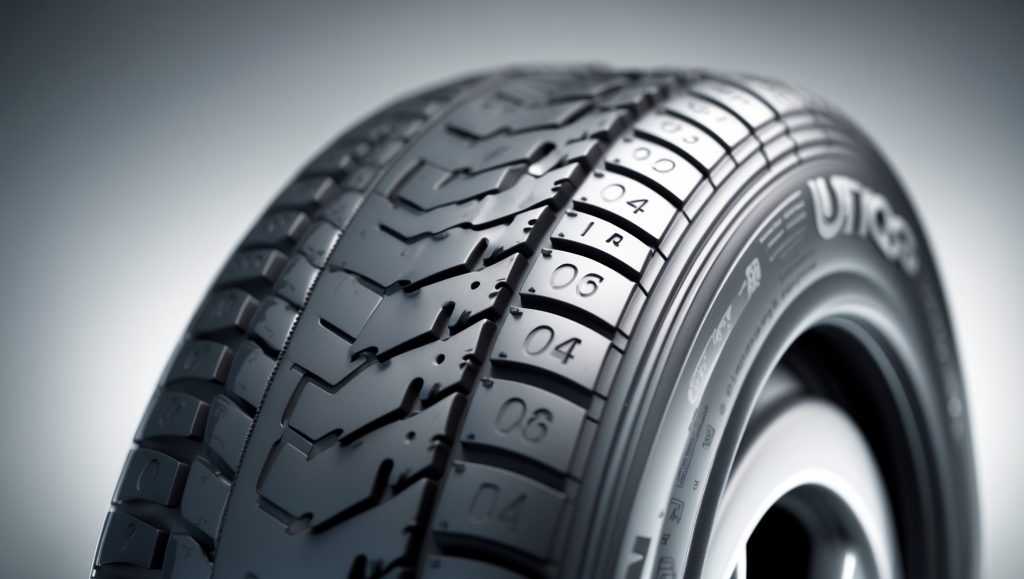
UTQG numbers are molded into the tyre’s sidewall, typically near the size and other regulatory markings. Tyre manufacturer websites and retailer listings also display these ratings.
Breaking Down the UTQG Components
Every UTQG rating consists of three parts: treadwear, traction, and temperature. Each rating provides unique insight into how a tyre is likely to behave in real-world conditions.
Treadwear Grade
The treadwear number is a comparative rating based on the wear rate of the tyre when tested under controlled conditions. The baseline grade is 100. A tyre graded 200 is expected to last twice as long as a 100-rated tyre under the same test conditions. Most passenger car tyres have treadwear grades ranging from 300 to 800, but this can vary widely.
- Example: A tyre with a treadwear rating of 400 should, in theory, last four times as long as a 100-rated reference tyre in the test. However, real-world mileage can differ based on driving habits, maintenance, and road conditions.
Traction Grade
Traction grades reflect the tyre’s ability to stop on wet pavement, as measured under controlled tests. The grades are AA (best), A, B, and C (minimum acceptable). This rating focuses on straight-line wet braking, not cornering or hydroplaning resistance.
- AA: Highest wet traction performance.
- A: Excellent wet braking.
- B: Acceptable, but less than A or AA.
- C: Meets the minimum federal requirement.
Temperature Grade
This grade measures a tyre’s ability to withstand and dissipate heat under controlled conditions. Excessive heat can lead to tyre failure, making this an important safety metric—especially for highway and high-speed driving. The grades are A (best), B, and C (meets federal minimum).
- A: Performs well at speeds over 115 mph (185 km/h).
- B: Performs between 100–115 mph (160–185 km/h).
- C: Meets the minimum standard for speeds between 85–100 mph (130–160 km/h).
How to Use UTQG Ratings When Buying Tyres
UTQG ratings are most useful when comparing tyres of similar size, category, and intended use. Here’s how each component can guide your buying decision.
Prioritizing Longevity
If you drive high annual mileage or manage a fleet, a higher treadwear number generally means a longer-lasting tyre, potentially lowering cost-per-mile. For example, a commuter might choose a 700-rated tyre for maximum life, while a sports car owner might accept a 300-rated ultra-high performance tyre for better grip.
Choosing for Wet Safety
Drivers in rainy climates or those who prioritize wet braking should look for tyres with AA or A traction grades. This is especially important for regions prone to sudden downpours or for vehicles frequently driven at highway speeds.
Heat and High-Speed Driving
Frequent highway drivers or those living in hot climates should prioritize tyres with an A temperature grade to reduce the risk of heat-related tyre damage or blowouts.
Comparing Similar Tyres
UTQG is best used to compare tyres within the same class (e.g., all-season touring tyres, performance summer tyres). Comparing a touring tyre to a high-performance summer tyre may not be meaningful, as their UTQG targets differ by design.
Limitations and Edge Cases of UTQG Ratings
While UTQG is a helpful tool, it has its limitations and should not be the sole factor in tyre selection.
Manufacturer Testing Variability
UTQG testing is performed by tyre manufacturers themselves, following federal guidelines, but there’s room for interpretation. This means results can vary between brands, and a 400-grade from one company may not perfectly match a 400 from another.
Not All Tyres Are Rated
Winter tyres, light truck tyres, and some specialty models are not required to have UTQG ratings. For these products, alternative comparisons or independent reviews are necessary.
Real-World vs. Test Conditions
Actual tyre life, wet grip, and temperature resistance can be influenced by road surface, climate, vehicle alignment, maintenance, and driving style—factors not fully captured by UTQG tests.
Not a Complete Safety Measure
The traction grade only measures straight-line wet braking, not cornering grip or hydroplaning resistance. Similarly, the temperature grade focuses on heat dissipation under laboratory conditions, not all real-world heat sources.
How to Read a UTQG Marking: Real Examples
Let’s decode a typical tyre sidewall marking: UTQG 500 A A.
- 500: Treadwear rating; generally long-lasting.
- A: Traction; strong wet braking.
- A: Temperature; excellent high-speed heat resistance.
Another example: UTQG 300 AA B would indicate a shorter tread life (performance focus), top-tier wet braking, and good—but not top—heat resistance.
Common Mistakes
- Assuming a higher treadwear rating always means better tyre quality.
- Comparing UTQG ratings across different tyre categories (e.g., touring vs. performance).
- Ignoring temperature grades in hot climates or for high-speed driving.
- Overlooking wet traction grades when safety in rain is essential.
- Expecting UTQG to predict exact mileage for your specific driving habits.
- Choosing tyres solely based on UTQG without considering vehicle manufacturer recommendations.
- Forgetting that not all tyres (e.g., winter or light truck tyres) display UTQG ratings.
Quick Checklist
- Check the UTQG rating on the tyre sidewall or product listing.
- Prioritize treadwear for long-distance driving or fleet use.
- Look for AA or A traction grades if wet safety is a top concern.
- Choose A temperature grade for highway or hot-climate driving.
- Compare UTQG only among tyres of similar type and use.
- Combine UTQG data with professional tyre tests and user reviews.
- Always confirm the tyre meets your vehicle’s OEM specifications.
FAQ
- What does UTQG stand for?
Uniform Tire Quality Grading—a US federal system for rating tyre treadwear, traction, and temperature resistance. - Are UTQG ratings directly comparable between brands?
Only to a point. Testing is manufacturer-conducted, so use UTQG as a guide, not an absolute comparison, especially across brands. - Why don’t all tyres have UTQG ratings?
Winter tyres, light truck tyres, and some specialty tyres are exempt from UTQG labeling due to different performance criteria. - Does a higher treadwear rating always mean a longer-lasting tyre?
In general, yes—but real-world factors like driving style, roads, and maintenance can alter actual tyre life. - Is the traction grade related to dry grip?
No. The UTQG traction grade measures wet braking only, not dry grip or cornering performance. - How important is the temperature grade?
Very important for drivers who spend long periods at highway speeds or live in hot regions. - Can I use UTQG ratings to choose tyres for my truck or SUV?
Some SUV tyres carry UTQG labels, but many truck tyres do not. Always check the rating and consult manufacturer guidance for your vehicle type. - Should UTQG be my only consideration when buying tyres?
No. Use UTQG alongside independent reviews, lab tests, and your vehicle’s requirements for a well-rounded decision.
Conclusion
Understanding UTQG ratings empowers US drivers and fleet managers to make smarter, safer, and more cost-effective tyre choices. By interpreting treadwear, traction, and temperature grades correctly—and recognizing their limitations—you can select tyres that align with your driving habits, climate, and vehicle needs. Always combine UTQG information with professional reviews, independent tests, and your vehicle’s specifications for the best results. The next time you shop for tyres, take a closer look at those sidewall markings—they’re more than just numbers; they’re the key to a better driving experience.
If I’m mostly driving in a hot area like Arizona, should I pay more attention to the temperature grade, or are treadwear and traction just as important?
In hot climates like Arizona, the temperature grade is particularly important because it shows how well the tire can withstand heat, which is crucial for safety and longevity. However, treadwear and traction are also important for overall performance and durability, so it’s best to consider all three ratings when choosing your tires.
As someone on a tight budget, is it generally more cost-effective to go for a tyre with a high treadwear number, even if the traction or temperature ratings are a bit lower?
Choosing a tyre with a high treadwear number can be cost-effective since it usually lasts longer, saving you money over time. However, if you often drive in wet conditions or at higher speeds, lower traction or temperature ratings could affect safety. It’s important to balance durability with safety based on your driving needs.
Do UTQG ratings apply to all-season and performance tyres the same way, or should I interpret them differently based on tyre type?
UTQG ratings use the same testing standards for all-season and performance tyres, but you should interpret the numbers in context. Performance tyres often have lower treadwear ratings due to their grip-focused compounds, so compare ratings within the same tyre category for the most accurate assessment.
Is there a specific place on the sidewall where the UTQG code is usually found, or does it vary by brand? I want to make sure I’m reading the right set of numbers.
The UTQG code is typically found molded into the sidewall of the tire, often near the tire size information. Its exact location can vary slightly by brand or model, but it’s usually on one sidewall and consists of a three-part rating—treadwear, traction, and temperature. Look for a sequence like 400 A A. If you don’t see it, try checking the opposite sidewall.
How reliable are UTQG ratings when comparing tyres from different brands, and are the tests standardized enough for a fair comparison?
UTQG ratings are helpful for comparing treadwear, traction, and temperature, but they aren’t perfectly reliable across different brands. While the tests are standardized by the government, manufacturers conduct their own testing, which can lead to variation. Use UTQG ratings as a rough guide, but also check independent reviews and real-world performance when comparing tyres.