
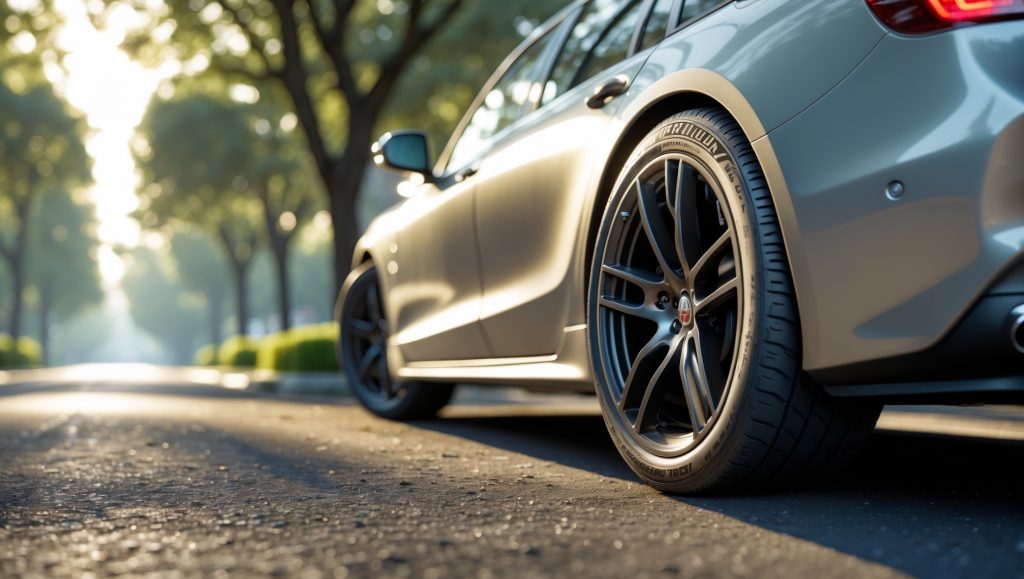
Overview
The Pirelli Cinturato P7 All Season Plus II is a premium touring all-season tyre designed for drivers of mid-sized sedans, coupes, and smaller crossovers. Developed with a strong focus on comfort, low noise, and improved fuel efficiency, this tyre is targeted at motorists who prioritize a quiet, refined ride for daily commuting or long highway journeys. The Cinturato P7 All Season Plus II fits seamlessly onto popular models like the Honda Accord, Toyota Camry, Volkswagen Jetta, and similar vehicles, offering balanced all-weather traction without sacrificing comfort. It’s especially relevant for US drivers looking to minimize cabin noise while maximizing mileage and year-round dependability.
Key Specs
| Type | All-Season Touring |
| Available sizes range | 16″ to 20″ (common: 205/55 R16, 225/45 R17) |
| Speed rating examples | H, V, W |
| Load index examples | 91, 94, 97 |
| Tread pattern | Asymmetric, optimized for noise reduction |
| Technology highlights | Noise-cancelling tread, advanced silica compound, optimized contact patch, low rolling resistance construction |
Performance: Dry
On dry roads, the Cinturato P7 All Season Plus II delivers the composed manners expected of a premium touring tyre. Steering response is precise for the segment, with a reassuring on-center feel that inspires confidence during highway cruising. Grip levels are more than adequate for everyday driving, allowing for secure lane changes and stable, predictable braking. Enthusiasts will note that while outright dry handling is not on par with high-performance summer tyres, the P7 AS Plus II provides a reassuring balance between comfort and traction for typical commuter and family use. Emergency maneuvers are handled with minimal drama, and the tyre remains predictable at the limit, making it a safe choice for drivers prioritizing stability over aggressive cornering.
Performance: Wet
Pirelli’s advanced silica-enriched tread compound and four wide circumferential grooves work together to maintain strong wet weather performance. The Cinturato P7 All Season Plus II resists hydroplaning effectively, offering confidence in heavy rain and standing water. Wet braking distances are among the better options in the touring all-season class, with measured, progressive pedal feel and consistent stopping power. Cornering grip in the wet remains stable, though spirited drivers will detect some early warning understeer when pushed. For the majority of drivers, these characteristics translate to safe, composed handling and a sense of security on slick surfaces. The tyre’s ability to clear water quickly is a notable strength, especially compared to older or budget-focused competitors.
Performance: Snow & Ice
As an all-season tyre, the Cinturato P7 All Season Plus II is engineered for mild to moderate winter conditions but isn’t a specialized winter tyre. Light snow traction is respectable thanks to the tread’s siping and compound flexibility at lower temperatures. Acceleration and braking on packed snow are manageable for cautious drivers, but limitations become clear in deeper snow or icy scenarios. The tyre can handle occasional dustings, but those in regions with frequent or severe winter weather should consider a dedicated winter tyre for maximum safety. However, for much of the US where winters are variable and plowing is prompt, the P7 AS Plus II offers enough capability to get through typical cold snaps and surprise snowfalls without drama.
Comfort & Noise
Noise and ride comfort are standout qualities for the Cinturato P7 All Season Plus II. Pirelli’s tread pattern features pitch sequencing and phasing specifically designed to disrupt and minimize road noise, leading to a notably serene cabin environment. On both coarse and smooth pavement, the tyre remains impressively quiet, with only a muted hum detectable at highway speeds. The sidewall construction and optimized footprint further dampen vibrations, making rougher roads less intrusive. For drivers sensitive to tyre noise—whether commuting daily or taking extended road trips—the P7 AS Plus II is among the quietest tyres in its class. It rivals (and in some cases surpasses) perennial leaders like the Michelin Primacy and Continental PureContact in subjective sound comfort.
Durability & Economy
Durability is another area where the P7 All Season Plus II stands out. Pirelli offers a competitive 70,000-mile treadwear warranty, indicating confidence in longevity. The tyre’s tread compound is engineered for even wear, and many users report consistent performance well into the later stages of tread life. Rolling resistance is notably low, which can contribute to measurable improvements in fuel economy for both gasoline and hybrid vehicles. In the US, UTQG ratings typically fall around 700 A A, reflecting high treadwear potential and strong temperature/traction scores. This makes the P7 AS Plus II a smart choice for value-conscious drivers seeking lower long-term running costs. While no tyre is immune to alignment issues or irregular wear, the Pirelli’s construction helps maintain uniformity with proper maintenance.
Sizes & Alternatives
The Cinturato P7 All Season Plus II is available in a wide range of popular sizes, catering to everything from compact sedans to midsize crossovers. Two of its most frequently fitted sizes are 205/55 R16 and 225/45 R17, making it an accessible option for vehicles like the Honda Civic, Volkswagen Golf, Toyota Camry, and Subaru Legacy. Other common sizes include 215/55 R17 and 235/45 R18.
Notable competitors in the touring all-season category include:
- Michelin Primacy Tour A/S
- Continental PureContact LS
- Bridgestone Turanza QuietTrack
- Goodyear Assurance WeatherReady
- General Altimax RT45
Each of these rivals offers its own blend of comfort, noise suppression, wet weather security, and tread life, but the Pirelli P7 AS Plus II is particularly strong on noise and fuel economy.
Pros & Cons
Pros
- Exceptionally quiet ride on most road surfaces
- Excellent ride comfort and vibration damping
- Low rolling resistance helps improve fuel efficiency
- Long treadwear warranty and strong durability
- Reliable dry and wet traction for everyday driving
Cons
- Limited traction in deep snow and on ice
- Not suitable for aggressive driving or sporty handling
- Premium price point versus some mainstream rivals
- Performance drops off in severe winter conditions
Verdict
The Pirelli Cinturato P7 All Season Plus II is a top-tier choice for drivers who value a quiet, comfortable, and efficient ride above all else. Its strengths in noise suppression, ride quality, and fuel economy make it an ideal fit for daily commuters, families, and anyone who spends long hours behind the wheel. While it isn’t designed for high-performance antics or deep winter battles, it handles the majority of US driving scenarios with composure and confidence. Those seeking the ultimate in snow and ice traction should look elsewhere, but for typical American climates, the P7 AS Plus II delivers a refined, low-stress driving experience. It stands out as a leading option among premium all-season touring tyres—especially for those sensitive to noise and ride comfort.
The article says the P7 AS Plus II is made for smaller crossovers too—would it still work well on a heavier vehicle like a Toyota RAV4, or should I look for something else?
The P7 All Season Plus II can be used on vehicles like the Toyota RAV4, but if your RAV4 is a heavier or more powerful version, you might benefit from a tire designed specifically for SUVs or crossovers for better handling and tread life. Always double-check the tire load and speed ratings against your vehicle’s requirements before choosing.
Has anyone noticed a real difference in cabin noise with these P7 All Season Plus II tires compared to other touring brands like Michelin or Continental?
Many drivers who switched to the Pirelli Cinturato P7 All Season Plus II report a noticeable drop in cabin noise, especially compared to some older Michelin and Continental touring tires. The tread design on the P7 helps dampen road sounds, making for a quieter ride, but actual results can vary based on your vehicle and road conditions.
Is it easy to find the common sizes for this tire in stock at most shops, or would I likely need to order them ahead of time and wait for delivery?
The Pirelli Cinturato P7 All Season Plus II is a popular touring tire, and common sizes are usually stocked at many tire retailers, especially for mainstream sedans. However, availability can vary by location and season, so it’s a good idea to call ahead or check online with your local shop before visiting. For less common sizes, ordering ahead might be necessary.
How does the noise level on the Cinturato P7 All Season Plus II compare to typical OEM tires for a family sedan like the Camry, especially on longer highway drives?
The Cinturato P7 All Season Plus II is designed to provide a quieter ride than most standard OEM tires that come with family sedans like the Camry. On longer highway drives, you’ll likely notice reduced road noise and less hum inside the cabin, contributing to a more comfortable experience for everyone in the car.
I’m mostly concerned about winter traction for my daily commute. Does the silica compound in this tire offer enough grip on light snow, or should I look for something different?
The silica compound in the Cinturato P7 All Season Plus II does help provide better traction on light snow compared to traditional summer tires. However, if you frequently face icy or heavy snow conditions, a dedicated winter tire would offer significantly better grip and safety for your commute.
Are there any notable differences in comfort or fuel efficiency when fitting the 16-inch versus 20-inch sizes of the Cinturato P7 on a Honda Accord?
Yes, there are some differences. The 16-inch size generally provides a softer, more comfortable ride and can slightly improve fuel efficiency due to lower rolling resistance and lighter weight. The 20-inch size may offer sharper handling but can result in a firmer ride and potentially lower fuel efficiency compared to the 16-inch option on your Honda Accord.
For someone driving a Honda Accord mostly on highways, how does the fuel efficiency improvement from the low rolling resistance construction of this Pirelli compare to older P7 models or other touring tyres?
The Cinturato P7 All Season Plus II uses an improved low rolling resistance compound, which can offer up to a few percent better fuel efficiency compared to older P7 models. Compared to standard touring tires, you’ll likely notice slightly better gas mileage, especially on highway drives, thanks to reduced energy loss and optimized tread design.
For sedans that commonly use 16-inch versus 18-inch wheel sizes, is there a significant difference in ride comfort or noise reduction with the available P7 All Season Plus II sizes?
Yes, there can be a noticeable difference. The 16-inch versions of the P7 All Season Plus II generally offer a smoother, quieter ride due to their taller sidewalls, which better absorb bumps and road noise. The 18-inch sizes provide sharper handling but may transmit more road feel and tire noise into the cabin.
For a small business with a fleet of Honda Accords, how would the comfort and noise reduction of the P7 All Season Plus II compare to similar Michelin or Continental options?
The Pirelli Cinturato P7 All Season Plus II is well-regarded for its quiet ride and comfort, especially on sedans like the Honda Accord. Compared to similar Michelin and Continental touring tires, the P7 generally matches or slightly trails Michelin in noise reduction but is often on par with Continental for comfort. It’s a strong, cost-effective choice for fleet vehicles seeking a balance of performance and ride quality.
Is there any trade-off in winter traction for the noise reduction and comfort features on these tires? I’m looking for something that performs well in light Midwest snow without being too loud.
The Cinturato P7 All Season Plus II is designed to balance comfort, quietness, and year-round traction. While it offers improved winter performance compared to typical all-season tires, it’s not as grippy as a dedicated winter tire in snow and ice. For light Midwest snow, it should do reasonably well, but heavy snow or icy conditions may challenge its limits.
For someone on a budget, is the P7 All Season Plus II worth the premium over standard all-season tyres when the main goal is a quiet ride for family trips?
If a quiet ride is your top priority for family trips, the P7 All Season Plus II stands out for its noise reduction and comfort compared to many standard all-season tyres. While it does cost more, its touring-focused design often delivers a noticeably quieter and smoother ride, which can make long journeys more pleasant. If your budget allows for a bit extra, the upgrade could be worthwhile for your needs.
Are these tires suitable to keep on year-round in places with occasional light snow, or would I still need to switch to dedicated winter tires for safety?
The Pirelli Cinturato P7 All Season Plus II is designed to handle light snow, so in areas with only occasional, mild winter conditions, you can typically keep them on year-round. However, for frequent or heavy snow and icy roads, dedicated winter tires will provide better safety and traction.
For someone on a tight budget, is the improved fuel efficiency with these tires enough to offset their higher upfront cost compared to more basic all-season options?
The improved fuel efficiency of the Pirelli Cinturato P7 All Season Plus II can help offset its higher upfront cost over time, but the total savings will depend on how much you drive. If you put a lot of miles on your car, the fuel savings could add up, but for light or occasional driving, the difference may not be substantial.
Can you clarify whether the P7 All Season Plus II is suitable for occasional light snow, or would you recommend switching to dedicated winter tyres for businesses located in northern states?
The P7 All Season Plus II handles occasional light snow fairly well, thanks to its all-season tread design. However, for businesses in northern states where snow and ice are more frequent or severe, dedicated winter tires are a safer and more reliable choice for optimal traction and safety during winter months.
For someone driving mostly in mild Southern US winters, is this tire sufficient for occasional light snow, or would you still recommend a dedicated winter set?
The Pirelli Cinturato P7 All Season Plus II is designed to handle occasional light snow, making it a reasonable choice for mild Southern US winters. If you rarely encounter snow or ice, these should be sufficient. However, if you expect frequent snow or icy conditions, a dedicated winter tire would offer better safety and traction.
Are there any notable differences in comfort or road noise between the available speed ratings (H, V, W) for the P7 All Season Plus II?
The comfort and road noise levels for the P7 All Season Plus II are very similar across the H, V, and W speed ratings. Any differences are minimal, as the main distinctions between speed ratings relate to maximum speed capability rather than ride quality or quietness.
I see these fit sedans like the Camry and Accord, but would they be suitable for a small business fleet with a few crossovers mixed in, or would another Pirelli model be better for mixed vehicle types?
The Cinturato P7 All Season Plus II is designed mainly for sedans but can fit some crossovers if they use compatible tire sizes. For a mixed fleet with several crossovers, you might want to consider Pirelli’s Scorpion line, which is tailored for SUVs and crossovers, to ensure optimal performance and durability for all vehicles.
I usually drive mostly in the rain—are the wet traction improvements of this tire really that significant, or are there better options I should consider in the same price range?
The Cinturato P7 All Season Plus II does offer notable improvements in wet traction compared to its predecessor, especially with enhanced tread design for better water evacuation. However, if rain performance is your top priority, you might also want to consider alternatives like the Michelin CrossClimate2 or Continental PureContact LS, which are well-regarded for wet grip and are often in a similar price range.
Does the Cinturato P7 All Season Plus II handle sudden summer storms well? I worry about hydroplaning on wet roads during the school pickup rush.
The Cinturato P7 All Season Plus II is designed with wide circumferential grooves and a special tread pattern to help channel water away, which reduces the risk of hydroplaning. It performs well in wet conditions, making it a good choice for staying safe during sudden summer storms, especially during busy school pickup times.
Is there any noticeable difference in cabin noise reduction when switching from the previous Cinturato P7 All Season Plus to the Plus II version on a mid-sized sedan?
The Plus II version of the Cinturato P7 All Season Plus is designed with updated tread patterns and rubber compounds that can help reduce road noise compared to the previous version. On a mid-sized sedan, most drivers report a subtle but noticeable improvement in cabin quietness, especially at highway speeds and over rougher pavement.
For someone on a student budget, is the extra comfort and quietness of the P7 All Season Plus II worth the price over cheaper touring tires?
If you’re on a tight student budget, you might find the extra comfort and quietness of the P7 All Season Plus II nice but not essential. Cheaper touring tires can still offer good safety and performance for everyday driving, so unless you really value a quieter, smoother ride, saving money with a more affordable option could make sense.
Are there any budget-friendly alternatives to the Cinturato P7 All Season Plus II that still offer similar comfort and quietness for highway driving?
Yes, there are a few budget-friendly alternatives you can consider. The General Altimax RT43 and the Kumho Solus TA71 are both known for providing good comfort and quietness on highways, while often being more affordable than the Cinturato P7 All Season Plus II. These options should give you a smooth and quiet ride without stretching your budget.
Are these tires suitable for occasional light snow, or would you recommend a dedicated winter tire for colder regions?
The Pirelli Cinturato P7 All Season Plus II can handle occasional light snow, thanks to its all-season tread. However, if you often drive in colder regions or face regular snow and ice, a dedicated winter tire will provide better traction, safety, and performance during harsh winter conditions.
Are there certain vehicles where the advanced contact patch technology might not make a noticeable difference, or is the benefit pretty consistent across all compatible sedans?
The advanced contact patch technology offers consistent benefits like improved grip and even wear across most compatible sedans, especially those in the midsize to full-size range. However, if a vehicle already has an exceptionally refined suspension or is designed mainly for performance rather than comfort, the difference might be less noticeable.
For someone living in a region with occasional snow but mostly rain, does the P7 All Season Plus II still provide strong enough year-round traction compared to a dedicated winter tyre?
The P7 All Season Plus II performs well in rainy and mild winter conditions, offering reliable traction for occasional snow. However, it won’t match the grip or control of a dedicated winter tire in heavy snow or icy situations. For mostly rain and light snow, it’s a solid year-round choice, but for frequent or severe winter weather, dedicated winter tires are safer.
I see the Cinturato P7 AS Plus II fits sedans and some crossovers. Would these be a good option for someone who drives mostly on highways and sometimes encounters light snow, or would a different style tire be better?
The Cinturato P7 All Season Plus II is well-suited for mostly highway driving and occasional light snow, offering good comfort, quietness, and reliable year-round traction. Unless you frequently encounter heavy snow or icy conditions, these tires should meet your needs without requiring a switch to a different style.
Do these tires tend to wear evenly over time, especially given the asymmetric tread design?
The Pirelli Cinturato P7 All Season Plus II is designed to wear evenly, even with its asymmetric tread pattern. Regular tire rotation and proper alignment are important to ensure even wear, but the tire’s tread design helps distribute pressure consistently across the surface for balanced performance over time.
I’m planning to replace the tires on my Toyota Camry soon. Is there a big drop in fuel efficiency if I go with the 225/45 R17 size instead of the 205/55 R16?
Switching from 205/55 R16 to 225/45 R17 tires will likely cause a slight decrease in fuel efficiency. The wider 225 mm tires create more rolling resistance and are generally heavier, which can increase fuel consumption a bit. However, the difference is usually minor for most drivers, but it is something to consider if maximizing fuel economy is a priority.
Are there any issues with these tyres in colder US climates, or should I be looking at a different Pirelli model for occasional snow in the Midwest?
The Cinturato P7 All Season Plus II performs well in light snow and cold weather, but for Midwest winters with occasional snow and icy conditions, you might want to consider a dedicated winter tire like the Pirelli Sottozero range for better traction and safety during harsher weather.
You mention that these fit vehicles like the Honda Accord and Camry. Are there any installation tips or alignment settings I should ask for at the tire shop to maximize ride comfort?
When having the Cinturato P7 All Season Plus II tires installed, ask the shop to balance all wheels and perform a four-wheel alignment to your vehicle’s factory specifications. Ensure tire pressure matches the car manufacturer’s recommendations. If you prioritize comfort, you can mention this to the technician—they may suggest slightly lower pressures within the safe range for a softer ride.
Is there any info on how long the tread lasts for these tyres, or if they come with a mileage warranty?
The article doesn’t mention the exact tread life, but the Pirelli Cinturato P7 All Season Plus II typically comes with a mileage warranty of around 70,000 miles. This warranty is fairly standard for touring all-season tyres and can give you an idea of their expected longevity.
For someone considering these tyres over a set of high-performance summer tyres, can you elaborate on what sacrifices in dry handling to expect, and whether it’s noticeable during spirited weekend drives?
Choosing the Cinturato P7 All Season Plus II instead of high-performance summer tyres means you’ll notice less sharp steering response and reduced grip when pushing hard on dry roads. During spirited weekend drives, especially on twisty routes, the difference will be noticeable—the all-season tyres prioritize comfort and quietness over maximum cornering grip and feedback.
I drive a Honda Accord mostly for commuting and road trips. Do these tires affect fuel mileage enough to justify choosing them over less expensive all-seasons?
The Pirelli Cinturato P7 All Season Plus II is designed with low rolling resistance, which can help improve your Honda Accord’s fuel efficiency compared to some standard all-season tires. While the difference may not be dramatic, over time it can lead to noticeable savings, especially if you commute and take road trips frequently. If fuel economy matters to you, these tires are a worthwhile consideration.
Is there a big price difference between the different speed ratings (like H vs V) for this tire, and does it matter much for regular highway driving in the US?
The price difference between H and V speed ratings for the Pirelli Cinturato P7 All Season Plus II is usually modest, often just a few dollars per tire. For regular highway driving in the US, either rating is fine—what matters most is matching the tire to your vehicle’s requirements. Most drivers won’t notice a practical difference in everyday use.
For drivers in northern states facing light snow, would you recommend this tire or a dedicated winter option for better all-weather dependability?
For northern states with light snow, the Cinturato P7 All Season Plus II offers solid performance in mild winter conditions. However, if you encounter frequent icy roads or want maximum traction and safety in snow, a dedicated winter tire is the better choice for dependable all-weather grip.
Is there a big difference in fuel efficiency with the low rolling resistance construction on these compared to regular all-season tires?
The low rolling resistance construction of the Cinturato P7 All Season Plus II can improve fuel efficiency by reducing the energy needed to move the car. While the difference isn’t huge, you might notice a small boost in miles per gallon compared to standard all-season tires, especially on longer drives or highway trips.
For someone commuting year-round in a region with occasional snowfall, would you recommend this tire over a dedicated winter tire, or is it best suited for milder climates?
The Cinturato P7 All Season Plus II is designed for year-round use and handles light snow reasonably well, making it suitable if snowfall is only occasional and not severe. However, for regions with frequent or heavy snow, a dedicated winter tire would provide better traction and safety. For milder climates or areas with just occasional snow, this all-season tire should be a good fit.
Can you clarify if the advanced silica compound in this model affects tread life or durability over multiple years of commuting?
The advanced silica compound in the Pirelli Cinturato P7 All Season Plus II is designed to enhance both grip and tread life. It helps the tire resist wear from frequent commuting, so you can expect solid durability and longevity over several years, provided you maintain proper tire care and rotation.
For a small business fleet of sedans that racks up a lot of highway miles, how does the P7 All Season Plus II’s fuel efficiency compare to other all-season touring options?
The P7 All Season Plus II is known for delivering good fuel efficiency among all-season touring tires, thanks to its low rolling resistance design. Compared to similar options, it generally matches or slightly outperforms competitors like the Michelin Defender T+H and Continental TrueContact Tour in real-world highway mileage, making it a cost-effective choice for fleet use.
Do the sizes mentioned, like 205/55 R16, fit most Toyota Camrys from the last decade, or would I need to double-check compatibility before buying?
The 205/55 R16 size is not a standard fitment for most Toyota Camrys from the last decade. Camrys typically use larger sizes, like 215/55 R17 or 205/65 R16. It’s important to double-check your exact Camry model and year, and refer to your owner’s manual or check your current tire sidewall before purchasing.
I’m interested in maximizing fuel efficiency—do you have any real-world data on mileage improvements when switching to these from standard all-season tires?
While exact mileage improvements can vary depending on vehicle and driving habits, many users report gaining 1 to 2 extra miles per gallon after switching to Cinturato P7 All Season Plus II tires. The low rolling resistance design helps boost fuel efficiency compared to many standard all-season tires. Actual results may differ, but some drivers notice a small yet noticeable improvement in fuel economy.
How do these tires typically wear if used year-round in areas with mild winters and occasional snow, or would you recommend a separate winter tire for best longevity?
The Cinturato P7 All Season Plus II is designed for year-round use, offering good tread life in areas with mild winters and only occasional snow. They generally wear evenly if rotated regularly. However, for best longevity and performance in harsher winter conditions, separate winter tires are recommended. In your climate, these all-seasons should be sufficient unless you frequently encounter icy roads.
For US drivers who encounter occasional snow, how does the wet and light snow traction of the P7 All Season Plus II compare to similar touring tires from Michelin or Continental?
The Pirelli Cinturato P7 All Season Plus II performs well in wet and light snow conditions, offering confident traction on par with many top touring tires. However, Michelin’s CrossClimate2 and Continental’s PureContact LS generally edge it out slightly in snow grip and wet braking. For occasional snow, the P7 is a solid choice, but Michelin and Continental alternatives may provide a bit more winter assurance.
The article mentions improved fuel efficiency with these tires. About how much of a difference could I expect in gas mileage if I switched to these from regular factory all-season tires?
Switching to the Pirelli Cinturato P7 All Season Plus II could improve your gas mileage by about 1 to 2 miles per gallon compared to standard factory all-season tires. The exact difference will depend on your driving habits and vehicle, but these tires are designed with low rolling resistance specifically to help boost fuel efficiency.
If my Honda Accord has 17-inch wheels, would the 225/45 R17 size be the best match, or should I double-check anything before buying?
225/45 R17 is a common size for Honda Accord models with 17-inch wheels, but it’s important to double-check your owner’s manual or the tire placard on your car door jamb for the recommended size. This ensures proper fit, safety, and accurate speedometer readings.
I drive a 2017 Honda Accord and mostly do highway miles. How does the road noise of the P7 All Season Plus II compare to something like the Michelin Defender?
The Pirelli Cinturato P7 All Season Plus II is known for its quiet, comfortable ride, especially on highways. Compared to the Michelin Defender, the P7 generally offers similar or slightly lower road noise levels. Both are good choices for reducing cabin noise, but the Pirelli may edge out the Defender in overall quietness for your 2017 Accord.
I noticed these are available in multiple speed ratings. Would you recommend the H, V, or W for primarily city commuting with occasional highway travel?
For mostly city commuting with some highway use, the H speed rating is typically sufficient. It balances comfort, tread life, and performance well for everyday driving. The V or W ratings are designed for higher speeds and sportier handling, which you might not need unless you drive aggressively or own a high-performance sedan.
The article mentions the P7 All Season Plus II has an asymmetric tread pattern optimized for noise reduction. How does its cabin noise level compare to other touring tires like the Michelin Primacy or Continental PureContact for daily commuters?
The P7 All Season Plus II is designed to be exceptionally quiet, thanks to its asymmetric tread pattern that specifically targets noise reduction. In real-world use, many drivers report that its cabin noise level is on par with, or even slightly quieter than, the Michelin Primacy and Continental PureContact, making it a solid choice for daily commuting comfort.
I’m driving a 2018 Toyota Camry and mostly use it for daily errands and kids’ activities. Would these tires handle occasional heavy rain here in the Midwest, or should I look for something more specialized?
The Pirelli Cinturato P7 All Season Plus II is designed for reliable traction in a variety of conditions, including occasional heavy rain. Its tread pattern helps reduce hydroplaning, making it well-suited for Midwest weather on a daily-driven Camry. Unless you often drive in extreme rain or flooding, these tires should meet your needs without needing something more specialized.
How does the noise reduction technology in the P7 All Season Plus II compare to Continental or Michelin touring tyres aimed at US sedans?
The P7 All Season Plus II uses a specialized tread pattern and advanced rubber compounds to minimize road noise. While it delivers a quiet ride comparable to Continental’s and Michelin’s touring options for US sedans, Michelin’s top models like the Primacy MXM4 may offer a slight edge in cabin quietness. Overall, Pirelli’s approach is highly competitive among premium touring tires.
Is there a noticeable difference in fuel efficiency after switching to these from a standard OE set, given the low rolling resistance design?
Switching to the Pirelli Cinturato P7 All Season Plus II can provide a modest improvement in fuel efficiency compared to many standard OE tires, thanks to its low rolling resistance design. While exact results vary by vehicle and driving habits, most drivers notice slightly better gas mileage over time.
Is the noise-cancelling tread technology effective even as the tires wear, or does the quiet ride only last during the first half of their lifespan?
The noise-cancelling tread technology on the Cinturato P7 All Season Plus II is designed to provide a quiet ride throughout much of the tire’s lifespan. However, as the tread wears down, some increase in road noise is normal for any tire, though the tire should remain relatively quiet compared to standard models.
For someone mainly doing highway commuting on a Honda Accord, is the H, V, or W speed rating best, or does it matter much for everyday use?
For highway commuting in a Honda Accord, the H speed rating is usually sufficient and can provide a good balance of comfort, durability, and price. The V or W ratings are designed for higher speeds and sportier handling, but for everyday use, you likely won’t notice a difference. Just make sure the rating meets or exceeds your car’s recommended specification.
I see it’s offered in sizes up to 20 inches. Would you recommend this tire for smaller crossovers, or is it mainly optimized for sedans and coupes?
The Pirelli Cinturato P7 All Season Plus II is primarily designed for sedans and coupes, but it can work well for smaller crossovers, especially those with a car-like ride and similar tire size requirements. Just make sure the load and speed ratings match your vehicle’s specifications for the best performance and safety.
Can you explain more about how the noise-cancelling tread technology works? Is it mainly effective on highways, or does it help in city driving too?
The noise-cancelling tread technology in the Cinturato P7 All Season Plus II works by using a specific tread pattern and rubber compounds that reduce the vibrations and air movement responsible for road noise. This helps create a quieter ride not just on highways but also at lower speeds in city driving, offering consistent comfort in both settings.
How does this Pirelli model handle winter conditions in northern US states compared to dedicated all-weather tires, considering it’s positioned as an all-season option?
The Pirelli Cinturato P7 All Season Plus II offers reliable traction in light winter conditions typical of the northern US, such as cold, wet roads and mild snowfall. However, it doesn’t match the winter grip or snow performance of dedicated all-weather tires, which are specially designed for frequent, heavier snow and icy roads. For harsh winters, an all-weather or winter-specific tire would be a better choice.
How do these tires handle wintery conditions, like light snow or freezing rain, compared to dedicated all-season tires often used in the northern US? Are they adequate for occasional snow days, or would you still recommend a dedicated winter tire?
The Cinturato P7 All Season Plus II performs well in light snow and cold conditions for an all-season tire, offering decent grip and safety for occasional snow days. However, if you regularly face heavy snow or icy roads, a dedicated winter tire is still the better choice for maximum traction and control.
Are there any noticeable ride comfort differences between the 16-inch and 18-inch sizes of the Cinturato P7 All Season Plus II when installed on a VW Jetta?
Yes, there are some ride comfort differences between the 16-inch and 18-inch sizes. The 16-inch version generally provides a softer, more comfortable ride because it uses a taller sidewall, which absorbs bumps better. The 18-inch size, with a lower-profile sidewall, may feel firmer and transmit more road imperfections, but can offer slightly sharper handling.
I see these fit common sizes like 205/55 R16 and 225/45 R17. Are there any trade-offs in ride comfort or noise reduction between the smaller and larger sizes on heavier sedans?
Yes, there can be some trade-offs. Generally, the larger 225/45 R17 tires have a lower sidewall and may offer slightly less ride comfort compared to the 205/55 R16, especially on heavier sedans. However, the difference in noise reduction is usually minor, as both sizes are designed for quietness. The smaller size may absorb bumps a bit better.
How does the wet weather performance hold up over time, especially after a couple of years of daily driving? Does the silica compound help maintain traction as the tread wears down?
Over time, the Pirelli Cinturato P7 All Season Plus II generally retains good wet weather performance, even with regular use. The high-silica compound is designed to help maintain traction as the tread wears, so you’ll notice less drop-off in wet grip compared to some older tire designs. However, like all tires, performance will gradually decline as tread depth decreases, so regular checks are important for safety.
For drivers who live in areas with occasional light snow, is this tyre a safe year-round option or should I consider a different all-season model?
The Pirelli Cinturato P7 All Season Plus II performs well in light snow, making it a reasonable year-round choice for areas with occasional winter weather. However, if you often encounter heavier snow or icy conditions, you might want to consider an all-season tire with stronger winter traction or even a dedicated winter tire for added safety.
Does the P7 All Season Plus II wear down faster or slower than typical all-season tires, especially on heavier sedans like the Camry or Accord?
The P7 All Season Plus II is designed with a special tread compound for longer tread life compared to many typical all-season tires. On heavier sedans like the Camry or Accord, it generally wears at a normal or slower rate, provided you maintain proper tire pressure and rotation schedules.
Does the Pirelli Cinturato P7 All Season Plus II maintain its low noise levels as the tread wears down, or does cabin noise increase noticeably over the life of the tire?
The Pirelli Cinturato P7 All Season Plus II is designed to provide a quiet ride, but as the tread wears down over time, you may notice a gradual increase in cabin noise. This is normal for most tires, as reduced tread depth offers less sound absorption. However, many users report that these tires remain relatively quiet compared to others, even as they age.
Are these tires worth the price if my main concern is highway noise reduction, or would a more budget-friendly all-season touring tire work almost as well?
If highway noise reduction is your top priority, the Pirelli Cinturato P7 All Season Plus II is a strong choice, as it’s specifically designed for quiet, comfortable rides. Some budget-friendly touring tires do a decent job, but may not match the same level of noise suppression and refinement. If your budget allows, the Pirelli is likely to perform better for noise reduction.
Is there any impact on ride comfort or quietness once these tires near the end of their tread life?
As the Pirelli Cinturato P7 All Season Plus II tires wear down, you might notice a gradual decrease in ride comfort and an increase in road noise. This is common with most tires, as tread depth helps cushion the ride and absorb sound. Near the end of their tread life, these effects can become more noticeable.
For drivers in northern states that see occasional snow, would you recommend the Cinturato P7 All Season Plus II over dedicated winter tires, or is it best suited just for milder climates?
The Cinturato P7 All Season Plus II is designed for good performance in light snow, making it suitable for occasional winter use. However, for areas with frequent or heavy snow and ice, dedicated winter tires are a safer choice due to their superior grip in harsh conditions. All-seasons work best in milder climates or where snow is infrequent.
For drivers who put a lot of miles on their sedans each year, what kind of tread life can be expected from the P7 All Season Plus II compared to similar touring tires?
The Pirelli Cinturato P7 All Season Plus II is known for its impressive tread life, typically offering around 70,000 miles under normal driving conditions. This is on par with or slightly better than many competing touring all-season tires, so it’s a strong choice for high-mileage drivers looking for durability in addition to comfort and quietness.
I see the P7 AS Plus II comes in a range of sizes. For someone with 18-inch wheels on a Jetta, would you recommend this tire over a dedicated summer tire for mostly dry California driving?
If you mostly drive in dry California conditions and prioritize sporty handling, a dedicated summer tire will likely offer better grip and responsiveness than the P7 All Season Plus II. The P7 AS Plus II is excellent for comfort and year-round versatility, but summer tires generally outperform all-seasons in dry, warm climates. Consider your driving style and whether you need wet or cold weather capability.
Have any owners experienced issues with road feedback or ride harshness when these tires are paired with smaller crossovers, not just sedans?
Some owners who have fitted the Pirelli Cinturato P7 All Season Plus II to smaller crossovers mention a slight increase in road feedback and firmer ride compared to sedans, especially over rough pavement. However, most still find the comfort level acceptable for daily driving. Your experience may also depend on your specific vehicle’s suspension tuning.
For a Honda Accord primarily used for highway commuting in the Northeast, would the asymmetric tread design of this tire help with road noise on rough pavement?
Yes, the asymmetric tread design of the Pirelli Cinturato P7 All Season Plus II is intended to reduce road noise, especially on rough pavement. This feature, along with its optimized tread pattern, helps absorb sound and vibrations, making it a good fit for your Honda Accord during highway commutes in the Northeast.
Is the advanced silica compound in these tires mainly for better wet grip or does it also help with tread life and fuel efficiency? I’m trying to get the most miles possible out of a set.
The advanced silica compound in the Cinturato P7 All Season Plus II does more than just improve wet grip. It also contributes to longer tread life and better fuel efficiency by reducing rolling resistance. So, you can expect these tires to help you get more miles out of each set.
How long can I expect these tires to last if most of my driving is daily suburban commutes and family road trips?
For mostly suburban commutes and family road trips, you can typically expect the Pirelli Cinturato P7 All Season Plus II tires to last around 60,000 to 70,000 miles, assuming regular maintenance like proper inflation and rotation. Actual mileage can vary based on driving style and conditions, but these tires are designed for long-lasting performance in everyday use.
Since the article mentions improved fuel efficiency, do you know if drivers have actually seen better gas mileage after switching to these tires on their sedans?
Many drivers have reported noticing a modest improvement in gas mileage after switching to the Pirelli Cinturato P7 All Season Plus II, thanks to its low rolling resistance design. However, actual results can vary depending on driving habits and vehicle condition. Most sedan owners typically see a slight boost in fuel efficiency, but the difference may be more noticeable over time.
If I stick with the suggested sizes, would these tires fit on a 2019 Volkswagen Jetta without negatively affecting ride comfort?
Yes, if you choose Pirelli Cinturato P7 All Season Plus II tires in the sizes recommended for your 2019 Volkswagen Jetta, they will fit properly and are designed to maintain or even enhance your ride comfort. These tires are known for their quietness and smooth performance on sedans like yours.
The article mentions improved fuel efficiency with these tires. Do you know if most users see a noticeable change in their actual MPG after switching to the Cinturato P7 All Season Plus II?
Most users report a slight improvement in fuel efficiency after switching to the Cinturato P7 All Season Plus II, thanks to its low rolling resistance design. However, the actual change in MPG varies depending on driving habits, vehicle type, and conditions. While some drivers notice a clear boost, others find the difference more subtle.
Are these Pirelli tires more durable or longer-lasting than similar options from Michelin or Continental for US sedans?
The Pirelli Cinturato P7 All Season Plus II is designed for good tread life and durability, but Michelin and Continental also offer highly durable touring tires for US sedans. In many independent tests, tread life among these brands is quite comparable, with Michelin sometimes edging ahead in longevity. Actual results can vary depending on driving habits, maintenance, and road conditions.
Could you clarify if all available sizes, especially the 20-inch option, are optimized with the same noise-cancelling tread technology mentioned in the article?
All available sizes of the Pirelli Cinturato P7 All Season Plus II, including the 20-inch option, use the same advanced tread pattern and rubber compounds designed for noise reduction and quietness. The noise-cancelling features highlighted in the article are consistent across the entire size range, so you can expect similar performance regardless of tire size.
Are there any trade-offs in snow or icy conditions since the focus seems to be on comfort and low rolling resistance, or does the silica compound help maintain good winter traction for daily commutes?
The silica compound in the Pirelli Cinturato P7 All Season Plus II does help improve grip in light snow and cold conditions, making it suitable for typical winter commutes. However, since the tire is not a dedicated winter tire, traction and braking will still be less effective on ice or deep snow compared to specialized winter tires. It balances comfort and efficiency with reasonable all-season traction.
Could you clarify if the lower rolling resistance in this tire has a significant impact on fuel efficiency for city drivers, or is the benefit mostly seen on highways?
The lower rolling resistance of the Pirelli Cinturato P7 All Season Plus II can help improve fuel efficiency in both city and highway driving. However, you’ll notice the most savings on highways, since steady speeds enhance the tire’s efficiency benefits. City drivers may see some improvement, but it will be more modest due to frequent stops and starts.
Are there any trade-offs in wet traction with the noise-cancelling tread compared to other all-season tires in this price range?
The Pirelli Cinturato P7 All Season Plus II uses a tread design that focuses on quietness, but it doesn’t significantly compromise wet traction compared to similar all-season tires in its price range. While some ultra-high-performance tires may offer better wet grip, the P7 still provides reliable wet handling for daily driving, balancing comfort and safety.
For drivers who value fuel efficiency, is there any data or estimate on how much these tires can improve mileage compared to typical OEM all-season tires?
The Pirelli Cinturato P7 All Season Plus II is designed with low rolling resistance technology, which can help improve fuel efficiency. While exact mileage gains can vary, drivers often see around a 2–4% improvement in fuel economy compared to standard OEM all-season tires. Actual results depend on driving habits and vehicle type.
The article mentions multiple speed ratings like H, V, and W—does choosing a higher speed rating, such as W, impact the ride comfort or noise levels on daily commutes?
Choosing a higher speed rating like W generally means the tire is built for higher performance, which can make the ride feel firmer compared to H or V rated versions. This might slightly reduce comfort and increase road noise, but for daily commuting, the difference is usually minor unless your car is very sensitive to tire changes.
If I upgrade my company’s sedan fleet soon, how long does it usually take to get these tyres installed at a typical US retailer, and are there any supply delays to watch out for?
For a typical US retailer, installing Pirelli Cinturato P7 All Season Plus II tires on a sedan fleet usually takes about 45 minutes to an hour per vehicle, depending on their schedule and workload. Supply has generally been stable, but it’s wise to call ahead and check stock, especially if you need a large number of tires for multiple cars.
For someone driving mostly in the Northeast with lots of rain and occasional snow, does the wet and light snow traction on these Pirellis match up to their comfort and quietness?
The Pirelli Cinturato P7 All Season Plus II performs very well in wet conditions, offering reliable traction and confident handling. Its light snow performance is good for an all-season tire, but not quite as strong as its comfort and quietness. For frequent or heavier snow, a dedicated winter tire would be better, but for occasional snow, these should suit your needs.
If I drive a Toyota Camry and mostly stick to city roads, will the advanced silica compound help with tread wear over a couple of years or should I expect to replace them sooner?
The advanced silica compound in the Cinturato P7 All Season Plus II is designed to improve tread life and resist wear, especially for city driving like yours. As long as you maintain proper tire pressure and rotate them regularly, you can expect good durability over a couple of years, rather than having to replace them sooner.
I’m curious if these fit well on a 2019 Volkswagen Jetta with 17-inch wheels and if I’d need to adjust the tire pressure for optimal comfort.
The Pirelli Cinturato P7 All Season Plus II is available in sizes that fit 17-inch wheels, which should work for your 2019 Volkswagen Jetta as long as you match the recommended tire size listed in your owner’s manual. For optimal comfort and safety, stick to the tire pressure specified on the sticker inside your driver’s door or in your manual—there’s usually no need to adjust it differently for these tires.
Do the advanced silica compound and asymmetric tread mean these tires will wear out faster if I drive a lot in hot southern states?
The advanced silica compound and asymmetric tread are actually designed to improve both grip and tread life, even in hot conditions. The Cinturato P7 All Season Plus II was developed for long-lasting performance, so you shouldn’t see unusually fast wear just because you drive in hotter southern states.
For someone with a mid-sized crossover, would these tires work just as well as they do on sedans, or are there better options for crossovers in this price range?
The Pirelli Cinturato P7 All Season Plus II is designed mainly for sedans and smaller vehicles, so it may not offer the best performance or durability for a mid-sized crossover. For your vehicle, consider options specifically made for crossovers and SUVs, such as the Michelin CrossClimate2 or Continental CrossContact, which are in a similar price range and better suited to your needs.
Does the noise-cancelling tread on the Cinturato P7 All Season Plus II actually make a noticeable difference on rough US highways compared to other touring tires? I drive a lot on concrete interstates and cabin noise is a big concern for me.
Many drivers notice that the Cinturato P7 All Season Plus II is quieter than typical touring tires, especially on rough or grooved concrete highways. The tread design helps reduce road noise, which can make a real difference in cabin quietness. While no tire is completely silent, this model is designed to keep interior noise levels lower than most alternatives in its class.
Can you clarify if the P7 All Season Plus II performs well during sudden summer rainstorms or if hydroplaning is a concern for drivers in the Midwest?
The P7 All Season Plus II is specifically designed to handle wet conditions, including sudden summer rainstorms. Its tread pattern helps channel water away to reduce hydroplaning risk, making it a solid choice for Midwest drivers who often face heavy rain. However, always ensure proper tire maintenance and adequate tread depth for best results.
Is the low rolling resistance of these tires noticeable in terms of actual miles per gallon on cars like the Honda Accord?
You may notice a slight improvement in miles per gallon with the Pirelli Cinturato P7 All Season Plus II due to its low rolling resistance, especially on cars like the Honda Accord. While the increase isn’t dramatic, drivers often report gains of around 1–2 mpg under normal driving conditions compared to standard all-season tires.