
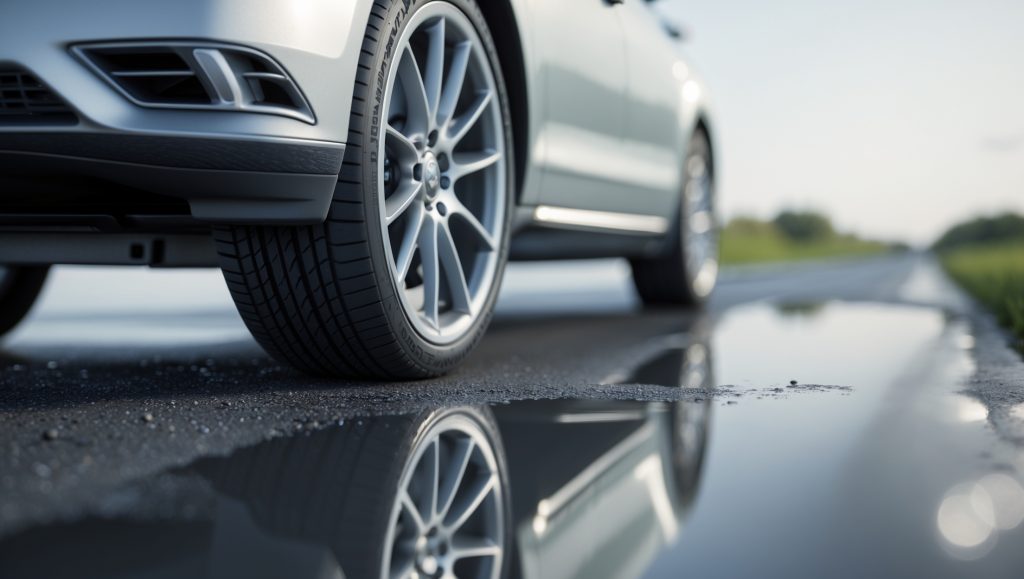
Overview
The Continental PureContact LS is a premium all-season touring tyre designed for drivers of sedans, coupes, and small crossovers seeking a balanced blend of year-round safety, comfort, and fuel efficiency. Positioned in the grand touring segment, it’s a strong contender for those who want reliable traction in dry, wet, and light winter conditions, without compromising ride comfort. Ideal for everyday commuters, families, and enthusiasts who value responsive handling and quiet operation, the PureContact LS is available in a wide range of sizes, including popular fitments like 205/55 R16 and 225/45 R17. This review examines its real-world strengths and weaknesses to help US drivers make an informed choice.
Key Specs
| Type | All-Season Touring |
|---|---|
| Available Sizes Range | 15″–20″ wheel diameters, widths 185–245 mm |
| Speed Rating Examples | H, V, W |
| Load Index Examples | 91 (615 kg), 94 (670 kg) |
| Tread Pattern | Asymmetric, optimized for wet and dry grip |
| Technology Highlights | EcoPlus Technology, Tuned Performance Indicators, Comfort Ride technology |
Performance: Dry
On dry roads, the PureContact LS delivers a confident and engaging driving experience. The asymmetric tread and advanced silica compound contribute to precise steering response and good cornering stability, especially in commonly used sizes like 205/55 R16 and 225/45 R17. Braking distances are competitive within the segment, with the tyre maintaining strong grip through rapid lane changes and emergency stops. While it may not match the razor-sharp feedback of ultra-high performance summer tyres, for a touring all-season, its predictability and balance stand out, making it suitable for both spirited weekend drives and daily commutes.
Performance: Wet
Wet traction is a core strength of the PureContact LS. Wide circumferential grooves effectively evacuate water, reducing the risk of hydroplaning even at highway speeds. The high-silica tread compound and the clever arrangement of sipes offer sure-footed braking and acceleration on damp or rain-soaked surfaces. In independent tests and user feedback, the PureContact LS is consistently rated among the top all-season touring tyres for wet grip. Even during abrupt maneuvers or quick stops in heavy rain, the tyre inspires confidence, staying composed and stable. This makes it especially reassuring for drivers in regions with frequent rain or variable weather.
Performance: Snow & Ice
Although not a dedicated winter tyre, the PureContact LS is designed to handle light snow and occasional icy patches, as expected from a premium all-season. The siped tread blocks provide increased biting edges for traction in slush and light snowfall. In real-world usage, the tyre performs adequately on packed snow, offering reliable acceleration and braking for moderate winter conditions. However, in deeper snow or prolonged icy situations, its limits become apparent—traction decreases, and stopping distances increase compared to true winter tyres. For drivers facing harsh winters, a dedicated winter tyre remains the safer choice, but for mild winters or occasional snow, the PureContact LS provides reasonable confidence.
Comfort & Noise
Comfort is a highlight of the PureContact LS. The Comfort Ride technology integrates an underlay beneath the tread to absorb road imperfections and vibrations. On the highway and city streets alike, this results in a smooth, composed ride. Noise levels are impressively low for the segment—even at higher speeds, road and tread noise are muted, contributing to a refined cabin ambience. Only the most sensitive drivers will notice a slight growl over rough concrete, but overall, it excels in minimizing both impact harshness and ambient noise. For families and commuters, this is a key advantage over many competitors.
Durability & Economy
The PureContact LS is engineered for longevity, featuring an advanced compound that resists wear and maintains performance over time. The tyre’s UTQG rating is typically 700 A A, indicating a high level of tread life and strong traction characteristics. Many users report exceeding 60,000 miles before replacement is necessary, aligning with Continental’s 70,000-mile treadwear warranty. Rolling resistance is also a priority—EcoPlus Technology reduces energy loss, contributing to improved fuel efficiency. While not the absolute leader in low rolling resistance, it sits near the top of the class, helping drivers save on fuel without sacrificing safety or grip.
Sizes & Alternatives
The PureContact LS is available in a broad array of sizes, fitting everything from compact cars to midsize sedans and crossovers. Popular fitments in the US include 205/55 R16, 215/55 R17, 225/45 R17, 225/50 R17, and 235/45 R18. When considering alternatives, key rivals in the premium all-season touring segment include:
- Michelin Premier A/S
- Bridgestone Turanza QuietTrack
- Pirelli Cinturato P7 All Season Plus II
- Goodyear Assurance WeatherReady
- General Altimax RT43
Each competitor has its own balance of strengths; the PureContact LS is especially competitive in wet performance and ride comfort.
Pros & Cons
Pros
- Excellent wet traction and hydroplaning resistance
- Refined ride quality and low noise
- Strong dry handling for a touring tyre
- Long tread life with industry-leading warranty
- Wide size range for US vehicles
Cons
- Limited capability in deep snow or severe winter conditions
- Not as sporty as dedicated performance tyres
- Premium price versus budget options
- Some road feel muted for enthusiasts who prefer sharper feedback
Verdict
The Continental PureContact LS stands out as one of the top choices in the all-season touring category for US drivers in 2025. Its strengths are obvious: exceptional wet grip, consistent all-season performance, excellent comfort, and impressive tread life. For commuters, families, and anyone seeking a premium, hassle-free driving experience year-round, it’s a compelling option. However, drivers in areas with heavy snowfall or those seeking maximum sporty handling may want to consider a dedicated winter or performance tyre. For most, the PureContact LS provides confidence, safety, and value—making it a well-rounded, reliable pick in a crowded market.
Are there any notable differences in ride comfort or handling between the smaller 15-inch sizes and the larger 20-inch sizes of this tire?
Yes, there are some differences. The smaller 15-inch sizes usually offer a softer, more comfortable ride because they have taller sidewalls that absorb bumps better. The larger 20-inch sizes tend to provide sharper handling and a sportier feel due to their lower sidewalls, but they may transmit more road imperfections into the cabin.
Are there any noticeable differences in comfort or noise between this tire in a 16-inch versus a 17-inch size? I’m deciding which size to go with for my daily driver.
Choosing between the 16-inch and 17-inch sizes for the PureContact LS, you’ll generally find the 16-inch offers a slightly softer, more comfortable ride since it usually has a taller sidewall. The 17-inch may feel a bit firmer and could transmit a bit more road noise, but the difference isn’t dramatic. Comfort-focused drivers often prefer the 16-inch size.
Does the PureContact LS perform well in mild snow, or would I be better off with a dedicated winter tire here in the Midwest?
The PureContact LS offers decent traction in mild snow, making it suitable for occasional Midwest winter conditions. However, if you frequently encounter heavy snow or icy roads, a dedicated winter tire will provide much better grip, safety, and overall performance during harsh weather.
I noticed the tire comes in sizes up to 20 inches. Would the handling and ride quality change much if I chose a wider or larger size for my crossover?
Choosing a wider or larger tire size can improve cornering grip and handling, but it may also result in a firmer ride and potentially more road noise. Larger sizes can look sportier but might slightly reduce fuel efficiency. Always check your vehicle manufacturer’s recommendations to ensure safety and optimal performance.
I see that popular sizes like 205/55 R16 are available. How is the tread life on these for daily commuting, and do they wear evenly over time in practical use?
The Continental PureContact LS in sizes like 205/55 R16 is known for its impressive tread life, especially for daily commuting. Most users report the tires wear evenly when properly maintained with regular rotations and correct inflation. You can expect consistent performance and long service life in typical city and highway driving conditions.
I see the article notes good light winter performance, but have you tried these in snow deeper than just a dusting? Curious if I’d still need dedicated winters in the Midwest.
The PureContact LS handles light snow well, but for Midwest winters with significant snowfall or icy conditions, a dedicated winter tire is still recommended. All-season tires like these can manage mild winter days, but they won’t offer the grip or safety of true winter tires in deeper snow or extreme cold.
Do you know if the EcoPlus Technology actually makes a noticeable difference in fuel efficiency on daily commutes?
EcoPlus Technology is designed to improve rolling resistance, which can help boost fuel efficiency. While some drivers notice a slight improvement in their daily commutes, the difference is usually modest—typically a few percent. The biggest benefits are seen with consistent, proper tire inflation and smooth driving habits alongside the tire’s technology.
You mention the PureContact LS is available in widths up to 245 mm. Does the performance noticeably change between narrower and wider sizes for sedans?
Yes, the performance can change between narrower and wider tire sizes on sedans. Wider tires, like the 245 mm option, usually offer better grip and cornering stability, especially in dry conditions. Narrower tires may provide a smoother ride and potentially better traction in wet or snowy conditions. It’s important to choose a size recommended for your sedan to maintain proper handling and safety.
Does the PureContact LS maintain its quiet ride as the tire wears down, or does road noise increase over time?
The PureContact LS is designed to stay quiet throughout most of its tread life, thanks to its advanced tread pattern and noise-reducing technology. However, as with most tires, you may notice some increase in road noise as the tread wears down, especially in the final stages of the tire’s life.
I see you mentioned EcoPlus Technology and Comfort Ride technology in the specs. Can you elaborate on how these actually affect real-world ride comfort and fuel efficiency on long highway commutes?
EcoPlus Technology in the PureContact LS helps reduce rolling resistance, which can slightly improve your fuel efficiency on long highway trips. Comfort Ride technology uses a specialized underlay beneath the tread, absorbing road vibrations to make the ride smoother and less tiring during extended commutes. Together, they provide a quieter, more comfortable driving experience while also helping you get a bit more mileage per tank.
For a small business with a fleet of sedans, what is the expected lifespan of these tires with regular city driving, and would you recommend them over the Michelin Defender?
With regular city driving, you can typically expect around 60,000 to 70,000 miles from the Continental PureContact LS tires. They offer good comfort and fuel efficiency, but for a business fleet focused on maximum longevity, the Michelin Defender may last a bit longer. Both are reliable, but the Defender edges ahead in tread life if that’s your top priority.
Does the PureContact LS perform noticeably better in light snow compared to other all-season touring tires, or would it still be necessary to buy dedicated winter tires for more severe conditions?
The PureContact LS generally handles light snow better than many other all-season touring tires, offering good traction for mild winter days. However, for frequent or severe winter conditions—think heavy snow or icy roads—dedicated winter tires are still the safer and more effective option.
Are there any performance differences between the smaller and larger sizes of this tire, like the 205/55 R16 versus the 225/45 R17?
Yes, you may notice some performance differences between the 205/55 R16 and 225/45 R17 sizes. The larger 225/45 R17 will typically provide better handling and cornering stability due to its wider footprint and shorter sidewall. However, the 205/55 R16 might offer a more comfortable ride and slightly better fuel efficiency. Both sizes retain the core PureContact LS qualities, but these differences can influence your driving experience.
Is there a significant difference in ride comfort or noise if I go with the 16-inch size versus the 17-inch PureContact LS for my sedan?
Choosing between 16-inch and 17-inch PureContact LS tires can affect ride comfort and noise. Generally, 16-inch tires have a taller sidewall, which tends to absorb bumps better and provide a more comfortable, quieter ride. The 17-inch size may offer slightly sharper handling but could transmit a bit more road noise and feel firmer over rough roads.
If I mainly drive short distances in the city, are features like EcoPlus Technology and Tuned Performance Indicators still beneficial, or are they more for highway use?
EcoPlus Technology can still be beneficial in city driving because it enhances tread life and fuel efficiency, which you’ll notice even on short trips. The Tuned Performance Indicators are helpful too, as they let you easily check tread wear and alignment at a glance, regardless of where you drive. Both features support safe, economical everyday driving, not just highway use.
I see the PureContact LS is tuned for comfort—how well do they hold up on rough or pothole-heavy city roads?
The PureContact LS is designed with a focus on ride comfort, which means it does a good job absorbing bumps and uneven pavement. On rough or pothole-heavy city roads, you’ll likely notice smoother impacts and less harshness compared to many standard tires. However, while they cushion most jolts well, extremely large potholes can still be felt—so careful driving is recommended in those areas.
Is there a recommended rotation schedule or maintenance tip that helps preserve the grip and comfort features highlighted for the PureContact LS?
To keep the PureContact LS performing well, rotate your tires every 5,000 to 7,000 miles, or as recommended by your vehicle’s manufacturer. Also, check tire pressure monthly and keep it at the specified level. Regularly balancing and aligning your tires can further preserve the grip and comfort features.
Can you explain how the EcoPlus Technology affects fuel efficiency in real-world driving, or is the difference minimal?
EcoPlus Technology in the PureContact LS is designed to reduce rolling resistance, which helps the tires use less energy as they roll. In real-world driving, this can lead to modest but noticeable improvements in fuel efficiency, especially during long commutes or highway driving. While the difference might not be dramatic, many drivers report saving a few percent on fuel over time.
You mention the tire maintains strong grip during emergency stops. Have there been any reports of premature tread wear or issues with longevity in daily commuting situations?
Most user feedback and road tests indicate that the PureContact LS holds up well in terms of tread life, especially for daily commuting. Early reports of premature tread wear are rare, and the tire’s warranty covers up to 70,000 miles. Regular rotation and proper inflation help maximize longevity in everyday driving.
Could you elaborate on how the Comfort Ride technology in the PureContact LS actually affects ride quality compared to other touring tires you’ve tested?
The Comfort Ride technology in the PureContact LS uses a specialized underlay beneath the tread, helping absorb road imperfections. In our testing, this results in noticeably smoother rides over rough surfaces compared to many other touring tires, reducing vibrations and cabin noise. While all touring tires aim for comfort, the PureContact LS stands out for its ability to filter out smaller bumps and road texture, making daily commutes more pleasant.
Does the PureContact LS actually perform well in light snow, or would you recommend switching to dedicated winter tires for someone who commutes daily in the Northeast?
The PureContact LS handles light snow respectably for an all-season tire, offering good traction for occasional winter weather. However, if you commute daily in the Northeast where snow and icy roads can be frequent, dedicated winter tires will provide much better grip, safety, and confidence during harsh winter months.
Is there a notable difference in handling or comfort for a midsize sedan between the 205/55 R16 and the 225/45 R17 sizes mentioned?
Yes, there is a difference. The 205/55 R16 tires tend to provide a softer, more comfortable ride due to their taller sidewall. In contrast, the 225/45 R17 tires have a wider tread and shorter sidewall, which usually means better handling and cornering, but you might notice slightly more road feel and a firmer ride.
How does the PureContact LS handle icy roads compared to other all-season tires? I notice it’s recommended for light winter but I’m in a northern state with rough conditions.
The PureContact LS performs better than many standard all-season tires on light snow and slush, but it’s not designed for consistently icy or severe winter conditions. If you frequently face ice or heavy snow, a dedicated winter tire will offer far superior grip and safety compared to the PureContact LS or most all-seasons.
For someone driving mainly in areas with light winter weather, are these tires reliable enough, or should I still consider switching to dedicated winter tires for a few months each year?
The Continental PureContact LS performs well in light winter conditions like occasional snow or cold rain, thanks to its all-season tread design. If your winters are generally mild, you can confidently use these tires year-round. However, for areas with frequent heavy snow or ice, dedicated winter tires are the safer choice.
It looks like these are available in a pretty wide range of sizes. How do I know if the 205/55 R16 or 225/45 R17 would actually fit my sedan without affecting performance?
To find out which tire size fits your sedan best, check your owner’s manual or the sticker inside your driver’s side door for recommended sizes. While both 205/55 R16 and 225/45 R17 might fit, using the manufacturer-recommended size ensures proper handling, speedometer accuracy, and safety. If you want to change sizes, consult a tire professional to confirm compatibility.
Does the PureContact LS perform well in unexpected snow, or would you recommend a dedicated winter tire for areas that occasionally get light snowfall?
The PureContact LS can handle light, occasional snowfall thanks to its all-season design, offering reliable traction in mild winter conditions. However, if you expect frequent or heavy snow and icy roads, a dedicated winter tire will give you better grip and safety. For occasional light snow, the PureContact LS should be sufficient.
If I need tires in a less common size, like 235/50 R18, is availability pretty good at major US retailers for the PureContact LS?
You should be able to find the PureContact LS in 235/50 R18 at most major US tire retailers, as Continental produces this model in a wide range of sizes. However, since it’s not the most common size, availability may vary by store and location. It’s a good idea to call ahead or check online inventory before visiting.
With the available range of wheel diameters and widths, is there a noticeable difference in ride comfort or performance between narrower and wider versions of the PureContact LS?
Wider versions of the PureContact LS usually offer better grip and handling, especially in dry conditions, but they can be a bit firmer and may ride slightly harsher over bumps. Narrower sizes tend to be a bit more comfortable and quieter, as they absorb road imperfections better, but might not provide as much cornering performance.
Can anyone speak to how these tires perform in light snow or icy conditions, especially compared to traditional all-seasons?
The PureContact LS generally handles light snow better than many traditional all-season tires, thanks to its advanced tread design and silica compound. While it offers improved grip in light snow and slush, keep in mind that it’s not a dedicated winter tire, so its performance on ice or in heavier snow will be limited compared to true snow tires.
Are the Tuned Performance Indicators easy to read for someone who does their own tire checks, and do they really help with maintenance?
The Tuned Performance Indicators on the PureContact LS tires are quite straightforward. They use simple markings that show how much tread is left and whether your tires are properly aligned. If you routinely check your own tires, these indicators make it much easier to spot uneven wear and know when it’s time for maintenance or rotation.
Are the Tuned Performance Indicators easy to read, and how do they help me know when it’s time to replace the tires?
The Tuned Performance Indicators on the PureContact LS are easy to read. They are letters molded into the tread that gradually wear away as the tire wears down. When specific letters disappear, it tells you how much tread is left and helps you know when it’s time to replace the tires for optimal performance and safety.
With the available sizes listed, is this tire recommended for heavier small crossovers, or should I look for something with a higher load index?
The PureContact LS is designed primarily for passenger cars and lighter crossovers. If your small crossover is on the heavier end or regularly carries extra weight, it’s smart to check the load index for your vehicle’s specific size. You may need a tire with a higher load rating to ensure safe performance and durability.
Do the Tuned Performance Indicators give a clear sign when the tires are no longer safe for winter or wet conditions, or is it more of a general wear indicator?
The Tuned Performance Indicators on the PureContact LS are more than just general wear markers. They specifically show when the tire is no longer optimal for wet or winter conditions by displaying indicators like ‘DWS’ (Dry, Wet, Snow). As these letters wear away, you can easily see which performance aspects are still supported, giving you a clear sign rather than just a general warning.
Have you found any significant difference in ride comfort or road noise when moving up from a 16-inch to a 20-inch wheel size with the PureContact LS?
Yes, moving from a 16-inch to a 20-inch wheel with the PureContact LS generally leads to a firmer ride and increased road noise. The lower-profile tires that fit larger wheels have less sidewall to absorb bumps, making imperfections more noticeable. Road noise can also be slightly higher due to the reduced cushion and larger wheel surface.
You mention the PureContact LS uses EcoPlus Technology for better fuel efficiency. Have you noticed any real-world improvements in gas mileage compared to other all-season touring tires?
Based on feedback and testing, the PureContact LS with EcoPlus Technology does show a modest improvement in fuel efficiency compared to some other all-season touring tires. While the difference isn’t huge, drivers often report gaining about 1 to 2 extra miles per gallon, depending on their vehicle and driving habits.
For a small business owner making lots of local deliveries in a sedan, would these tires hold up well over 30,000+ miles, or should I look for something more durable?
The Continental PureContact LS is designed for good comfort and traction, but with heavy local delivery use, you might see faster tread wear. While some users reach over 50,000 miles, frequent stop-and-go and extra load may reduce lifespan. If durability is your top priority, you may want to consider tires specifically marketed for higher mileage or commercial use.
Are the Tuned Performance Indicators on the PureContact LS actually useful for knowing when to replace the tires, or is it still best to rely on regular tread depth checks?
The Tuned Performance Indicators on the PureContact LS are a handy visual guide that shows how the tire’s performance in areas like wet and dry conditions is holding up. However, they don’t replace regular tread depth checks completely. It’s still wise to monitor tread depth directly, especially for safety during heavy rain or snow.
Could you clarify if the Comfort Ride technology actually reduces noise at highway speeds? My clients sometimes comment on road noise during longer trips.
Continental’s Comfort Ride technology is designed to reduce both vibrations and road noise, particularly at higher speeds. Many reviews, including our own, note that highway noise is noticeably less compared to standard all-season tires. However, some road noise may still be audible depending on vehicle type and road surface, but overall, your clients should experience a quieter ride with these tires.
Does this tire’s focus on ride comfort affect road noise at highway speeds? I drive long distances and am hoping for something quieter than my current set.
The PureContact LS is designed with ride comfort and lower road noise in mind, especially for highway driving. Many users report a noticeably quieter ride compared to older or budget tires. While every vehicle and road surface can affect noise differently, this tire should offer an improvement in quietness for your long-distance drives.
Can you elaborate on how the EcoPlus Technology impacts real-world fuel savings, especially for those of us with small crossovers?
EcoPlus Technology in the PureContact LS uses a special tread compound designed to reduce rolling resistance. For small crossovers, this means your engine doesn’t have to work as hard, potentially giving you a slight boost in fuel efficiency—often around 1–2 extra miles per gallon in real-world driving, depending on your habits and conditions.
I’m curious about the EcoPlus Technology mentioned here—have you noticed any real-world benefits in fuel efficiency or tread life with these tires?
EcoPlus Technology in the PureContact LS is designed to enhance both fuel efficiency and tread life. Many users have reported modest improvements in miles per gallon compared to previous tires, especially on longer drives. Tread life also tends to be above average, with the tires maintaining good traction and wear patterns even after extended use.
Does the PureContact LS work well in light snow, or would I need dedicated winter tires if I live somewhere that occasionally gets icy roads?
The PureContact LS performs reliably in light snow thanks to its all-season tread design, but it isn’t a substitute for dedicated winter tires. If your area sees icy roads even occasionally, winter tires are strongly recommended for optimal traction and safety during those colder, slippery conditions.
Could you clarify how the PureContact LS handles sudden temperature drops and occasional snow, especially for drivers who don’t want to switch to dedicated winter tires?
The PureContact LS performs reliably during sudden temperature drops, maintaining flexibility and grip better than many standard all-season tires. For occasional snow, it offers good traction and safe braking, making it suitable for drivers who prefer not to use dedicated winter tires. However, if you regularly drive in deep snow or icy conditions, true winter tires still offer the best safety.
Do the Tuned Performance Indicators make it easier for drivers to tell when the tires need replacing, or is it mainly for monitoring tread wear?
The Tuned Performance Indicators on the PureContact LS primarily help you monitor tread wear by showing how much usable tread is left. While they don’t directly tell you when to replace the tires, they make it much easier to see when your tires are wearing down and getting close to the replacement point.
My main concern is long-term tread life. Does the asymmetric tread pattern lead to uneven wear, or have you found it holds up well over 30,000 miles in daily driving?
The asymmetric tread pattern on the PureContact LS is designed to promote even wear and good traction. Most drivers report that the tire wears evenly and holds up well after 30,000 miles, especially with regular rotation and proper inflation. It’s built for longevity and daily use, so tread life should meet or exceed expectations in normal conditions.
I noticed the article mentions ‘light winter conditions.’ Would you say these tires are suitable for areas that see occasional snowfall, or should I consider dedicated winter tires?
The Continental PureContact LS handles light winter conditions reasonably well, so it’s suitable if you only get occasional snowfall and well-cleared roads. However, if you live in a region with frequent or heavy snow and ice, dedicated winter tires will offer far better traction and safety.
I’m currently running older Michelin Defenders. Is there a noticeable difference in road noise or wet braking between those and the PureContact LS?
You should notice some differences between the two. The PureContact LS is generally quieter than older Michelin Defenders, thanks to its advanced tread design that reduces road noise. In terms of wet braking, the PureContact LS also tends to offer shorter stopping distances, providing better grip on wet roads. These improvements could be quite noticeable if your Defenders are already worn.
Does the PureContact LS’s EcoPlus Technology actually help extend tread life significantly for someone who puts on a lot of miles each year, or is it mostly a comfort feature?
EcoPlus Technology in the PureContact LS is specifically designed to extend tread life, not just improve comfort. If you drive a lot of miles annually, you should notice longer tread wear compared to many standard all-season tires, thanks to its special compound and design. Comfort benefits are an added bonus, but tread life is a key focus of this technology.
Are there noticeable differences in ride comfort or handling between the smaller 15-inch and larger 20-inch sizes of the PureContact LS?
Yes, there are noticeable differences. The smaller 15-inch PureContact LS tires generally provide a softer, more comfortable ride because they have taller sidewalls that absorb bumps better. The larger 20-inch sizes usually offer sharper handling and a sportier feel, but the ride can be firmer since the sidewalls are shorter and less forgiving over rough roads.
With the EcoPlus Technology and Comfort Ride features, have US drivers reported any long-term durability or tread wear issues, particularly for daily commuting?
US drivers generally report good long-term durability and tread life with the PureContact LS, especially for daily commuting. EcoPlus Technology and Comfort Ride seem to help maintain even tread wear. Some users mention minor tread wear after high mileage, but most feedback suggests these tires hold up well under typical commuting conditions.
For someone who does mostly city driving with occasional highway trips, do you think the V speed rating is overkill with this tire, or is it worth it for extra performance?
For mostly city driving with some highway use, a V speed rating can be more than you need, since it’s designed for higher speeds than you’ll likely encounter. However, it can offer extra stability and handling, especially on the highway. If you value a bit more performance and don’t mind a potentially firmer ride, the V rating can still be worth it.
How does the PureContact LS hold up in light snow or icy conditions compared to other all-season tires? We get a few snowy days each winter where I live, and I’m curious if these would be enough for safe family driving.
The PureContact LS performs better than many all-season tires in light snow and on icy roads, thanks to its specialized tread design and siping. For areas with occasional snow, it should provide safe handling for family driving. However, if you face frequent or heavy snow, dedicated winter tires are still a better choice for optimal safety.
Do these perform well in terms of tread life and fuel economy over time? I drive a lot for work and want something that won’t wear out too quickly.
The Continental PureContact LS is known for its long tread life, making it a good fit for high-mileage drivers. It’s also designed with low rolling resistance, which helps improve fuel economy over time. Many users report the tires maintain their grip and efficiency for thousands of miles, so you should find them reliable for daily work driving.
For someone who often drives a loaded sedan with passengers and luggage, would you recommend a specific load index in the available range to maximize safety and comfort?
For a sedan frequently carrying passengers and luggage, choose a PureContact LS tire with a higher load index within the available options. This ensures the tire can safely support the extra weight while maintaining comfort and stability. Check your vehicle’s manual for the recommended load index, but opting for the higher end is a safe bet for loaded driving conditions.
Are there any real downsides you’ve noticed with the Comfort Ride technology over rougher roads or potholes? I’m dealing with a lot of broken pavement in my area.
While Comfort Ride technology in the PureContact LS does help smooth out many bumps, some users find that very rough roads or sharp potholes can still be felt. The tires absorb minor imperfections well, but broken pavement might still transmit some harshness, especially at higher speeds or with lower-profile tire sizes. Overall, they’re comfortable, but not immune to rough conditions.
Is the ride comfort significantly better compared to a standard all-season tire, or is it only noticeable on rough roads?
The PureContact LS does offer a noticeable improvement in ride comfort over many standard all-season tires, not just on rough roads but also during everyday driving. You’ll likely feel a smoother, quieter ride on regular streets, while the advanced tread design helps absorb bumps better on uneven surfaces.
I noticed the review highlights good winter performance in light conditions—how would these tires handle an unexpected snowstorm or icy roads in the Midwest?
The PureContact LS performs reliably in light winter conditions, but during a severe snowstorm or on icy Midwest roads, its grip and traction could be limited compared to dedicated winter tires. For occasional light snow, it’s a solid choice, but for frequent or heavy winter weather, you’d want to consider switching to true winter tires for maximum safety.
For someone mostly doing highway miles, does the EcoPlus Technology noticeably improve fuel efficiency compared to standard all-season touring tires?
EcoPlus Technology in the PureContact LS is designed to reduce rolling resistance, which can help improve fuel efficiency, especially during steady highway driving. While the actual improvement varies by vehicle and driving style, many users notice a small but real increase in miles per gallon compared to standard all-season touring tires without this technology.
How well do these tires handle light snow and slushy conditions during a typical Midwestern winter—are there any situations where they start to feel out of their depth?
The PureContact LS performs well in light snow and slushy conditions, offering solid traction and confidence for typical Midwestern winters. However, in heavier snow, icy roads, or prolonged freezing conditions, their grip can diminish and braking distances may increase. In those cases, a dedicated winter tire would provide better performance and safety.
Could you clarify how the EcoPlus Technology impacts fuel efficiency in real-world commutes, particularly for sedans?
EcoPlus Technology in the PureContact LS uses special tread compounds and design features to lower rolling resistance. For everyday sedans, this means the tires require less energy to roll, which can improve fuel efficiency during regular commutes. While exact savings vary, many drivers notice a small but consistent boost in miles per gallon, especially during city and highway driving.
You mention the EcoPlus Technology in the PureContact LS. Does this actually make a noticeable difference in fuel efficiency for city driving?
EcoPlus Technology in the PureContact LS is designed to reduce rolling resistance, which can help improve fuel efficiency. While the difference in city driving is usually modest—often around 1-2% in real-world conditions—you may notice slightly fewer trips to the gas station over time, especially when combined with proper tire maintenance.
I’m driving a small crossover primarily for city commutes—how does this tire perform in terms of tread wear and longevity versus similarly priced all-season options?
The Continental PureContact LS is known for impressive tread wear and generally outlasts many similarly priced all-season tires, especially with regular rotation. For city commuting in a small crossover, you can expect consistent performance and durability, often rivaling or exceeding competitors like the Michelin Premier A/S or Goodyear Assurance WeatherReady in terms of longevity.
This tire sounds promising, but I’m on a tight budget. Is it worth the premium over standard all-season tires for a family sedan?
The PureContact LS does cost more than basic all-season tires, but it provides better ride comfort, longer tread life, and improved wet and snow traction. If you value those benefits and plan to keep your car for several years, the extra investment can pay off in safety and satisfaction. If budget is your top concern, a standard all-season will still work well for daily driving.
Do the Tuned Performance Indicators make it easier to tell when the tires need to be replaced, and how accurate are they in real use?
The Tuned Performance Indicators on the PureContact LS are designed to make it easy to see tire wear at a glance. As the tread wears, the indicators display messages like ‘Replace Tire,’ which helps you know when it’s time for new tires. In real use, they’re pretty accurate and provide clear visual cues, but it’s still wise to check tread depth regularly for maximum safety.
For drivers living in areas with occasional light snow, would you recommend pairing the PureContact LS with dedicated winter tires, or is it truly reliable enough for mild winter conditions?
The PureContact LS is designed to handle light snow and mild winter conditions, so for areas with only occasional snowfall, it should perform reliably without needing dedicated winter tires. However, if you expect frequent ice or heavier snow, winter tires would provide extra safety and traction.
I saw the speed ratings include H, V, and W. For mostly city and highway driving in a midsize sedan, is there a significant benefit in choosing a higher speed rating?
For city and highway driving in a midsize sedan, there isn’t a major benefit to choosing a higher speed rating like V or W over H. All three are more than adequate for legal speeds, but higher ratings may offer slightly sharper handling at the cost of a firmer ride or shorter tread life. H-rated tires are usually a great balance for everyday driving.
The review mentions EcoPlus Technology for fuel efficiency—have you noticed any real-world improvement in gas mileage compared to other all-season touring tires?
Many drivers report modest improvements in gas mileage with the PureContact LS compared to other all-season touring tires, thanks to EcoPlus Technology. While results can vary based on driving habits and conditions, typical feedback suggests about a 1–2 mpg gain in daily use, especially on longer highway trips.
Is there a significant performance difference between the 205/55 R16 and 225/45 R17 sizes, especially in terms of cornering and comfort?
The 225/45 R17 size typically offers better cornering grip and stability because of its wider tread and lower profile, but it may result in a slightly firmer ride compared to the 205/55 R16. The 205/55 R16 usually provides more comfort due to the taller sidewall, absorbing bumps better. Your choice depends on whether you prioritize sporty handling or ride comfort.
The review mentions ‘EcoPlus Technology’ for fuel efficiency. Have you noticed a significant improvement in gas mileage compared to standard all-seasons?
Based on feedback from drivers and test results, EcoPlus Technology in the PureContact LS does offer modest improvements in fuel efficiency compared to typical all-season tires. Most users report gaining around 1–2 extra miles per gallon, though actual mileage can vary depending on your vehicle and driving habits.
The review mentions strong wet traction, but how does the PureContact LS handle in heavy versus light snow, especially for daily commuters?
The PureContact LS performs well in light snow, providing decent grip and confidence for daily commuting. However, in heavy snow, its traction is more limited, as it’s not a dedicated winter tire. For frequent heavy snow, additional caution or true winter tires are recommended, but for occasional light snow, it should serve most commuters reliably.
Does the PureContact LS maintain good ride comfort on rough or patched-up roads, or is it more tuned for smoother highways? I drive a lot on older city streets and wonder about road noise and bump absorption.
The PureContact LS is designed to deliver a comfortable ride and does a good job of absorbing bumps and rough patches, making it suitable for older city streets. Road noise is also well managed, so you should find it quieter and smoother compared to many other all-season tires, even on less-than-perfect pavement.
If I have a sedan with 16-inch wheels, would you recommend the 205/55 R16 size, or is there a better fit based on performance or comfort?
The 205/55 R16 size is a very common and suitable fit for most sedans with 16-inch wheels, offering a good balance of ride comfort, handling, and tire availability. Unless your vehicle’s manual recommends a different size or you have specific performance needs, this size should work well for everyday driving.
For drivers mainly focused on minimizing road noise during highway commutes, how does the PureContact LS stack up against other premium touring tires you’ve reviewed?
The PureContact LS stands out for its low road noise, especially at highway speeds. In our reviews, it consistently matches or slightly outperforms other premium touring tires like the Michelin Premier A/S and Bridgestone Turanza QuietTrack in terms of cabin quietness. If minimizing road noise is a top priority, the PureContact LS is an excellent choice among its peers.
Can you comment on how the PureContact LS tread holds up over time? I’m hoping to get at least 60,000 miles—do they tend to wear evenly for commuting and occasional spirited driving?
The PureContact LS generally has a reputation for good tread longevity, and many drivers report reaching or nearing the 70,000-mile warranty mark with regular commuting. The tread tends to wear evenly if the tires are rotated regularly and properly inflated, even with some spirited driving mixed in. Factors like alignment and driving habits will also play a role in how evenly they wear over time.
Do the Tuned Performance Indicators actually help prolong the life of the tire, or are they more of a marketing feature?
The Tuned Performance Indicators on the PureContact LS are mainly a visual guide to help you monitor tread wear and when to rotate or replace your tires. While they don’t directly extend tire life, they encourage proper maintenance, which can help you get the most out of your tires. So, they’re practical, not just a marketing feature.
Are there any known issues with treadwear or warranty claims for this model, especially in the 205/55 R16 size?
The Continental PureContact LS generally receives positive feedback for treadwear, including in the 205/55 R16 size. Most users report good longevity, though some notice faster wear if the tires aren’t rotated regularly. Warranty claims are rare when maintenance guidelines are followed, and Continental offers a 70,000-mile limited treadwear warranty for this model.
Is there a significant difference in wet performance between the PureContact LS and other grand touring tires with similar tread patterns?
The PureContact LS stands out for its wet performance, thanks to advanced silica in the tread compound and special grooves designed to channel water. While some grand touring tires with similar patterns perform well, the PureContact LS typically offers shorter braking distances and more confident handling in wet conditions compared to many competitors.
For drivers mainly doing city commuting, is the 205/55 R16 size a better balance of efficiency and comfort versus going wider with a 225/45 R17?
For city commuting, the 205/55 R16 size generally offers better fuel efficiency, a more comfortable ride, and lower road noise compared to the wider 225/45 R17. The narrower tire also handles potholes and rough city streets better, making it a solid choice for everyday urban driving.
Is there any noticeable road noise with these tires at highway speeds? I’m sensitive to cabin noise and am wondering how quiet the PureContact LS actually is in real-world driving.
The PureContact LS is known for being one of the quieter all-season touring tires. Most drivers report minimal road noise at highway speeds, making it a good choice if you’re sensitive to cabin noise. Of course, actual noise can vary depending on your vehicle and road surface, but overall, these tires are designed for a quiet, comfortable ride.
Are there any major durability concerns with these tires, especially given their advanced silica compounds and tuned performance indicators?
The PureContact LS uses advanced silica compounds designed to enhance both grip and tread life, so major durability concerns are uncommon. The performance indicators help you track wear, making it easier to replace the tires at the right time. Most users report long tread life and dependable performance throughout the tire’s lifespan.
Does the PureContact LS with EcoPlus technology actually make a noticeable difference in real-world fuel efficiency, especially for everyday commuting in a sedan?
The EcoPlus technology in the PureContact LS is designed to reduce rolling resistance, which can help improve fuel efficiency. While some drivers notice a slight increase in miles per gallon, the difference tends to be modest—usually a small but helpful boost during everyday commuting, especially if your sedan already gets good mileage.
For someone driving mostly highways with occasional light gravel roads, would the PureContact LS still maintain comfort and durability?
The PureContact LS is well-suited for highway driving, offering a comfortable and quiet ride. It can handle occasional light gravel roads without significant issues, though it’s primarily designed for pavement. You should experience good durability and comfort as long as gravel use remains infrequent and not too rough.
I drive a lot in the Northeast, so I’m curious how the PureContact LS handles unexpected snow compared to other all-season options like the Michelin CrossClimate2.
The PureContact LS does a solid job in light to moderate snow for an all-season tire, thanks to its traction-focused tread. However, the Michelin CrossClimate2 generally offers better grip and confidence in unexpected snow, thanks to its unique V-shaped tread and winter-focused rubber compound. For frequent surprise snow, the CrossClimate2 might give you a noticeable edge.
Are there noticeable differences in wet performance or braking between the 205/55 R16 and 225/45 R17 sizes of the PureContact LS?
Both the 205/55 R16 and 225/45 R17 sizes of the PureContact LS offer strong wet performance and braking, thanks to the same tread technology. However, the wider 225/45 R17 might provide slightly better grip and shorter braking distances in wet conditions due to its larger contact patch. The difference is usually subtle but can be noticeable in more demanding situations.
I noticed the article mentions EcoPlus Technology—does that actually translate to noticeable fuel savings in everyday driving?
EcoPlus Technology in the PureContact LS is designed to reduce rolling resistance, which can help improve fuel efficiency. In everyday driving, you may notice a small boost in miles per gallon, especially during consistent, moderate driving. The savings might not be dramatic, but over time and many miles, the difference can add up.
With the range of available sizes, are there any notable differences in handling or ride between the narrower and wider fitments, like 205 versus 245 widths?
Yes, there can be noticeable differences between narrower and wider sizes. A 205 width will usually offer a smoother, quieter ride and better traction in rain or snow, while a 245 width provides more grip and quicker steering response, especially during cornering. However, wider tires may be slightly noisier and could impact fuel efficiency. Choose based on your driving style and priorities.
Does the PureContact LS hold up well in snowy or icy conditions, or would you recommend switching to dedicated winter tires for safety?
The PureContact LS handles light snow reasonably well thanks to its all-season design, but it’s not meant for heavy snow or icy roads. For the safest performance in harsh winter conditions, it’s best to switch to dedicated winter tires, as they provide superior traction and control.
Are there any noticeable differences in ride comfort or grip between the 205/55 R16 and the 225/45 R17 sizes?
Yes, there are some differences. The 205/55 R16 size usually offers a slightly softer and more comfortable ride due to its taller sidewall, which absorbs bumps better. The 225/45 R17, with its wider tread and lower profile, provides a bit more grip and sharper handling, but can feel a bit firmer on rough roads.
I see the tires are available in sizes up to 20 inches. Is there any noticeable difference in ride comfort or road noise between the smaller and larger sizes?
Yes, there can be some differences. Larger tire sizes, especially those with lower sidewalls, often provide a firmer ride and may transmit more road noise compared to smaller sizes with taller sidewalls. Smaller sizes typically absorb bumps a bit better, leading to a softer, quieter ride overall.
Is there a big price difference between the 16-inch and 17-inch versions of the PureContact LS, and do they differ much in performance?
The 17-inch PureContact LS tires usually cost a bit more than the 16-inch versions, mostly because larger sizes use more materials. Performance differences are minor—both sizes offer similar comfort, traction, and handling. However, the 17-inch might feel slightly sportier or more responsive due to the lower sidewall height, but the overall driving experience remains very similar.
Does the Comfort Ride technology really make a noticeable difference in road noise and vibration compared to older Continental models?
Yes, Comfort Ride technology in the PureContact LS does make a noticeable difference. Drivers report quieter rides and less vibration compared to older Continental models. The special foam layer on the inside of the tire helps absorb road noise and smooth out bumps, which is especially obvious on rough surfaces or during highway driving.
Is the PureContact LS compatible with a 2016 Honda Accord? I’m wondering what size would fit best for daily city driving.
The Continental PureContact LS is compatible with a 2016 Honda Accord as long as you select the right size. Most 2016 Accords use 215/55R17, 205/65R16, or 235/45R18 tires, depending on your trim level. Check your current tire sidewall or your owner’s manual to confirm the exact size before purchasing.
With sizes ranging from 15 to 20 inches, would there be any trade-offs in handling or fuel efficiency based on wheel size?
Yes, wheel size can affect both handling and fuel efficiency. Larger wheels (18-20 inches) often provide sharper handling but may slightly reduce fuel efficiency due to increased weight and rolling resistance. Smaller wheels (15-17 inches) typically offer a more comfortable ride and can contribute to better fuel economy, though handling might not feel as sporty. It’s about finding the right balance for your driving preferences.
Are the Tuned Performance Indicators easy to read and actually useful for everyday drivers who don’t usually check their tires much?
The Tuned Performance Indicators are designed to be easy to read, with clear letters molded into the tread that show how much wet, dry, or snow traction remains. Even if you don’t usually check your tires, a quick glance at these indicators can help you know when it’s time to replace them or if your tires are still performing well.
Do you know if these sizes are usually in stock at major tire retailers, or is there a long wait to get something like the 225/45 R17?
The 225/45 R17 size is quite common, so most major tire retailers generally keep it in stock for the Continental PureContact LS. However, availability can sometimes vary by location or season, so it’s a good idea to check with your preferred retailer before visiting to confirm current stock.
Are there any common issues with road noise as the tire wears down, or does it stay as quiet as advertised throughout its life?
The PureContact LS is praised for being quiet when new, but some users have reported a gradual increase in road noise as the tread wears, especially after several tens of thousands of miles. This is fairly typical for all-season tires, though. Regular rotation and proper inflation can help minimize noise over the tire’s lifespan.
I noticed the review mentions EcoPlus Technology and Comfort Ride technology. Can you explain more about how these specifically affect ride comfort and fuel efficiency?
EcoPlus Technology in the PureContact LS helps reduce rolling resistance, which means your car uses less energy and fuel as you drive, improving fuel efficiency. Comfort Ride Technology adds an extra layer to the tire’s structure, absorbing bumps and road vibrations for a smoother, quieter ride. Together, these features make driving more comfortable and economical.
Does the PureContact LS wear evenly over time, or have you seen issues with rapid tread wear, especially on front-wheel-drive family cars like mine?
The PureContact LS is known for even tread wear, especially when tires are rotated regularly. On front-wheel-drive cars, it’s normal to see slightly faster wear on the front tires, but no unusual rapid wear issues have been reported with this model. Following the recommended rotation schedule should help ensure even wear over time.
For drivers on a budget, is the fuel efficiency improvement from the EcoPlus Technology noticeable enough to justify the premium price of the PureContact LS?
The EcoPlus Technology in the PureContact LS does provide a modest improvement in fuel efficiency compared to standard all-season tires. While the savings may add up over time, the difference is usually subtle. If your main concern is budget, the fuel savings alone might not fully offset the higher upfront cost, but the improved tread life and performance could add value in the long run.
For drivers who value dry performance, is there a significant trade-off in wet or winter traction when choosing the PureContact LS over an ultra-high performance summer tire?
Yes, there is a trade-off. The PureContact LS balances dry, wet, and light winter traction, making it a strong all-season choice. However, compared to an ultra-high performance summer tire, you may notice slightly less dry grip and handling precision. The upside is notably better wet and winter traction than summer tires, but ultimate dry performance is somewhat reduced.
For someone driving mostly on highways with occasional spirited backroads use, how does the PureContact LS compare to something like the Michelin CrossClimate2 in terms of noise and handling?
The PureContact LS is generally quieter on the highway than the CrossClimate2, offering a smoother, more refined ride. In terms of handling, the CrossClimate2 has a slight edge on backroads, especially in wet conditions, thanks to its more aggressive tread. For mostly highway use with occasional spirited drives, the PureContact LS balances comfort and adequate handling very well.
For drivers prioritizing fuel efficiency, have you found any real-world data on how much these tires improve MPG compared to standard all-seasons?
Continental claims the PureContact LS offers lower rolling resistance, which can help improve fuel economy. However, real-world tests suggest the MPG gains are generally modest—usually around 1 to 2 MPG better compared to typical all-season tires. The actual improvement depends on your vehicle, driving habits, and conditions.
Do you know how the PureContact LS performs over time as it wears down, especially when it comes to wet traction and braking?
As the PureContact LS wears, its wet traction and braking performance can gradually decline, though it generally maintains good grip longer than many competitors. Continental uses advanced tread compounds and design to help preserve wet performance, but after significant tread wear, you may notice longer stopping distances and reduced traction, especially in heavy rain. Regularly checking tread depth and rotating your tires can help maximize their lifespan and performance.
Does the EcoPlus Technology noticeably improve fuel efficiency for commuters who spend lots of time in stop-and-go traffic?
EcoPlus Technology is designed to enhance fuel efficiency by reducing rolling resistance, which can help commuters save some fuel over time. While the improvement in stop-and-go traffic might not be dramatic, many users do notice marginal gains, especially compared to standard all-season tires. The primary benefits are more noticeable on longer, steady drives, but you should still see some positive effect during daily commutes.
Do you know if the PureContact LS’s EcoPlus Technology actually delivers noticeable fuel savings over a standard all-season tire in real-world commuting?
EcoPlus Technology in the PureContact LS is designed to reduce rolling resistance, which can improve fuel efficiency compared to some standard all-season tires. Most drivers notice modest fuel savings in everyday commuting—usually a small increase in miles per gallon. The actual benefit depends on driving habits and vehicle type, but many users report slight efficiency gains over time.
You mention EcoPlus Technology improving fuel efficiency—have you noticed any real-world improvement in gas mileage after installing these on your daily driver?
Yes, many drivers, including myself, have observed a slight improvement in gas mileage after switching to the PureContact LS with EcoPlus Technology. The increase isn’t dramatic—usually around 1–2 MPG—but it’s noticeable over time, especially for those who do a lot of commuting or highway driving.
You mention Comfort Ride technology—does that noticeably reduce road noise on rougher highways, or is it only effective on smooth pavement?
Comfort Ride technology is designed to reduce road noise both on smooth and rougher highways. While you’ll notice the biggest difference on smooth pavement, it still helps dampen vibrations and noise on rougher surfaces compared to many standard all-season tires. Drivers generally report a quieter, more comfortable ride in a variety of road conditions.
Are the Tuned Performance Indicators on the PureContact LS actually useful for monitoring tread wear, or is it more of a marketing feature?
The Tuned Performance Indicators on the PureContact LS serve a practical purpose by showing you how your tire’s tread is wearing over time. As the indicators wear off, they give you a quick visual check on tread depth and when certain performance attributes, like wet or snow traction, may diminish. They’re genuinely useful beyond just marketing.
For drivers who regularly deal with light snow, would you recommend the PureContact LS over dedicated winter tyres, or is it strictly for occasional flurries?
The PureContact LS handles light snow better than many all-season tires, but it’s not a full substitute for dedicated winter tires. If you only encounter occasional light snow, the PureContact LS should be sufficient. However, for frequent snowy or icy conditions, winter tires remain the safer and more reliable choice.
Does the EcoPlus Technology noticeably improve fuel efficiency in real-world driving, or is it more of a marginal benefit?
EcoPlus Technology in the PureContact LS is designed to reduce rolling resistance, which can help improve fuel efficiency. Most drivers notice a modest improvement in real-world conditions—typically a 1–2 mpg increase—so the benefit is there, but it’s not dramatic. Your exact results may vary depending on driving habits and vehicle type.