
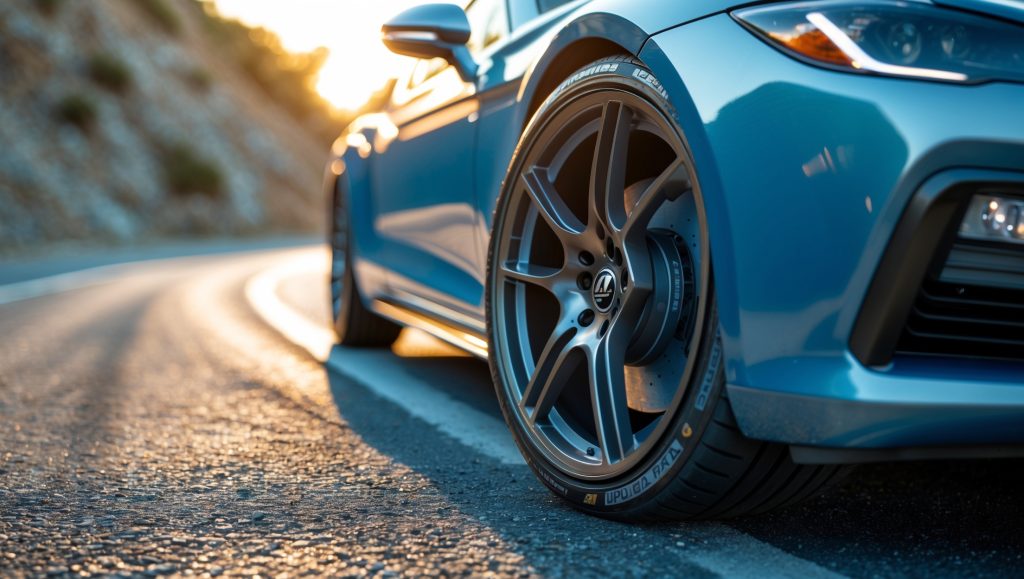
Overview
The Michelin Pilot Sport 4S is an ultra-high performance summer tyre designed for drivers who demand top-tier handling, grip, and steering response. Primarily targeting sports sedans, coupes, and performance-oriented vehicles, the 4S sits at the pinnacle of Michelin’s performance lineup for street use. Its mission is clear: deliver outstanding dry and wet traction, precise steering, and predictable behavior at the limit—making it a favorite among enthusiasts and owners of vehicles like the BMW 3 Series, Ford Mustang, Chevrolet Corvette, and Audi S4. The focus is firmly on summer driving; cold weather and snow are outside its design brief. For this review, we focus on two popular sizes: 245/40ZR18 and 275/35ZR19, commonly found on staggered setups for performance cars.
Key Specs
| Type | Ultra-High Performance Summer |
| Available sizes range | 17″–23″ rim diameters; widths 205–345 mm |
| Speed rating examples | Y (up to 186 mph), (Y) (over 186 mph) |
| Load index examples | 92 (1389 lbs), 100 (1764 lbs) |
| Tread pattern | Asymmetric; Multi-compound outer/inner design |
| Technology highlights | Dynamic Response Technology, Bi-Compound tread, Aramid/nylon belt reinforcement |
Performance: Dry
In dry conditions, the Pilot Sport 4S stands at the forefront of the summer segment. Steering response is immediate and direct, thanks to Michelin’s Dynamic Response Technology that incorporates hybrid aramid and nylon belts for optimal feedback. The tyre delivers exceptional grip during aggressive cornering, with a progressive breakaway that inspires confidence for both spirited road driving and occasional track days. Braking performance is among the best in class: the tyre comes to a halt quickly and predictably, minimizing stopping distances even when pushed hard. Lateral stability remains high, and the tread pattern ensures a generous contact patch for maximizing available traction. For drivers who appreciate sharp handling and high-speed stability, the 4S is difficult to fault on dry pavement.
Performance: Wet
One of the standout characteristics of the Pilot Sport 4S is its wet weather competence. The tyre’s asymmetric tread and bi-compound technology—harder on the outside for dry grip, softer on the inner shoulder for wet adherence—work in tandem to maintain excellent traction even when roads are slick. Hydroplaning resistance is strong; the wide circumferential grooves evacuate water efficiently, providing a reassuring footprint and reducing the risk of loss of control in heavy rain. Braking distances remain short, and lateral grip is impressive for a performance tyre, giving drivers the confidence to push their vehicles in less-than-ideal conditions. While some competitors may match its wet grip, the 4S consistently rates at or near the top for combined wet and dry performance.
Performance: Snow & Ice
N/A. The Michelin Pilot Sport 4S is a dedicated summer tyre and is not designed for use in snow, ice, or temperatures consistently below 45°F. Drivers in regions with cold winters should switch to dedicated winter tyres when conditions require.
Comfort & Noise
Despite its high-performance credentials, the Pilot Sport 4S maintains a surprisingly refined ride. Road noise is well controlled for the segment, with a relatively subdued hum even at highway speeds—noticeably quieter than some competing max performance tyres. The ride is firm, as expected, but not harsh; impacts from potholes and expansion joints are damped better than many rivals, making it suitable for daily driving on less-than-perfect city streets. Michelin’s focus on balancing performance with livability is evident, and the 4S stands out among ultra-high performance summer tyres for its overall comfort.
Durability & Economy
For a tyre with such high levels of grip, the Pilot Sport 4S offers respectable tread life. Michelin lists a UTQG rating of 300 AA A for most sizes, indicating moderate wear characteristics for this class—better than some competitors but behind touring tyres. Real-world mileage varies with driving style; enthusiastic use will naturally reduce lifespan, but many owners report 20,000–30,000 miles under mixed conditions. Rolling resistance is moderate, resulting in a slight fuel economy penalty compared to standard all-seasons, but not excessive for a performance-focused product. The tyre’s construction and compounds are optimized for longevity within the constraints of its performance mission, making it a reasonable choice for those who want both grip and some durability.
Sizes & Alternatives
The Pilot Sport 4S is available in a wide array of sizes from 17 to 23 inches, covering many popular fitments for sports sedans, coupes, and high-performance vehicles. Common enthusiast sizes include 245/40ZR18 (BMW 3 Series, Audi S4, Ford Mustang) and 275/35ZR19 (Chevrolet Corvette, Porsche 911, Mercedes-AMG C-Class).
Notable alternatives in the ultra-high performance summer category include:
- Continental ExtremeContact Sport 02
- Goodyear Eagle F1 SuperSport
- Bridgestone Potenza Sport
- Pirelli P Zero PZ4
- Falken Azenis FK510
Pros & Cons
Pros
- Exceptional dry grip and handling precision
- Class-leading wet traction and hydroplaning resistance
- Good ride comfort for the segment
- Competitive tread life (UTQG 300 AA A)
- Wide range of sizes for many performance vehicles
Cons
- Premium price compared to some rivals
- Not suitable for cold weather or snow
- Still firmer than touring tyres
- Fuel economy not as high as standard all-seasons
Verdict
The Michelin Pilot Sport 4S remains a benchmark for ultra-high performance summer tyres, excelling in both dry and wet conditions and offering a level of steering feedback and predictability that appeals to driving enthusiasts. Its ability to combine outstanding grip with respectable comfort and tread life makes it a compelling choice for sports sedans, coupes, and high-powered vehicles frequently driven in warm weather. While the price is on the higher end, the balance of performance and daily usability justifies the investment for those who value both spirited driving and everyday refinement. For drivers seeking a tyre that maximizes their vehicle’s capabilities in the summer months—and are willing to swap to winter tyres as needed—the Pilot Sport 4S is a leading choice in 2025. Consider rivals like the Continental ExtremeContact Sport 02 or Bridgestone Potenza Sport if you’re looking for specific handling traits or price points, but the 4S offers a hard-to-beat package for most enthusiast applications.
Is there a noticeable difference in steering response or grip between the 245/40ZR18 and 275/35ZR19 sizes when used on a staggered setup?
Yes, there can be a noticeable difference in both steering response and grip between the two sizes in a staggered setup. The 275/35ZR19 rear tires usually offer more grip due to their wider contact patch, enhancing rear traction. The 245/40ZR18 fronts tend to deliver more precise steering response, especially compared to a wider front tire. This setup balances sharp turn-in with strong rear-end grip.
Are there any specific challenges with running the 275/35ZR19 rears on vehicles not originally spec’d for that width, especially regarding fit or wear patterns?
Using 275/35ZR19 tires on vehicles not designed for that width can lead to issues like rubbing against the wheel well, incorrect speedometer readings, and changes in handling. You may also see uneven or accelerated tire wear if the rim width and suspension geometry aren’t suitable. It’s important to check clearance, wheel specs, and alignment before installing wider tires.
If I have a staggered setup with different widths front and rear, are there any specific rotation or maintenance tips for these tyres?
With a staggered setup, you typically can’t rotate the tyres front to rear because they’re different sizes. Instead, focus on maintaining correct tyre pressures, regular alignment checks, and inspecting for uneven wear. Rotating tyres side-to-side may be possible if they’re non-directional; otherwise, just monitor tread and replace as needed.
You mention the 4S is strong in dry performance—have you noticed any difference in ride comfort or road noise when switching from the 245/40ZR18 to the 275/35ZR19 setups?
Switching from the 245/40ZR18 to the 275/35ZR19, there’s a slight increase in road noise and the ride feels a bit firmer, mainly due to the lower sidewall profile of the 19-inch size. However, comfort remains quite good for a performance tyre, and the extra grip from the wider 19s is noticeable in spirited driving.
Given the focus on dry and wet traction, how does the Pilot Sport 4S hold up for occasional autocross compared to dedicated track tires in the same sizes?
The Pilot Sport 4S is excellent for occasional autocross, providing strong grip and responsive handling in both dry and wet conditions. However, dedicated track tires in the same sizes will generally offer even more grip, sharper steering, and faster heat cycles. For casual or mixed use, the 4S balances performance with daily comfort, but track-focused tires outperform it in competitive autocross settings.
If these tires aren’t suitable for colder months, what’s your recommendation for safely switching between summer and winter tires for someone in the Midwest?
For the Midwest, it’s best to swap to winter tires when temperatures consistently drop below 45°F, usually around late October or early November. Store your summer tires in a cool, dry place. When spring arrives and temps stay above 45°F, switch back to the Michelin Pilot Sport 4S. This routine helps ensure safety and preserves tire life.
Does the asymmetric tread and the Bi-Compound design make tyre rotation trickier for regular maintenance? I’m wondering about the long-term care for these tyres.
The asymmetric tread and Bi-Compound design do mean the Michelin Pilot Sport 4S tyres should only be rotated side-to-side, not front-to-back, to maintain optimal performance. This can limit rotation options compared to symmetric tyres, so regular monitoring of tyre wear and alignment is especially important for long-term care.