
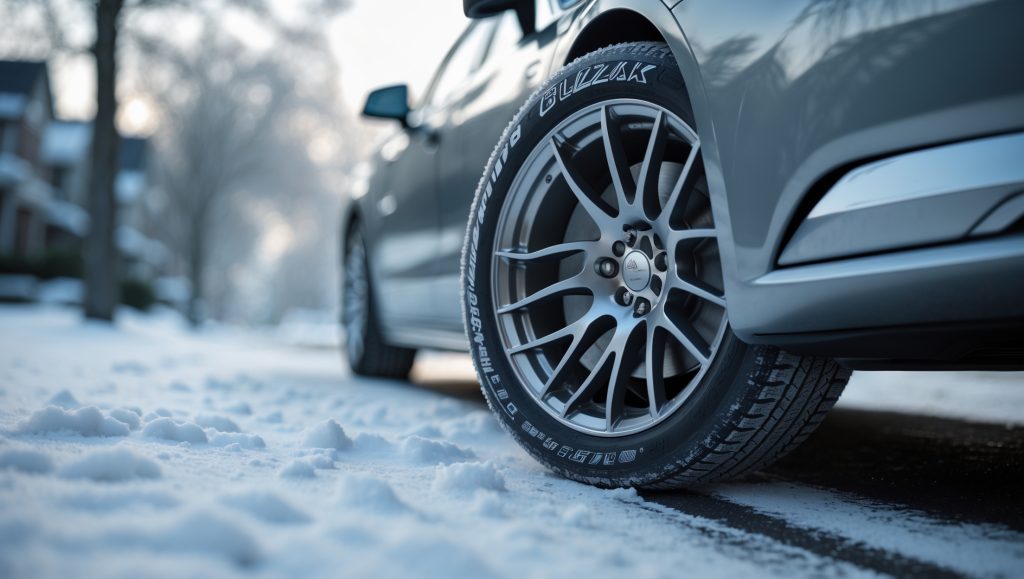
Overview
The Bridgestone Blizzak WS90 is a dedicated winter tyre aimed at drivers of sedans, hatchbacks, coupes, and small crossovers seeking maximum safety and confidence during harsh US winters. Tailored for those who routinely face snow, slush, and icy conditions, the WS90 sits in the premium studless winter segment, excelling in severe weather without sacrificing everyday comfort. Its reputation is built on advanced cold-weather grip, predictable handling, and solid wear characteristics, making it popular among both everyday drivers and enthusiasts who refuse to compromise on winter performance.
Key Specs
| Type | Studless Winter |
| Available Sizes Range | 14″–20″ wheel diameters; e.g., 205/55 R16, 195/65 R15 |
| Speed Rating Examples | T (118 mph), H (130 mph) for select sizes |
| Load Index Examples | 91 (615 kg), 94 (670 kg) |
| Tread Pattern | Directional with 3D sipes and multiple biting edges |
| Technology Highlights | Multi-Cell compound, EdgePerformance Technology, advanced tread block stiffness |
Performance: Dry
While the Blizzak WS90 is purpose-built for winter, its dry road manners are among the best in the winter category. The tread’s reinforced block stiffness delivers notably stable handling for a snow tyre, with minimal tread squirm during lane changes and cornering. Braking distances on dry pavement are shorter than most budget winter options, though still longer than leading all-season or summer tyres. Road feedback is moderate, and steering response remains predictable, enabling confident everyday driving when the roads are cold but clear. However, very spirited drivers will notice a softer feel compared to performance-focused all-seasons.
Performance: Wet
In wet conditions, the WS90 sets a high bar for winter tyres. Its Multi-Cell compound is designed to disperse water film and maintain grip on cold, wet roads. Hydroplaning resistance is strong, aided by wide circumferential grooves and directional tread channels. Compared to older winter tyres and several mainstream rivals, the WS90 inspires confidence during heavy winter rains or when slush is present. Emergency stopping and lane changes remain controlled, though the softer tread compound means a slight increase in braking distances versus top all-season tyres on wet but unfrozen pavement. Still, for its segment, wet grip and aquaplaning control are standout strengths.
Performance: Snow & Ice
This is where the Blizzak WS90 truly shines. The tyre’s dense 3D sipes and aggressive biting edges ensure excellent traction in both deep snow and compacted snow. Take-offs, cornering, and braking remain controlled and predictable, even on unplowed streets. On ice, the Multi-Cell compound provides micro-level grip by wicking away thin water layers, noticeably improving stopping distances and directional stability compared to typical winter tyres and most all-seasons. In independent tests, the WS90 routinely outperforms competitors in both acceleration and braking on slick surfaces—though ultimate ice traction still can’t match studded tyres. For most US winter conditions, however, the WS90 offers some of the best real-world security available.
Comfort & Noise
Despite its aggressive winter tread, the WS90 delivers a smooth and composed ride. The tyre absorbs road imperfections well, maintaining comfort on pothole-ridden winter roads. Cabin noise is impressively low for a winter tyre; while there’s a subtle hum from the directional tread at highway speeds, it never becomes intrusive. Compared to older Blizzak generations and many rivals, the WS90 is among the quieter and more refined options for daily commuting or longer trips during winter months.
Durability & Economy
Bridgestone’s upgraded tread compound for the WS90 has improved longevity over previous versions—a common criticism of earlier Blizzaks. Real-world users report solid wear rates, especially when the tyre is removed promptly in spring. Rolling resistance is modest for a winter tyre; while fuel economy drops slightly compared to all-seasons, the difference is less pronounced than with many budget winter competitors. The WS90 does not carry a UTQG rating, as is standard for dedicated winter tyres, but drivers can expect 3–5 winter seasons of reliable use when rotated and stored properly.
Sizes & Alternatives
The Blizzak WS90 is available in a wide array of sizes, covering most popular compact and midsize sedans, hatchbacks, and small crossovers in the US. Common sizes include:
- 205/55 R16 (Honda Civic, Toyota Corolla, VW Golf, Mazda3)
- 195/65 R15 (Toyota Prius, Honda Accord, Hyundai Elantra)
- 215/60 R16 (Subaru Legacy, Toyota Camry)
Key competitors include:
- Michelin X-Ice Snow
- Continental VikingContact 7
- Nokian Hakkapeliitta R5
- Goodyear Ultra Grip Ice WRT
- General Altimax Arctic 12
Pros & Cons
Pros
- Class-leading grip on snow and ice
- Excellent wet performance for a winter tyre
- Predictable, stable handling on dry roads
- Low cabin noise and comfortable ride
- Improved tread life over previous Blizzak models
- Wide size availability for US cars
Cons
- Not as durable as top all-season or summer tyres
- Fuel economy slightly reduced compared to all-seasons
- Soft tread feel may not suit performance enthusiasts
- Needs to be swapped out after winter—unsuitable for warm-weather use
- Premium price point versus some rivals
Verdict
The Bridgestone Blizzak WS90 remains a standout choice for US drivers prioritizing safety, control, and peace of mind during winter. Its blend of best-in-class snow and ice traction, wet weather confidence, and everyday comfort justify its premium status. While it demands annual seasonal changeover and commands a higher price than entry-level options, the WS90 more than repays with its performance consistency and reliability in severe conditions. If your winters are long, snowy, or unpredictable, and you want one of the most trusted names in winter grip, the WS90 is a top-tier investment. For drivers in milder climates or those seeking year-round convenience, however, a quality all-season or all-weather tyre might be more practical. But for true winter mastery, few can match the Blizzak WS90’s reputation and real-world results in 2025.
Could you elaborate on how the Blizzak WS90’s handling and braking on dry pavement compares to a top-rated all-season tire during winter months? I’m trying to decide if I should swap my performance all-seasons for these.
On dry pavement, the Blizzak WS90 provides good stability for a winter tire, but its handling and braking won’t match the responsiveness and shorter stops of a top-rated performance all-season. However, if you regularly face snow or ice, the WS90’s winter grip far outweighs the slight drop in dry performance. Swapping is worthwhile if winter conditions are frequent where you drive.
If I’m mostly commuting in city traffic with occasional highway driving, would the EdgePerformance Technology and 3D sipes make a significant difference compared to older Blizzak models?
EdgePerformance Technology and 3D sipes in the Blizzak WS90 offer better grip and improved handling, especially in stop-and-go city traffic and during lane changes on highways. Compared to older models, you’ll notice more confident braking and cornering on icy or slushy roads, making them a worthwhile upgrade for your daily commute.
With the WS90 coming in a range of sizes, is there generally a big price jump between the 15-inch and 17-inch versions, or are they similarly priced within the same model line?
There is usually a noticeable price difference between the 15-inch and 17-inch WS90 tires. Larger sizes like 17-inch typically cost more due to increased materials and manufacturing expenses. While they’re part of the same model line, expect the 17-inch versions to be priced higher than the 15-inch ones.
I see the WS90 is available in both T and H speed ratings. For a compact sedan mostly driven on highways, is there a noticeable real-world difference between those two ratings in terms of ride comfort or performance?
For most drivers of compact sedans, the real-world difference between T and H speed ratings is minimal regarding ride comfort or everyday performance. The H-rated WS90 may feel slightly firmer and handle a bit better at higher speeds, but both offer excellent winter grip and comfort for typical highway use. Either option should work well for your needs.
I see the WS90 is available in sizes up to 20 inches. Are there any drawbacks to using these tires on a compact car with smaller wheels compared to larger sedans?
Using the Blizzak WS90 on a compact car with smaller wheels is perfectly suitable, as these tires are designed for a range of vehicle sizes. The main difference is that smaller tires may have slightly less contact area, but the WS90 still provides excellent winter traction and handling for compacts. Just be sure to choose the correct size recommended for your car.
Does the directional tread pattern on the Blizzak WS90 make tire rotation more complicated for someone with a front-wheel drive sedan, or is it similar to other winter tires?
The Blizzak WS90 features a non-directional tread pattern, so rotating these tires on your front-wheel drive sedan won’t be more complicated than with most other winter tires. You can use typical rotation patterns, making maintenance easy and straightforward.
You mentioned the WS90 handles dry roads better than most winter tires, but still trails all-season and summer options. For someone who only wants to swap tires once, is it reasonable to daily drive these in early spring or late fall?
Daily driving the Blizzak WS90 in early spring or late fall is reasonable, as it performs better on dry roads than most winter tires. However, its grip, handling, and tread life will still lag behind true all-season or summer tires, especially as temperatures rise. If you only want to swap once and prioritize winter safety, the WS90 can work, but expect some compromises in warmer, dry conditions.
I see these are studless—am I going to notice a big difference in grip on snowy hills versus traditional studded tires for my sedan?
You might notice a bit less grip on icy or very hard-packed snowy hills compared to studded tires, since studs provide extra traction in those conditions. However, the Blizzak WS90 is excellent for most winter driving and offers impressive grip on snow and slush, making it a strong choice unless you consistently face extreme icy hills.
Does the Blizzak WS90 retain good traction as it wears down, or does performance drop significantly once the Multi-Cell compound layer is gone?
The Blizzak WS90 is known for outstanding winter traction, largely due to its Multi-Cell compound on the upper tread. Once this layer wears away, traction on ice and packed snow can decrease noticeably. While the tire still performs reliably in general winter conditions after this point, its best ice grip is during the life of the Multi-Cell layer.
How would you rate the noise level of the WS90 during everyday highway driving, especially when fitted to a compact sedan?
The Blizzak WS90 is generally known for its quiet performance, especially for a winter tire. On a compact sedan, you can expect a moderate noise level on the highway—noticeably quieter than many other winter tires, though not as silent as top-tier summer or all-season tires. Road noise should be unobtrusive during everyday driving.
The review mentions sizes from 14 to 20 inches. Are there any noticeable performance changes between smaller and larger wheel diameters for this tire?
Yes, there can be slight performance differences between smaller and larger wheel diameters for the Blizzak WS90. Smaller diameters generally offer a softer ride and better traction in deep snow, while larger sizes may provide more precise handling on dry and wet winter roads. Overall, the tire maintains strong winter performance across all sizes, but the feel and handling can vary depending on your vehicle and wheel size.
With the WS90 only available up to H speed rating for select sizes, would you recommend it for a compact car that occasionally sees higher highway speeds in winter, or is it better to stay under those limits?
The Blizzak WS90’s H speed rating means it is safe for speeds up to 130 mph, which covers typical highway speeds. For a compact car that only occasionally reaches higher highway speeds in winter, the WS90 should perform very well. Just make sure not to exceed the rated speed for safety and optimal tire performance.
Does the Blizzak WS90’s advanced cold-weather grip mean it will wear down faster if I use it on dry roads during mild winter days?
Yes, the Blizzak WS90 is designed for cold, icy, and snowy conditions, so its softer rubber compound can wear down faster on dry or warmer roads. For best longevity, try to use them only when temperatures are consistently below 45°F or when winter conditions are present.
I’m curious how the Blizzak WS90 compares to leading all-season tires on dry days—does the softer feel really impact handling for regular highway driving?
The Blizzak WS90 does feel softer than most all-season tires, and while it maintains good stability, you might notice a slightly less responsive steering feel on dry highways. The trade-off is better winter traction, but for regular dry driving, all-seasons typically offer firmer handling and quicker feedback.
Are there any trade-offs in comfort or road noise when using the Blizzak WS90 on long highway drives during dry winter days?
When using the Blizzak WS90 on long, dry highway drives, you might notice a bit more road noise compared to all-season tires, since the tread is designed for winter grip. Comfort remains generally good, but the slightly firmer ride and noise are trade-offs for the tire’s excellent winter performance.
How does the dry road braking performance of the WS90 compare to a top all-season tire in the same size range? I want good winter safety but don’t want to sacrifice too much on clear, cold days.
The Blizzak WS90 offers above-average dry braking for a winter tire, but a top all-season tire will still have a shorter stopping distance on dry, cold roads. The WS90’s dry performance is impressive for its category, so you won’t sacrifice much, but all-seasons do edge it out in clear conditions while the WS90 excels in snow and ice.
I see the WS90 comes in various speed and load ratings—how important is it to match those exactly to my car, or can I go with a higher rating for extra safety?
It’s essential to match at least the minimum speed and load ratings specified by your vehicle manufacturer. You can choose a higher rating if you wish—this won’t harm performance and can sometimes offer extra durability. However, never go below the recommended ratings, as that could compromise safety and handling.
For those of us who drive in areas where winters can be unpredictable, would the WS90 still make sense if we only get a few heavy snowfalls each year?
The Blizzak WS90 is designed to excel in tough winter conditions, so even if you only get a few heavy snowfalls each year, they’ll be a solid choice. They’ll give you extra confidence and safety during those unpredictable storms, and their performance on cold, dry, or wet roads is still reliable.
I drive a small crossover and am trying to choose between the WS90’s available size range. Is there any practical benefit to going with a wider or narrower option for New England winters?
For New England winters, a slightly narrower tire is usually better for snow and slush, as it can cut through and maintain traction more effectively. Wider tires might provide a bit more grip on dry roads, but can struggle more with deep snow. Go with the narrowest WS90 size that fits your vehicle’s recommended specifications for optimal winter performance.
I noticed the WS90 comes in a range of sizes—are certain wheel sizes better for sedans in deep snow, or does it not make much difference?
For deep snow, narrower tires generally perform better because they cut through snow more effectively and provide more traction. Many sedans use 15-17 inch wheels, and choosing a WS90 size that’s slightly narrower than your standard tire (while still fitting your wheel) can help in snowy conditions. Just make sure the size you pick is approved for your vehicle.
Do you know how the tread wears over multiple seasons, especially since it uses the Multi-Cell compound and advanced tread block stiffness?
The Blizzak WS90 is designed to offer improved tread life compared to earlier Blizzak models. Its Multi-Cell compound does wear away after a few seasons, transitioning to a standard winter rubber, but the advanced tread block stiffness helps maintain even wear and grip. Most users can expect dependable performance for about three to four winter seasons with typical driving.
How long can I expect a set of WS90s to last if I’m driving through multiple severe US winters, and are there any tips to maximize their lifespan?
With regular use through several harsh winters, Blizzak WS90 tires typically last around 3 to 5 seasons, depending on mileage and driving habits. To maximize their lifespan, rotate the tires regularly, keep them properly inflated, store them in a cool, dry place when not in use, and avoid aggressive driving on dry roads.
For someone who mostly drives on cold but dry roads, would it make sense to choose the WS90 over an all-season tire, or will the longer braking distances on dry pavement be a drawback?
If you mostly drive on cold but dry roads, all-season tires may actually serve you better. The WS90 excels in snow and ice, but it can have slightly longer braking distances on dry pavement, which could be a drawback for your needs. Unless you expect frequent snow or ice, an all-season tire might be a more balanced choice.
Is the WS90 a good investment if we only get heavy snow a few times each winter, or would a more budget-friendly winter tire be enough?
If you only experience heavy snow a few times each winter, a more budget-friendly winter tire could be sufficient, especially if you drive mainly on plowed roads. The WS90 excels in harsh winter conditions, but its premium features may be more than you need for occasional snow.
Are there any specific maintenance tips to maximize tread life on these tires, given their advanced 3D sipes and directional pattern?
To get the most tread life from the Blizzak WS90, regularly rotate your tires (every 5,000–7,000 miles), maintain proper tire pressure, and check alignment periodically. Avoid aggressive acceleration and braking, as this can wear out the advanced 3D sipes and the directional tread more quickly.
If my sedan came with 17-inch wheels, does switching to a smaller size like a 15-inch (as mentioned in your size range) improve snow traction, or should I stick with my original size?
Switching to a smaller wheel size, like 15-inch, with a taller sidewall can improve snow traction and ride comfort, as the tire can flex more and grip better on deep snow. However, make sure the 15-inch size fits your car and clears the brakes before changing, and always use the correct tire width and load rating.
I see the WS90 is in the premium category—are there more budget-friendly winter tires you’d recommend that still offer solid ice and snow performance?
If you’re looking for budget-friendly winter tires with reliable snow and ice performance, consider options like the General Altimax Arctic 12 or the Firestone Winterforce 2. They typically cost less than the Blizzak WS90 but still provide dependable traction in winter conditions for sedans and compacts.
Does the Blizzak WS90’s advanced tread and Multi-Cell compound help reduce road noise compared to other studless winter tires?
Yes, the Blizzak WS90’s advanced tread design and Multi-Cell compound do help reduce road noise compared to many other studless winter tires. While all winter tires can produce some noise, users generally report that the WS90 is quieter than most, providing a more comfortable ride during winter conditions.
If my sedan currently uses all-season tires, would I notice a big difference in dry road braking and steering feel when switching to the WS90s?
You’ll likely notice a difference in dry road performance. The Blizzak WS90s are optimized for winter grip, so braking distances on dry pavement may be longer and the steering feel could feel less sharp compared to your all-season tires. However, their safety and traction advantages in snow and ice far outweigh these minor trade-offs during winter.
For someone with a compact crossover who drives mostly on mixed snow and slush, would you recommend the WS90 over an all-season with a high snow rating, or would the softness in dry performance be a concern?
For a compact crossover in mixed snow and slush, the Blizzak WS90 will offer significantly better traction and safety than even high-rated all-season tires. While the Blizzak may feel a bit softer on dry roads, its winter performance advantage usually outweighs that if you regularly face wintry conditions.
If I mainly drive on clear but cold roads, would I sacrifice much in braking distance compared to top all-season tires with the WS90?
On clear but cold roads, the Blizzak WS90 will generally offer similar or even slightly shorter braking distances compared to top all-season tires, thanks to its winter-focused rubber compound that stays soft in low temperatures. You shouldn’t see a significant sacrifice in braking performance for cold, dry conditions.
I noticed the WS90 comes in a wide range of sizes—are there any handling or comfort tradeoffs when choosing one of the smaller sizes for a compact sedan?
Choosing a smaller size of the Blizzak WS90 for your compact sedan can slightly improve comfort, as smaller sidewalls tend to absorb bumps better. However, smaller tires may offer a bit less responsive handling compared to wider or larger ones. The tradeoff is generally minor, and the WS90 still delivers strong winter grip across all its size options.
I noticed the WS90 comes in a pretty wide range of sizes, but do you know if it fits most stock sedan wheels, like a 16-inch rim on a Honda Accord?
Yes, the Bridgestone Blizzak WS90 is available in many sizes, including those that fit typical 16-inch wheels found on most Honda Accord sedans. You’ll just want to double-check your specific Accord’s tire size (like 205/60R16) and match it with one of the available WS90 options to ensure a proper fit.
How does the performance of the WS90 in cold rain stack up against its abilities in snow or slush, especially in Midwest conditions?
The WS90 performs impressively in snow and slush, offering strong traction and confidence. In cold rain, its grip remains reliable due to the tread design and compound, but it truly excels in snowy or slushy conditions. For Midwest weather, you can expect solid performance in both scenarios, though its snow and slush handling is where it stands out most.
Since the WS90 is studless, would it still work well on steep, icy driveways or should I consider a different type of tire for that specific situation?
The Blizzak WS90 performs impressively on ice for a studless winter tire, thanks to its advanced tread compound and biting edges. However, if your driveway is consistently steep and icy, studded tires generally offer even better grip. The WS90 is still a strong choice, but studded tires might provide extra security on extreme surfaces.
If I drive a small crossover and face lots of deep slush and occasional ice patches, would you recommend upsizing to a higher load index or just sticking with the regular sizes offered?
For a small crossover, it’s generally best to stick with the tire size and load index recommended by your vehicle manufacturer. Upsizing the load index isn’t usually necessary unless you’re carrying heavy loads frequently. The Blizzak WS90 performs well in deep slush and ice when properly sized, so choosing the right fitment is key for safety and performance.
Does the WS90’s directional tread impact how I should rotate these tires throughout the winter? I want to make sure I’m maintaining them correctly.
Yes, the WS90 has a directional tread pattern, so when rotating them, make sure to only swap the tires front to back on the same side of the vehicle. Never switch them side to side, as this would reverse the tread direction and affect performance.
For a sedan driven mostly on plowed city streets with occasional highway trips, would you recommend these over an all-weather tire?
If your city streets are regularly plowed and you only occasionally travel on highways, the Blizzak WS90 will offer much better winter traction and braking compared to all-weather tires. However, you’ll need to switch them out for non-winter tires when temperatures rise, as they wear faster in warmer weather.
How does the WS90 wear compared to all-season tires if I leave them on a few weeks after winter ends? Will it degrade quickly on dry roads?
The WS90 is made with a softer rubber compound optimized for cold weather, so if you use them on warmer, dry roads after winter, they will wear out faster than all-season tires. While a few extra weeks won’t destroy them, you’ll notice quicker tread wear and reduced tire life if you routinely leave them on in mild conditions.
Could you clarify whether the Multi-Cell compound affects ride comfort or noise levels compared to other winter options you’ve tested for sedans?
The Multi-Cell compound in the Blizzak WS90 is mainly designed to improve grip on ice and snow. In our testing, it does not noticeably increase road noise or negatively affect ride comfort compared to other leading winter tires for sedans. The ride remains smooth and cabin noise is comparable to similar high-quality winter options.
Do the available WS90 sizes, like the 205/55 R16, fit older hatchbacks, or are they mostly aimed at newer vehicles?
The Blizzak WS90 in sizes like 205/55 R16 can definitely fit many older hatchbacks, as long as the size matches your car’s recommended specifications. This size isn’t exclusive to newer vehicles; it’s quite common on older models too. Always check your vehicle’s manual or current tire sidewall to confirm compatibility.
Does the WS90’s Multi-Cell compound affect tread life at all, or should I expect similar wear to other premium winter tires?
The WS90’s Multi-Cell compound is designed to enhance ice and snow traction, but Bridgestone has improved its durability compared to earlier Blizzak models. You can generally expect tread life that’s competitive with other premium winter tires, though aggressive winter compounds may still wear a bit faster than all-season options.
With the WS90 being in the premium segment, are there cost-effective alternatives that come close in severe winter performance for drivers on a tighter budget?
Yes, there are some budget-friendly alternatives to the Blizzak WS90 that still offer solid winter performance. Consider tires like the General Altimax Arctic 12 or the Hankook Winter i*cept iZ2. While they may not quite match the WS90 in every category, they provide dependable traction and safety for severe winter conditions at a lower price point.
For drivers on a tight budget, are there any drawbacks to choosing a more affordable winter tire over the WS90 beyond just longer dry braking distances?
Choosing a more affordable winter tire instead of the WS90 can also mean less grip on ice and snow, shorter tread life, and possibly more road noise. Cheaper tires may not handle as well in turns or under sudden maneuvers, especially in tough winter conditions.
How long does a set of WS90s typically last for someone dealing with just one or two major snowfalls each year in the US Midwest?
If you only face one or two major snowfalls each year in the US Midwest, a set of Blizzak WS90s can typically last 5 to 6 seasons, assuming you swap them out for all-season or summer tires once winter ends. Regular rotation and proper storage between seasons will help maximize their lifespan.
I see the WS90 is part of the premium studless segment. For a small business watching costs, is it worth the upgrade over less expensive winter tires in terms of long-term durability?
The Blizzak WS90 stands out for its long tread life and consistent winter performance, which means you could get more seasons out of each set compared to budget tires. While the upfront cost is higher, the added durability and safety can make it a smart investment for a small business, potentially saving money over time on replacements and reducing downtime.
If I get the WS90s in a 205/55 R16 size, can I keep using my same wheels, or does installing winter tires usually require new rims?
If your current wheels are 16 inches in diameter and fit 205/55 R16 tires, you can use the WS90s on your existing wheels. You typically only need new rims if you want a dedicated winter wheel set or if your current wheels aren’t compatible with the tire size.
For drivers with older sedans, are there specific size limitations or fitment issues to be aware of with the WS90’s available range?
The Blizzak WS90 comes in a wide range of sizes, but it’s important to check your sedan’s wheel diameter, width, and aspect ratio before purchasing. Older sedans may have uncommon wheel sizes, so always confirm compatibility with your owner’s manual or a tire professional to ensure proper fitment and safety.
If my sedan currently uses summer tyres, would I notice a huge difference in road noise or comfort after switching to Blizzak WS90s for winter?
Yes, you’ll likely notice some difference in road noise and comfort when switching from summer tyres to Blizzak WS90 winter tyres. Winter tyres like the WS90 tend to be a bit noisier and have a slightly softer ride due to their tread pattern and rubber compound, but these changes help provide much better grip and safety in cold, icy, or snowy conditions.
Can you explain more about the Multi-Cell compound technology and how it actually improves grip on icy roads compared to regular winter tires?
The Multi-Cell compound in the Blizzak WS90 is designed with tiny pores that help absorb and remove the thin layer of water on top of icy surfaces. This process allows the tire to make better contact with the ice, giving much more grip compared to standard winter tires that lack this technology, which often rely solely on tread patterns for traction.
I see the Blizzak WS90 has a directional tread with 3D sipes. In your experience, does this tread pattern make tire rotation tricky compared to non-directional winter tires?
The directional tread on the Blizzak WS90 does limit your rotation options compared to non-directional tires. With directional tires, you can only rotate them front-to-back on the same side of the vehicle, not side-to-side. This ensures the tread always rolls in the intended direction for optimal performance.
With the Blizzak WS90 being a premium option, is there a big difference in real-world tire life compared to more budget-friendly winter tires?
The Blizzak WS90 is known for its excellent winter grip, but its tread life is typically average for a winter tire. Compared to some budget tires, the WS90 may not always last significantly longer, as softer compounds for better traction can wear faster. However, it often outperforms budget options in safety and consistency as it ages.
Are there any significant differences in ride comfort or road noise between the Blizzak WS90 and other premium studless winter tires, especially on highways for sedans?
The Blizzak WS90 is known for being quiet and comfortable, ranking on par with other top studless winter tires. On highways, it generally offers a smooth ride and low road noise for sedans. Some users notice it may be slightly firmer than a few competitors, but differences in comfort and noise are minimal among premium options.
Does the WS90’s Multi-Cell compound make any noticeable difference in icy intersections compared to something like the Michelin X-Ice Snow? I’m curious about real-world stopping distances.
The WS90’s Multi-Cell compound is designed to wick away the thin layer of water on ice, which can noticeably improve grip at icy intersections. Many drivers report shorter real-world stopping distances versus the Michelin X-Ice Snow, especially on glare ice, but the difference can vary depending on temperature and road conditions. Both are top-tier, but the WS90 often has a slight edge on sheet ice.
How does the tread life of the WS90 compare to other premium studless winter tires? I want to know if I’ll have to replace them more often since I drive a lot each winter.
The Blizzak WS90 is known for its improved tread life compared to previous Blizzak models and ranks competitively among premium studless winter tires. While winter tires generally wear faster than all-seasons, the WS90’s wear-resistant compound helps extend its lifespan, so you shouldn’t have to replace them more often than similar high-end options if you rotate and maintain them properly.
If the WS90 has minimal tread squirm according to the review, does that mean they’ll feel more stable than cheaper winter tires during sudden maneuvers or quick lane changes?
Yes, the review highlights that the Blizzak WS90’s minimal tread squirm contributes to a more stable and predictable feel, especially during sudden maneuvers or quick lane changes. This typically means you’ll experience less wobble compared to many cheaper winter tires, which can have softer, less stable tread designs.
How does the Blizzak WS90 hold up in areas where roads are often wet but not snowy during the winter? Is there any significant drop in performance outside of deep snow or ice?
The Blizzak WS90 performs well on wet roads, thanks to its tread design that channels water and reduces hydroplaning. While it’s optimized for snow and ice, you won’t see a significant drop in wet performance. However, compared to an all-season tire, the ride may feel a bit firmer and there could be slightly longer wear if used mainly on wet, snow-free pavement.
The WS90 seems to be packed with a lot of tech like the Multi-Cell compound and EdgePerformance Technology. Does all of this make it a lot pricier than budget winter tire options?
The advanced features like the Multi-Cell compound and EdgePerformance Technology do mean the Blizzak WS90 is priced higher than budget winter tires. However, many drivers find the improved winter grip, braking, and overall safety worth the extra cost. If top-tier winter performance is a priority, the WS90 justifies its price over entry-level options.
If my car needs the 195/65 R15 size, are there any notable performance differences compared to larger or smaller sizes of the WS90?
The 195/65 R15 size of the Blizzak WS90 generally offers a good balance of grip, comfort, and efficiency for sedans and compacts. Compared to larger sizes, you might notice slightly less cornering stability, but better ride comfort and snow traction. Smaller sizes could handle deep snow even better but may reduce stability at higher speeds. The core winter performance remains excellent across all sizes.
My compact car currently uses 195/65 R15 wheels. Is there any noticeable difference in performance or ride comfort between the smaller and larger sizes of the Blizzak WS90?
For your 195/65 R15 size, the Blizzak WS90 performs very well, offering reliable grip and comfort. Larger sizes may feel slightly firmer and could provide sharper handling, but the difference in ride comfort is generally minor. The WS90 is designed to deliver consistent winter performance across all sizes, so your current size should serve you well.
Does the WS90’s directional tread pattern limit how I can rotate the tires, and could this affect their longevity if I drive a lot each winter?
Yes, the WS90’s directional tread pattern means you should only rotate the tires front-to-back on the same side, not diagonally or side-to-side. This does limit rotation options compared to non-directional tires, and could affect even wear if you drive a lot in winter. Regularly scheduled rotations are still important to help maintain longevity.
I noticed the WS90 is studless but mentions strong grip on ice and slush. For someone who commutes daily at higher speeds, is there a noticeable difference compared to using studded winter tires?
The Blizzak WS90 achieves impressive ice and slush grip thanks to its advanced rubber compound and tread design, even without studs. For most daily high-speed commutes, you’ll find the difference between WS90 and studded tires minimal in terms of grip and handling. Studded tires offer extra traction on sheer ice, but the WS90 delivers excellent, reliable winter performance with less road noise and better ride comfort.
With the speed ratings listed (T and H), are there any performance trade-offs for daily drivers who occasionally travel at higher highway speeds in winter?
The T and H speed ratings mean the Blizzak WS90 is safe up to 118 mph (T) and 130 mph (H). For normal highway speeds, both are sufficient. The H-rated version may offer slightly better high-speed stability, but both prioritize winter grip over sporty handling, so ultra-high-speed performance is not their focus.
Can you clarify if the WS90’s Multi-Cell compound and EdgePerformance Technology make a noticeable difference in icy conditions compared to the previous Blizzak versions?
The WS90’s Multi-Cell compound and EdgePerformance Technology do offer a noticeable boost in icy conditions compared to earlier Blizzak versions. The new compound helps channel away the thin water layer on ice, improving grip, and the EdgePerformance Technology provides more biting edges for stable braking and cornering. Many users report better confidence and performance on ice with the WS90.
Given the directional tread and advanced technologies, are there any special installation or rotation requirements owners need to be aware of with the WS90?
The Blizzak WS90 features a directional tread, so make sure the tires are mounted with the correct side facing forward, usually indicated by an arrow on the sidewall. For rotation, only swap tires front-to-back on the same side of the vehicle to maintain the correct rotation direction and performance.
Do these tires maintain their traction and handling over multiple seasons, or does the advanced tread compound tend to harden or lose effectiveness after a couple of winters?
The Blizzak WS90 uses an advanced tread compound designed to resist hardening, so it retains good traction and handling through a few winter seasons. However, like most winter tires, you may notice some loss of effectiveness after about three or four winters, especially if the tread wears down or the tires are exposed to prolonged warm temperatures.
For sedans that rarely face more than a light dusting of snow, does the Blizzak WS90 still make sense over a top-tier all-season tire, or would the softer feel be an unnecessary tradeoff?
If your sedan usually only sees light snow, a top-tier all-season tire could be a better fit than the Blizzak WS90. All-seasons typically provide a firmer, more responsive feel on dry and wet roads, and avoid the softer ride and faster wear of winter tires. The WS90 really shines when facing frequent or severe winter conditions.
For a compact sedan that mostly commutes on plowed, salted roads but occasionally visits the mountains, is the WS90 overkill or just right?
The WS90 is actually a sensible choice for your situation. While it’s excellent on icy and snowy roads, it’s also designed for reliable handling on plowed, salted streets. You won’t find it overkill, and it will give you peace of mind for those mountain trips.
Since the WS90 is described as having a directional tread with 3D sipes, do I need to pay attention to any specific mounting direction when putting them on myself?
Yes, since the Blizzak WS90 has a directional tread pattern, you need to mount each tire so that the arrow or ‘rotation’ mark on the sidewall points in the direction the tire will rotate when the car moves forward. This ensures optimal traction and performance in winter conditions.
The review mentions some softer steering feel compared to all-seasons. Would that be noticeable for daily commuting, or is it mainly an issue for more aggressive drivers?
For daily commuting, the softer steering feel of the Blizzak WS90 is generally subtle and not bothersome for most drivers. It’s more apparent if you’re used to sporty or very responsive all-season tires or if you drive aggressively. For regular city or highway use, you likely won’t find it distracting.
When considering the WS90 for my sedan, is there a noticeable tradeoff in tread life due to its advanced compound and aggressive siping compared to more budget-friendly winter tires?
The Blizzak WS90’s advanced compound and aggressive siping do provide excellent winter grip, but they can result in slightly shorter tread life compared to some budget-friendly winter tires. However, many users find the superior performance and safety in harsh conditions outweigh this tradeoff. Regular rotation and proper tire maintenance will help maximize tread life.
I noticed the WS90 comes in sizes up to 20 inches—are there any performance drawbacks for larger wheel diameters on compact crossovers in deep snow?
Larger wheel diameters on compact crossovers can reduce sidewall height, which may slightly decrease deep snow traction compared to smaller wheels with taller sidewalls. Lower-profile tires are generally less flexible in deep snow, making it harder to cut through and grip. For optimal deep snow performance, consider narrower tires with more sidewall, if your vehicle allows.
For drivers with sedans who occasionally drive on highways at higher speeds, how does the WS90’s T and H speed ratings affect long-distance winter travel?
The WS90’s T and H speed ratings mean the tire is safe for speeds up to 118 mph (T) or 130 mph (H). For typical highway driving in a sedan, both ratings are more than sufficient, even on long winter trips. Just make sure not to exceed the speed rating of your specific tire for safety and optimal performance.
For someone driving a lot of highway miles in the northeast, would you recommend sticking with the WS90, or are there better all-season options for mixed conditions?
If you regularly drive highways in the Northeast during winter, the WS90 is excellent for snow and ice safety but may wear faster and feel noisier in dry, mixed conditions. For year-round use and better tread life, a premium all-season tire might suit you better unless you face frequent severe winters.
Is the WS90 a good option for someone with a tighter budget, or would you recommend a different winter tire that balances safety and price for sedans?
The Blizzak WS90 offers excellent winter traction and safety, but it is priced higher than some budget-friendly options. If you’re looking for a more affordable tire without compromising too much on safety, consider models like the General Altimax Arctic 12 or the Firestone Winterforce 2, which are well-reviewed and often easier on the wallet.
For a compact sedan regularly parked outside overnight in sub-zero temps, do you find the WS90 maintains flexibility and grip from the moment you start driving, or does it need to warm up a bit?
The Blizzak WS90 is designed to stay flexible even in sub-zero temperatures, so you should notice good grip and control from the moment you start driving. There may be a slight improvement as the tires warm up, but you won’t need to wait for safe traction in cold conditions.
I noticed the WS90 comes in a wide size range up to 20 inches, but is there any performance difference between running a smaller versus a larger diameter with this tire during winter?
There can be some performance differences based on tire diameter. Generally, smaller diameter tires with taller sidewalls can offer better traction and ride comfort in deep snow, while larger diameters with lower profiles may provide sharper handling but less snow performance. Matching the recommended size for your vehicle is key to getting the best winter results from the WS90.
With the WS90 available in multiple speed and load ratings, how should I choose the best fit for my hatchback if I sometimes carry heavy loads?
To choose the best WS90 for your hatchback, check your vehicle’s owner’s manual for the recommended load and speed ratings. If you often carry heavy loads, select a tire with a higher load index to ensure safety and proper performance under extra weight. Always match or exceed the manufacturer’s minimum requirements.
Is the directional tread pattern harder to rotate during tire maintenance, and does that affect longevity or performance?
A directional tread pattern does mean the tires can only be rotated front-to-back, not side-to-side. This may limit rotation options compared to non-directional tires, but it doesn’t negatively impact performance or longevity if you follow the recommended rotation pattern. Regular front-to-back rotation still helps ensure even wear and maintains the Blizzak WS90’s winter performance.
Are there any differences in handling or comfort between the WS90 in smaller sizes like 14-inch versus larger 20-inch fitments for compact cars?
Yes, there can be differences. Smaller 14-inch WS90s usually offer a softer, more comfortable ride and handle rough roads well, but steering might feel less precise. Larger 20-inch WS90s provide sharper handling and better cornering, but can transmit more bumps into the cabin. The overall winter performance remains strong across all sizes.
I see the WS90 uses Bridgestone’s Multi-Cell compound for wet grip. How does this compound hold up in terms of tread life, especially for someone driving mostly on cleared but cold winter roads?
The Multi-Cell compound in the Blizzak WS90 offers great wet and cold grip, but it does tend to wear faster than traditional compounds, especially if roads are mostly clear. However, the WS90 is an improvement over earlier models and typically delivers solid tread life for winter tires, especially if you rotate them regularly and remove them once winter ends.
Does the WS90’s Multi-Cell compound mean it wears out faster in milder winters, or does it still last multiple seasons if you only see occasional snow?
The WS90’s Multi-Cell compound is designed for enhanced winter grip, but it is durable enough to last several seasons even in areas with occasional snow. In milder winters, as long as you avoid prolonged use in warm weather, the tread wear is generally moderate and should not be a concern.
I noticed the WS90 is available in a range of sizes—do the handling or wear characteristics differ much between smaller and larger wheel sizes?
The basic handling and wear qualities of the Blizzak WS90 remain consistent across different sizes, thanks to the same tread compound and design. However, larger wheel sizes may offer slightly crisper handling due to stiffer sidewalls, while smaller sizes can deliver a softer ride. Wear rates are generally similar, provided tire pressures are kept at recommended levels.
Could you clarify if the WS90’s Multi-Cell compound continues to provide an advantage as the tire wears down, or does its wet and icy grip diminish noticeably after a couple of seasons?
The WS90’s Multi-Cell compound is designed to maintain enhanced wet and icy grip even as the tire wears, but its benefits gradually diminish over time. After a couple of seasons, you may notice a reduction in performance, especially as the tread wears past the Multi-Cell layer and the compound transitions to standard rubber.
For someone who mostly drives in the city but sometimes takes longer trips out into the mountains, would these be a better investment than a set of all-seasons plus snow chains?
If you regularly face snowy or icy conditions, especially on mountain trips, the Blizzak WS90 offers much better winter traction and safety than all-season tires with chains. While chains work, they’re inconvenient to install and remove. For mostly city driving with occasional mountain travel, dedicated winter tires like the WS90 are a reliable, hassle-free investment for the cold months.
How does the WS90’s wear compare over several winters, especially for someone who does a lot of highway miles? I’m trying to understand if the solid wear mentioned means these will last me a few seasons.
The Blizzak WS90 is designed with improved tread life compared to earlier models, making it well-suited for multiple winter seasons. For drivers who spend a lot of time on highways, you can generally expect solid wear and performance for 3 to 4 winters, assuming proper rotation and inflation, although very high mileage could shorten that slightly.
For a sedan that only sees light snow a few times each winter, would buying these premium studless tires be overkill?
If your sedan experiences only occasional light snow, the Blizzak WS90 may offer more winter traction than you actually need. You could consider an all-season tire with good winter performance instead, which should handle light snow adequately and save you some money. However, if safety during those few snowy days is your top concern, the Blizzak is an excellent but possibly more robust choice than necessary.
Are there particular weather or road conditions where the WS90’s Multi-Cell compound becomes less effective, or is it consistently reliable even in slushy, rapidly changing conditions?
The WS90’s Multi-Cell compound is specially designed for icy and slushy conditions, providing strong grip and braking on wet, icy, and snowy roads. However, as temperatures rise and roads become dry or above 45°F (7°C), its effectiveness can drop, leading to faster wear and less optimal performance compared to all-season tires.
Since the WS90 is studless, do you need to swap them out immediately once spring comes, or could they handle a few weeks of warmer weather without wearing out too quickly?
The Blizzak WS90 can handle a few weeks of warmer weather without immediate damage, but it’s best to switch to all-season or summer tires as soon as you can. Warmer temperatures cause faster tread wear and reduced performance, so try not to leave them on longer than necessary after winter ends.
Could you clarify if the 3D sipes and Multi-Cell compound really help with slush, or are they mainly for snow and ice grip?
The 3D sipes and Multi-Cell compound in the Blizzak WS90 do help with slush as well as snow and ice. The 3D sipes provide extra biting edges for better grip on slippery surfaces, and the Multi-Cell compound helps channel away water and slush, improving traction and reducing the risk of hydroplaning.
I noticed the WS90 has a directional tread with 3D sipes. Does this make any difference in road noise or vibration compared to other winter tires?
The directional tread and 3D sipes on the Blizzak WS90 are designed mainly for enhanced grip and water evacuation, but they can also help reduce road noise slightly compared to some older or less advanced winter tires. Most users find the WS90 runs quietly with minimal vibration, especially for a winter tire, thanks to its tread design.
The review says the WS90 has a directional tread with 3D sipes and a Multi-Cell compound. For first-time DIYers, is there anything special to watch for when mounting or rotating these tires at home?
When mounting the WS90 tires, make sure the directional tread pattern is facing the correct way—look for arrows on the sidewall. For rotations, always keep the tires on the same side of the car to maintain proper direction. Avoid flipping sides, as that can affect performance in winter conditions.
Can you clarify whether the wear characteristics hold up for drivers who put a lot of highway miles on their winter set each season?
The Blizzak WS90 is designed with an improved tread compound and sturdy construction to enhance wear, even for drivers who log significant highway miles each winter. However, like most winter tires, softer compounds mean they’ll generally wear faster than all-season options, especially on dry pavement. Rotating the tires and maintaining proper inflation can help extend their life if you do frequent highway driving.
Given the WS90 targets sedans and small crossovers, would these still be appropriate for a heavier car, or should I look at different winter tire models for better wear?
The Blizzak WS90 is optimized for sedans and smaller crossovers, so on a heavier vehicle, you may experience faster tread wear and less optimal performance. For heavier cars, it’s a good idea to consider winter tires specifically designed for higher weight, as they’ll offer better durability and handling in winter conditions.
I have a small crossover with 17-inch wheels—does the WS90’s directional tread pattern make tire rotation more complicated than with symmetrical designs?
The Blizzak WS90 has a directional tread pattern, which means you can only rotate the tires front-to-back on the same side, not side-to-side, unless the tires are remounted. This is a little less flexible than with symmetrical tread patterns, but rotation is still straightforward—just be sure to follow the front-to-rear method.
I noticed the article mentions the WS90 offers sizes for small crossovers. Are there any limitations or trade-offs when using them on a crossover versus on a sedan?
The Blizzak WS90 can work well on small crossovers, but you may notice slightly less responsive handling compared to using them on lighter sedans because crossovers are generally heavier. Also, for larger or heavier SUVs, a dedicated SUV winter tire is recommended for optimal performance and durability.
I noticed the WS90 uses a Multi-Cell compound for wet grip. Does this compound wear out quickly if I have a mild winter with more dry days than snow?
The Multi-Cell compound in the Blizzak WS90 is designed for excellent traction on ice and wet surfaces, but in milder winters with mostly dry roads, it can wear faster than an all-season tire. If you regularly drive on dry roads, you might notice a shorter tread life compared to using them mainly in snowy or icy conditions.
With the WS90 covering wheel sizes from 14 to 20 inches, do smaller sizes handle or wear differently for compact sedans?
Smaller WS90 sizes, often fitted on compact sedans, tend to offer more nimble handling and may provide slightly better traction in snow due to narrower tread widths. In terms of wear, they generally last just as long as larger sizes, assuming proper inflation and alignment are maintained.
Does the WS90’s Multi-Cell compound require any special care or storage between seasons to keep the grip effective for the next winter?
The WS90’s Multi-Cell compound doesn’t need any special care beyond standard winter tire storage. Just clean the tires, store them in a cool, dry place away from direct sunlight and sources of ozone, and keep them off the vehicle until next winter. This helps maintain their grip and overall performance.
For a compact sedan mostly used in city driving, would the H speed rating options for the WS90 offer any real-world benefit over the T rated versions?
For city driving in a compact sedan, the H speed rating on the WS90 likely won’t provide significant benefits over the T rated version. Both offer excellent winter performance, but the H rating is more about handling higher speeds, which isn’t usually necessary for typical urban use. The T rated option should be perfectly suitable and may even offer a slightly softer ride.
If my sedan rarely sees deep snow but often drives in slushy or wet winter conditions, is the Blizzak WS90 overkill compared to other studless options or would its wet performance still justify the purchase?
The Blizzak WS90 isn’t overkill for mostly slushy or wet winter conditions. Its tread design offers excellent wet traction and hydroplaning resistance, making it a strong choice even when deep snow is rare. You’ll still benefit from its wet performance and added safety, so it’s a worthwhile option compared to many other studless tires.
Can you clarify if the WS90’s directional tread requires specific tire rotation patterns, and does that affect maintenance costs throughout the winter season?
The Blizzak WS90 has a directional tread pattern, so tires should only be rotated front-to-back on the same side of the vehicle. This does limit rotation options compared to non-directional tires, but it doesn’t significantly increase maintenance costs during the winter since typical rotation remains straightforward.
I see the WS90 has reinforced block stiffness for dry roads, but how does tire noise compare on highways to other winter tires you’ve tested?
The Blizzak WS90 is known for being quieter than many other winter tires, thanks to its reinforced block stiffness and tread design. On highways, it generally produces less noise compared to older Blizzak models and many competitors, so you should notice a relatively comfortable and quiet ride for a winter tire.
How does the Blizzak WS90 perform in lighter winter conditions or on days when roads are mostly clear? Does the advanced tread compound make them noticeably noisier or less comfortable compared to all-seasons during longer drives?
The Blizzak WS90 handles lighter winter conditions and mostly clear roads quite well, maintaining good traction and stability. You might notice a bit more road noise and a firmer ride compared to all-season tires due to the specialized winter tread compound, but most drivers find the comfort level during long drives to be acceptable for a winter tire.
For someone driving a compact crossover mostly on cleared city streets but with occasional slushy commutes, would you recommend the WS90 or a more budget-friendly winter tire?
The Blizzak WS90 is excellent for handling slush and unpredictable winter conditions, offering top-notch traction and control. If your city streets are usually well-cleared and your winter driving is limited, a more budget-friendly winter tire could still meet your needs. However, if you value extra safety and performance during those occasional tricky commutes, the WS90 is worth considering.