
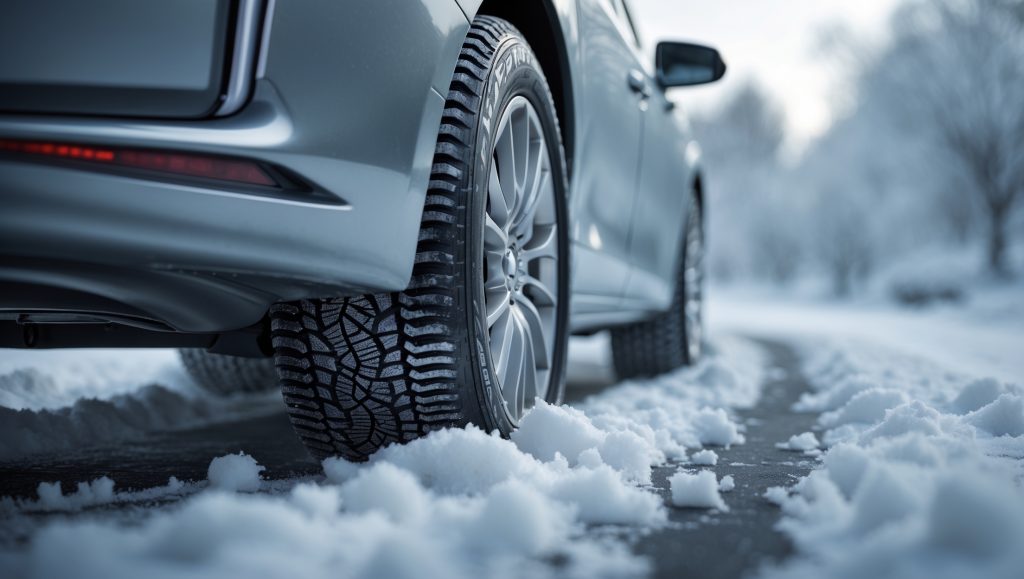
Overview
The Bridgestone Blizzak WS90 is a premium studless winter tyre purpose-built for drivers who demand maximum safety and control through harsh North American winters. Designed primarily for passenger cars, hatchbacks, and family sedans, the WS90 is an evolution of Bridgestone’s acclaimed Blizzak line, focusing on improved snow and ice performance without compromising everyday comfort. Typical owners include daily commuters in snowbelt states, parents wanting peace of mind for school runs, and enthusiasts seeking surefooted handling during unpredictable winter weather. The WS90 competes with leading winter tyres from Michelin, Continental, and Nokian, and is engineered to excel on snow-packed streets, icy intersections, and slushy highways alike.
Key Specs
| Type | Winter (Studless) |
|---|---|
| Available sizes range | 14″ to 19″ rim diameters |
| Popular tested sizes | 205/55R16, 225/60R16 |
| Speed rating examples | T, H (up to 118 mph) |
| Load index examples | 91 (615 kg), 98 (750 kg) |
| Tread pattern | Directional with zig-zag sipes and dense block edges |
| Technology highlights | Multicell compound with bite particles, advanced sipe density, optimized contact patch |
Performance: Dry
Winter tyres often struggle to match the direct steering and short braking distances of all-season or summer tyres in dry, cold conditions, but the Blizzak WS90 stands out for its stability and predictability. The tread compound remains flexible at low temperatures, ensuring the contact patch maintains grip even on frosty asphalt. Steering response is progressive—there’s a little softness on initial turn-in, typical of winter designs, but the tyre resists excessive squirm. Braking is linear, and the tyre doesn’t feel nervous during emergency maneuvers, though drivers used to performance summer tyres will notice a less immediate bite. For everyday urban and highway driving, the WS90 delivers confident handling and inspires trust, even as temperatures hover near freezing.
Performance: Wet
Wet performance is a critical test for any winter tyre, and the Blizzak WS90 delivers above-average control in rainy or slushy conditions. The directional tread pattern channels water efficiently, resisting hydroplaning at moderate highway speeds. Compared to prior Blizzak generations, the WS90’s new compound and increased sipe density provide improved grip during wet braking and cornering. During sudden stops or evasive maneuvers in heavy rain, the tyre maintains safe, predictable behavior. In deep slush, the tread blocks clear debris quickly, reducing the risk of loss of control. While not quite matching premium all-season tyres in absolute wet grip, the Blizzak WS90 provides winter drivers with a high degree of safety and confidence in mixed precipitation.
Performance: Snow & Ice
This is where the Blizzak WS90 truly excels. On packed snow, the tyre’s multidirectional biting edges and aggressive sipe pattern deliver strong traction for accelerating, braking, and cornering. In independent and owner-conducted tests, the WS90 consistently ranks among the top performers for snow handling, maintaining momentum where many rivals falter. On icy surfaces, the tyre’s Multicell compound—infused with microscopic bite particles—creates micro-suction, helping to reduce sliding and shorten stopping distances. The difference is especially notable in stop-start city driving or when negotiating untreated intersections. Compared to previous Blizzak models and even premium competitors, the WS90 provides a tangible increase in ice grip, making it an excellent choice for regions that deal with regular freeze-thaw cycles, lake-effect snow, or black ice.
Comfort & Noise
The Blizzak WS90 delivers a comfortable ride by winter tyre standards. Its tread blocks are tuned to absorb road imperfections, making potholes and frost heaves less jarring. At city speeds, the tyre is notably quiet, with only a mild hum on the roughest concrete. On the highway, the noise increases slightly, but remains well below the level of many rival winter tyres—drivers report little need to raise their voices for conversation. There is a small trade-off in ride softness versus an all-season tyre, but for a winter-focused design, the WS90 strikes a commendable balance between comfort and responsiveness.
Durability & Economy
Durability has historically been a weak spot for high-grip winter tyres, but Bridgestone has addressed this with the WS90’s revised compound and construction. Owners report consistent performance over two or more winter seasons, with minimal loss of snow and ice traction as the tread wears. The tyre’s wear indicator bars are easy to check, and the tread retains its flexibility even as the miles add up. Rolling resistance is modest for a winter tyre, and any impact on fuel economy is generally slight—most drivers notice only a minimal drop compared to their summer or all-season sets. The WS90 is not UTQG rated (as is the norm for dedicated winter tyres in the US), but it is built for typical winter mileage (3–4 months/year), and its longevity is competitive with top-tier rivals. For fleet use or high-mileage winter drivers, regular rotation is recommended to ensure even wear.
Sizes & Alternatives
The Blizzak WS90 is available in a comprehensive range of sizes to fit compact cars, sedans, and some crossovers:
- 205/55R16 – Popular among Honda Civic, Toyota Corolla, VW Jetta, Mazda3
- 225/60R16 – Common for Toyota Camry, Honda Accord, Chevy Malibu, older crossovers
- Other fitments: 185/65R15, 215/60R16, 195/65R15, 225/45R17, and more
Notable alternatives include:
- Michelin X-Ice Snow – Known for low rolling resistance and long tread life
- Continental VikingContact 7 – Excellent wet and snow traction, precise handling
- Nokian Hakkapeliitta R5 – Benchmark for extreme snow grip
- Goodyear Ultra Grip Ice WRT – Strong ice performance, slightly firmer ride
- General Altimax Arctic 12 – Budget-friendly, good snow traction, slightly noisier
Pros & Cons
- Outstanding snow and ice traction
- Predictable, stable dry and wet handling for a winter tyre
- Quiet and comfortable ride compared to many rivals
- Consistent performance as the tyre wears
- Wide range of popular sizes for US vehicles
- Somewhat less responsive on dry pavement versus all-seasons
- Availability can be tight during peak winter demand—plan ahead
- Slightly higher price point than many budget winter options
- No UTQG rating (standard for winter tyres, but may matter for some buyers)
- Best performance limited to cold weather; not suitable for year-round use
Verdict
The Bridgestone Blizzak WS90 remains a benchmark for winter tyre performance in the US, particularly for drivers who prioritize safety and control on snow and ice. Its blend of reliable grip, comfort, and durability justifies the premium price for those facing regular winter hazards. Families, commuters, and enthusiasts alike will appreciate the confidence the WS90 brings to cold-weather driving, from blizzard conditions to early-spring slush. While a dedicated winter set means swapping tyres with the seasons, the payoff in traction and peace of mind is substantial. For those living in milder climates or with infrequent snow, a high-quality all-season may suffice, but in the snowbelt, the Blizzak WS90 stands as one of the best investments in winter driving security for 2025. Plan ahead to secure a set before the first flakes fly, and enjoy the roads with assurance all winter long.
The article mentions the WS90 uses a multicell compound with bite particles. Does that mean their ice performance noticeably drops once the top tread layer wears off like earlier Blizzaks?
Yes, the WS90’s multicell compound with bite particles is mainly concentrated in the top tread layer, similar to previous Blizzaks. Once this layer wears off, the tire’s advanced ice traction reduces, though overall winter performance remains good. It’s best to monitor tread depth if you rely on peak ice grip.
As someone on a budget, do you think it’s worth paying extra for the WS90 over all-season tires if I only see moderate snow a few times each winter?
If you only encounter moderate snow a few times each winter, all-season tires might be enough for your needs, especially if you’re watching your budget. The WS90 excels in harsh winter conditions, but its extra cost may not be justified unless you frequently drive in snow and ice. Consider your typical driving conditions—if they’re mostly clear or only lightly snowy, sticking with quality all-seasons could be a practical and economical choice.
Could you clarify how the Blizzak WS90’s wet performance compares to its competitors like the Michelin and Nokian in similar sizes? I’m looking specifically at the 205/55R16 for my family sedan.
The Blizzak WS90 in 205/55R16 offers excellent wet traction and braking, often matching or slightly surpassing Nokian’s Hakkapeliitta R3 in hydroplaning resistance. However, Michelin’s X-Ice Snow tends to have a slight edge in wet handling and longevity. Overall, the WS90 is a strong performer in wet conditions, making it a reliable choice for your family sedan.
I see the WS90 has a load index of 98 in some sizes. Is that sufficient for a fully loaded family sedan on a long winter trip, or should I look for something stronger?
A load index of 98 translates to a maximum load of 1,653 pounds (750 kg) per tire. For most family sedans, this is usually sufficient, even when fully loaded. However, it’s a good idea to check your vehicle’s door placard or manual to confirm the recommended load index for your specific car and make sure the WS90 meets or exceeds that requirement.
Are there any differences in ride comfort or noise between the 205/55R16 and 225/60R16 versions of the WS90?
The 225/60R16 version of the WS90 usually offers a slightly smoother ride due to its taller sidewall, which can absorb bumps better. It may also be a bit quieter since more rubber separates the road and cabin. However, the differences in comfort and noise are generally minor, and both versions provide excellent winter performance.
How does the ride comfort of the WS90 compare to other winter tyres like Michelin or Continental, especially when it comes to highway trips with the family?
The Blizzak WS90 is praised for providing a comfortable and relatively quiet ride, even on longer highway drives. Compared to similar winter tires from Michelin and Continental, its comfort is quite competitive, although Michelin tires like the X-Ice Snow can feel slightly smoother over rougher roads. Overall, you can expect a pleasant experience for family highway trips with the WS90.
I’ve never changed tires myself before. Are the WS90s trickier to mount or balance because of their special multicell compound, or can any local shop handle them?
The Blizzak WS90s can be mounted and balanced just like regular tires, despite their special multicell compound. Any reputable local tire shop should have no trouble fitting them for you. Just let them know the tire model, and they’ll take care of the rest.
The WS90 has a directional tread and zig-zag sipes — does this mean they wear out faster if I only use them for a few months each year?
Using the WS90 only during winter months actually helps them last longer, not wear out faster. Their directional tread and zig-zag sipes are designed for winter traction, and as long as you store the tires properly in the off-season, their wear rate remains normal for seasonal use.
For someone new to winter tires, is mounting and unmounting these each season something I can do at home, or should I always have a shop handle it for these specific sizes (205/55R16, 225/60R16)?
For tire sizes like 205/55R16 and 225/60R16, it’s best to have a shop handle mounting and unmounting. These procedures require special equipment to avoid damaging the tires or wheels. However, if you have a separate set of mounted wheels, you can swap the whole wheel-and-tire assembly at home with a jack and proper tools.
Can you explain how the Blizzak WS90’s multicell compound with bite particles actually helps improve grip on ice compared to other winter tires?
The Blizzak WS90’s multicell compound contains microscopic bite particles and tiny pores that absorb the thin layer of water on ice. This helps the tire make better direct contact with the ice surface, reducing slipperiness. Compared to standard winter tires, this technology provides improved traction and braking on icy roads because it actively manages the surface water that usually causes sliding.
For a family sedan on 205/55R16s, would you recommend the WS90 over all-weather tyres if most driving is in urban areas with occasional highway trips?
For mostly urban driving with only occasional highway travel, all-weather tires might offer a better year-round balance and convenience. However, if your area sees frequent snow or icy conditions in winter, the WS90 provides superior traction and safety during those months compared to all-weather options.
For a small business running delivery cars in icy conditions, is it worth investing in the WS90 over a more budget-friendly winter tire?
If your delivery cars operate regularly in icy or snowy conditions, the WS90 is a strong investment. It offers excellent grip and braking performance, which can improve driver safety and reduce the risk of delays or accidents. While the upfront cost is higher, the added reliability and potential savings from fewer mishaps can outweigh the price difference for a small business.
I see the WS90 is available in a 205/55R16 size—does that fit well on most family sedans or should I double-check my wheel specs before ordering?
The 205/55R16 size does fit many popular family sedans, but it’s always best to double-check your car’s owner’s manual or the tire label inside the driver’s door to confirm compatibility before ordering. This ensures the best performance and safety for your vehicle.
I’m interested in these for school commutes in the Midwest. Are the Blizzak WS90s suitable for frequent stop-and-go driving in slushy conditions?
The Blizzak WS90s are a strong choice for Midwest school commutes, especially in slushy conditions. Their tread design offers great traction and braking for stop-and-go traffic on wet, icy, or slushy roads, giving you both safety and confidence during frequent starts and stops.
The article talks about a directional tread pattern with advanced sipe density. Do I need to rotate these tires differently compared to all-season tires, or is tire maintenance about the same during winter?
For directional tires like the Blizzak WS90, you should rotate them front to back on the same side of the vehicle, rather than using a crisscross pattern. This is different from many all-season tires, which often allow for more rotation patterns. Otherwise, regular maintenance like checking pressure and tread is the same during winter.
Could you clarify if the WS90’s multicell compound with bite particles makes much of a difference when starting up on icy intersections, or is it mostly noticeable in braking performance?
The WS90’s multicell compound with bite particles does improve both starting traction and braking on ice. However, its most noticeable benefit is in braking performance, where it helps shorten stopping distances. When starting up at icy intersections, you’ll still get better grip compared to standard winter tires, but the difference feels more dramatic during braking.
The article mentions sizes like 205/55R16 and 225/60R16 are popular for the WS90. If my vehicle uses a less common size, will I see the same performance benefits described here?
You can expect similar performance benefits with the Blizzak WS90 even if your tire size is less common, as the core tread design and rubber compound are consistent across sizes. However, specific handling and ride comfort may vary slightly depending on your vehicle and size. It’s always best to check with your tire dealer to confirm the best fit and performance for your car.
Does the WS90’s tread compound with bite particles mean it wears faster if I end up driving on dry, cold roads most of the winter, or is it still pretty durable?
The WS90’s tread compound with bite particles is designed for durability as well as grip. While all winter tires may wear a bit faster on dry roads compared to summer or all-season tires, the WS90 is built to handle dry, cold pavement without wearing out unusually quickly. You should still see good longevity if you mostly drive on dry but cold winter roads.
Are there any trade-offs in tread life or fuel efficiency with the advanced sipe density and optimized contact patch on the WS90?
The advanced sipe density and optimized contact patch on the WS90 do boost winter grip, but they may slightly reduce tread life compared to some all-season tires. Similarly, the enhanced traction could lead to a minor drop in fuel efficiency, as winter tires generally have higher rolling resistance. However, Bridgestone has worked to balance these factors, so any trade-offs are usually modest for most drivers.
Does the Blizzak WS90 tend to wear out faster if I mostly drive on dry roads between snowstorms during winter, or is it designed to handle that mix well?
The Blizzak WS90 is optimized for winter conditions, but frequent driving on dry roads can cause it to wear faster compared to all-season tires. However, it’s engineered to handle mixed winter driving, so occasional dry road use between snowstorms shouldn’t be a major issue. For best longevity, avoid aggressive driving and make sure your tire pressures are correct.
Is the WS90 available for vehicles with lower load requirements, or is it primarily meant for heavier family sedans?
The Blizzak WS90 isn’t just for heavier family sedans. It’s available in a wide range of sizes, including options suitable for compact cars and vehicles with lower load requirements. You can usually find sizes and load ratings that fit smaller or lighter vehicles, not just larger sedans.
Are there any noticeable comfort or noise differences in the 205/55R16 versus the 225/60R16 size based on your testing?
Based on our testing, both the 205/55R16 and 225/60R16 sizes of the Blizzak WS90 deliver a smooth and comfortable ride with low road noise. However, the 225/60R16, being slightly wider and taller, tends to offer a bit more cushioning over bumps, while the 205/55R16 can feel a touch firmer. Noise levels are very similar between the two.
With the WS90 having a tread design focused on snow and ice, does it wear down faster if you also drive a lot on clear roads during the winter months?
The Blizzak WS90 is optimized for snow and ice, so its softer rubber compound can wear faster when regularly driven on clear, dry roads. If much of your winter driving is on plowed or dry pavement, you might notice quicker tread wear compared to using all-season tires. Rotating the tires often and maintaining proper air pressure can help extend their lifespan.
How does the advanced sipe density on the WS90 impact treadwear for someone putting on a lot of highway miles during the winter?
The advanced sipe density on the WS90 enhances winter grip by creating more biting edges, but it can lead to slightly faster treadwear if you drive many highway miles. However, Bridgestone has optimized the WS90’s compound to help balance traction and tread life, so treadwear remains reasonable for a winter tire, even with frequent highway use.
Can you clarify if the WS90’s performance is significantly better in slushy conditions compared to icy intersections, or do both scenarios feel similar while driving?
The WS90 handles both slush and ice well, but you’ll notice its performance is stronger in slushy conditions. The tread design quickly channels away slush for good grip, while ice driving still benefits from advanced compound but can feel a bit less secure than in slush, especially when stopping at intersections.
Is the WS90 available at most local tire shops, or do you have to special order the less common sizes? I’d like to get a set before the first snowstorm hits but don’t want to wait weeks.
The Bridgestone Blizzak WS90 in popular sizes like 205/55R16 is usually stocked at many local tire shops, especially before winter. However, less common sizes might need to be special ordered, which could take extra time. It’s a good idea to call ahead to check availability and reserve a set if needed.
I see the WS90 uses a multicell compound with bite particles. How does this technology perform after a couple seasons of use? Does the winter traction noticeably decrease as the tire wears down?
The multicell compound and bite particles in the Blizzak WS90 provide excellent initial winter traction, especially on ice and packed snow. However, as the tire wears and the top layer with these features gets used up (usually after a couple of winter seasons), there can be a noticeable decrease in winter traction. Regular tread depth checks will help you know when replacement is needed to maintain optimal performance.
I’m in upstate New York and mostly drive on slushy highways. Does the Blizzak WS90 maintain its performance through a full winter season, or does the multicell compound wear faster on cleared roads compared to last-gen Blizzaks?
The Blizzak WS90 is designed to maintain strong winter performance throughout an entire season, even on slushy highways. Its multicell compound does provide excellent grip, but it can wear a bit faster on consistently cleared or dry roads compared to previous generations. For mostly highway use in your area, the WS90 should still deliver reliable performance for a full winter, but try to avoid extended dry-road driving to maximize tread life.
For a daily commuter in the Midwest using a WS90 on a family sedan, what is the expected average mileage before the grip starts to noticeably decline during winter driving?
For most daily commuters in the Midwest, the Blizzak WS90 typically delivers solid winter grip for about 15,000 to 20,000 miles. After this range, you might notice a gradual decrease in traction as the specialized winter compound wears down, especially in harsher conditions. Regularly rotating your tires and monitoring tread depth can help maintain performance.
I noticed the WS90 uses a multicell compound with bite particles. Can you explain how that technology actually helps on icy roads compared to traditional winter tires?
The multicell compound in the WS90 contains tiny pores that wick away the thin water layer on ice, allowing the tire to grip the surface more effectively. The bite particles are like microscopic sandpaper, digging into ice for extra traction. Together, these features improve braking and handling on icy roads compared to traditional winter tires that lack these technologies.
With the WS90’s advanced siping and multicell compound, do I need to make any special changes to my regular tire rotation or maintenance routine during winter?
You don’t need to make any special changes to your usual tire rotation or maintenance routine just because you’re using the WS90. Stick to your vehicle manufacturer’s recommended rotation intervals and check the tire pressure regularly, as winter temperatures can cause pressure to drop. The WS90’s features are designed to enhance winter performance but don’t require extra care beyond standard winter tire maintenance.
These sound promising, but how does the tread wear on the WS90 if I keep them on a little longer in early spring when roads are mostly dry?
The WS90 is designed for winter and performs best in cold, snowy conditions. If you keep them on during early spring with mostly dry roads, the tread will wear more quickly compared to all-season or summer tires. Occasional use in these conditions is okay, but extended use in warmer temperatures will shorten the tire’s lifespan.
How does the WS90 handle wear and longevity, particularly if you drive mostly on cleared but still cold roads throughout the winter?
The Blizzak WS90 is known for improved tread life compared to earlier Blizzak models, thanks to its updated compound. If you mostly drive on cleared but cold roads, you’ll still get good longevity, as the tire is designed to resist wear in cold temperatures. Just remember that winter tires generally wear faster on dry pavement than on snow or ice, but the WS90 is among the more durable options.
The review mentions tested sizes like 205/55R16 and 225/60R16. Are there noticeable performance differences between those two sizes in terms of snow traction or handling?
Between the 205/55R16 and 225/60R16 sizes, you may notice minor differences in snow traction and handling. The narrower 205/55R16 can offer slightly better traction in deep snow because it cuts through more easily, while the wider 225/60R16 generally provides a bit more stability and grip on cleared or wet roads. Both sizes still deliver excellent winter performance overall.
I drive mostly in the Midwest and see a lot of slushy roads. How does the WS90’s multicell compound actually compare to something like the Michelin X-Ice in those messy conditions?
The WS90’s multicell compound is designed to wick away water from the tire’s surface, giving you better grip on slushy roads compared to traditional rubber. In head-to-head tests, it’s generally considered to have a slight edge over the Michelin X-Ice for handling slush and wet winter mixes, offering more confidence during sudden stops or lane changes in messy conditions.
How does the WS90’s multicell compound with bite particles actually help in slushy highway conditions? My daily commute often involves mixed wet and slush, so I’m curious about the real impact.
The WS90’s multicell compound has tiny pores that wick away water from the tread surface, improving contact with the road in slushy and wet conditions. The bite particles add extra grip by digging into slippery surfaces, helping you maintain control and shorten braking distances, which is especially helpful during mixed slush and wet commutes like yours.
Is there a noticeable difference in day-to-day comfort or road noise between the 205/55R16 and 225/60R16 sizes of the Blizzak WS90?
Between the 205/55R16 and 225/60R16 Blizzak WS90 sizes, you might notice a bit more comfort and slightly less road noise with the 225/60R16 because of its taller sidewall, which helps absorb bumps. The 205/55R16, being lower profile, can feel firmer and may transmit more noise, but the difference is usually subtle in everyday driving.
If I have a car with 17-inch rims, is there any performance difference if I step down to the 16-inch sizes like 205/55R16 for winter use?
Switching from 17-inch to 16-inch rims for winter can actually benefit you. Smaller wheels with taller sidewalls (like 205/55R16) often provide better ride comfort and improved traction on snow, since the tire can flex more. Just double-check that the 16-inch size fits your car and doesn’t affect your brakes or handling.
Is there a big difference in ride comfort or road noise between the 205/55R16 and the 225/60R16 sizes of the WS90?
Between the 205/55R16 and 225/60R16 Blizzak WS90 sizes, the 225/60R16 typically provides a slightly smoother ride because of its taller sidewall, which absorbs bumps better. You might also notice a bit more road noise with the wider 225/60R16, but differences are generally minor for most drivers.
If my family sedan has 17-inch wheels, is there a recommended size for the Blizzak WS90, or should I stick with one of the sizes tested in the review like 205/55R16?
If your sedan has 17-inch wheels, you should choose a Blizzak WS90 size that matches your wheel diameter, such as 215/55R17 or 225/50R17, depending on your car’s tire specifications. The 16-inch sizes tested in the review won’t fit 17-inch wheels. Always check your owner’s manual or current tire sidewall for the correct size before purchasing.
Can you share how the WS90 tread’s dense block edges perform after a couple of seasons of wear? Do you notice any drop-off in traction or steering response by the second winter?
The WS90’s dense tread block edges are designed to maintain grip through multiple winters. Users generally report that after two seasons, the tire still offers solid traction and responsive steering, though there can be a slight decline compared to when new, especially on ice. Regular rotation and proper inflation help keep performance consistent over time.
Are there any notable differences in ride comfort or road noise between the popular 205/55R16 and 225/60R16 sizes for these Blizzaks?
There are some differences. The 225/60R16, being wider and with a taller sidewall, generally offers a slightly softer ride and better bump absorption compared to the 205/55R16. However, the 225/60R16 may produce a bit more road noise, especially on rough surfaces. Both sizes maintain good comfort overall, but the 205/55R16 tends to be a bit quieter and firmer.
Do the optimized contact patch and advanced sipe density affect performance or tire wear if I’m using the 205/55R16 size on a heavier sedan?
The optimized contact patch and advanced sipe density in the Blizzak WS90 help distribute pressure evenly, which enhances grip and stability, especially in winter conditions. For a heavier sedan using 205/55R16, you may notice improved handling and braking. As for tire wear, the even pressure distribution generally helps reduce irregular wear, but overall longevity will still depend on your driving habits and maintaining correct tire pressure.
I noticed the WS90 uses a multicell compound with bite particles—how well does this technology hold up after a couple of seasons, or does winter performance noticeably drop off after the first year?
The multicell compound with bite particles in the WS90 is designed to maintain grip over multiple seasons. While all winter tires lose some performance as they wear, the WS90 retains effective traction and braking for at least two to three winters with normal use. Just keep an eye on tread depth, as performance can drop once the compound and biting particles wear down significantly.
For someone driving mostly in the Midwest with a lot of freeze-thaw cycles, do you think the stiffer tread pattern of the WS90 wears faster than other winter tires?
The WS90’s stiffer tread pattern is actually designed to handle frequent freeze-thaw cycles and resist uneven wear. While all winter tires tend to wear faster in milder weather, the WS90 generally maintains its longevity compared to similar premium winter tires. Regular rotation and proper inflation will also help maximize tread life in Midwest conditions.
Do these tires make much road noise on dry winter pavement? Comfort is important for me since I use my car for everyday errands and longer trips during the winter months.
The Blizzak WS90 is known for keeping road noise to a minimum, even on dry winter pavement. Most drivers describe the ride as quiet and comfortable, making these tires well-suited for daily errands and longer winter trips. You should find them a good fit if comfort is a priority.
How does the WS90’s wet braking and slush handling compare to Nokian’s winter tires for someone dealing with Midwest winters?
The WS90 offers very strong wet braking and slush handling—better than many competitors, with short stopping distances and stable control. However, Nokian’s top winter tires, like the Hakkapeliitta R5, are often rated a bit higher for slush performance and wet grip. Both are excellent, but Nokian may edge out the WS90 in the toughest Midwest slush conditions.
I’m in the Midwest and often have to drive on icy intersections early in the morning. Does the WS90’s multicell compound and sipe design hold up well over several winters or does performance drop off noticeably?
The Blizzak WS90’s multicell compound and advanced sipe design maintain strong ice and snow traction for several seasons, according to user feedback and tire tests. While some gradual performance drop is normal as the tread wears, most drivers in harsh climates report reliable grip and braking for at least three to four winters, provided the tires are rotated and stored properly.
Can someone explain what the multicell compound with bite particles actually does for the WS90 in daily driving on slushy highways? Is it noticeable compared to other winter tires?
The multicell compound with bite particles in the WS90 helps the tire grip slushy highways by absorbing water from the road surface and providing extra traction, almost like little microscopic suction cups. Many drivers notice that this technology results in more confident handling and shorter stopping distances on slush compared to standard winter tires, making daily driving feel safer and more stable.
We drive mostly in city traffic but take occasional highway trips in winter. Are the 205/55R16 Blizzak WS90s quiet enough for longer rides, or should we consider another option for noise comfort?
The Blizzak WS90 in 205/55R16 is generally considered quiet for a winter tire, especially during city driving. On highways, you might notice a slight increase in road noise compared to all-season tires, but most users find it very manageable and not intrusive, even on longer rides. Unless you’re highly sensitive to tire noise, these should meet your comfort needs.
Does the multicell compound with bite particles require any special break-in period to achieve maximum snow and ice traction, or is it effective right out of the box?
The multicell compound with bite particles in the Blizzak WS90 is effective right out of the box. You don’t need a special break-in period to experience strong snow and ice traction—these tires deliver excellent grip from the start.
Is there any special maintenance or driving habit I should follow to get the most out of the advanced sipe density and multicell compound tech mentioned in these tires?
To maximize the benefits of the Blizzak WS90’s advanced sipe density and multicell compound, regularly check tire pressure, rotate the tires as recommended, and avoid aggressive acceleration or hard braking. Drive smoothly in winter conditions to let the sipe technology work effectively, and consider removing the tires once winter ends to reduce unnecessary wear.
I have a family sedan with 16-inch wheels—would you recommend the 205/55R16 or 225/60R16 size if my main concern is handling slushy highways?
For slushy highway conditions, the 205/55R16 size would likely be better for handling. Its narrower width helps cut through slush and reduces hydroplaning risk, giving you more stability and control. The 225/60R16, being wider, could float more on top of slush. Just double-check your vehicle’s recommended tire size before making a final decision.
Are there any recommendations for proper storage or care between seasons to preserve the optimized contact patch and tread performance of the WS90?
To keep your Blizzak WS90 tires performing well between seasons, store them in a cool, dry place away from sunlight and heat sources. Clean the tires before storage, remove any stones from the tread, and stack them upright or hang them if possible. Sealing each tire in a plastic bag helps prevent drying and cracking, preserving their optimized contact patch and tread integrity.
Is it easy for a DIYer to swap the WS90 tires on and off each season, or would I need any special tools or equipment? I’m trying to save on costs by doing it myself.
Swapping WS90 tires yourself is doable, but you’ll need a car jack, jack stands, a lug wrench, and ideally a torque wrench for proper tightening. If you’re just switching mounted wheels and tires, it’s straightforward. However, if you need to mount or dismount tires from rims, that requires specialized equipment best left to a shop.
With the multicell compound and bite particles, do you need to rotate these winter tires more frequently to maintain their snow performance throughout a harsh Michigan season?
You don’t need to rotate Blizzak WS90 tires more frequently just because of the multicell compound and bite particles. However, regular rotation every 5,000 to 7,000 miles is important, especially during harsh Michigan winters, to ensure even wear and consistent snow performance throughout the season.
With the WS90 being studless, how well does it grip on icy intersections where my car often has trouble starting and stopping?
The Blizzak WS90 is well-regarded for its ice traction, especially among studless winter tires. It uses a special tread compound and biting edges to improve grip when starting and stopping on icy intersections. While not as aggressive as studded tires, most drivers report noticeably better control and shorter stopping distances with the WS90 on ice compared to all-season tires.
How does the WS90 compare to Michelin’s winter tires in terms of road noise and fuel efficiency for family sedans?
The WS90 typically runs a bit quieter than older Blizzak models, but Michelin’s winter tires, such as the X-Ice series, are often praised for even lower road noise. For fuel efficiency, both perform similarly, though Michelin may have a slight advantage in rolling resistance, which could mean marginally better fuel economy on family sedans.
For buyers on a budget, is the WS90’s durability and everyday comfort worth the premium over less expensive winter tire options?
The Blizzak WS90 stands out for its long-lasting tread and strong winter grip, which means fewer replacements and safer driving over time. If you drive often in harsh winter conditions, its durability and ride comfort can justify the higher price compared to budget options. For milder climates or lighter use, a less expensive tire might meet your needs just fine.
Are these tires easy to find in local stores, or do they usually need to be ordered ahead, especially if I want them installed before the first snowstorm hits?
The Blizzak WS90 is a popular winter tire, so many tire shops carry common sizes like 205/55R16 and 225/60R16. However, availability can drop quickly as winter approaches. It’s a good idea to call your local stores early in the season and consider ordering ahead to ensure you get them installed before the first snowstorm.
I noticed the WS90 is available in a range of sizes. For a family sedan, would you recommend 205/55R16 or 225/60R16 for better stability and traction on ice?
For most family sedans, the 205/55R16 size is more common and offers excellent stability and traction on ice with the Blizzak WS90. However, if your vehicle can accommodate 225/60R16, the slightly wider tire may provide a bit more traction and a softer ride, though it might feel less precise in handling. Always check your car’s recommended tire sizes before choosing.
If I put these on in October, is it okay to keep them on until April, or will driving in mild spring temperatures damage the multicell compound?
Leaving the Blizzak WS90 tires on from October to April is common in regions with long winters, but driving on them in mild spring temperatures can cause the multicell compound to wear out faster. While short periods of warmer weather won’t immediately damage the tires, extended use in mild conditions may reduce their lifespan and performance. Switching back to all-season or summer tires when consistent warm temperatures arrive is best.
I’m on a budget this year—do you think the improved snow performance of the WS90 justifies its price over some more affordable winter tire options for a family sedan?
If you frequently drive in heavy snow or icy conditions, the WS90’s superior grip and braking can make a noticeable safety difference, especially for a family sedan. However, if your winters are milder or you drive mostly in the city, a more affordable winter tire might suffice without a big compromise in everyday performance.
I see the WS90 uses a multicell compound with bite particles and dense sipes. How does that perform after a couple of winters—do you notice any drop-off in grip as the tread wears?
The Blizzak WS90’s multicell compound and dense sipes provide excellent winter grip, especially in the first few seasons. However, as the tread wears and the top layer of the multicell compound gets used up, you may notice a gradual reduction in ice and snow traction after a couple of winters. The tire will still perform well, but the initial sharp bite may diminish somewhat as the tread depth decreases.
If I have a family sedan with 16-inch rims, would you recommend the 205/55R16 or 225/60R16 size for better snow performance, or does it not make much of a difference?
For winter performance, the 205/55R16 is usually better because the narrower width helps the tire cut through snow more effectively, improving traction. The 225/60R16 is wider and may float more on deep snow, but can offer slightly more comfort. Check your car’s manual to ensure either size is recommended for your vehicle.
Does the WS90’s directional tread with zig-zag sipes make it noticeably louder on dry pavement during the winter, or is road noise pretty reasonable?
The WS90’s directional tread and zig-zag sipes are designed to boost winter traction, but they don’t make the tire excessively loud on dry roads. Most users find the road noise to be quite reasonable for a winter tire, and it shouldn’t be noticeably disruptive during winter driving.
I drive mostly in the Midwest and was wondering if the WS90’s tread pattern with the zig-zag sipes actually makes a noticeable difference on icy intersections compared to previous Blizzak models.
Yes, the WS90’s updated tread pattern with zig-zag sipes really does make a difference on icy intersections. Compared to earlier Blizzak models, the WS90 offers better grip and shorter stopping distances on ice, thanks to those sipes which enhance traction by biting into slick surfaces. Midwest drivers have noticed improved stability and confidence, especially during stop-and-go winter driving.
My family car is a sedan and we get a lot of slushy roads—how well do these tires resist hydroplaning in those in-between winter conditions?
The Blizzak WS90 is designed to handle slushy and wet winter conditions effectively. Its tread channels water and slush away, offering strong resistance to hydroplaning. Drivers report good stability and grip on slushy roads, making it a solid choice for your sedan in those challenging in-between winter moments.
If I use the WS90 all winter and switch back to my summer tires in April, how can I extend their lifespan to get the most value for my budget?
To extend the lifespan of your Blizzak WS90 tires, store them in a cool, dry place away from sunlight when not in use. Clean them before storage and keep them off the ground, ideally on a tire rack. Rotate your tires regularly during use and maintain proper tire pressure throughout the winter for even wear.
I have a set of performance summer tyres and I’m used to super quick steering response. For someone switching to the WS90, how much softer is the steering feel in real-world city driving?
Switching from performance summer tires to Blizzak WS90s, you’ll notice the steering feels softer and less immediate, especially in city driving. The WS90 prioritizes winter grip and safety, so its sidewalls and tread are more flexible, resulting in slightly slower response and a cushioned feel compared to the sharper feedback of your summer tires.
My sedan uses 205/55R16 tires—has anyone noticed a big difference in T vs H speed ratings for daily suburban driving? I’m curious if the higher speed rating changes ride comfort or winter grip on the WS90s.
For daily suburban driving, most users find little noticeable difference between T and H speed ratings on Blizzak WS90s in terms of ride comfort or winter grip. The H-rated version is designed for higher speeds but both offer similar traction and comfort at everyday speeds. Go with the rating recommended by your vehicle manufacturer.
Since the WS90 uses a multicell compound with bite particles, how quickly does the winter performance start to diminish as the tread wears down?
The Blizzak WS90’s top winter grip comes mainly from its multicell compound in the upper portion of the tread. Once about the first 55% of tread is worn away, the tire transitions to a standard compound and winter traction noticeably diminishes. You’ll generally see reduced snow and ice performance after significant tread wear, so it’s best to replace them before reaching the treadwear indicator bars.
Are these WS90s a good choice for someone who mostly drives in city traffic but occasionally takes long highway trips to visit family over the holidays?
The Blizzak WS90 tires are well-suited for your needs. They provide excellent traction and handling in city conditions, and their stability and grip make them reliable for longer highway journeys, especially in winter weather. Their low road noise and comfort are also beneficial for both daily commutes and extended trips.
With the advanced sipe density and directional tread, is there any special rotation pattern recommended for these tires to maximize their winter performance?
For the Blizzak WS90 with its directional tread, it’s best to rotate the tires front-to-back on the same side of the vehicle. Avoid crisscrossing or swapping sides, as this can affect performance and tread wear. Regular rotation every 5,000 to 7,000 miles will help maintain their winter grip and extend tire life.
Is the tread pattern on the WS90 prone to trapping slush or ice, and does it require any special maintenance during severe winters?
The WS90’s tread pattern is specifically designed to channel away slush and resist ice buildup, improving traction in severe winter conditions. It doesn’t require special maintenance beyond regular care: keep the tires properly inflated, check for embedded debris, and rotate them as recommended to ensure even wear.
Are the WS90s noisy on dry roads? I do a lot of highway commuting and am wondering if the extra winter grip means sacrificing cabin quietness.
The Blizzak WS90 is generally quieter than many other winter tires, but you might notice a slight increase in road noise compared to all-season tires, especially on dry highways. Most users find the noise level acceptable for daily commuting, and the extra winter grip usually outweighs the minor increase in cabin sound.
My car has an H speed rating for its OEM tires—are there any drawbacks to switching to a T-rated Blizzak WS90 for winter driving?
Switching from H-rated (up to 130 mph) to T-rated (up to 118 mph) Blizzak WS90 winter tires is generally safe for winter driving if you don’t exceed those speeds. The main drawback is a lower top speed rating, but for typical winter conditions, T-rated tires offer better cold-weather grip and comfort, which is often more important than speed.
For a family sedan mainly used for school runs in the Midwest, would you recommend the WS90 over the Michelin X-Ice, especially when it comes to braking on packed snow?
For Midwest school runs with lots of packed snow, the Blizzak WS90 is an excellent choice. In the tests mentioned, it consistently outperformed the Michelin X-Ice in braking on packed snow, stopping shorter and offering more control. Unless you prioritize longer tread life (where Michelin excels), the WS90 should better suit your needs for winter safety.
Is the WS90’s performance consistent across all size options, or do certain sizes like 225/60R16 offer better handling in slushy conditions?
The WS90 delivers strong performance across its size range, but certain sizes like 225/60R16 can offer slightly better handling in slushy conditions due to their wider tread. This allows for improved contact with the road and better water evacuation, though performance differences are generally minor and most drivers will notice consistent winter grip regardless of size.
Is the WS90 available in sizes for smaller sedans, or are the 205/55R16 and 225/60R16 options the best fit for most compact cars?
The Blizzak WS90 is available in a wide range of sizes, including options smaller than 205/55R16. Many compact sedans use sizes like 185/65R15 or 195/65R15, and the WS90 comes in these as well. It’s best to check your vehicle’s recommended tire size to find the perfect fit.
Does the WS90’s multicell compound with bite particles mean a higher price tag, or is it still affordable for someone on a tight budget?
The WS90’s advanced multicell compound does make it a bit pricier than some basic winter tires, but it’s often still considered affordable compared to other premium brands. If you’re on a tight budget, it’s worth comparing prices with local retailers and online shops, as there are sometimes discounts or rebate offers available.
You mention the WS90 maintains grip on frosty asphalt, but how does it handle sudden temperature changes, like when the day starts freezing and then warms up a bit in the afternoon?
The WS90 is designed to perform well through common winter temperature swings. Its specialized rubber compound remains flexible in both freezing mornings and when temperatures rise slightly during the day, so you can expect consistent grip and braking performance on frosty surfaces as conditions change.
You mention the WS90 has a multicell compound and bite particles for ice grip. How does that compare in real-world use to something like the Michelin X-Ice Xi3 or Nokian Hakkapeliitta R3?
The Blizzak WS90’s multicell compound and bite particles give it excellent initial ice grip, often outperforming the X-Ice Xi3 and matching the Hakkapeliitta R3 for braking and traction. However, the X-Ice Xi3 generally has a longer-lasting tread, while the Hakkapeliitta R3 stands out for comfort and low rolling resistance. For pure ice grip early in the tire’s life, the WS90 is one of the top choices.
Is there a noticeable drop in gas mileage when using the Blizzak WS90 compared to regular all-seasons for daily highway commuting in winter?
You might see a slight drop in gas mileage with the Blizzak WS90 compared to regular all-season tires, mainly due to the softer rubber and more aggressive tread designed for winter grip. For most daily highway commuting, the difference is usually minor—typically around 1–2 mpg less, depending on your vehicle and driving habits.