
Overview
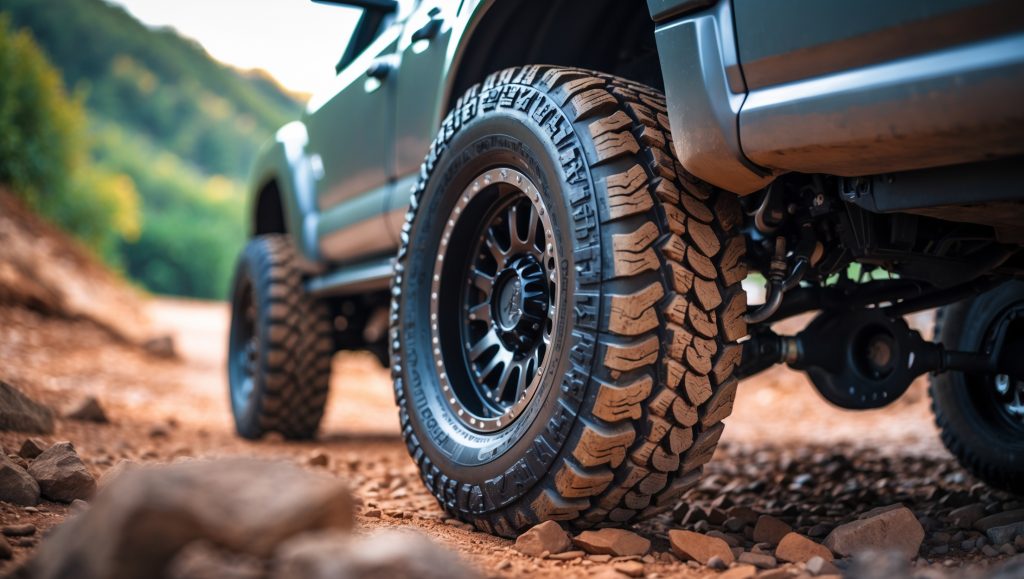
The BFGoodrich All-Terrain T/A KO2 is a legendary name in the off-road world, designed for drivers who demand serious traction both on and off the pavement. This all-season, all-terrain (AT) tire is targeted primarily at US truck and SUV owners—think Ford F-150, Chevy Silverado, Jeep Wrangler, Toyota Tacoma, and similar vehicles. Whether you’re a weekend adventurer, an overlander, or a contractor who needs to reach remote job sites, the KO2 promises a blend of off-road capability, daily comfort, and year-round versatility.
With its aggressive tread, tough construction, and focus on handling rugged terrain, the KO2 is engineered for drivers who split their time between highways and trails. It’s also one of the few AT tires with the 3PMSF (Three Peak Mountain Snowflake) symbol, making it a true all-season performer—even in light to moderate snow.
Key Specs
| Type | All-Terrain, All-Season |
|---|---|
| Available Sizes Range | 15″–22″ wheel diameters; widths from 215mm to 375mm |
| Speed Rating Examples | R, S, Q (typical for LT and flotation sizes) |
| Load Index Examples | 115/112 (LT265/70R17), 123/120 (LT275/65R18) |
| Tread Pattern | Aggressive, deep, interlocking blocks with wide grooves and sidewall lugs |
| Technology Highlights | CoreGard sidewall armor, stone ejectors, 3PMSF winter rating, reinforced shoulders, twin steel belts |
Performance: Dry
On dry pavement, the KO2 performs better than many would expect from a tire with such a chunky tread. Steering response is predictable, and there’s a confident sense of stability at highway speeds, especially in larger truck and SUV fitments. The stiff sidewalls resist squirm under heavy loads or towing, contributing to solid handling.
Braking distances are competitive with other all-terrain tires, though not quite as short as a pure highway or all-season tire. In cornering, the KO2 delivers good grip for an AT, but spirited drivers will notice more tread flex and a less precise feel compared to dedicated street tires. For everyday driving, however, the tradeoff is well-managed, and the tire inspires confidence on both asphalt and gravel roads.
Performance: Wet
Wet weather is often the Achilles heel of aggressive AT tires, but the KO2 fares well thanks to its advanced rubber compound and aggressive siping. Hydroplaning resistance is strong, with the wide grooves effectively channeling water away from the contact patch. Wet braking is above average for this tire category, though it can’t quite match the best highway all-seasons in emergency stops.
Traction during acceleration and cornering remains secure in moderate rain, but drivers should still exercise caution when pushing the limits, especially on painted lines or smooth surfaces. Overall, the KO2 builds trust in wet conditions, making it a practical year-round choice for regions prone to rain.
Performance: Snow & Ice
Unlike many AT tires, the KO2 carries the 3PMSF symbol, meaning it meets the industry’s severe snow service requirements. Real-world winter performance backs this up: the tire bites into light to moderate snow surprisingly well, aided by full-depth sipes and aggressive tread blocks. Traction on packed snow is much better than on standard all-seasons or non-3PMSF ATs.
On ice, performance is respectable for an all-terrain, but still trails dedicated winter tires. Stopping distances grow noticeably in icy conditions, and while you get enough grip to get moving and steer, caution is advised. For drivers facing frequent deep snow or icy roads, a true winter tire is still the gold standard, but for most US regions, the KO2 provides dependable, all-year traction.
Comfort & Noise
All-terrain tires are traditionally noisy and rough, but the KO2 strikes an impressive balance. Road noise is present—there’s a noticeable hum at highway speeds—but it’s not intrusive, and many drivers find it surprisingly subdued for such an aggressive tread. On smooth highways, the ride is firm yet composed, with only minor vibrations transmitted to the cabin.
On broken pavement or gravel, the tough carcass absorbs sharp impacts reasonably well, though some harshness is inevitable with LT-rated sizes. Overall, the KO2’s comfort is excellent within its segment, making it suitable for daily commuting as well as long-distance travel.
Durability & Economy
Durability is where the KO2 shines. Its CoreGard sidewall technology, originally developed for Baja racing, resists cuts and punctures from rocks and debris—a major advantage for off-roaders and work trucks. Tread life is well above average, with many users reporting 40,000–50,000 miles (sometimes more) under mixed use. The tire’s compound is optimized for chip and tear resistance, crucial for gravel or construction sites.
Rolling resistance is higher than a standard highway tire, which can impact fuel economy slightly—expect a small drop in MPG, especially in heavier LT sizes. Still, the tradeoff is worthwhile for the extra traction and toughness. The KO2 carries a UTQG rating of 500 A B in P-metric sizes (LT sizes are not UTQG-rated due to federal regulations).
Sizes & Alternatives
Popular KO2 Sizes:
- LT265/70R17
- LT275/65R18
- LT285/70R17
- LT265/75R16
- P275/60R20
Top Alternatives / Competitors:
- Goodyear Wrangler Duratrac
- Falken Wildpeak A/T3W
- General Grabber A/TX
- Toyo Open Country A/T III
- Nitto Ridge Grappler
Pros & Cons
Pros
- Outstanding off-road traction in dirt, mud, and gravel
- Durable construction and strong sidewall protection
- 3PMSF-rated for real winter performance
- Surprisingly quiet and comfortable for an aggressive AT
- Long tread life, even in tough conditions
Cons
- Higher rolling resistance and slight drop in fuel economy
- Some road noise at highway speeds
- Dry and wet braking not quite as short as highway tires
- Ice performance still lags behind dedicated winter tires
- Price can be higher than some competitors
Verdict
The BFGoodrich All-Terrain T/A KO2 is a benchmark for all-terrain tires, offering a rare blend of off-road prowess, everyday comfort, and true all-weather reliability. For US truck and SUV owners who split their time between highways and backwoods trails—or for anyone needing a tire that shrugs off rough job sites—the KO2 is a smart, proven choice. Its 3PMSF winter rating sets it apart in year-round usability, while heavy-duty construction means it can handle real abuse.
It’s not the quietest or most fuel-efficient tire, and drivers who stick to paved roads may be better served by a highway all-season. But for those who value traction, toughness, and versatility, the KO2 remains a top pick. As always, match your tire choice to your real-world needs: if your adventures or work take you off the beaten path, the KO2 is hard to beat.
Does the KO2’s 3PMSF rating mean it performs as well as a dedicated winter tire in moderate snow, or should I still consider swapping to winter tires for severe conditions?
The KO2’s 3PMSF rating means it meets the minimum standards for snow traction, so it handles moderate snow better than regular all-season tires. However, for severe winter conditions or heavy, frequent snow, a dedicated winter tire will offer superior traction and safety. Swapping to true winter tires is still recommended for harsh winters.
Are there any noticeable differences in handling or braking between the LT265/70R17 and LT275/65R18 sizes that you tested?
Between the LT265/70R17 and LT275/65R18 KO2 tires, there are only subtle differences in handling and braking. The wider LT275/65R18 offers a bit more lateral stability and slightly better grip on dry pavement, while the LT265/70R17 can feel a touch more nimble. In most real-world driving, performance between both sizes is very similar.
You mention that steering response is predictable, but how does the KO2 fare for daily highway commutes in terms of ride comfort and noise compared to pure street tires?
The KO2 delivers a firmer ride and more road noise than pure street tires due to its aggressive tread, but most drivers find it comfortable enough for daily highway commutes. While not as quiet or cushioned as dedicated street tires, it balances comfort with off-road capability reasonably well for an all-terrain option.
Can you speak to how the KO2’s aggressive tread pattern affects road noise and ride comfort on long highway trips compared to regular all-season tires?
The KO2’s aggressive tread pattern does make it noticeably louder on highways compared to regular all-season tires, and you may feel more vibration through the cabin. While ride comfort is still acceptable for most drivers, it’s a trade-off for the excellent off-road grip. If you prioritize a quiet, smooth highway ride, all-season tires are typically better.
Can you explain how the KO2’s performance changes as it wears down, especially regarding off-road traction and winter capability?
As the KO2 wears down, its off-road traction can diminish, especially in deep mud or loose surfaces, because the tread blocks lose some depth and biting edges. For winter capability, worn tread means less grip on snow and ice since there’s less siping to catch and hold snow. Regular rotation and monitoring tread depth help maximize both off-road and winter performance over the tire’s life.
Can you elaborate on how the CoreGard sidewall armor actually performs against sharp rocks on tough trails? Any real-world examples?
CoreGard sidewall armor is designed to resist splits and punctures from sharp rocks, thanks to its thicker rubber and reinforced construction. In real-world off-road tests, users often report far fewer sidewall cuts compared to standard tires, even after repeated scrapes on rocky trails. Some off-roaders have shared that their KO2s with CoreGard survived harsh terrain that punctured lesser tires.