
Introduction
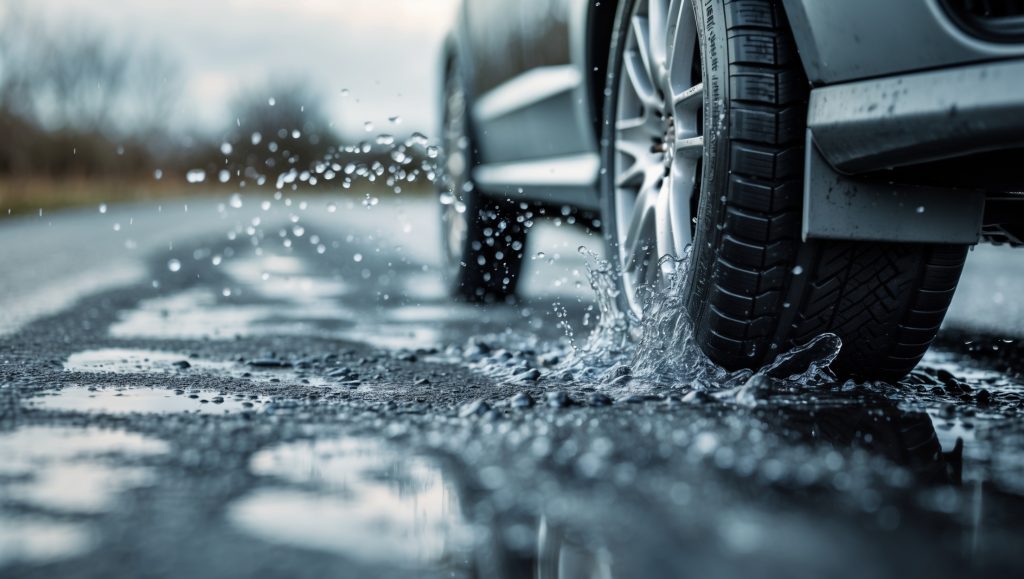
Driving in wet conditions presents unique challenges that can compromise safety, with aquaplaning (also known as hydroplaning) and reduced wet braking performance among the most critical concerns. Both phenomena are directly influenced by tyre design, tread depth, and driver behavior. Understanding how tyres interact with wet roads empowers drivers and fleet operators to make informed choices, reducing risks and ensuring consistent performance, no matter the weather.
What is Aquaplaning?
Definition and Causes
Aquaplaning occurs when a layer of water builds up between the tyre and the road surface, causing the vehicle to lose traction. When this happens, steering, braking, and acceleration become ineffective, and the vehicle may skid uncontrollably.
Key Factors That Contribute
- Water Depth: Even shallow puddles can cause aquaplaning at higher speeds.
- Tyre Tread Depth: Worn tyres are less effective at channeling water away from the contact patch.
- Speed: The faster you drive, the harder it is for tyres to disperse water.
- Tyre Design: Tread patterns and rubber compounds impact water evacuation.
How to Recognize Aquaplaning
Common signs include a sudden lightness in steering, the engine revving without an increase in speed, or a complete loss of steering response. If you notice these symptoms, you may be aquaplaning.
Wet Braking: How Tyres Make the Difference
Why Wet Braking is Challenging
On wet roads, tyres must maintain grip despite the lubricating effect of water. Stopping distances increase, and the margin for error shrinks considerably. Wet braking performance is a critical safety aspect for every driver.
Tyre Features That Improve Wet Braking
- Tread Pattern: Directional and asymmetric designs often offer better water evacuation.
- Rubber Compounds: Silica-enriched compounds maintain pliability in low temperatures and enhance wet grip.
- Groove Design: Wider and deeper grooves help channel water away from the contact patch.
Testing Wet Braking
Tyre manufacturers and independent organizations routinely test tyres for wet braking by measuring the distance required to stop from a set speed on a wet surface. While specific numbers vary, the difference between high- and low-performing tyres can be dramatic.
Choosing Tyres for Wet Conditions
Understanding Tyre Labels and Ratings
In the US, look for wet traction grades on the Uniform Tire Quality Grading (UTQG). The grades range from AA (best) to C (lowest). While these ratings provide a baseline, real-world performance can differ based on vehicle, load, and driving style.
All-Season vs. Summer vs. All-Weather Tyres
- All-Season Tyres: Balanced for year-round use, but wet performance can vary.
- Summer Tyres: Typically offer superior wet braking due to softer compounds and specialized tread.
- All-Weather Tyres: Designed for year-round safety, often with enhanced wet performance.
When to Replace Tyres
For optimal wet braking and aquaplaning resistance, replace tyres before they reach the legal minimum tread depth. In the US, this is 2/32” (1.6 mm), but replacement at 4/32” (3 mm) is advised for wet safety.
Driving Techniques to Minimize Risk
Before the Rain
- Regularly inspect tyre tread depth and pressure.
- Choose tyres with proven wet performance.
- Replace wiper blades and ensure good visibility.
During Wet Conditions
- Reduce speed, especially through standing water.
- Increase following distance to allow extra stopping distance.
- Avoid sudden braking or steering inputs.
- Drive in the tracks of vehicles ahead where water is less likely to pool.
If You Aquaplane
- Do not brake or turn suddenly.
- Gently lift off the accelerator and steer straight until traction returns.
Tyre Maintenance for Wet Safety
Tread Depth Monitoring
Check tread depth monthly using a gauge or the penny test. Adequate tread is essential for water evacuation.
Tyre Pressure
Underinflated or overinflated tyres reduce the contact patch and compromise grip. Check pressures at least once a month and before long trips.
Rotation and Alignment
Rotate tyres every 5,000 to 8,000 miles and ensure wheel alignment is correct to promote even wear and consistent wet performance.
Common Mistakes
- Waiting until tyres are bald before replacing them.
- Assuming all tyres perform equally in the wet, regardless of design or brand.
- Ignoring tyre pressure checks, especially before rainy seasons.
- Driving too fast for conditions during or after heavy rain.
- Using cruise control in heavy rain, which can delay driver reaction in emergencies.
- Failing to adapt following distances and braking habits for wet roads.
- Neglecting regular tyre rotation and alignment.
Quick Checklist
- Check tyre tread depth monthly; replace at 4/32” for optimal wet safety.
- Confirm tyre pressure is at manufacturer’s recommendations.
- Look for tyres with high UTQG traction grades (A or AA for best wet grip).
- Rotate tyres every 5,000–8,000 miles.
- Slow down in wet conditions and avoid abrupt maneuvers.
- Maintain good windshield wipers and clear windows.
- Plan ahead for tyre replacements before the rainy season.
FAQ
- What is the minimum safe tread depth for wet driving?
While the legal minimum is 2/32” (1.6 mm), experts recommend replacing tyres at 4/32” (3 mm) for improved wet safety. - Do all-season tyres perform well in heavy rain?
Performance varies by brand and model. Look for those with proven wet braking test results and high UTQG traction grades. - Can wider tyres help prevent aquaplaning?
Not necessarily. Wider tyres can actually be more prone to aquaplaning if tread design and water evacuation aren’t optimized. - How do I know if my tyres are suitable for wet conditions?
Check for UTQG traction grades, manufacturer wet performance claims, and independent test results. Visible tread channels and deep grooves are good signs. - What should I do if my vehicle starts to aquaplane?
Stay calm, ease off the accelerator, and steer straight. Avoid braking or sharp turns until you regain traction. - Does tyre age affect wet performance?
Yes. Rubber degrades over time, reducing grip. Replace tyres that are more than 6 years old, even if tread appears adequate. - Is tyre pressure more important in wet weather?
Correct pressure is always important, but underinflated tyres are especially risky in wet conditions due to reduced water dispersion and increased risk of aquaplaning. - Can I use cruise control when it’s raining?
It’s best to avoid cruise control in wet weather. Manual control allows for quicker reaction if the car starts to lose traction.
Conclusion
Understanding aquaplaning and wet braking is crucial for every driver and fleet manager. Tyre selection, maintenance, and mindful driving all play vital roles in reducing risk when the roads are wet. Regularly inspect your tyres, prioritize wet performance when choosing replacements, and adapt your driving habits to the weather. By staying proactive, you’ll maximize safety for yourself and your passengers every time rain hits the road.
If a driver realizes they are aquaplaning, what are the immediate corrective actions they should take according to best safety practices?
If a driver realizes their car is aquaplaning, they should stay calm, ease off the accelerator, and avoid sudden steering or braking. Keep the steering wheel steady and let the car slow down naturally until the tyres regain contact with the road. Only then should they gently steer or brake if needed.
If I notice the steering getting light during rain but my tyres look okay, what should I check first?
If your steering feels light in the rain, that’s a common sign of aquaplaning. Even if your tyres look fine, first check the tread depth—worn tread reduces grip on wet roads. Also, ensure your tyres are inflated to the recommended pressure, as under- or over-inflation can affect wet handling.
Does the article recommend how often we should check our tyre tread depth, especially for families who drive in areas with frequent rain?
The article highlights the importance of regularly checking tyre tread depth for safety, particularly in rainy regions, but it doesn’t specify an exact frequency. For families driving in wet conditions, it’s wise to check the tread depth at least once a month or before long journeys to ensure optimal grip and reduce the risk of aquaplaning.
Can aquaplaning still happen if I have new tyres with great tread but I’m driving really fast through deep puddles?
Yes, aquaplaning can still occur even with new tyres and deep tread if you drive too fast through deep puddles. High speeds make it harder for tyres to clear water, increasing the risk. Slowing down in wet conditions is the best way to prevent aquaplaning, regardless of tyre condition.
For drivers on a budget, are there certain affordable tire features or brands you would recommend that still offer good wet braking and aquaplaning resistance?
Affordable tire brands like Hankook, Kumho, and General Tire often offer good wet braking and aquaplaning resistance without a high price tag. Look for features such as wide grooves for water evacuation and silica-enhanced tread compounds. Always check independent test results or user reviews to ensure the specific model performs well in wet conditions.
Is it possible to get good wet braking performance on a tight budget, or do I have to go for the most expensive, specialized tires to be safe?
You don’t have to buy the most expensive tires to get good wet braking performance. Many mid-range tyres offer solid wet grip and safety due to improved rubber compounds and tread patterns. Look for tyres with good wet braking ratings on their label and check independent reviews to find budget-friendly options that still perform well in wet conditions.
If one of my vehicles starts to aquaplane, are there specific steps my drivers should take immediately beyond just easing off the gas?
Yes, in addition to easing off the gas, drivers should keep the steering wheel steady, avoid sudden braking or turning, and wait for the tyres to regain grip. If braking is needed and the vehicle has ABS, brake firmly and steadily. Otherwise, brake gently. Never make sharp movements until control is fully regained.
What should I do immediately if I realize my car is aquaplaning? Is there a recommended technique for regaining control safely?
If you realize your car is aquaplaning, stay calm and avoid braking or steering suddenly. Gently ease off the accelerator to allow your speed to drop. Hold the steering wheel straight, and wait until your tyres regain contact with the road before making any steering or braking adjustments.
If I start noticing my steering feels lighter during heavy rain, what is the safest immediate action I should take to regain control?
If your steering feels lighter in heavy rain, you may be experiencing aquaplaning. The safest immediate action is to gently ease off the accelerator, keep the steering wheel steady, and avoid sudden braking or sharp movements. Wait until you feel traction return before making any adjustments to your speed or direction.
The article mentions silica-enriched compounds for wet grip—how do these compare in cost and durability to traditional tyre compounds?
Silica-enriched tyre compounds generally cost a bit more to produce than traditional compounds, which may make the tyres slightly more expensive. However, they tend to provide better wet grip and often have improved durability compared to older rubber-only compounds, meaning they can last as long or even longer while offering better safety on wet roads.
Are there certain tread patterns that perform noticeably better in heavy rain compared to light rain, or do the benefits apply equally across all wet conditions?
Some tread patterns, especially those with deep grooves and wide channels, are designed to excel in heavy rain by channeling water away more efficiently, helping to reduce aquaplaning. In lighter rain, most modern tread designs provide good grip, but the extra features of advanced patterns are most noticeable during heavy downpours and deeper standing water.
If I notice a sudden lightness in the steering during rain like you described, is it better to let off the gas or tap the brakes to regain control?
If you feel sudden lightness in the steering during rain, it’s usually a sign of aquaplaning. The safest response is to gently ease off the accelerator and keep the steering wheel steady. Avoid tapping the brakes or making sudden movements, as these can make it harder to regain control.
When aquaplaning happens, what is the safest immediate action a driver should take, especially if kids are in the car?
If you start to aquaplane, the safest thing to do is stay calm, gently ease off the accelerator, and keep the steering wheel steady. Do not brake suddenly or turn sharply. Wait for your tyres to regain contact with the road before making any movements. This keeps everyone, especially kids, safer during the episode.
How much of a difference do directional or asymmetric tread patterns really make for wet weather driving compared to standard tyre designs?
Directional and asymmetric tread patterns make a noticeable difference in wet weather. They are specifically designed to channel water away from the tyre’s contact patch more efficiently than standard patterns, reducing the risk of aquaplaning and improving grip. Drivers usually experience shorter braking distances and better handling in wet conditions with these advanced tread designs.
If I notice my steering feels lighter than usual during rain but my tyres look okay, could there be other issues with my car I should check besides just the tyre tread?
Yes, a lighter steering feel in the rain can also be caused by issues like low tyre pressure, worn suspension components, or alignment problems. It’s a good idea to check your tyre pressure, look for uneven tyre wear, and have your suspension and alignment inspected to ensure your car stays safe and responsive.
Is aquaplaning mainly a problem at highway speeds, or can it happen during city driving if there are big enough puddles?
Aquaplaning is more likely at higher speeds, but it can still happen during city driving if there’s enough water on the road and your tyres can’t clear it away fast enough. Deep puddles or poor drainage can cause aquaplaning even at lower speeds, so it’s important to stay cautious and reduce speed whenever you see standing water.
How often should I check my tire tread depth to minimize the risk of aquaplaning, especially if I drive in areas with frequent rain?
For wet conditions and areas with frequent rain, checking your tire tread depth at least once a month is recommended. Also, inspect before long trips or if you notice a change in handling. Regular checks help ensure your tread is deep enough to channel water away and reduce the risk of aquaplaning.
How often should I check my tyre tread depth during the rainy season to reduce the risk of aquaplaning?
During the rainy season, it’s wise to check your tyre tread depth at least once a month. If you drive frequently in wet conditions or cover long distances, consider checking every two weeks. Regular checks help ensure your tyres maintain enough grip to reduce the risk of aquaplaning.
You mention that even shallow puddles can cause aquaplaning at high speeds. Should I be lowering my highway speed limit on rainy days, and if so, by how much?
Yes, it’s wise to reduce your speed on rainy days, especially on highways. While there’s no universal number, lowering your speed by 10–20 km/h (about 5–12 mph) below the posted limit can greatly reduce the risk of aquaplaning in wet conditions. Always adjust further if visibility is poor or the road surface is particularly waterlogged.
How often should tyre tread depth be measured in rainy regions, and are there any quick at-home methods you recommend to check it accurately?
In rainy regions, it’s wise to check your tyre tread depth at least once a month. For a quick at-home method, use a coin—insert it into the tread grooves. If the tread covers part of the coin’s design (like the rim of a quarter or a 20p coin), your tread is still adequate. Alternatively, many tyres have tread wear indicators built in.
If I feel my steering suddenly gets lighter during heavy rain, what’s the best immediate action to take to regain control if I’m aquaplaning?
If you sense your steering suddenly getting lighter in heavy rain, you may be aquaplaning. Immediately ease off the accelerator and keep the steering wheel steady—don’t brake or turn sharply. Wait until your tyres regain contact with the road, then gently adjust your speed or direction if needed.
How much of a stopping distance difference should I expect between new tyres and ones that are close to being worn out in wet conditions?
In wet conditions, tyres that are close to being worn out can increase your stopping distance by up to twice as much compared to new tyres. This is because worn tyres have less tread to channel water away, leading to reduced grip and higher risk of aquaplaning.
If my tires still look okay but have a few years on them, how do I know if the tread pattern is still good enough to handle wet weather and prevent aquaplaning?
To check if your tires are still safe for wet weather, measure the tread depth—ideally, it should be at least 3 mm for good wet performance. Also, look for any visible signs of wear, cracks, or uneven tread. If you’re unsure, a professional inspection can help ensure your tires can still handle wet roads and reduce the risk of aquaplaning.
Could you clarify how different tread patterns, like directional versus asymmetric, actually perform in heavy rain situations? Is one clearly better for preventing aquaplaning?
Directional tread patterns are designed to channel water quickly away from the contact patch, which usually makes them very effective at resisting aquaplaning in heavy rain. Asymmetric patterns balance wet performance with dry grip and handling, offering good water evacuation but not always as focused as directionals. For severe wet conditions, directionals often have the edge in aquaplaning resistance.
Are there any practical tips for recognizing early signs of aquaplaning besides the ones described, especially for newer drivers?
Yes, for newer drivers, pay close attention to changes in steering feel—if the steering suddenly feels unusually light or unresponsive, that could indicate aquaplaning. Also, if you hear a sudden increase in road noise or the engine sound changes tone while driving through water, it’s a sign your tyres may have lost contact with the road.
Can you explain how a driver should respond if they notice the sudden lightness in steering or loss of response that might indicate aquaplaning?
If you sense sudden light steering or a lack of response, you may be aquaplaning. Stay calm, ease off the accelerator gently, and avoid braking or turning sharply. Hold the steering wheel straight, and wait until the tyres regain grip before making any adjustments. This helps you maintain control and reduce risk during aquaplaning.
How do the costs of investing in premium tyres with better wet performance compare to potential expenses from accidents or downtime due to wet weather incidents?
Investing in premium tyres with superior wet performance usually costs more upfront, but these tyres can significantly lower your risk of accidents and related expenses such as vehicle repairs, insurance claims, and lost work time from downtime. Over time, the safety and reliability often outweigh the initial extra cost, especially in regions with frequent wet weather.
Could you explain how drivers can check their tyre tread depth at home to help prevent aquaplaning?
To check your tyre tread depth at home, you can use a simple coin test. Insert a 20p coin into the main grooves of your tyre. If the outer rim of the coin is visible, your tread may be too low and you should consider replacing the tyre. Alternatively, tread depth gauges are inexpensive and give a precise reading.
If my drivers report sudden lightness in steering during wet weather, what immediate steps should they take to reduce risk, according to your findings?
If your drivers notice sudden lightness in the steering during wet weather, they are likely experiencing aquaplaning. They should immediately ease off the accelerator, avoid braking or making sharp steering movements, and keep the steering wheel steady until they regain traction. Slowing down gradually will help reduce the risk of losing further control.
If I start to feel my steering get light in heavy rain, should I immediately slow down, or are there other steps I should take to control the vehicle if I suspect aquaplaning?
If your steering feels light in heavy rain, it could be a sign of aquaplaning. Ease off the accelerator gently, keep the steering wheel steady, and avoid braking suddenly. Don’t make sharp turns; allow your speed to decrease naturally until the tyres regain grip. Once you feel control return, you can adjust your driving to suit the conditions.
How often should drivers check their tyre tread depth, especially during rainy seasons, to stay ahead of potential aquaplaning issues?
During rainy seasons, it’s wise to check your tyre tread depth at least once a month. Wet conditions increase the risk of aquaplaning, so regular inspections help ensure your tyres have enough grip to stay safe. Also check before long trips or after driving through rough terrain, as tread can wear unevenly.
Is there a specific speed in miles per hour where the risk of aquaplaning becomes significant, even if I have good tires?
Aquaplaning risk can start at speeds as low as 35 mph, even with good tires, especially if there is a lot of standing water. While modern tires help reduce the risk, factors like tread depth, water depth, and tire pressure still play a big role. Lowering your speed in wet conditions is always the safest approach.
Do you have any advice on choosing between directional and asymmetric tread patterns for delivery vans that are constantly exposed to wet conditions?
For delivery vans in wet conditions, directional tread patterns offer excellent water evacuation and help reduce aquaplaning risk during straight-line driving. However, asymmetric tread patterns provide a good balance by enhancing both wet grip and cornering stability. If your vans often make sharp turns or carry varied loads, asymmetric tyres might be more versatile, while directional patterns excel for frequent highway driving in heavy rain.
I noticed you mentioned rubber compounds improving wet grip. How can a business owner identify which tyres use these silica-enriched compounds when shopping?
When shopping for tyres, look for information on the tyre label, technical datasheets, or product descriptions that mention ‘silica compounds’ or ‘silica-enriched tread’. You can also ask suppliers or manufacturers directly about the rubber formulation used in specific models, as they often highlight these features for wet performance.
You mentioned that silica-enriched compounds help with wet grip. Are these types of tyres usually more expensive, or can I find affordable options that still perform well in rain?
Silica-enriched tyres do tend to be a bit more expensive than basic tyres because of the advanced materials and technology involved in improving wet grip. However, many mainstream brands now offer affordable models that include silica compounds, so you don’t necessarily have to spend a lot to get good wet-weather performance. Comparing different brands and looking for sales or mid-range options can help you find tyres that balance price and wet safety.
Does weather make a bigger difference in aquaplaning risk than tread pattern, or is tyre design usually more important even in heavy rain?
Both weather conditions and tyre design play big roles in aquaplaning risk. Extremely heavy rain increases the danger, but a tyre’s tread pattern and depth can make a huge difference, even in bad weather. Properly designed tyres with effective tread help channel water away, reducing aquaplaning, so tyre design is often just as important as the weather itself.
How can a business owner determine when a tyre’s rubber compound has started to lose its effectiveness for wet grip, aside from visually checking tread depth?
To assess wet grip beyond tread depth, pay attention to any noticeable reduction in braking or cornering performance in wet conditions. Regularly review staff feedback about vehicle handling and consult tyre age—rubber compounds typically harden over time, usually after five years, even if tread appears fine. If possible, ask your tyre supplier about in-house grip testing or professional inspections.
Does tread depth make a significant difference in aquaplaning risk if I mostly drive at low speeds in city conditions?
If you’re mostly driving at low speeds in city conditions, the risk of aquaplaning is quite low. However, adequate tread depth still matters, as it helps disperse water and maintain grip during wet braking or sudden maneuvers. It’s less critical than at highway speeds, but staying above the legal tread depth is still important for overall safety.
How much of an impact does tire rotation and regular maintenance have on wet braking performance? If my treads are starting to get low, would rotating the tires buy me some extra safety margin in the rain?
Tire rotation and regular maintenance do help keep tread wear even, which can improve wet braking performance compared to unevenly worn tires. However, if your tread is already getting low, rotating the tires won’t restore lost grip—worn tread significantly reduces safety in wet conditions. For the best wet braking, replacing tires with low tread is much more effective than just rotating them.
If I notice my steering suddenly feels lighter during rain, what immediate steps should I take to regain control and minimize danger?
If your steering suddenly feels lighter in the rain, you could be aquaplaning. Gently lift your foot off the accelerator, avoid braking or turning sharply, and keep the steering wheel steady. Wait until you regain traction before making any movements. Stay calm and let the tyres reconnect with the road.
Are silica-enriched rubber compounds noticeably better for wet braking in everyday driving, or are those benefits mostly seen in performance or premium tyres?
Silica-enriched rubber compounds do improve wet braking even in everyday driving, not just in performance or premium tyres. These compounds help tyres maintain better grip on wet roads, leading to shorter stopping distances. Even many mid-range tyres now use silica for this reason, making it a noticeable benefit for regular drivers.
The article mentions silica-enriched rubber compounds for better wet grip. How do these compare to traditional compounds in terms of longevity and maintenance costs over time?
Silica-enriched rubber compounds generally provide better wet grip without significantly reducing tyre lifespan compared to traditional carbon black compounds. In fact, many modern silica tyres last just as long. Maintenance costs are similar, though silica tyres can sometimes be slightly more expensive upfront. However, the improved safety and performance in wet conditions often make them a worthwhile investment.
How do tyre manufacturers test for aquaplaning resistance, and are there any labels or ratings I should look for when buying new tyres to ensure they perform well in wet conditions?
Tyre manufacturers test for aquaplaning resistance by running tyres on wet surfaces at controlled speeds to see when water causes loss of grip. When buying new tyres, look for the EU tyre label, which rates wet grip from A (best) to E. This label helps you compare how well different tyres perform in wet conditions.
Does the article recommend a minimum tread depth for safe wet braking performance, or does it depend mainly on the tyre design?
The article emphasizes that both tread depth and tyre design are important for safe wet braking performance. It suggests maintaining a tread depth of at least 3 mm for optimal safety in wet conditions, even though legal minimums might be lower. Tyre design also plays a significant role, but tread depth is a clear focus in the article.
Are there specific tyre brands or models known for excelling in aquaplaning resistance that you would recommend for someone who drives a lot in rainy regions?
Some tyre brands consistently perform well in wet conditions and offer strong aquaplaning resistance. Models like the Michelin Pilot Sport 4, Continental PremiumContact 6, and Goodyear Eagle F1 Asymmetric 5 are often praised for their wet grip and safety features. It’s also a good idea to look for tyres with high wet performance ratings on their EU label.
We manage a small delivery fleet and often drive in heavy rain. Do you recommend prioritizing tread pattern or rubber compound when choosing replacement tyres for minimizing aquaplaning risk?
For minimizing aquaplaning, prioritizing tread pattern is key, as patterns with wide grooves and channels efficiently disperse water and reduce the risk. However, don’t overlook the rubber compound—modern compounds improve wet grip, which helps with braking. Ideally, choose tyres that offer both an effective tread pattern and a compound designed for wet conditions to maximize safety for your fleet.
Can you explain how directional tread patterns work compared to asymmetric ones when it comes to preventing aquaplaning?
Directional tread patterns feature V-shaped grooves that channel water quickly away from the center of the tyre, which helps prevent aquaplaning, especially when driving straight. Asymmetric tread patterns combine different tread designs on the inner and outer parts of the tyre; the inner side often manages water dispersion while the outer side focuses on dry grip and cornering. Both improve wet safety, but directional patterns are especially efficient at clearing water in straight-line conditions.
Does the article recommend any specific budget-friendly tyre brands that perform well in wet braking and aquaplaning tests?
The article doesn’t mention any specific budget-friendly tyre brands by name. Instead, it focuses on the importance of tyre tread patterns, depth, and rubber compounds for wet braking and aquaplaning resistance. For recommendations, it suggests checking independent tyre test results to find options that balance performance and cost.
Can you explain how much of a difference there is between directional and asymmetric tread patterns when it comes to preventing aquaplaning?
Directional tread patterns are specifically designed to channel water away from the tire, which generally makes them more effective at resisting aquaplaning compared to asymmetric patterns. Asymmetric treads balance wet and dry performance, but for pure aquaplaning prevention, directional designs usually offer a noticeable advantage.
Are silica-enriched rubber compounds more expensive, and if so, is the cost justified by their performance in wet conditions for everyday drivers?
Silica-enriched rubber compounds are typically more expensive to produce than conventional tire materials. However, the improved grip and shorter braking distances in wet conditions often justify the extra cost, especially for everyday drivers concerned about safety. Many find the increased confidence and reduced risk of aquaplaning well worth the investment.
If I have to choose between replacing all four tyres or just the most worn ones, which has a bigger impact on wet braking and aquaplaning safety?
Replacing all four tyres has a bigger impact on wet braking and aquaplaning safety. New tyres improve grip and channel water more effectively, reducing the risk of losing control. If only the most worn tyres are replaced, the difference in tread depth can affect stability, especially in wet conditions.
Are there affordable ways to improve wet traction for older vehicles that might already have worn tyre treads, or is replacement the only safe option?
While keeping tyres properly inflated and driving carefully can help a bit, worn tyre treads significantly reduce wet traction and increase aquaplaning risk. For safety, replacing worn tyres is really the best option. If budget is tight, consider quality mid-range tyre brands or look for seasonal promotions at tyre shops to make replacement more affordable.
Can aquaplaning still happen if my tyres are new but I’m driving at a really high speed on a wet highway?
Yes, aquaplaning can still occur even with new tyres if you’re driving at high speeds on a wet highway. New tyres help reduce the risk, but as speed increases, water is harder to clear from under the tyres, increasing the chance of losing grip. It’s important to slow down in wet conditions, regardless of tyre age.
Do tyre manufacturers publish specific wet braking distance ratings, and if so, how should consumers interpret those when comparing different tyre models?
Yes, many tyre manufacturers provide wet braking distance ratings, especially for tyres sold in regions with strict safety regulations. These ratings are often part of the tyre label, shown as a letter grade (like A to E), with ‘A’ indicating the shortest stopping distance. When comparing models, a higher grade means better wet braking performance, so aim for tyres with better (closer to ‘A’) ratings.
Do budget tyres usually compromise on the silica-enriched compounds you mentioned for better wet grip, or can I find affordable tyres that still perform well in wet conditions?
Budget tyres often use fewer premium materials, so they may have less silica compared to higher-end models, which can affect wet grip. However, some affordable tyres do include silica-enriched compounds. When choosing budget tyres, check the label for wet grip ratings and look for independent reviews to ensure good wet weather performance.
My delivery drivers often complain about losing steering control during heavy rain, especially when making quick stops. Are there specific tyre tread patterns or designs you’d recommend for small business fleets that frequently operate in wet conditions?
For delivery fleets operating in wet conditions, consider tyres with directional or asymmetric tread patterns. These designs channel water away from the contact patch, improving grip and reducing the risk of aquaplaning. Look for tyres labeled as ‘rain’ or ‘wet weather’ models, and make sure to maintain proper tread depth and tyre pressure for optimal safety and performance.
Does the type of vehicle, like a compact car versus a pickup truck, make a significant difference in how likely you are to experience aquaplaning, or is tyre tread depth the main concern for everyone?
Both the type of vehicle and tyre tread depth influence aquaplaning risk. Heavier vehicles like pickup trucks can sometimes resist aquaplaning better due to their weight, but tyre tread depth is crucial for all vehicles. Worn treads make any vehicle more prone to aquaplaning, so regularly checking and maintaining your tyres is essential regardless of vehicle type.
Do certain tread patterns perform better in heavy rain versus light showers, or is the benefit mostly seen at higher speeds?
Certain tread patterns, particularly those with deeper grooves and channels, are designed to evacuate more water and tend to perform better in heavy rain and at higher speeds where aquaplaning risk is greater. In light showers or at lower speeds, the differences between tread patterns are less pronounced, but specialized rain patterns still offer some advantage in dispersing water efficiently.
If a driver starts to experience a sudden lightness in steering during heavy rain, what immediate actions should they take to safely regain control?
If you feel the steering go light during heavy rain, you may be aquaplaning. Immediately ease off the accelerator, keep the steering wheel steady, and avoid sudden braking or sharp turns. Wait for your tyres to regain grip before making any corrections.
For someone on a tight budget, are there affordable tyre options that still offer decent safety features for wet roads, or is it worth stretching the budget for premium brands?
There are affordable tyres from reputable brands that still perform well in wet conditions. Look for tyres with good wet grip ratings, which are often indicated on the label. While premium brands may offer the best performance, many mid-range options balance safety and price effectively. It’s important to prioritize wet grip and braking performance even if you can’t go for the top brands.
Could you expand on how often drivers should check their tyre tread depth to maintain optimal wet braking performance and minimize the risk of aquaplaning?
To maintain optimal wet braking and reduce aquaplaning risk, check your tyre tread depth at least once a month and always before long journeys. Also inspect tread depth after driving in rough conditions or if you notice handling changes. Regular checks help ensure your tyres stay above the legal limit and perform well in wet weather.
If a driver notices that the steering feels light on wet roads but the braking distance seems normal, should they be equally concerned about aquaplaning or is this more of a wet braking issue?
If the steering feels light but braking distance is normal, it could be an early sign of aquaplaning, where the tyres are starting to lose grip with the road. Even if braking still feels normal, it’s important to reduce speed and drive cautiously, as further loss of grip could occur quickly on wet roads.
If I start noticing my car feels unusually light while driving in the rain, how should I safely regain control if I think I’m aquaplaning?
If you suspect you’re aquaplaning, the safest thing to do is to gently ease off the accelerator and keep the steering wheel steady. Avoid braking or making sudden turns. Only after you feel the tyres regain contact with the road should you gently steer or brake if needed. This helps you stay in control and avoid skidding.
If I start noticing the steering feels lighter in rain, does that mean my tyres’ rubber compound has worn out, or could there be another cause?
A lighter steering feel in the rain could indicate aquaplaning, which happens when your tyres lose contact with the road due to water. While worn rubber compounds or low tread depth can contribute, other factors like tyre pressure, speed, and depth of water also play roles. It’s a good idea to check your tyres’ tread and pressure, and drive more cautiously in wet conditions.
How quickly does wet braking performance decline as tyres wear down? Is it a gradual decrease, or does it suddenly drop after a certain tread depth?
Wet braking performance tends to decrease gradually as tyres wear down, but the decline becomes much more noticeable when tread depth falls below around 3 mm. Below this point, water dispersal is less effective and the risk of aquaplaning rises, leading to a sharper drop in wet performance.
How quickly does wet braking performance deteriorate as tyres wear down, and should I replace tyres before they reach the legal minimum tread for safety?
Wet braking performance can deteriorate significantly well before tyres reach the legal minimum tread depth. As tread wears, the tyre’s ability to channel water away is reduced, increasing braking distances. For optimal safety, it’s wise to consider replacing tyres before they reach the minimum—many experts recommend doing so at around 3 mm tread depth instead of waiting for 1.6 mm.
If a driver starts to feel the steering become lighter on wet roads, which immediate actions are safest to regain control as described in your section on recognizing aquaplaning?
If you sense the steering becoming lighter on wet roads, it’s a sign of aquaplaning. The safest actions are to gently ease off the accelerator, avoid braking suddenly or turning sharply, and keep the steering wheel straight until your tyres regain contact with the road. This helps you stay in control as traction returns.
What specific tyre tread patterns would you recommend for delivery vans that frequently drive in rainy conditions?
For delivery vans operating often in rainy conditions, look for tyres with deep, wide grooves and directional or asymmetric tread patterns. These designs help channel water away from the contact patch, reducing the risk of aquaplaning and improving wet braking. Brands often label these as ‘rain’ or ‘all-season’ tyres, which are suitable for wet surfaces.
If a driver feels that sudden lightness in steering but recovery happens quickly, is it necessary to have the tyres inspected immediately, or is that considered normal in brief puddle situations?
Even if the steering feels normal again after a brief loss of grip, it’s a good idea to have your tyres checked soon. That lightness suggests your tyres may have momentarily lost contact with the road, which can signal worn tread or underinflation. Quick recovery is reassuring, but a tyre inspection will ensure your safety in future wet driving.
On a tight budget, is it more important to invest in tires with deeper grooves or those with a special rubber compound for wet weather driving?
If you’re on a tight budget, prioritize tires with deeper grooves. Deeper tread channels water more effectively, reducing the risk of aquaplaning. Special wet-weather compounds help too, but for basic safety in wet conditions, tread depth is the most crucial factor. Always check tread patterns and depth before buying.
Is there a minimum tread depth you recommend before tyres become too worn to safely handle wet braking and aquaplaning risks?
For safe wet braking and to reduce aquaplaning risk, it’s best to replace tyres when the tread depth approaches 3 mm. While the legal minimum in many places is 1.6 mm, performance in wet conditions begins to drop noticeably below 3 mm, so changing them earlier helps maintain safety.
Is there a big price difference between tyres with advanced silica rubber compounds and regular tyres, and is the improved wet performance worth it for everyday drivers?
Tyres with advanced silica rubber compounds usually cost more than standard tyres, sometimes by 10–30%. The improved wet performance can be significant, offering better grip and shorter braking distances, which is especially valuable in rainy conditions. For everyday drivers who often encounter wet roads, the added safety and confidence can justify the higher price.
How does the effectiveness of silica-enriched rubber compounds compare to older rubber formulations when it comes to stopping distances on wet roads?
Silica-enriched rubber compounds generally provide shorter stopping distances on wet roads compared to older rubber formulations. The silica helps the tyre maintain better grip and flexibility in wet conditions, which reduces the risk of sliding and improves braking performance, making them safer in rainy weather.
If a driver starts to experience the signs of aquaplaning you described, like light steering or the engine revving without speed increase, what immediate actions should they take to regain control safely?
If you begin to aquaplane, stay calm and avoid braking or making sudden steering movements. Gently ease off the accelerator, keep the steering wheel steady, and wait for your tyres to regain contact with the road. Only when you feel traction return should you gently steer or brake if needed.
For US drivers who have to deal with both heavy rain and occasional snow, is it better to focus on directional tread patterns, or are all-season asymmetric treads sufficient for aquaplaning resistance?
All-season asymmetric treads are generally sufficient for most US drivers, as they balance wet, dry, and light snow performance while still offering good aquaplaning resistance. Directional tread patterns provide excellent water evacuation, but unless you’re regularly facing very intense rain or slush, asymmetric all-season tyres should meet your needs for both safety and year-round versatility.
Is there a recommended speed limit during heavy rain to minimize the risk of aquaplaning, or does it really come down to the type of tire I have on my car?
Both speed and tire type play important roles in aquaplaning risk. Generally, it’s wise to slow down well below posted limits during heavy rain—often to around 40-50 km/h (25-30 mph) or less, depending on conditions. High-quality, well-treaded tires help, but reducing speed is always the safest approach when roads are very wet.
Can you explain how different rubber compounds, like those with silica, actually help improve grip on wet surfaces?
Silica-based rubber compounds help improve grip on wet roads because silica keeps the rubber more flexible at low temperatures and helps the tyre maintain better contact with the road. This flexibility and improved contact mean water is more effectively dispersed, reducing slippage and boosting traction compared to traditional carbon black compounds.
Are silica-enriched rubber compounds much more expensive than regular ones, and are they worth the extra cost for everyday drivers?
Silica-enriched rubber compounds do tend to cost more than standard ones, mainly because of the advanced materials and technology used. For everyday drivers, they can be worth the extra investment, as they offer better grip and shorter braking distances in wet conditions, which means improved safety, especially in rainy climates.
What practical steps can drivers take if they suddenly experience a loss of steering response due to aquaplaning?
If you suddenly lose steering response from aquaplaning, stay calm and avoid braking or turning sharply. Gently ease off the accelerator and keep the steering wheel straight. Wait for the tyres to regain contact with the road, then steer and brake smoothly as needed. Avoid sudden movements to reduce the risk of losing control.
If my car starts to feel light during heavy rain but the tyres are pretty new, could alignment or inflation play a role in increasing aquaplaning risk?
Yes, both wheel alignment and tyre inflation can affect aquaplaning risk, even with new tyres. Incorrect alignment may reduce effective tread contact with the road, while over- or under-inflation can change how water is channeled away. It’s a good idea to check your tyre pressure and alignment to help maintain grip in wet conditions.
How often should I actually check my tyre tread depth to avoid surprises during heavy rain, and are there any quick DIY tricks to measure it accurately at home?
To stay safe, check your tyre tread depth at least once a month, and always before long trips or expected heavy rain. For a quick DIY check, use a coin: insert a 20p (UK) or quarter (US) into the tread. If you can see the coin’s outer band or top, your tread may be too low and it’s time to replace the tyre.
Are there affordable tyre options for small businesses that still offer reliable water evacuation features like wider grooves or silica compounds?
Yes, several budget-friendly tyre brands offer good wet-weather performance by incorporating features like wider grooves and silica-enhanced compounds. Look for value lines from reputable manufacturers, as they often balance affordability with essential safety features like effective water evacuation. It’s also worth checking reviews to compare wet braking performance before making a decision.
How do directional and asymmetric tread patterns compare in real-world wet braking performance, and are there trade-offs I should be aware of when choosing between them?
Directional tread patterns are generally better at channeling water away, which can improve wet braking and reduce aquaplaning. Asymmetric patterns, however, offer a balance—good wet performance plus enhanced dry grip and stability. The trade-off is that directional tyres may wear faster or be noisier, while asymmetric tyres might not match the absolute best wet braking but provide more all-round performance. Your choice depends on your driving conditions and priorities.
The article talks about wider grooves for water evacuation—are premium tyre brands significantly better at this, or can budget tyres perform just as well in wet conditions?
Premium tyre brands usually design their tread patterns and use rubber compounds specifically to maximize water evacuation and minimize aquaplaning. While some budget tyres can perform reasonably, premium tyres generally offer better wet grip and shorter braking distances due to more advanced technology. For the best safety in wet conditions, premium tyres typically have a noticeable advantage.
Can you explain how directional and asymmetric tyre designs differ in their performance during wet conditions, and which is better for everyday drivers?
Directional tyres have a V-shaped tread pattern that channels water away quickly, reducing aquaplaning risk, especially at higher speeds. Asymmetric tyres combine different tread patterns to balance wet grip, dry handling, and comfort. For everyday drivers, asymmetric tyres are usually better because they perform well in a wider range of conditions and provide good safety and comfort in both wet and dry weather.