
Introduction
Driving in the rain presents unique challenges for safety and vehicle control. Two crucial concepts—aquaplaning (also known as hydroplaning) and wet braking—play a major role in how your vehicle handles wet roads. Understanding how your tyres contribute to or mitigate these risks isn’t just technical knowledge: it’s a foundation for confident, safe driving and effective tyre purchasing decisions. This article explores how tyre features, maintenance, and driving habits affect aquaplaning and wet braking, providing practical guidance for US drivers and fleet owners alike.
What Is Aquaplaning?
Definition and Causes
Aquaplaning occurs when a layer of water builds up between your tyre and the road, causing the tyre to lose direct contact with the surface. This loss of contact results in a sudden, dramatic reduction in grip, making steering and braking extremely difficult. The primary causes include excessive water on the road, insufficient tyre tread depth, worn tyres, incorrect inflation, and high driving speeds.
How It Happens
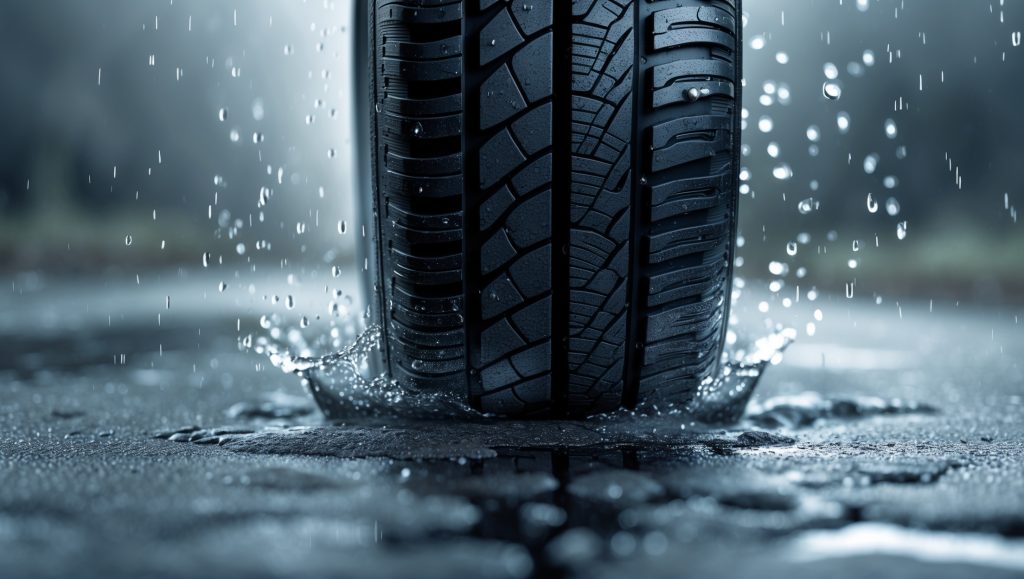
When driving over wet surfaces, your tyres are designed to channel water away from the contact patch using tread grooves. If the volume of water exceeds the tyre’s ability to evacuate it—due to high speed, deep water, or worn tread—the tyre rides on top of the water film, losing traction entirely.
Warning Signs
- Sudden increase in engine RPM without acceleration (wheels spinning)
- Loss of steering response; the car feels ‘light’ or ‘floating’
- Complete absence of feedback from the road
Wet Braking Explained
What Affects Wet Braking?
Wet braking refers to how quickly a vehicle can stop on a wet surface. Several factors influence stopping distances in the rain:
- Tyre tread pattern and depth: Deeper, well-designed tread channels water more effectively.
- Rubber compound: Softer, silica-enhanced compounds often improve wet grip.
- Tyre pressure: Underinflated or overinflated tyres reduce contact area and water evacuation efficiency.
- Vehicle speed: Higher speeds increase stopping distances and aquaplaning risk.
- Brake system condition: Worn pads, rotors, or ABS malfunctions can severely impair wet braking.
Why Wet Braking Differs from Dry Braking
Water acts as a lubricant between the tyre and the road, reducing friction and making it harder for tyres to ‘bite’ into the surface. Even high-performance tyres take significantly longer to stop on wet roads compared to dry.
Tyre Design Features for Wet Safety
Tread Patterns
Modern tyres use a variety of tread patterns—directional, asymmetric, and symmetric—to optimize water evacuation. Directional patterns (with V-shaped grooves) are particularly effective at channeling water away from the contact patch, while asymmetric designs combine wet and dry performance. The density and depth of sipes (small slits in the tread blocks) also improve wet grip by cutting through thin water layers.
Rubber Compounds
Advanced rubber compounds, often incorporating silica, maintain flexibility at lower temperatures and in wet conditions. This flexibility allows the tyre to conform better to microscopic variations in the road surface, aiding grip in the rain.
Tread Depth and Wear Bars
Tread depth is critical for wet safety. US regulations require a minimum depth of 2/32″ (1.6 mm), but most experts recommend replacing tyres at 4/32″ (3 mm) or even earlier for optimal wet performance. Most tyres have wear bars molded into the tread; when the tread wears down to these bars, wet performance drops significantly.
Specialized Wet Tyres
Some tyres are specifically engineered for wet climates, featuring wider circumferential grooves, deeper sipes, and compounds tuned for rain. These are worth considering for regions with frequent heavy rainfall.
Maintenance and Driving Techniques for Wet Safety
Tyre Pressure
Maintaining correct tyre pressure is essential. Underinflated tyres flatten out, increasing the risk of aquaplaning; overinflated tyres reduce the size of the contact patch, reducing grip. Check tyre pressures monthly and adjust to the manufacturer’s recommended value (found on the driver’s door jamb or owner’s manual).
Tread Inspection
Regularly inspect tread depth and look for uneven wear, cracks, or embedded objects. Rotate tyres as recommended (typically every 5,000–7,500 miles) to ensure even wear and consistent wet performance.
Safe Driving Practices
- Reduce speed in wet weather
- Increase following distance
- Brake and steer smoothly to avoid sudden inputs
- Avoid standing water and puddles when possible
Emergency Handling
If you feel your vehicle begin to aquaplane, remain calm—ease off the accelerator, avoid sudden steering, and wait for the tyres to regain contact with the road before braking or correcting your direction.
How to Choose Tyres for Wet Conditions
Label Ratings and Reviews
Many tyre manufacturers include wet grip ratings or publish performance data from independent tests. Look for tyres with strong wet performance scores from reputable sources, and read real-world user reviews to confirm their effectiveness in rain.
All-Season vs. Summer vs. Winter Tyres
All-season tyres generally offer balanced wet and dry performance for most US climates. Summer tyres often provide better wet grip than all-seasons but may not be suitable for cold conditions. Winter tyres are optimized for snow and ice but can also excel in cold, wet situations thanks to their soft compounds and aggressive siping.
Consider Local Climate
If you drive mostly in wet regions (like the Pacific Northwest or Gulf Coast), prioritize tyres with high wet traction ratings and deeper tread patterns. For drier regions, a balanced all-season tyre may suffice, but still ensure good wet braking scores for occasional storms.
Common Mistakes
- Ignoring tread depth until tyres are below legal minimum
- Assuming all tyres perform equally in the rain
- Neglecting tyre pressure checks
- Using mismatched tyres with uneven tread patterns or depths
- Driving too fast for conditions, especially through standing water
- Relying solely on ABS or stability systems for wet safety
- Delaying replacement of old or weather-cracked tyres
Quick Checklist
- Check tyre pressures monthly and before long trips
- Monitor tread depth—replace at 4/32″ (3 mm) for best wet safety
- Inspect for wear, cracks, and embedded debris
- Rotate tyres regularly for even wear
- Choose tyres with strong wet grip ratings and positive user feedback
- Reduce speed and increase following distance in the rain
- Avoid sudden braking or steering on wet roads
FAQ
- What is the minimum safe tread depth for wet driving?
- While the legal minimum is 2/32″ (1.6 mm), most experts recommend replacing tyres at 4/32″ (3 mm) for optimal wet grip and aquaplaning resistance.
- How can I tell if my tyres are worn for wet driving?
- Use a tread depth gauge or insert a quarter into the tread. If part of Washington’s head is covered, you have more than 4/32″ left—good for wet safety.
- What should I do if my car starts to aquaplane?
- Ease off the accelerator, avoid sudden steering or braking, and wait for the tyres to regain traction before making corrections.
- Do all-season tyres work well in rain?
- Most modern all-season tyres are designed for reasonable wet performance, but their effectiveness depends on the specific model and tread condition.
- How does tyre pressure affect wet safety?
- Incorrect pressure—either too high or too low—reduces the tyre’s ability to clear water and maintain grip. Always use the manufacturer’s recommended pressure.
- Are expensive tyres always better in the rain?
- Not necessarily. Some mid-priced tyres offer excellent wet performance. Prioritize independent test results, wet grip ratings, and real-world reviews over price alone.
- Does tyre rotation help with wet safety?
- Yes. Regular rotation ensures even tread wear, maintaining consistent wet grip and reducing aquaplaning risk.
- Can worn rear tyres cause aquaplaning, even if fronts are new?
- Yes. Worn rear tyres increase the risk of losing rear grip, especially in emergency maneuvers. Always install new tyres on the rear axle if replacing only two.
Conclusion
Aquaplaning and wet braking are critical safety considerations for US drivers, especially in regions prone to rain. By understanding how tyre design, tread depth, and maintenance affect wet performance, you can make informed choices that keep you and your passengers safer. Regular inspections, proper inflation, and choosing tyres with proven wet grip ratings are your best defenses against wet-weather hazards. If you’re due for new tyres, prioritize wet performance in your decision-making process—your safety depends on it.
Could you clarify how different tread patterns impact water evacuation and aquaplaning risk? For example, are directional or asymmetric tread designs more effective in heavy rain conditions?
Directional tread patterns are designed to channel water away from the tyre’s contact patch quickly, which helps reduce aquaplaning risk in heavy rain. Asymmetric tread patterns often combine different features: one side may focus on water evacuation while the other emphasizes grip. Both designs can be effective, but directional treads are especially efficient in clearing water during intense rain, while asymmetric treads offer a balance for mixed conditions.
Does tire pressure actually make a big difference for wet braking, and how do I know the right pressure for my car during rainy seasons?
Tire pressure plays a big role in wet braking. Under-inflated or over-inflated tires have less grip and can increase stopping distances, especially in rain. To find the right pressure, check your owner’s manual or the sticker inside your driver’s door. Stick to the recommended pressure, even during rainy seasons, for the best safety and performance.
You mention that tyre tread depth plays a big role in aquaplaning and wet braking. How do I know when my tread depth is too low for safe driving in the rain?
To check if your tread depth is safe, look for the tread wear indicators—these are small raised bars in the tyre grooves. When the tread is worn down to these bars, it’s time to replace the tyre. Generally, a tread depth below 3mm can reduce wet performance, even though the legal minimum is usually 1.6mm.
If I notice my car feeling light or like it’s floating on the highway after it rains, what immediate steps should I take to regain control safely?
If your car feels light or starts to float after rain, you could be experiencing aquaplaning. Stay calm, gently ease off the accelerator, and avoid sudden steering or braking. Hold the steering wheel straight and wait for your tyres to regain contact with the road. Only brake or steer gently once you feel control return.
Do silica-enhanced tyres cost significantly more, and is the investment worth it for a business primarily operating in wet climates?
Silica-enhanced tyres can cost a bit more than standard tyres, but the price difference is usually moderate. For a business operating mostly in wet conditions, the investment is often worthwhile. These tyres offer improved wet grip and reduce the risk of aquaplaning, which means better safety and potentially fewer accidents or delays.
Can you elaborate on how often US drivers should check their tyre tread depth to minimize the risk of aquaplaning, especially if they live in regions with frequent rainfall?
US drivers should check their tyre tread depth at least once a month, and even more frequently if they live in areas with frequent rainfall. Regular checks help ensure the tread is deep enough to channel water away and reduce aquaplaning risk. Pay special attention before and during the rainy season for extra safety.