
Introduction
Off-road driving is more popular than ever across the US, from weekend trail rides in the Rockies to working ranches and overland adventures. Choosing the right tyres is essential for maximizing performance, safety, and comfort—especially when navigating diverse terrain. Two of the most common types for off-road use are all-terrain (AT) and mud-terrain (MT) tyres. While they may look similar at a glance, their construction, tread design, and performance characteristics differ significantly. Understanding these differences is key to making an informed purchase, whether you’re a casual explorer or a seasoned trail veteran.
All-Terrain Tyres: Versatility for Mixed Surfaces
Construction and Tread Design
All-terrain tyres are engineered for versatility. Their tread patterns combine closely spaced tread blocks with moderate voids, offering a balance between on-road comfort and off-road traction. Reinforced sidewalls are common, providing extra protection against punctures and cuts. Many AT tyres use multi-pitch tread design to reduce road noise and improve ride quality on highways.
Performance Benefits and Limitations
The main draw of all-terrain tyres is their ability to handle varied surfaces: gravel, dirt, grass, light mud, and pavement. They deliver better road manners than most aggressive off-road tyres, with improved wet and dry grip, predictable handling, and typically longer tread life. However, in deep mud or loose sand, AT tyres may struggle to find traction compared to specialized alternatives.
Typical Use Cases
- Daily drivers who occasionally head off-pavement
- Light to moderate trail use
- Work vehicles needing all-weather flexibility
- Overlanders seeking a compromise between highway comfort and off-road capability
Mud-Terrain Tyres: Maximum Traction Off the Beaten Path
Construction and Tread Design
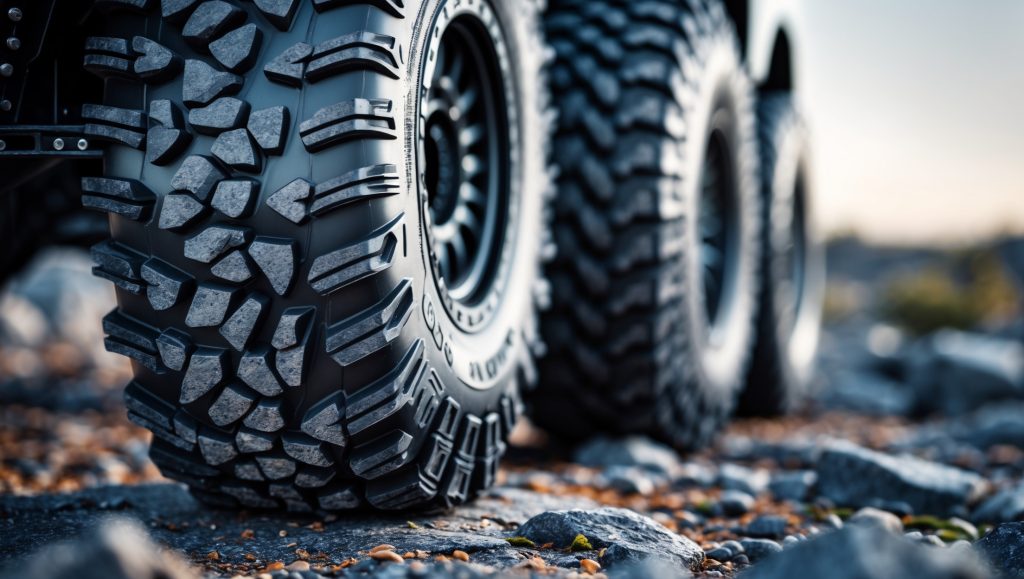
Mud-terrain tyres are purpose-built for the toughest off-road environments. Their aggressive tread consists of large, widely spaced lugs and deep channels, designed to dig into soft terrain and clear mud, rocks, and debris as the tyre rotates. Stronger sidewalls and reinforced shoulders enhance resistance to cuts, abrasions, and sidewall punctures.
Performance Benefits and Limitations
MT tyres excel in mud, loose soil, rocks, deep snow, and other extreme conditions. The open tread design offers superior self-cleaning, preventing build-up that can reduce traction. However, these same features make them noisier and less comfortable on paved roads, with longer braking distances and faster tread wear when used primarily on asphalt. Fuel economy may also suffer due to increased rolling resistance.
Typical Use Cases
- Frequent off-roaders tackling challenging or muddy trails
- Rock crawlers and expedition rigs
- Work trucks in construction, forestry, or agriculture
- Enthusiasts who prioritize off-road performance above all else
How to Choose: Key Factors for US Off-Road Drivers
Assess Your Driving Habits
Consider how much time your vehicle spends on pavement versus off-road. If you drive mainly on highways but need occasional off-road capability, all-terrain tyres offer the best compromise. For vehicles dedicated to off-road adventures or heavy work in rough environments, mud-terrain tyres may be worth the trade-offs.
Regional Terrain and Climate
Geography plays a significant role. Southwestern desert drivers face different challenges (sand, rocks) than those in the Pacific Northwest (mud, wet forest floors) or the Rockies (snow, gravel, rocks). All-terrain tyres handle a wide range of conditions, but if deep mud or serious rock crawling is routine, mud-terrains offer a clear advantage. For mixed climates, some all-terrain tyres now carry the Three-Peak Mountain Snowflake (3PMSF) symbol for winter use.
Load, Towing, and Vehicle Requirements
Heavier vehicles, frequent towing, or carrying heavy loads demand tyres with higher load ratings and reinforced construction. Many all-terrain and mud-terrain tyres come in Load Range E (10-ply equivalent) for trucks and large SUVs. Always verify fitment, load, and speed ratings for your specific vehicle.
On-Road vs Off-Road: Balancing Performance and Comfort
Road Noise and Ride Quality
All-terrain tyres are generally quieter and smoother on pavement, thanks to their less aggressive tread. Mud-terrain tyres, with their large lugs and voids, tend to generate more noise and vibration. If daily comfort is important, especially on longer commutes, this can be a deciding factor.
Fuel Economy and Tread Life
Rolling resistance is higher on mud-terrain tyres, which often translates to reduced fuel efficiency compared to all-terrains. Tread compounds and designs for all-terrain tyres are typically optimized for longer life, especially when used on highways. Mud-terrains wear faster when driven mostly on-road, so consider your mileage split before committing.
Wet and Winter Performance
Many modern all-terrain tyres feature advanced siping and rubber compounds for better wet grip and winter traction. Mud-terrain tyres, while capable in deep snow, may be less predictable on icy or slushy roads due to fewer sipes and stiffer compounds. Look for all-terrain tyres with snow ratings if winter is a concern.
Durability and Maintenance Considerations
Puncture Resistance and Sidewall Protection
Both AT and MT tyres often include reinforced sidewalls, but mud-terrains usually go further with thicker rubber and more aggressive shoulder lugs. If you frequently encounter sharp rocks or roots, sidewall protection can prevent costly failures. Regularly inspect tyres for cuts, bulges, or embedded debris after off-road use.
Rotation and Pressure Management
Off-road use accelerates uneven wear. Rotate tyres every 5,000–7,000 miles and check air pressure before and after trips. Underinflated tyres risk sidewall damage, while overinflated tyres offer less traction and comfort. For extreme off-roading, some drivers air down tyres, but always reinflate to safe levels before returning to pavement.
Aftermarket Upgrades and Fitment
Larger or wider tyres can improve off-road capability but may require modifications such as lift kits, fender trimming, or recalibrated speedometers. Always consult your vehicle’s manual and a reputable tyre dealer to ensure proper fitment and avoid issues with rubbing, handling, or legal compliance.
Common Mistakes
- Choosing mud-terrain tyres for mainly highway use, resulting in excess noise, faster wear, and poor fuel economy
- Selecting tyres without considering load ratings or vehicle requirements
- Neglecting regular rotation and pressure checks, leading to uneven wear
- Failing to inspect tyres after off-road use for damage or debris
- Overlooking the need for snow-rated tyres in winter conditions
- Installing oversized tyres without accounting for necessary suspension or body modifications
Quick Checklist
- Assess your driving split: on-road vs off-road
- Identify typical terrain and weather (mud, snow, rocks, sand)
- Check manufacturer load and speed ratings for your vehicle
- Look for 3PMSF symbol if winter performance is needed
- Plan for regular rotation and air pressure checks
- Consult experts for fitment, especially with oversized tyres
- Inspect tyres after off-road trips for cuts, punctures, or embedded objects
FAQ
- Are all-terrain tyres good for daily driving?
- Yes, all-terrain tyres are designed to provide a balance of on-road comfort and off-road capability, making them suitable for daily use with occasional off-road excursions.
- Do mud-terrain tyres wear out faster on pavement?
- Typically, yes. The aggressive tread of mud-terrain tyres wears faster on asphalt and can result in increased road noise and reduced fuel efficiency compared to all-terrain options.
- Can I use all-terrain tyres in winter conditions?
- Some all-terrain tyres are rated for winter use and carry the 3PMSF symbol, indicating adequate performance in snow. Always check for this symbol if winter driving is a concern.
- Will mud-terrain tyres improve my off-road traction?
- In deep mud, loose soil, or rocky conditions, mud-terrain tyres offer superior traction and self-cleaning ability. However, they may compromise on-road comfort and noise levels.
- How often should I rotate my off-road tyres?
- Rotate your tyres every 5,000–7,000 miles or as recommended by your vehicle manufacturer, especially if you drive off-road frequently.
- Can I fit larger tyres on my stock vehicle?
- It depends on your vehicle’s suspension, fender clearance, and wheel size. Oversized tyres often require modifications. Consult a professional before making changes.
- What pressure should I use for off-roading?
- Lowering tyre pressure can improve off-road traction, but always reinflate to the recommended level before highway driving to ensure safety and prevent damage.
- Is the 3PMSF (Three-Peak Mountain Snowflake) rating important?
- If you drive in snowy or icy conditions, look for tyres with this rating for reliable winter performance.
Conclusion
Choosing between all-terrain and mud-terrain tyres comes down to how and where you drive. For most US drivers who need year-round versatility and comfort, all-terrain tyres are a practical choice. Dedicated off-roaders or those facing extreme conditions may benefit from the extra traction and durability of mud-terrain options, accepting the trade-offs in noise, comfort, and tread life. Carefully assess your needs, consult professionals when necessary, and maintain your tyres to ensure safe and enjoyable off-road adventures.
I run a landscaping company and our trucks spend a lot of time switching between highways and muddy job sites. Based on the differences you described, would all-terrain tyres be durable enough for daily use, or would we have to sacrifice mud traction?
All-terrain tyres are designed to balance on-road comfort and off-road capability, making them suitable for trucks that regularly switch between highways and muddy sites. While they might not match mud-terrain tyres in deep mud, they offer good durability and enough traction for most job sites, without sacrificing daily drivability or wearing out quickly on pavement.
If I want to upgrade to mud-terrains but I’m on a tight budget, are there certain features or aspects I shouldn’t compromise on to maintain off-road safety?
When upgrading to mud-terrain tyres on a budget, don’t compromise on sidewall strength, tread depth, or the tyre’s load rating. These features are critical for off-road safety, helping protect against punctures and ensuring good traction in tough conditions. Even if you choose a less expensive brand, make sure these essentials are met for safe performance.
I mostly drive on pavement but want to start exploring light trails. How much road noise should I expect if I pick all-terrain tyres over my current stock ones?
Switching to all-terrain tyres will likely result in a slight increase in road noise compared to your stock tyres, but it should be minimal—especially with newer all-terrain models designed for comfort. You’ll get better grip for light trails without a major compromise in everyday driving noise levels.
Can you elaborate on how all-terrain tyres perform in northern states during winter months, especially in terms of snow and ice compared to regular all-seasons?
All-terrain tyres generally perform better than regular all-seasons on light snow due to their deeper treads and more aggressive patterns. However, on packed snow and ice, they may not grip as well as dedicated winter tyres. Some all-terrains are marked with the Three-Peak Mountain Snowflake symbol, indicating better winter performance, so it’s worth checking for that feature if you face harsh winters.
If I’m on a budget and can only get one set, which type would last longer with 70% highway and 30% off-road use?
For 70% highway and 30% off-road driving, all-terrain tyres would generally last longer than mud-terrain tyres. All-terrain tyres are designed for mixed use, offering better tread life and comfort on paved roads while still handling occasional off-road conditions. Mud-terrain tyres tend to wear faster on highways due to their aggressive tread pattern.
For someone on a budget who wants flexibility, is it worth spending more for reinforced sidewalls on all-terrain tyres, or can I get by with basic versions?
If you plan to do a mix of on-road and occasional off-road driving, basic all-terrain tyres should suffice, especially on a budget. However, reinforced sidewalls offer better puncture resistance and durability if you’ll encounter rocky or rugged trails often. Consider how rough your off-road use will be—if it’s mostly mild, basic versions are fine; for tougher terrain, reinforced sidewalls are a worthwhile investment.