
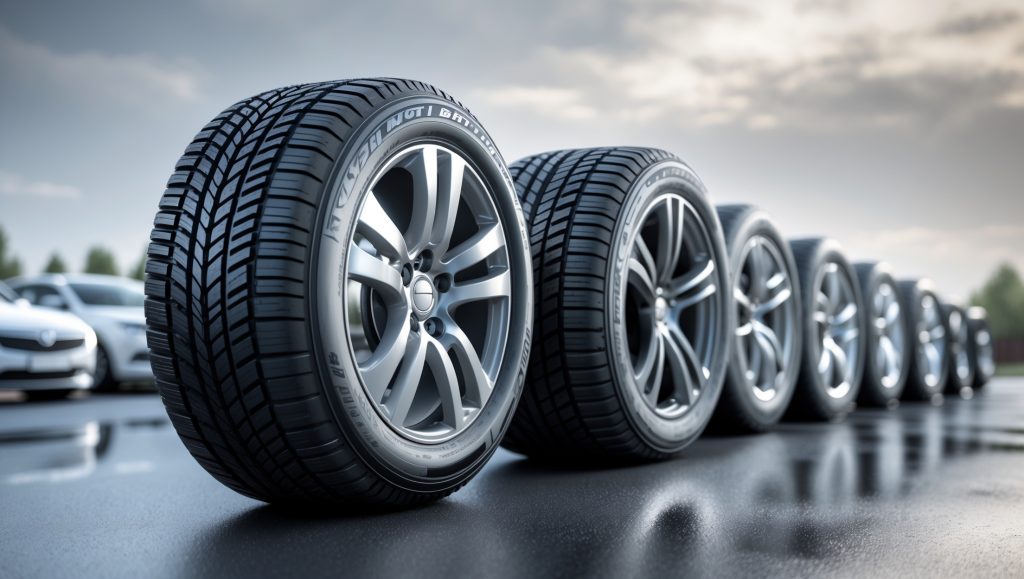
How We Chose
We evaluated tyres based on safety (braking, handling, hydroplaning resistance), wet and dry grip, ride comfort, road noise, treadwear/durability, and value for money. For US buyers, we considered UTQG ratings (treadwear, traction, temperature) and real-world feedback, while referencing EU label data for international models. Snow performance was weighed, but these are not dedicated winter tyres. Our list covers a range of brands and price points to help both drivers and fleet managers.
1. Michelin CrossClimate2 — All-Season Mastery
Why it stands out
With best-in-class dry and wet grip, the CrossClimate2 delivers exceptional year-round confidence. It’s uniquely rated for severe snow (3PMSF), bridging the gap between all-season and all-weather tyres.
Best for
- Drivers facing unpredictable weather
- Those wanting winter traction without switching tyres
- Fleet owners prioritizing low downtime
Key notes
- Season/Type: Grand Touring All-Season, 3PMSF certified
- Popular sizes: 205/55R16, 225/60R17, 235/45R18
- Strengths: Wet/snow grip, all-climate versatility, quiet ride
- Trade-offs: Premium price, slightly firmer ride
2. Continental PureContact LS — Luxury Ride, Confident Grip
Why it stands out
Continental’s PureContact LS balances comfort, quietness, and impressive wet performance, with EcoPlus Technology for long tread life and fuel economy.
Best for
- High-mileage commuters
- Luxury sedan and crossover owners
- Drivers valuing a plush, refined ride
Key notes
- Season/Type: Grand Touring All-Season
- Popular sizes: 215/55R17, 225/50R17, 235/60R18
- Strengths: Comfort, low noise, treadwear
- Trade-offs: Average snow traction
3. Bridgestone Turanza QuietTrack — Whisper-Quiet Touring
Why it stands out
The Turanza QuietTrack is engineered for minimal road noise and a smooth ride, excelling on highways and in urban settings. Wet braking and treadwear are strong points.
Best for
- Long-distance travelers
- Families prioritizing quiet cabin environments
- Luxury crossovers and sedans
Key notes
- Season/Type: Grand Touring All-Season
- Popular sizes: 225/60R16, 235/45R18, 245/40R19
- Strengths: Low noise, comfort, longevity
- Trade-offs: Modest snow grip, higher cost
4. Goodyear Assurance WeatherReady — Reliable in All Climates
Why it stands out
This tyre combines Goodyear’s weather-adaptive technology with reliable wet and light-snow traction, making it a strong choice for drivers tackling all four seasons.
Best for
- Regions with variable weather
- Drivers who prefer not to switch tyres for winter
- Fleet operators seeking versatility
Key notes
- Season/Type: All-Season, 3PMSF certified
- Popular sizes: 215/60R16, 225/65R17, 235/50R18
- Strengths: Wet/snow grip, treadwear warranty
- Trade-offs: Slightly louder at highway speeds
5. Pirelli Cinturato P7 All Season Plus II — Balanced Performer
Why it stands out
With a focus on balanced handling, the Cinturato P7 All Season Plus II offers strong wet and dry performance, eco-friendly construction, and a comfortable ride.
Best for
- Drivers seeking efficiency and comfort
- Green-conscious buyers
- Urban commuters
Key notes
- Season/Type: Grand Touring All-Season
- Popular sizes: 205/55R16, 225/45R17, 235/40R18
- Strengths: Fuel efficiency, even wear, ride comfort
- Trade-offs: Modest snow capability
6. General Altimax RT43 — Value and Reliability
Why it stands out
General’s Altimax RT43 is a proven value leader, offering dependable all-season performance and a comfortable ride at a wallet-friendly price.
Best for
- Budget-minded drivers
- Older sedans and crossovers
- Fleet vehicles with high turnover
Key notes
- Season/Type: Grand Touring All-Season
- Popular sizes: 195/65R15, 215/60R16, 225/65R17
- Strengths: Affordability, comfort, even wear
- Trade-offs: Average wet and snow grip
7. Yokohama AVID Ascend LX — Long Life, Smooth Ride
Why it stands out
The AVID Ascend LX features an impressively high UTQG treadwear rating, with a focus on ride quietness and low rolling resistance for improved fuel economy.
Best for
- Drivers logging high annual miles
- Those seeking longevity and value
- Hybrid and fuel-efficient vehicle owners
Key notes
- Season/Type: Grand Touring All-Season
- Popular sizes: 205/55R16, 215/60R16, 225/65R17
- Strengths: Tread life, quietness, fuel savings
- Trade-offs: Average snow grip
8. Firestone WeatherGrip — All-Weather Safety
Why it stands out
Firestone’s WeatherGrip offers 3PMSF-rated traction for drivers needing confidence in light snow, plus reliable wet performance and a strong value proposition.
Best for
- Northern states with unpredictable winters
- Drivers wanting improved snow safety
- Fleet buyers needing all-weather performance
Key notes
- Season/Type: All-Season, 3PMSF certified
- Popular sizes: 205/60R16, 215/55R17, 225/60R17
- Strengths: Snow/wet grip, safety, price
- Trade-offs: Shorter tread life than some premium models
9. Hankook Kinergy PT (H737) — Quiet, Durable, Affordable
Why it stands out
This tyre combines a quiet ride with long treadwear and good all-season traction, at a moderate price point that appeals to practical buyers.
Best for
- City and suburban commuters
- Budget-conscious families
- Older or economy sedans
Key notes
- Season/Type: Grand Touring All-Season
- Popular sizes: 195/65R15, 205/55R16, 225/60R16
- Strengths: Quietness, tread life, stable handling
- Trade-offs: Less grip on snow/ice
10. Vredestein Quatrac Pro — European All-Weather Versatility
Why it stands out
Imported from Europe, the Quatrac Pro brings strong wet and winter credentials, with a 3PMSF rating making it a solid all-weather option for US drivers seeking year-round safety.
Best for
- Those wanting European performance and safety
- Drivers in regions with moderate to severe winters
- Modern sedans and crossovers
Key notes
- Season/Type: All-Weather, 3PMSF certified
- Popular sizes: 225/45R17, 235/40R18, 245/45R18
- Strengths: Wet/snow grip, precise handling
- Trade-offs: Limited US availability, price
Buying Tips
When choosing grand touring all-season tyres, always check your vehicle’s fitment guide—correct size, load, and speed ratings ensure safety and warranty compliance. Don’t be tempted to upsize or downsize without consulting your car’s manual or a tyre professional. Monitor tread depth regularly and rotate tyres every 5,000–8,000 miles for optimal wear. Store spare or seasonal tyres in a cool, dry place, upright and away from direct sunlight. Always have your alignment checked when fitting new tyres to maximize tread life and ride comfort.
Verdict
If you want a premium tyre with year-round capability, the Michelin CrossClimate2 and Goodyear Assurance WeatherReady shine for all-weather safety. The Continental PureContact LS and Bridgestone Turanza QuietTrack are ideal for those prioritizing ride comfort and minimal noise. Value-focused buyers should look at the General Altimax RT43 or Hankook Kinergy PT. For fleets, the Firestone WeatherGrip and Yokohama AVID Ascend LX deliver durability and all-season dependability. Consider your local climate, driving habits, and budget—there’s a strong grand touring tyre on this list for every need.
You mentioned the Michelin CrossClimate2 is 3PMSF certified for severe snow, but noted a firmer ride as a trade-off. How noticeable is that firmness compared to the Continental PureContact LS, especially on rougher roads?
The Michelin CrossClimate2 does ride noticeably firmer than the Continental PureContact LS, especially over uneven or rough pavement. While the CrossClimate2 offers excellent snow capability, you might feel more bumps and road imperfections. The PureContact LS, by comparison, provides a softer, smoother ride and absorbs rough patches better, making it a more comfortable option if ride comfort is a top priority.
I run a small fleet of sedans for ride-sharing, so treadwear and minimizing downtime matter most to me. Between the PureContact LS and Turanza QuietTrack, which would you recommend for longevity and value?
For your ride-sharing fleet, the Turanza QuietTrack generally offers better treadwear and longer mileage than the PureContact LS, which means less downtime and good long-term value. While both are comfortable and quiet, the Turanza QuietTrack stands out for durability, making it a solid choice for maximizing uptime in your sedan fleet.
For a high-mileage commuter, do you recommend prioritizing treadwear ratings or road noise when choosing between the Bridgestone Turanza QuietTrack and PureContact LS?
For a high-mileage commuter, treadwear rating should generally be your top priority, since it affects how long the tires last before needing replacement. Both the Turanza QuietTrack and PureContact LS offer good tread life, but if you spend long hours driving, a quieter ride can also improve comfort. If maximizing value and minimizing replacement frequency matter most, treadwear should come first.
The Continental PureContact LS sounds comfortable, but you noted it only has average snow traction. For someone in upstate New York who faces occasional heavy snow, is it still a solid option or should I look elsewhere?
The Continental PureContact LS is a solid all-season tyre, but for upstate New York’s heavier snowfalls, you might want something with stronger winter performance. Consider tyres with better snow ratings or even dedicated winter tyres for the coldest months, then switch back to all-seasons for spring through fall.
If my crossover mainly does short daily school runs and the occasional road trip, is it worth paying more for the QuietTrack’s lower road noise, or would a mid-range tire be just as good?
If most of your driving is short, local trips, a mid-range tire should be perfectly adequate and cost-effective. The QuietTrack’s lower road noise shines on long highway drives, so unless quietness on road trips is a top priority for you, a mid-range tire will likely meet your needs.
Do all of these grand touring all-season options fit standard crossovers like the Honda CR-V, or do I need to check each tire’s size availability carefully for fleet purchasing?
You should definitely check each tire’s size availability carefully, especially for fleet purchasing. Not every grand touring all-season tire in the list will fit all Honda CR-V models, as tire sizes vary by year and trim. It’s best to confirm compatibility with your specific CR-V model and tire size before ordering.
What kind of performance drop, if any, could I expect if I use these grand touring all-season tires year-round in an area with occasional ice, rather than swapping to dedicated winter tires?
Using grand touring all-season tires year-round in areas with occasional ice can lead to reduced grip, longer braking distances, and less predictable handling compared to dedicated winter tires. All-seasons are designed for mild winter conditions, but they won’t perform as well as winter tires on ice or in very cold temperatures, so extra caution would be needed during icy spells.
For fleet managers on a tighter budget, are there any options here that balance durability and value better than the premium-priced Michelin CrossClimate2?
Yes, several options on the list offer a strong balance of durability and value at a lower price point than the Michelin CrossClimate2. The General Altimax RT45 and Kumho Solus TA51a are both highlighted for their long tread life, reliable all-season performance, and more affordable pricing, making them good choices for budget-conscious fleet managers.
Is there a notable difference in fuel economy between these top picks, especially for someone logging a lot of miles commuting each week?
Yes, there can be a noticeable difference in fuel economy among top grand touring all-season tires. Some models are designed with lower rolling resistance, which helps improve mileage. If you commute a lot, look for tires specifically marketed as fuel-efficient or with Eco/Low Rolling Resistance features, as these can help you save on gas over time.
If I have to drive my kids through unpredictable Midwest winters but want to avoid switching to winter tires, would you still recommend the PureContact LS or should I focus on the CrossClimate2?
For Midwest winters with unpredictable conditions, the CrossClimate2 is a safer bet. While the PureContact LS is an excellent all-season tire, the CrossClimate2 offers superior winter traction and performs much closer to a dedicated winter tire, making it a better choice if you want to avoid seasonal tire changes.
As a first-time tire buyer, how do I decide between quiet ride and snow performance, especially if I drive mostly in the city but sometimes take road trips to snowy areas?
Since you mostly drive in the city but occasionally visit snowy areas, consider a tire that balances both quiet comfort and reliable snow traction. Look for grand touring all-season tires rated well for noise reduction and marked with the three-peak mountain snowflake (3PMSF) symbol, which indicates good winter performance. This way, you get a comfortable city ride without sacrificing safety on those snowy road trips.
Do any of these tyres, especially the Michelin CrossClimate2, tend to wear out faster in regions with very hot summers like Texas? I’m hoping for something durable in extreme temperatures.
The Michelin CrossClimate2 is well-regarded for its durability, but in regions with extremely hot summers like Texas, all tyres—including the CrossClimate2—can experience slightly faster wear due to higher road temperatures. However, among all-season tyres, the CrossClimate2 still offers excellent longevity and performance in heat compared to many competitors.
Between the PureContact LS and Turanza QuietTrack, which would likely provide lower overall operating costs for a rideshare vehicle doing high annual mileage on mostly city roads?
For high-mileage rideshare use on city roads, the PureContact LS typically provides lower overall operating costs. It often has a longer tread life and better fuel efficiency compared to the Turanza QuietTrack. While both are reliable, the PureContact LS may require fewer replacements over time, which can help reduce your total cost of ownership.
Could you clarify how the snow traction of the Turanza QuietTrack measures up against the 3PMSF-rated CrossClimate2? I’m in the Northeast and get occasional heavy snow but don’t want a full winter tire.
The CrossClimate2, with its 3PMSF rating, delivers much stronger snow traction than the Turanza QuietTrack, which is M+S rated but not certified for severe winter use. For Northeast conditions with occasional heavy snow, the CrossClimate2 will provide noticeably better grip and confidence without needing a dedicated winter tire.
For fleet managers prioritizing low downtime, is the treadwear difference between these top choices substantial over a few years? Are any of them notably faster to wear out under higher annual mileage?
The treadwear differences among the top all-season tyres on this list can impact downtime over several years, especially with high annual mileage. Some, like the Michelin Defender2 and Goodyear Assurance MaxLife, are designed for longer tread life, making them better for fleets. Others, such as the Continental PureContact LS, offer great performance but may wear faster under heavy use. Choosing tyres with higher treadwear warranties will help minimize downtime.
If my priority is road noise for family road trips, would you recommend the Bridgestone Turanza QuietTrack over the other options, or does it compromise too much on wet or snow performance?
The Bridgestone Turanza QuietTrack is one of the quietest options in the list and is designed specifically to minimize road noise, making it ideal for family road trips. While its wet and snow performance is solid for an all-season tire, it may not top the list in those conditions. If road noise is your top priority, it’s a great choice, but if you regularly drive in heavy rain or snow, you might consider alternatives with a stronger wet or snow rating.
Are there any noticeable impacts on fuel economy between these grand touring tyres, especially between the EcoPlus Technology in the PureContact LS and the Michelin option?
Yes, there can be some differences in fuel economy between these tires. The PureContact LS with EcoPlus Technology is specifically designed to reduce rolling resistance, which can help improve fuel efficiency. The Michelin option also performs well, but many tests show the PureContact LS tends to edge out slightly in terms of lower fuel consumption, especially in city driving.
Could you elaborate on how the tyres performed as they aged? For example, did wet grip or road noise change noticeably after 20,000 miles for any of these models?
Most of the tyres in the list maintained good performance up to around 20,000 miles, but some differences did emerge. Wet grip tended to decrease slightly for models like the Michelin Primacy and Pirelli Cinturato, especially in heavy rain. Road noise increased a bit for the Continental PureContact after extended use, but it remained acceptable. Rotating and maintaining proper inflation can help slow these changes.
Could you elaborate on how you weighed treadwear/durability versus initial price when ranking these tires? I’m trying to balance upfront cost with long-term value for my sedan.
In our rankings, both treadwear/durability and initial price contributed significantly to overall value. We favored tires that offer longer tread life even if their upfront cost is higher, since these often save money over time. For each tire, we considered the estimated mileage warranty and typical real-world lifespan alongside current retail prices to highlight options that balance immediate affordability with long-term savings.
Could you clarify what you mean by ‘slightly firmer ride’ with the CrossClimate2? Is it uncomfortable enough to notice on typical city roads, or mostly a highway issue?
A ‘slightly firmer ride’ with the CrossClimate2 means you might feel a bit more of the road’s surface compared to some softer all-season tires. On typical city streets, most drivers find it noticeable but not uncomfortable—it won’t jar you or make daily driving unpleasant. It’s generally more apparent on rougher roads or sharp bumps rather than smooth highways.
Can you explain a bit more about how UTQG ratings factored into your choices here? For example, did any tyres get bumped off the list due to low treadwear scores?
UTQG ratings, especially treadwear scores, played a key role in shortlisting tyres for the list. Tyres with noticeably low treadwear ratings were excluded, even if they performed well in other areas, to ensure long-term value and durability. Only tyres with solid UTQG scores for treadwear, traction, and temperature made the final cut.
Are there any more budget-friendly options on your list that still offer decent performance for wet roads and reasonable treadwear?
Yes, the article highlights a few budget-friendly all-season tires that balance cost with good wet-road performance and treadwear. The General Altimax RT43 and Kumho Solus TA31 are notable choices, offering reliable traction in wet conditions and respectable durability, all at an affordable price point.