
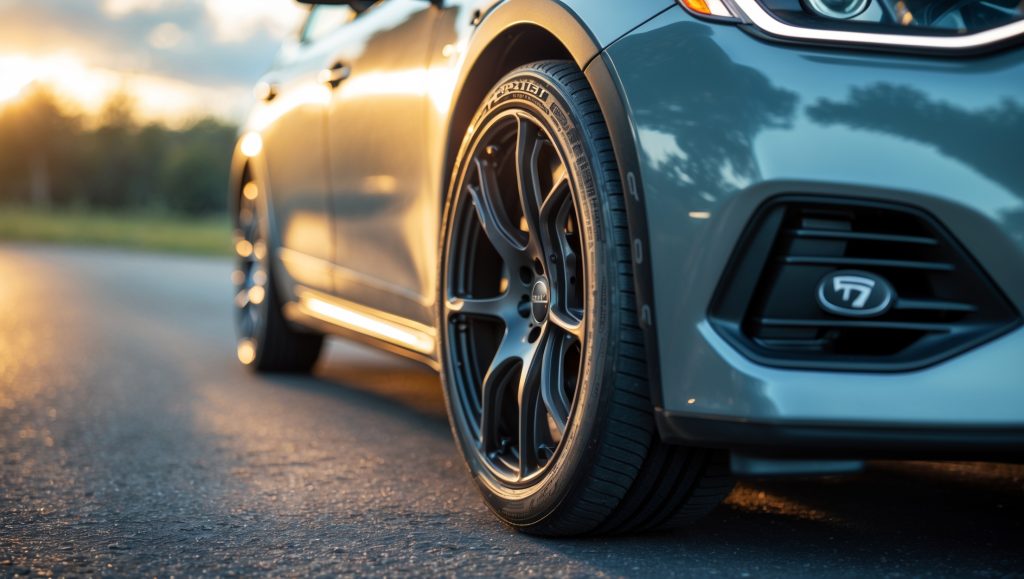
Overview
The Pirelli Cinturato P7 is a premium summer touring tyre designed for drivers of sedans, coupes, and compact cars seeking a balance of comfort, safety, and efficiency. It’s a popular choice in the US for everyday commuting, highway travel, and spirited weekend drives, particularly in sizes like 205/55 R16 and 225/50 R17. This tyre focuses on delivering reliable dry and wet performance, low rolling resistance for improved fuel economy, and a refined ride—all essential qualities for those who prioritize a comfortable, secure, and eco-friendly driving experience during the warmer months.
Key Specs
| Type | Summer Touring |
| Available sizes range | 15″ to 20″ (Common: 205/55 R16, 225/50 R17) |
| Speed rating examples | H, V, W (Up to 168 mph) |
| Load index examples | 91, 94 |
| Tread pattern | Asymmetric with four longitudinal grooves |
| Technology highlights | EcoImpact compounds, optimized pitch sequencing, integrated silica for wet grip, low rolling resistance |
Performance: Dry
The Cinturato P7 stands out in dry conditions, especially for drivers who want a balance between sporty handling and everyday comfort. Its asymmetric tread design and rigid shoulder blocks provide precise steering response and good cornering stability. Braking distances are competitive for this segment, and the tyre maintains composure during sudden maneuvers. While it doesn’t match the outright grip of ultra-high-performance summer tyres, its predictability and control inspire confidence for most daily driving scenarios and moderate spirited runs on winding roads.
Performance: Wet
Pirelli has engineered the Cinturato P7 with four wide longitudinal grooves and high silica content to enhance wet safety. In real-world use, the tyre offers reliable wet grip and short stopping distances on rain-soaked roads. Aquaplaning resistance is above average thanks to the effective water evacuation design. During heavy downpours, the tyre maintains traction and inspires trust, though pushing the limits reveals a progressive, predictable loss of grip rather than sudden breakaway. For most drivers, it’s a reassuring performer in wet conditions.
Performance: Snow & Ice
N/A — The Pirelli Cinturato P7 is a dedicated summer tyre and is not intended for use in snow or icy conditions. Drivers in regions that experience winter weather should switch to dedicated winter or all-season tyres as appropriate.
Comfort & Noise
Touring tyres like the Cinturato P7 are designed with comfort in mind, and this model delivers. The tread pitch sequencing and optimized block arrangement reduce pattern noise, resulting in a quiet cabin at city and highway speeds. Road imperfections are absorbed well, with a compliant sidewall providing a smooth ride over potholes and expansion joints. Some minor harshness can be felt over the sharpest bumps, but overall, the tyre’s comfort level is a key strength for long-distance and daily driving.
Durability & Economy
Durability is a strong point for the Cinturato P7, with even wear characteristics and a tread compound designed for longevity. In the US, its UTQG rating is typically around 700 A A, indicating above-average tread life for its class. The tyre’s low rolling resistance technology supports improved fuel economy, making it a smart choice for drivers looking to save at the pump. Regular rotations and correct inflation help maximize lifespan, which for many users exceeds 45,000–55,000 miles under normal use. The tread is also resistant to rapid wear from aggressive driving, though not as robust as some harder-compound alternatives.
Sizes & Alternatives
Popular Sizes:
- 205/55 R16 (widely used on Honda Civic, Toyota Corolla, VW Jetta, Mazda3, Hyundai Elantra)
- 225/50 R17 (popular for midsize sedans like Honda Accord, Toyota Camry, BMW 3-Series)
- 195/65 R15, 215/55 R17, 225/45 R18 (other common fitments)
Notable Alternatives:
- Michelin Primacy MXM4
- Continental PureContact LS
- Bridgestone Turanza QuietTrack
- Goodyear Assurance MaxLife
- Yokohama AVID Ascend GT
Each of these rivals has its own strengths, but the Cinturato P7 is especially competitive for those prioritizing a blend of efficiency, comfort, and balanced performance.
Pros & Cons
- Strong dry and wet grip for a touring tyre
- Quiet, comfortable ride quality
- Long tread life (high UTQG rating)
- Low rolling resistance boosts fuel efficiency
- Available in a wide range of sizes for popular US sedans
- Not suitable for cold, snowy, or icy conditions
- Ultimate cornering grip below performance-focused summer tyres
- Some road harshness over sharp impacts
- Price may be higher than some mainstream brands
Verdict
The Pirelli Cinturato P7 is a standout choice for US drivers seeking a refined and efficient summer touring tyre in sizes like 205/55 R16. Its combination of confident dry and wet handling, excellent comfort, and long tread life will appeal strongly to commuters, families, and anyone who values a quiet, fuel-saving ride. While it’s not designed for winter conditions or for those chasing maximum sports performance, it excels as a well-rounded, premium option for everyday driving. For drivers who spend most of the year in warm climates and prioritize both safety and comfort, the Cinturato P7 deserves serious consideration. Just remember to switch to appropriate tyres if winter weather is on the horizon.
If most of our deliveries take place in mixed wet and dry conditions during the summer, are there any situations where the Cinturato P7 might not perform as reliably as expected?
The Cinturato P7 generally handles wet and dry summer roads well, but in heavy, prolonged rain with lots of standing water, its aquaplaning resistance may be less than that of specialized rain tires. Also, if temperatures drop unexpectedly or you encounter early frost, its grip will be reduced since it’s designed purely for summer use.
Is there a recommended rotation schedule for these tyres to maintain optimal grip and safety, particularly given their asymmetric tread design?
For the Pirelli Cinturato P7 with its asymmetric tread, it’s best to rotate the tyres every 5,000 to 8,000 miles, or as suggested in your vehicle’s manual. Stick to a front-to-back rotation pattern, keeping each tyre on its original side to preserve the tread’s performance and maintain optimal grip and safety.
How long does the tread typically last for someone commuting mostly on highways with the 205/55 R16 P7, and are there any specific maintenance tips to extend its lifespan?
For mostly highway commuting, the Pirelli Cinturato P7 in 205/55 R16 typically lasts around 40,000 to 50,000 miles, depending on driving habits. To maximize tread life, keep your tyres properly inflated, rotate them every 6,000–8,000 miles, maintain wheel alignment, and check for uneven wear regularly.
How does the P7 perform during heavy downpours on the freeway compared to something like the Michelin Primacy or Continental PureContact, especially in terms of hydroplaning?
The Pirelli Cinturato P7 offers good wet traction for a summer touring tire, but when compared to the Michelin Primacy or Continental PureContact, it’s generally a bit more prone to hydroplaning in heavy rain. Both Michelin and Continental tend to have slightly better water evacuation and resistance to hydroplaning at higher speeds, giving them an edge for freeway driving during downpours.
If I get the 205/55 R16 size, how well do these tyres hold up over a few seasons of hot Midwest summers? Any issues with tread life?
The Pirelli Cinturato P7 in 205/55 R16 is designed for solid performance during hot summers. Drivers generally report good durability and tread life across several Midwest seasons, as long as regular rotation and proper inflation are maintained. Extended heat can accelerate wear if not maintained, but overall, these tyres are well-regarded for their longevity in warm climates.
For someone doing mostly highway commuting with occasional heavy rain, how does the wet performance of the P7 compare to something like the Continental PureContact LS in the 205/55 R16 size?
The Pirelli Cinturato P7 offers respectable wet performance for highway use, with good braking and aquaplaning resistance. However, the Continental PureContact LS generally has a stronger reputation in wet conditions, offering shorter braking distances and better overall grip in heavy rain. For mostly highway commuting with occasional downpours, the PureContact LS may provide more confidence and safety.
Since the P7 isn’t an ultra-high-performance tyre, is it still a good option for occasional spirited drives, or would you recommend a different tyre for someone on a budget who likes sharp handling?
The Pirelli Cinturato P7 balances comfort, efficiency, and safety, making it suitable for daily driving with some occasional spirited runs. However, if crisp handling is your top priority and budget matters, consider tyres like the Hankook Ventus Prime or Falken Ziex ZE914, which offer sportier feel at similar prices. The P7 will do fine, but these alternatives may give you a sharper experience.
Are there any issues with tread wear if I use this tyre for frequent highway trips during summer breaks, or does it hold up well long-term?
The Pirelli Cinturato P7 is designed to handle frequent highway driving, especially in summer conditions. It generally holds up well over time, offering good tread life for long-term use. Just remember that actual wear can depend on driving style, load, and keeping your tyres properly inflated and aligned.
Is the ride comfort on rougher US highways affected by the rigid shoulder blocks mentioned in the P7’s design?
The rigid shoulder blocks in the Pirelli Cinturato P7 help improve cornering and stability, but they may make the ride a bit firmer, especially on rougher US highways. While the tyre still aims for a comfortable touring experience, you might notice a slightly less cushioned feel over bumps compared to tyres with softer sidewalls.
Is the Pirelli Cinturato P7 a good choice for mostly city driving with occasional highway trips in a 205/55 R16 size? Or would something more performance-focused make a noticeable difference for me?
The Pirelli Cinturato P7 is well-suited for mostly city driving with occasional highway use in the 205/55 R16 size. It focuses on comfort, fuel efficiency, and low noise, which are ideal for urban conditions. A more performance-focused tyre would mainly benefit spirited driving or frequent high-speed travel, so for your needs, the P7 should be a great fit.
Does the 205/55 R16 P7 work well for drivers who sometimes need to carry heavier loads, like equipment or supplies, or should I be concerned about the load index options mentioned?
The 205/55 R16 Cinturato P7 does come in various load index ratings, so it’s important to check the specific load index on the tyre you plan to buy. If you regularly carry heavier loads, choose a higher load index (like 94 instead of 91) for better safety and durability. Always match the load index to your vehicle’s requirements.
Can you explain how the EcoImpact compounds actually contribute to improved fuel economy? Is the difference noticeable compared to similar touring tires?
EcoImpact compounds in the Pirelli Cinturato P7 are designed to reduce rolling resistance by using special polymers and silica blends. This means your car needs less energy to keep moving, which lowers fuel consumption. In real-world terms, the difference is often subtle but measurable—drivers might see a slight improvement in miles per gallon compared to conventional touring tires without low rolling resistance technology.
I drive mostly on highways for work and value a quiet ride. How does the optimized pitch sequencing in these tyres help with road noise in real life?
The optimized pitch sequencing in the Pirelli Cinturato P7 is designed to reduce the rhythmic noise generated as the tyre rolls on the road. In real-world highway driving, this means you’ll experience less intrusive road noise inside your car, making your rides quieter and more comfortable, especially during long commutes.
Is the Pirelli Cinturato P7 a good fit for someone who wants eco-friendly features but is also on a budget, or are there better value alternatives for the 205/55 R16 size?
The Pirelli Cinturato P7 is well-regarded for its eco-friendly features like low rolling resistance and longer tread life, which can help save fuel and reduce emissions. While it offers good performance and comfort, it tends to be priced above some budget alternatives. If cost is a major concern, you might also consider eco-focused models from brands like Hankook or Kumho, which often deliver solid value in the 205/55 R16 size.
I do a lot of family road trips and daily school runs in my sedan with 205/55 R16 tyres. How does the Cinturato P7 hold up comfort-wise on long highway drives compared to other premium summer tyres?
The Cinturato P7 is known for its comfortable and quiet ride, especially on long highway journeys. It absorbs road noise and bumps well, making it suitable for family trips. Compared to other premium summer tyres, it holds up very well in terms of ride comfort, providing a smooth and stable driving experience for daily use and extended travel.
Does the Cinturato P7’s low rolling resistance noticeably improve fuel economy for daily commuting compared to other summer touring tires in the 205/55 R16 size?
The Cinturato P7 is designed for low rolling resistance, which can improve fuel economy during daily commuting. In real-world use, you might see a modest improvement—typically around 2–4% better fuel efficiency compared to standard summer touring tires in the same 205/55 R16 size. The difference is noticeable over time, especially if you drive frequently.
Are these tires noticeably quieter on the highway compared to other options in the same price range? I’m sensitive to cabin noise on longer trips.
The Pirelli Cinturato P7 is designed with noise-cancelling technology and is generally quieter than many tyres in its price range. Most users notice a reduction in cabin noise, especially on highways. However, exact results may vary depending on your car model and road surfaces, but overall, these are a solid choice for quieter long-distance driving.
Does the Cinturato P7’s lower rolling resistance actually make a noticeable difference in fuel economy for daily commuting, or is it more of a minor improvement?
The Cinturato P7’s lower rolling resistance can provide a real, though modest, improvement in fuel economy—often around 2–4%. For daily commuting, this means you might notice a small but steady savings over time, especially if you drive frequently or over longer distances. The difference is more than minor, but not dramatic.
I see the Cinturato P7 focuses on fuel economy with low rolling resistance. Has anyone compared their real-world MPG before and after switching to these in the 205/55 R16 size?
Several drivers have reported a small but noticeable improvement in real-world MPG after switching to the Cinturato P7 in 205/55 R16, typically seeing 1–2 mpg gains. Of course, results can vary depending on driving habits and vehicle condition, but lower rolling resistance does seem to translate to slightly better fuel economy for many users.
I see the tyre is good for wet roads, but how does it hold up after a year or two of regular use—does the wet grip decrease significantly?
The Pirelli Cinturato P7 generally maintains good wet grip during its first couple of years if properly maintained and not excessively worn. However, like most tyres, its wet performance can decline as the tread depth wears down. Regularly checking tread depth, maintaining correct tyre pressure, and rotating tyres will help preserve its wet grip over time.
You mention the P7 offers good fuel economy, but have you found any difference in efficiency between the available speed ratings like H, V, or W?
In practice, the difference in fuel efficiency between the H, V, and W speed ratings of the Pirelli Cinturato P7 is generally minimal. All variants are designed for low rolling resistance. You might notice a slight advantage with the H-rated tyre, since it’s often optimized more for comfort and economy, but for most drivers, the efficiency differences are very small.
I see these are designed for summer use and mention eco-friendly features. Is there a recommended mileage or seasonal time frame when I should plan to replace them to maintain those benefits?
To keep enjoying the eco-friendly performance, it’s a good idea to check your tyres regularly for tread wear and aging. Generally, summer tyres like the Pirelli Cinturato P7 last around 25,000 to 40,000 miles, but should be replaced at least every 5–6 years, even if they appear fine. Rotate them seasonally and monitor tread depth to maintain their benefits.
With the P7’s focus on comfort and eco-friendliness, how does its ride quality compare to something like the Michelin Primacy or Continental PureContact in a 205/55 R16 setup?
The Pirelli Cinturato P7 is known for its smooth, quiet ride and low rolling resistance, offering comfort close to the Michelin Primacy and Continental PureContact in 205/55 R16. While the Michelin might edge ahead in plushness and the Continental in wet grip, the P7 still delivers a balanced, comfortable experience with strong eco-friendly features.
Do you know if the Pirelli Cinturato P7 is a good choice for drivers who have to deal with a mix of city and highway driving in the summer? My business car sees both types of routes regularly.
The Pirelli Cinturato P7 is designed for a comfortable and quiet ride, with good handling and braking performance in both city and highway conditions. Its tread pattern and rubber compound make it well-suited for summer use, so it should be a reliable and efficient choice for mixed urban and highway routes.
Does the Cinturato P7’s EcoImpact compound noticeably improve fuel economy compared to other summer touring tires in the same size, like the Michelin Primacy or Continental PureContact?
The Cinturato P7’s EcoImpact compound is designed to lower rolling resistance, which can help improve fuel economy. In independent tests, its fuel efficiency is generally on par with or slightly better than the Michelin Primacy and Continental PureContact in 205/55 R16. The difference is usually modest but can add up over time, especially for frequent drivers.
The article mentions ‘optimized pitch sequencing’ for a refined ride. Could you explain what that means for road noise inside the car?
Optimized pitch sequencing refers to varying the size and arrangement of tread blocks around the tyre. This design helps break up repetitive noise patterns as the tyre rolls, resulting in less road noise transmitted into the cabin. In practical terms, it means a quieter and more comfortable ride for you and your passengers.
If most of my summer driving is on rougher highways rather than smooth city roads, will the optimized pitch sequencing still provide a refined ride with the P7?
The optimized pitch sequencing on the Pirelli Cinturato P7 does help reduce road noise and enhance ride comfort. However, while it improves refinement even on rough highways, very coarse surfaces may still transmit some vibrations. The P7 should still offer a smoother and quieter experience compared to many standard tyres in those conditions.
If my car requires a 91 load index, would it make sense to go for a higher load index like 94 with this tyre, or would that impact comfort?
Choosing a higher load index, like 94 instead of 91, is safe and can even provide a bit more durability. However, tyres with a higher load index may feel slightly firmer, which could reduce ride comfort a little. Most drivers notice minimal difference, but if you value a softer ride, sticking to 91 is best.
Are there any reported issues with tread wear or longevity for the P7s when used mostly for city driving in the US?
According to the review, the Pirelli Cinturato P7 generally offers good tread life, especially with balanced driving. However, some users in the US who primarily drive in city conditions have noted that tread wear can be a bit faster than expected, especially with frequent stop-and-go traffic. Regular rotation and proper tire pressure help maximize longevity.
Is the P7 easy to rotate and maintain on a typical compact car? I’m a first-timer and want to know if there’s anything unusual about their care compared to other premium summer tires.
The Cinturato P7 is straightforward to rotate and maintain, just like most other premium summer tires. You won’t face any unusual challenges on a typical compact car. Following your manufacturer’s recommended rotation schedule and checking tire pressure regularly will help you get the best performance and longevity from your P7s.
Does the Cinturato P7’s low rolling resistance noticeably improve fuel economy for drivers who mainly do short city trips, or is the benefit more apparent on highways?
The Cinturato P7’s low rolling resistance can help improve fuel economy even during short city trips, but the difference is usually more noticeable on highways where you maintain steady speeds. In city driving with frequent stops and starts, the fuel savings are present but tend to be less dramatic.
Does the Cinturato P7’s wet performance hold up after a few seasons of use, or does that decrease noticeably as the tread wears down?
The Cinturato P7 generally maintains good wet performance for the first few seasons, but like most summer tyres, its ability to grip on wet roads will diminish as the tread wears down. You’ll notice more significant decreases in wet handling and braking once the tread gets closer to the legal minimum depth. Regularly checking your tread depth will help ensure optimal safety.
Is the Pirelli Cinturato P7 a good option for college students on a budget, or are there more affordable touring tyres that offer similar wet and dry performance?
The Pirelli Cinturato P7 offers strong wet and dry performance, but it tends to be pricier than some alternatives. For college students focused on savings, brands like Hankook, Kumho, or Falken often provide touring tyres with similar performance at a lower price point. Comparing user reviews and local prices can help you find the best balance between cost and quality.
Does the Cinturato P7 tend to get noisy as it wears, especially around the 205/55 R16 size on highways?
The Cinturato P7 is generally praised for its quiet ride when new, especially in the 205/55 R16 size. However, some users report a gradual increase in road noise as the tyre wears, particularly on rougher highway surfaces. Regular rotation and proper inflation can help minimize noise over the tyre’s lifespan.
With the EcoImpact compounds and low rolling resistance, have you noticed any real improvements in fuel economy during daily commutes?
Drivers have reported modest but noticeable improvements in fuel economy when using the Pirelli Cinturato P7, especially during regular city commutes. The low rolling resistance and EcoImpact compounds seem to help most in stop-and-go traffic, where small gains add up over time. Actual savings will vary based on your driving style and vehicle, but a slight increase in efficiency is typical.
Does the Cinturato P7 in the 205/55 R16 size tend to last as long as other premium touring tyres, or is the longevity impacted by its focus on low rolling resistance?
The Cinturato P7 in 205/55 R16 is designed for balanced performance, including good longevity. Its focus on low rolling resistance doesn’t significantly reduce tread life compared to other premium touring tyres. With proper care and regular rotation, you can expect its lifespan to be very competitive within its class.
You mention the P7’s low rolling resistance for better fuel economy. Have you seen any real-world data or feedback from drivers on actual miles-per-gallon improvements after switching to these tyres?
Several drivers have reported modest improvements in fuel economy after switching to the Cinturato P7, typically noticing gains of 1 to 2 miles per gallon. Actual results can vary based on driving style and vehicle type, but the consensus from user feedback aligns with the tyre’s low rolling resistance claims.
Does the Cinturato P7 maintain its comfort and low rolling resistance over several years of use, or do those qualities fade faster than with other summer touring tyres?
The Cinturato P7 is known for maintaining comfort and low rolling resistance for a good portion of its lifespan, thanks to its advanced compounds. However, like most summer touring tyres, some decline in these qualities will occur over time, especially after several years. Compared to other tyres in its class, the P7 generally holds up well, but proper tyre care and regular rotations will help preserve its performance.
Since this tire covers a pretty wide range of vehicles, are there any noticeable differences in performance when used on compact cars versus mid-size sedans?
Yes, you might notice some performance differences depending on the car size. On compact cars, the Cinturato P7 typically feels lighter and more responsive, while on mid-size sedans it may prioritize comfort and stability more. The tire’s overall grip and wet-weather performance remain solid for both, but handling and ride feel can vary slightly due to the vehicle’s weight and suspension setup.
For the 205/55 R16 size, how does the wet performance of the Cinturato P7 compare to all-season options, especially during heavy summer storms?
The Cinturato P7 offers notably better wet performance than most all-season tyres in the 205/55 R16 size, especially during heavy summer storms. Its tread design and rubber compound are optimized for water evacuation and grip, giving you shorter braking distances and more confident handling in wet conditions compared to typical all-seasons.
Does the low rolling resistance of the Pirelli Cinturato P7 noticeably improve gas mileage for everyday commuting, or is the difference pretty small in real-world driving?
The low rolling resistance of the Pirelli Cinturato P7 can provide a modest improvement in gas mileage, typically around 2–4% compared to standard tyres. While this might not be dramatic for each tank, over time and with regular commuting, you should notice some fuel savings.
Since the P7 is marketed as a premium option, is it worth the higher price for everyday use, or would a mid-range summer tyre offer similar comfort and safety for a lower cost?
The Pirelli Cinturato P7 offers excellent comfort, quietness, and wet grip, making it a strong choice for drivers who value a refined ride and added safety. However, many mid-range summer tyres today also provide good comfort and safety at a lower price. If you drive mostly in normal conditions and aren’t seeking top performance, a quality mid-range tyre could be a great value alternative.
I noticed the article mentions low rolling resistance for better fuel economy. Have you seen any specific mpg improvement after switching to these tyres?
While the article highlights the Pirelli Cinturato P7’s low rolling resistance for improved fuel economy, it doesn’t include exact mpg figures from real-world tests. However, drivers often report modest improvements, typically in the range of 2-4% better fuel efficiency, depending on driving habits and vehicle type, compared to standard tyres.
Does the Pirelli Cinturato P7 maintain its good wet performance as the tread wears down, or does the grip noticeably decrease over time?
The Pirelli Cinturato P7 starts out with strong wet grip, but like most summer tyres, its wet performance will decrease as the tread wears down. Reduced tread depth means less ability to channel water away, so you’ll likely notice a decline in grip over time, particularly in heavy rain or standing water.
Does the Pirelli Cinturato P7 come with any mileage warranty for the 205/55 R16 size, and if so, how does it compare to similar summer touring tyres?
The Pirelli Cinturato P7 generally does not include a specific mileage warranty for the 205/55 R16 size in most regions. This differs from some competitors, like Michelin or Continental, which may offer limited treadwear warranties on their summer touring tyres. Always confirm with your local dealer, as policies can vary by country.
You mentioned the tyre does well in wet conditions with its four longitudinal grooves. In heavy rain, have users experienced any hydroplaning or loss of control on highways?
According to user feedback and tests, the Pirelli Cinturato P7 generally maintains good grip and stability in heavy rain, largely thanks to its four longitudinal grooves. Most drivers report minimal issues with hydroplaning at highway speeds, provided the tyres are in good condition and properly inflated. However, as with any tyre, extremely worn treads or excessive speed in standing water can still increase the risk of hydroplaning.
I see the P7 has several speed ratings—how do I figure out if I need an H or V rating for my compact sedan if I primarily do local driving?
To choose between H and V speed ratings, check your car’s owner’s manual or the information inside your driver door jamb for the recommended tyre rating. For mostly local driving with a compact sedan, H is usually sufficient, but matching or exceeding your car’s specified rating is safest for insurance and performance reasons.
For those of us who get heavy afternoon storms, do the four longitudinal grooves on the P7s really make a difference in hydroplaning at highway speeds?
Yes, the four longitudinal grooves on the Pirelli Cinturato P7 are designed to efficiently channel water away from the tread, which helps reduce the risk of hydroplaning at highway speeds. This feature should provide you with better wet-weather performance during heavy afternoon storms.
How does the P7 handle quick stops or emergency maneuvers in sudden rain, especially for someone who drives a compact car? Is there much road feedback before it starts to slip?
The Pirelli Cinturato P7 is designed with good wet braking and grip, so it generally handles quick stops and emergency maneuvers in sudden rain quite well for compact cars. Drivers report decent road feedback, so you should feel some warning through the steering and pedals before the tyres start to lose grip.
If I want to switch our shop vehicles to this Pirelli tyre, are there any specific alignment or installation considerations I should tell my mechanic about due to the asymmetric tread design?
The Pirelli Cinturato P7 has an asymmetric tread, so it’s important that each tyre is mounted with the correct side facing outward, as indicated on the sidewall. No special alignment beyond standard best practices is required, but proper installation ensures optimal performance and even wear. Just mention the tread orientation to your mechanic.
Are there any specific maintenance tips to ensure the P7 maintains its comfort and performance throughout the summer driving season?
To keep your Pirelli Cinturato P7 tyres performing well and feeling comfortable all summer, regularly check and maintain the recommended tyre pressure, rotate the tyres as advised by your vehicle manufacturer, and inspect for uneven wear or damage. Also, keep your wheels properly aligned and balanced. These steps help preserve ride comfort and performance.
I noticed these tyres are said to have low rolling resistance for better fuel economy. Has anyone actually seen a noticeable improvement in gas mileage after switching to the Cinturato P7?
Many drivers who switched to the Cinturato P7 have reported small but noticeable gains in fuel economy, typically around 2-5%, depending on driving habits and conditions. While results vary, the tyre’s low rolling resistance is designed to help improve mileage, and most users do see some benefit over standard tyres.
Does the P7’s focus on low rolling resistance noticeably improve fuel economy in real-world commuting, or is the difference pretty minor compared to other touring tyres in this size?
The P7’s low rolling resistance can provide some improvement in fuel economy, especially over long commutes, but it’s usually a modest gain—think a few percent at best. Compared to other quality touring tyres in the 205/55 R16 size, the difference isn’t dramatic, but every bit can help if you’re aiming to maximize efficiency.
With the focus on eco-friendly performance, does the Cinturato P7 have a treadwear warranty and how does its longevity compare to other summer touring options in the 205/55 R16 size?
The Cinturato P7 does come with a treadwear warranty in some markets, typically around 70,000 kilometers or 45,000 miles. Its longevity is considered good for a summer touring tyre in the 205/55 R16 size, often matching or slightly exceeding similar eco-focused competitors. Actual lifespan may vary depending on driving habits and conditions.
With the focus on fuel economy and comfort, how does this Pirelli handle unexpected potholes or rough city streets? Is the ride still smooth for families using compact sedans in urban areas?
The Pirelli Cinturato P7 is designed for comfort and efficiency, and it generally manages city bumps and potholes well for a summer touring tyre. While sharp impacts may still be noticed on rough streets, most families using compact sedans should find the ride remains smooth and composed in typical urban driving conditions.
If I use these tyres in an area with occasional, unexpected cold snaps in late spring or early fall, is there a risk of reduced safety or damage to the Cinturato P7?
The Cinturato P7 is a summer tyre, so it can lose grip and become less effective in cold conditions, especially below 7°C. Occasional cold snaps may reduce safety, particularly in terms of traction and braking. Short, mild cold spells are unlikely to damage the tyres, but regular or extreme cold use could shorten their lifespan or performance. For frequent cold weather, consider all-season or winter tyres.
How does the Pirelli Cinturato P7 perform when it starts to wear down, especially in terms of road noise and wet grip? Is there a point where they noticeably lose traction?
As the Pirelli Cinturato P7 wears, you might notice a gradual increase in road noise and a slight decrease in wet grip performance. These changes become more apparent when tread depth drops below 3mm. It’s wise to monitor the tread regularly, as significant traction loss can occur near the legal minimum, especially in wet conditions.
Is the P7 a good option for people who do a lot of highway driving in hot climates, or would a more performance-oriented summer tyre handle heat better?
The Pirelli Cinturato P7 is well-suited for highway driving in hot climates, thanks to its focus on comfort, fuel efficiency, and reliable grip on dry roads. However, if you’re looking for even better high-speed stability and cornering performance in extreme heat, a more performance-oriented summer tyre could offer enhanced handling.
For someone sticking to a moderate budget, is the P7 worth its premium price tag, or would a mid-tier brand offer similar performance for everyday commuting?
The Pirelli Cinturato P7 is known for its comfort, low rolling resistance, and wet grip, which can benefit daily commuters. However, if you mainly drive in typical city or highway conditions, many mid-tier brands offer solid performance and good value. Unless you prioritize premium features, a reputable mid-tier option should meet your needs and save you money.
Is there a noticeable difference in braking distances or wet performance on older P7 sets after several years, or do they hold up well with age and mileage?
Older P7 tyres typically show reduced wet performance and longer braking distances as they age and wear, even if tread depth seems adequate. Rubber compounds harden over time, which can affect grip, especially in wet conditions. Regularly checking tyre condition and considering replacement after 5-6 years is recommended for optimal safety and performance.
Does the Cinturato P7’s low rolling resistance make a big difference in real-world fuel economy compared to other summer touring tyres in the same size?
The Cinturato P7’s low rolling resistance can offer a modest boost in real-world fuel economy—usually a few percent compared to standard summer touring tyres of the same size. While the improvement isn’t massive, drivers often notice slightly fewer trips to the fuel pump over time, especially during highway driving or for those who rack up a lot of miles.
The article says the P7 doesn’t quite match the grip of ultra-high-performance tyres. For someone who occasionally drives spiritedly on twisty roads, is the tradeoff in performance worth the comfort gains?
If you enjoy the occasional spirited drive but prioritize comfort in daily use, the P7 strikes a good balance. You’ll get a quieter, softer ride and longer tread life, but it won’t feel as sharp as a true ultra-high-performance tyre when pushed hard. For most drivers, the comfort and everyday usability make up for the slight drop in ultimate grip.
My old tyres wore out pretty quickly on my daily school runs and weekend trips. How does the tread life of the Cinturato P7 compare to similar tyres, and is there a mileage warranty for the 205/55 R16 size?
The Pirelli Cinturato P7 is designed with a focus on long tread life, and many users find it lasts longer than typical summer touring tyres in the 205/55 R16 size. However, Pirelli does not currently offer a specific mileage warranty for this size, so actual lifespan may depend on driving habits and maintenance.
With the tread pattern designed for comfort and safety, how is the road noise at highway speeds compared to other summer options in this size?
The Cinturato P7 is known for its low road noise, especially at highway speeds. Its tread pattern and advanced rubber compounds help dampen sound better than many budget summer tyres in the 205/55 R16 size. Drivers often notice a quieter ride compared to older or performance-focused summer tyres, making it a good choice if cabin comfort is a priority.
You mention the tyre is good for sedans and compact cars, but do you think the Cinturato P7’s wet grip features are enough for areas with frequent summer thunderstorms?
The Cinturato P7 offers reliable wet grip performance, thanks to its tread pattern and silica compound. For areas with frequent summer thunderstorms, it should handle wet roads confidently, providing good braking and control. However, always ensure your tyres have adequate tread depth and are properly inflated for best performance in heavy rain.
Can you clarify how the EcoImpact compounds in the Cinturato P7 really impact fuel economy for typical commuter driving, and is the improvement significant enough to notice at the pump?
The EcoImpact compounds in the Cinturato P7 are designed to reduce rolling resistance, which means your car uses less energy to move. For everyday commuting, this usually translates to a small but tangible fuel savings—often around 3–4% compared to standard tyres. While you may not notice a huge difference on a single fill-up, the savings do add up over time.
If most of my driving is on winding roads in dry conditions, would you still recommend the P7 over a more performance-oriented summer tire?
If you mostly drive on winding roads and prioritize sporty handling, a more performance-oriented summer tire could offer sharper steering and better grip than the P7. The Cinturato P7 focuses on comfort, efficiency, and safety, so if high-speed cornering and responsiveness matter most, you might prefer a dedicated performance summer tire instead.
I see that the P7 claims to improve fuel economy due to low rolling resistance. Any idea how much of a difference I might actually notice in real-world MPG for city commuting?
In real-world city commuting, you might see an improvement of about 2–4% in fuel economy with the P7’s low rolling resistance compared to standard tyres. That usually means gaining 1–2 extra miles per gallon, but the exact benefit depends on your driving habits and vehicle condition.
Does the P7 require any special care or rotation pattern because of its asymmetric tread, or can I just follow a standard tyre rotation schedule?
You can follow a standard tyre rotation schedule with the Pirelli Cinturato P7, even though it has an asymmetric tread. Just make sure each tyre is mounted so the correct side faces outward. No special rotation pattern is required beyond the usual front-to-rear or cross-rotation methods for your vehicle type.
I travel between states often and sometimes hit borderline chilly nights in spring and fall. How does this tyre cope with temps just above freezing? Is there a sudden drop in performance or is it gradual?
The Cinturato P7 is designed as a summer touring tyre, so it maintains good performance in mild to cool conditions, including those just above freezing. You won’t experience a sudden drop in grip as temperatures dip slightly, but as it gets colder, especially near the freezing mark, performance and traction will gradually decrease. Extra caution is needed if roads are wet or icy.
Does this tyre work well for people who occasionally drive in heavy rain, or would you recommend something with even better wet performance?
The Pirelli Cinturato P7 performs reliably in wet conditions for a summer touring tyre, offering good grip and safety during rain. However, if you frequently encounter heavy rain and prioritize maximum wet performance, you might want to consider tyres specifically designed for enhanced wet handling, as they can offer even greater confidence and shorter braking distances.
Any idea how the P7 handles potholes or rough pavement in real-world US city streets? I want to make sure the sidewalls aren’t too stiff or prone to damage before I commit.
The Pirelli Cinturato P7 is designed for a balanced ride, offering a good mix of comfort and handling. On typical US city streets with potholes or rough pavement, it absorbs most bumps reasonably well, and its sidewalls aren’t overly stiff. While it’s not an off-road tire, it generally holds up to everyday urban driving without being especially prone to sidewall damage.
The article mentioned that the handling is predictable, but what about road noise on rougher pavement in older sedans? Is the ride as quiet as advertised?
On rougher pavement, especially in older sedans that may have less insulation, you might notice a bit more road noise with the Cinturato P7 compared to on smoother surfaces. However, the tyre still maintains a quieter ride than many budget options in this size, and most users find the noise levels to be reasonable for a touring tyre.
If my car currently has 205/55 R16 all-seasons, do I need to plan for any adjustments before switching to these Pirelli summer tyres?
If your car already uses 205/55 R16 tyres, you won’t need to make any adjustments to switch to the Pirelli Cinturato P7 summer tyres, as the size matches. Just be aware that summer tyres offer the best performance in warmer conditions and won’t perform well in cold or snowy weather, so plan your changeover timing accordingly.
The article talks about improved fuel economy with low rolling resistance. Have you noticed a significant difference in MPG after switching to these tyres on your 205/55 R16 car?
Drivers who switch to the Pirelli Cinturato P7 in 205/55 R16 often see a moderate improvement in fuel economy. While exact results vary based on driving style and conditions, many report gaining about 1–2 extra miles per gallon compared to standard touring tyres, thanks to the lower rolling resistance.
Is this tire suitable for occasional spirited driving, or would you recommend something with more grip for those weekend trips through the hills?
The Pirelli Cinturato P7 is designed primarily for comfort, efficiency, and everyday touring rather than performance driving. While it can handle occasional spirited runs, it doesn’t offer the same high levels of grip as sport-oriented tyres. If you frequently enjoy enthusiastic drives through the hills, you might prefer a tyre with a sportier focus for better handling and cornering confidence.
I noticed the article mentions EcoImpact compounds for improved fuel economy. Has anyone actually seen noticeable changes in their gas mileage after switching to these?
Some drivers have reported slight improvements in fuel economy after switching to tyres with EcoImpact compounds like the Pirelli Cinturato P7, generally noticing a 2-5% increase in miles per gallon. However, results can vary based on driving habits, vehicle type, and road conditions, so individual experiences may differ.
Is the wet performance of this tyre sufficient for sudden Midwest thunderstorms, or would you recommend something with even more focus on wet safety?
The Pirelli Cinturato P7 offers solid wet performance for its class and should handle typical Midwest thunderstorms reasonably well. However, if wet safety is your top priority, you might consider tyres with a reputation for exceptional wet grip, such as models specifically designed for enhanced wet braking and hydroplaning resistance.
How does the P7’s low rolling resistance translate to real-world fuel savings for small business fleets? Is it noticeably better than other touring tyres?
The P7’s low rolling resistance can help small business fleets save on fuel costs by reducing the effort needed for the vehicle to move, especially over many miles. While savings will vary, many users report modest but consistent improvements over standard touring tyres, typically around 2–4% better fuel efficiency. This can add up for fleets with high annual mileage, making the P7 a practical choice for cost-conscious businesses.
Could you clarify how the P7s hold up in terms of treadwear and longevity, especially when used for a lot of highway miles during hot US summers?
The Pirelli Cinturato P7 is designed with a focus on durability and even treadwear, making it a solid choice for frequent highway driving. In hot US summers, its advanced silica compound helps resist heat-related wear, so you can expect good longevity. With proper maintenance like regular rotation and correct tire pressure, most drivers report strong tread life, often reaching or exceeding 40,000 miles.
For drivers mostly using their car for commuting in mixed city and highway conditions, do you think the comfort and noise levels of the Cinturato P7 hold up against some of the quieter alternatives?
The Cinturato P7 generally performs well for comfort and noise, particularly in everyday commuting scenarios involving both city and highway driving. However, some newer touring tyres might be a bit quieter, especially those designed specifically with noise reduction in mind. The P7 still provides a good balance, but if ultra-quietness is your top priority, it may be worth comparing with the latest premium options.
How does the Pirelli Cinturato P7 fare in terms of tread wear and longevity, especially for drivers who rack up high annual mileage in the 205/55 R16 size?
The Pirelli Cinturato P7 is known for its good tread wear and durability, making it a solid choice for high-mileage drivers in the 205/55 R16 size. Its tread compound and design focus on even wear, so you can expect a longer lifespan compared to sportier tyres, provided regular rotations and correct pressures are maintained.
You mentioned that the Cinturato P7 is good for both comfort and sporty handling, but how does it compare to more performance-oriented summer tyres if I like to drive aggressively sometimes?
The Cinturato P7 offers a good mix of comfort and handling, but if you drive aggressively often, more performance-oriented summer tyres will provide better grip, sharper response, and improved cornering at the limit. The P7 is ideal for balanced use, but pure performance tyres will outperform it when pushed hard.
Given the premium focus and technology in the P7, are there any hidden long-term maintenance costs or issues I should keep in mind before switching from a more budget-focused summer tyre?
The Pirelli Cinturato P7 generally doesn’t come with hidden long-term maintenance costs. However, as a premium tyre, its replacement cost will be higher than budget options. It may also be more sensitive to alignment and rotation schedules to maintain performance and even wear, so sticking to recommended maintenance intervals is important.
Do these tyres tend to wear quickly if used for frequent highway travel, or do they usually last a couple of seasons before needing replacement?
The Pirelli Cinturato P7 is designed for durability and should hold up well to frequent highway use. Most drivers find they last several seasons, especially with proper maintenance like regular rotations and keeping the tyres correctly inflated. Of course, actual lifespan depends on your driving habits and road conditions, but premature wear is not commonly reported for this model.
Is the wet grip on these tyres noticeably better than other brands in the same size, like Continental or Michelin? I’ve had trouble with aquaplaning before and want something reliable in heavy rain.
The Pirelli Cinturato P7 performs well in wet conditions and offers reliable grip, but top-tier models from Continental and Michelin, such as the PremiumContact or Primacy series, usually score slightly higher for wet grip and aquaplaning resistance. If heavy rain is your main concern, Continental and Michelin might offer a small but noticeable advantage.
With summer tyres like these, what should I watch out for as the temperature starts dropping in early fall? When do you recommend switching back to all-seasons in the US Northeast?
As temperatures drop below 45°F (7°C), summer tyres like the Cinturato P7 lose grip and may harden, reducing safety. In the US Northeast, it’s wise to switch to all-season tyres by late September or early October, before the first frost or when nighttime lows regularly dip into the 40s.
Does the Cinturato P7 tend to get noisy as it wears down, especially since the article mentions optimized pitch sequencing for noise reduction? I’m mostly doing highway miles in a 205/55 R16 size.
The Cinturato P7 is engineered with optimized pitch sequencing to keep noise levels low, especially when new. Over time, as the tread wears, some increase in noise can occur, which is typical for most tyres. However, many drivers report that it remains relatively quiet even after significant highway use in the 205/55 R16 size, thanks to its design.
If I’m mostly driving in the city with occasional weekend road trips, would going for a higher speed rating like V or W make any practical difference for day-to-day use?
For mostly city driving and occasional road trips, you likely won’t notice any practical difference in daily use between H, V, or W speed ratings. Higher speed ratings are designed for sustained high speeds, which you rarely reach in regular driving. Choosing H or V would be sufficient and might even offer a slightly more comfortable ride.
I drive mostly on highways and value a quiet ride. How does the P7 stack up in terms of road noise and comfort for longer family trips?
The Pirelli Cinturato P7 is known for its quiet performance and comfortable ride, especially at highway speeds. Its tread pattern is designed to minimize road noise, making it a good choice for long family trips where comfort matters. Many users report that it keeps the cabin peaceful, even during extended drives.
I drive mostly on highways during the summer—will the optimized pitch sequencing actually reduce road noise on long trips?
Yes, the optimized pitch sequencing in the Pirelli Cinturato P7 is designed to reduce road noise, especially at highway speeds. Many drivers notice a quieter ride during long summer trips, making it a good choice if you value cabin comfort on extended drives.
I usually drive in heavy rain during summer storms in the Midwest. Has anyone noticed how the P7 holds up in standing water on highways given the four longitudinal grooves? Is aquaplaning ever a concern as the tread wears down?
The four longitudinal grooves on the P7 are designed to channel water efficiently and reduce aquaplaning risk, especially when the tread is fresh. However, as with most tyres, the risk of aquaplaning does rise as tread depth decreases. Regularly checking tread wear and replacing tyres before they get too worn is the best way to maintain safety in heavy rain.
If my sedan uses 205/55 R16 tyres, do I need to pay attention to both the speed rating and load index when picking these out, or is one more important than the other for mostly city driving?
It’s important to pay attention to both the speed rating and load index when choosing tyres, even for city driving. The speed rating ensures safe performance at your car’s maximum speed, while the load index matches the tyre to your vehicle’s weight. Both should meet or exceed your car manufacturer’s recommendations for safety and durability.
Is the wet performance of the P7 noticeably better than other tyres in its class, or just about average? I often drive in heavy rain and want to be sure it’s a good fit.
The Pirelli Cinturato P7 offers above-average wet performance compared to many tyres in its class. It delivers reliable grip and braking in heavy rain, making it a strong choice for wet conditions. However, some premium competitors may offer slightly better aquaplaning resistance. For most drivers, the P7 is a solid fit for frequent wet weather driving.
You mention the tyre is focused on comfort and efficiency, but how does it perform in terms of noise on rougher US roads, especially compared to other touring tyres in this size?
On rougher US roads, the Pirelli Cinturato P7 does a good job keeping noise levels relatively low for a touring tyre in the 205/55 R16 size. While some road noise is still present on coarse surfaces, it’s generally quieter than many budget rivals and on par with top competitors like the Michelin Primacy and Continental PureContact in real-world scenarios.
Does the P7’s tread pattern or silica integration impact how quickly the tires tend to wear out compared to similar models from Michelin or Continental?
The Cinturato P7’s tread pattern and silica integration are designed to balance grip and longevity. Compared to similar models from Michelin and Continental, the P7 typically offers competitive tread life, but some users report slightly faster wear under aggressive driving. Overall, its silica and tread design aim to reduce rolling resistance and enhance durability under normal touring conditions.
Do these tyres tend to get noisy as they wear, or does the optimized pitch sequencing keep them fairly quiet even after some mileage?
The optimized pitch sequencing of the Pirelli Cinturato P7 is designed to minimize road noise throughout the tyre’s life. While some increase in noise is natural as any tyre wears, these tyres generally remain relatively quiet even after accumulating mileage, thanks to that specific tread design feature.