
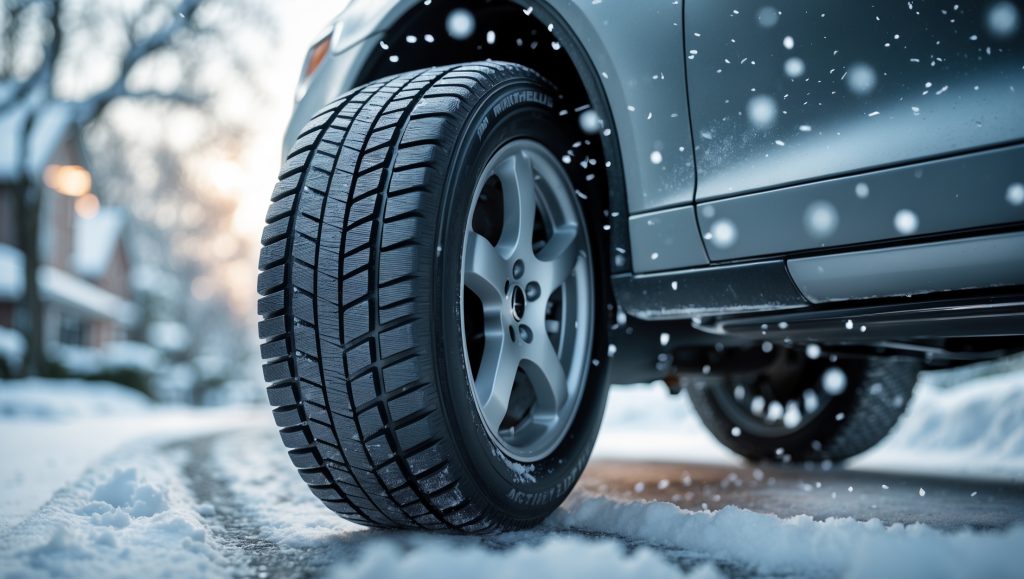
Overview
The Michelin X-Ice Snow is a dedicated winter tyre designed for drivers who demand confident performance on snow, ice, and slush. Aimed at compact and midsize cars as well as crossovers and minivans, the X-Ice Snow prioritizes traction in harsh winter conditions while maintaining comfort and durability for daily US driving. Available in popular sizes like 205/55 R16 and 225/60 R17, it’s a top choice for those seeking secure winter mobility without sacrificing ride quality or longevity.
Key Specs
| Type | Winter (Studless) |
| Available sizes range | 14″ – 22″ wheel diameters |
| Speed rating examples | T, H, V (up to 149 mph) |
| Load index examples | 91 (1356 lbs), 98 (1653 lbs) |
| Tread pattern | Directional V-shaped with variable sipe density |
| Technology highlights | FleX-Ice 2.0 compound, EverGrip design, 3PMSF certified |
Performance: Dry
On dry winter roads, the X-Ice Snow offers poised and predictable handling. Its stiffer tread blocks and optimized siping minimize squirm, delivering a stable feel during cornering and lane changes. Braking distances are competitive for a winter tyre, with the rubber compound and tread design preventing excessive flex. Compared to all-season tyres, steering response is slightly softer, but this is typical for the segment and ensures cold-weather pliability. Everyday drivers will appreciate the confidence and control when roads are clear but temperatures are low.
Performance: Wet
Wet traction is a standout feature of the X-Ice Snow. The directional V-shaped tread pattern is engineered to channel water and slush away from the contact patch, reducing the risk of hydroplaning. In comparative tests, the tyre maintains strong grip during wet braking and acceleration, even as temperatures hover near freezing. Handling remains secure in puddles and slushy conditions, and the tyre’s silica-rich compound helps preserve flexibility for optimal wet performance. While not on par with top all-season tyres in warm rain, in cold, wet scenarios typical of US winters, it delivers reassuring safety.
Performance: Snow & Ice
This is where the Michelin X-Ice Snow truly excels. The tyre’s FleX-Ice 2.0 compound stays supple even in severe cold, enabling the tread to bite into packed snow and ice. The dense network of sipes creates thousands of biting edges, enhancing traction when starting, stopping, or cornering on snow. In real-world and independent tests, the X-Ice Snow consistently ranks among the leaders for snow braking, acceleration, and cornering grip. On ice, the advanced rubber and micro-pump sipes maximize contact, providing a surprising level of control and short stopping distances for a non-studded tyre.
Drivers report steady, predictable handling in deep snow, with the tyre maintaining forward momentum and resisting getting bogged down. The 3PMSF (Three-Peak Mountain Snowflake) certification ensures the tyre meets the industry’s highest winter standards, making it a reliable choice for areas that experience heavy snowfall and prolonged cold.
Comfort & Noise
Michelin’s reputation for ride comfort is evident in the X-Ice Snow. The flexible winter compound and carefully engineered tread reduce harshness and vibration, even on rougher winter-worn roads. Road noise is well controlled for a winter tyre—higher than a summer touring tyre, but noticeably quieter than many aggressive winter rivals. At highway speeds, the tyre hum is unobtrusive, and urban driving remains composed. Passengers and drivers alike can expect a comfortable, quiet ride throughout the winter season.
Durability & Economy
One of the X-Ice Snow’s strongest attributes is its longevity. Michelin claims up to one additional winter of use compared to leading competitors, and many user reviews support this, noting even wear and sustained performance over multiple seasons. The tread is designed to resist uneven wear and retain its snow grip as it ages. Rolling resistance is moderate for a winter tyre, meaning a minimal impact on fuel economy compared to all-seasons. For US buyers, the X-Ice Snow typically carries a UTQG rating of “N/A” (as winter tyres are exempt), but it is also backed by a limited treadwear warranty of up to 40,000 miles—a rarity in this segment.
The X-Ice Snow stands out for drivers who want winter safety without quickly burning through tyres or seeing a big MPG penalty. Regular rotation and proper inflation further enhance its lifespan.
Sizes & Alternatives
The X-Ice Snow is available in a wide range of sizes, covering everything from compact cars to SUVs. Two of the most popular fitments for US drivers are:
- 205/55 R16 (common for sedans and compacts like Honda Civic, Toyota Corolla, VW Golf)
- 225/60 R17 (popular for crossovers and minivans such as Honda CR-V, Toyota RAV4, Chrysler Pacifica)
Notable competitors in the premium winter tyre category include:
- Bridgestone Blizzak WS90
- Continental VikingContact 7
- Nokian Hakkapeliitta R5
- Goodyear Ultra Grip Ice WRT
- General Altimax Arctic 12
Each offers a unique blend of snow and ice performance, comfort, and price point. The X-Ice Snow’s strength lies in its balance of longevity, grip, and refinement.
Pros & Cons
- Excellent snow and ice traction
- Outstanding tread life for a winter tyre
- Quiet and comfortable ride
- Strong wet weather performance in cold
- Wide size availability for US vehicles
- 3PMSF certification for severe snow
- Premium pricing versus some rivals
- Only moderate dry handling versus all-seasons
- Warm weather performance not suitable (as expected for winter tyres)
- Availability may be limited in late fall
Verdict
The Michelin X-Ice Snow is one of the most well-rounded winter tyres available to US drivers in 2025. Its combination of superb snow and ice grip, quiet comfort, and exceptional tread life makes it a top pick for anyone facing serious winter conditions. While the upfront investment is higher than some alternatives, the long-term value—fewer replacements, increased safety, and a pleasant daily drive—justifies the cost for most drivers. If you routinely encounter snow, ice, or slush and want a tyre that excels throughout the winter without sacrificing comfort or longevity, the X-Ice Snow deserves a spot at the top of your shortlist. Just remember to switch back to all-seasons or summers once the temperatures rise; like all true winter tyres, its performance is optimized for the cold.
I’m curious if the Michelin X-Ice Snow tires hold up well over multiple seasons, especially in Midwest winters where we see a lot of freeze-thaw cycles. Does the FleX-Ice 2.0 compound help with long-term durability?
The Michelin X-Ice Snow tires are designed for long-term durability, especially in challenging conditions like Midwest freeze-thaw cycles. The FleX-Ice 2.0 compound is specifically engineered to resist cracking and maintain flexibility, which helps the tires last through several winters while retaining good grip and performance.
With the EverGrip design and FleX-Ice 2.0 compound, can I expect a quieter ride compared to other winter tires, or does the focus on winter traction make them noticeably noisier on dry roads?
The X-Ice Snow’s EverGrip design and FleX-Ice 2.0 compound aim to balance winter grip with everyday comfort. Many users find these tires quieter than typical aggressive winter tires, so you likely won’t notice much extra noise on dry roads. They’re engineered to minimize road noise while still delivering excellent winter traction.
Since these are studless and use FleX-Ice 2.0 compound, are they still a good option for areas that occasionally get heavy ice, or would something with studs be safer?
The Michelin X-Ice Snow with FleX-Ice 2.0 compound offers impressive grip and safety on ice for a studless tire, making it a strong choice for areas with occasional heavy ice. However, if you consistently face severe icy conditions, studded tires still provide better traction and might be a safer choice in those situations.
For someone with a midsize SUV, are there any trade-offs in ride quality or road noise when moving to the X-Ice Snow from a standard all-season tire?
Switching to the Michelin X-Ice Snow from standard all-season tires on a midsize SUV, you might notice a slightly firmer ride and a small increase in road noise, especially on dry pavement. However, these are generally minor trade-offs considering the significant boost in winter traction and safety the X-Ice Snow provides.
Is the Michelin X-Ice Snow’s EverGrip design mainly helpful for deep snow, or does it also make a big difference in icy conditions?
The EverGrip design in the Michelin X-Ice Snow helps in both deep snow and icy conditions. It features special tread patterns and rubber compounds that enhance grip on ice, not just in snow. So, you’ll notice improved traction and safety whether you’re driving on packed snow or icy roads.
I see the X-Ice Snow is 3PMSF certified and made for crossovers as well as cars—does it provide the same level of comfort and quiet ride on larger vehicles like minivans?
The Michelin X-Ice Snow is designed for a wide range of vehicles, including minivans and crossovers. Many users report that it maintains a quiet and comfortable ride even on larger vehicles, thanks to its advanced tread design. While ride comfort can vary slightly between vehicle types, most drivers experience a smooth, quiet drive with these tires on minivans.
I see the X-Ice Snow is available in a range of sizes—are there performance differences between sizes, especially for someone driving a minivan versus a compact car?
Yes, there can be some performance differences depending on the tire size. Larger sizes, like those for minivans, may have slightly different handling and ride comfort compared to smaller sizes for compact cars. However, the X-Ice Snow is designed to maintain strong winter performance across all sizes, so you can expect reliable grip and safety regardless of your vehicle type.
You mentioned the speed ratings go up to V, but is there any noticeable impact on ride comfort or noise level for daily use on highways with these tyres?
Choosing a higher speed-rated tire like the V-rated Michelin X-Ice Snow generally means the tire is designed for better stability at higher speeds, but it can be a bit firmer compared to lower speed ratings. However, for daily highway use, most drivers report that ride comfort and noise levels remain very good and well-balanced for winter tires, so you shouldn’t notice a significant difference.
If I switch from all-season to these tires, do I need to get a separate set of wheels, or can I mount them on my existing rims for just the winter season?
You can mount the Michelin X-Ice Snow tires on your existing rims for the winter season, as long as the tire size matches your wheels. Some drivers prefer a separate set of wheels for convenience, but it’s not required. Just be sure to have a professional handle the mounting and balancing each time you switch.
I see the X-Ice Snow comes in sizes up to 22 inches—would these be a good fit for a family minivan, or are they more geared toward smaller vehicles?
The X-Ice Snow is actually a great fit for a family minivan. Michelin offers larger sizes because many minivans, SUVs, and crossovers use bigger wheels. These tires are designed for a range of vehicles, not just smaller cars, so you can expect reliable winter performance and safety for your minivan.
Given that the X-Ice Snow isn’t studded, how does it perform on roads that see frequent black ice? Would you recommend it over a studded option in those regions?
The X-Ice Snow performs well on ice thanks to its advanced rubber compound and tread design, offering good grip for a non-studded tire. However, on roads with frequent black ice, a studded tire usually provides even better traction and safety. If black ice is a constant concern in your area, a studded option would be the safer choice.
For someone living in the Midwest with unpredictable winter storms, would you recommend sizing up or down from the listed 225/60 R17 for extra traction, or is it best to stick with standard sizing?
For Midwest winters, it’s generally best to stick with the standard 225/60 R17 size recommended for your vehicle. Sizing down (narrower tires) can improve traction in deep snow, but changing sizes may affect handling and speedometer accuracy. Using the manufacturer’s suggested size ensures optimal performance and safety.
Does the X-Ice Snow wear noticeably faster when used mostly on dry cold roads instead of constant snow, or does its longevity hold up well for mild US winters?
The Michelin X-Ice Snow is designed to handle both snowy and dry cold conditions. Its tread compound and design help it resist premature wear, so even if you mostly drive on dry, cold roads during mild US winters, it should still offer good longevity compared to many other winter tires.
I see the X-Ice Snow comes in sizes for crossovers and minivans; is the tread life similar across those heavier vehicles compared to compact cars, especially with the FleX-Ice 2.0 compound?
The X-Ice Snow’s FleX-Ice 2.0 compound is designed to maintain tread life across different vehicle types, but heavier vehicles like crossovers and minivans may still experience slightly faster tread wear compared to compact cars due to added weight. Regular tire rotation and proper inflation can help maximize tread life on any vehicle.
Do you know if the FleX-Ice 2.0 compound used in the X-Ice Snow makes these tyres more sensitive to warm spells in late winter or early spring?
The FleX-Ice 2.0 compound in the X-Ice Snow is designed to stay flexible in cold conditions, giving good grip on ice and snow. In warmer spells, like late winter or early spring, these tires may wear a bit faster compared to standard all-season tires, but they still remain safe and functional until you switch back to your warm-weather tires.
Given that these are 3PMSF certified, are there any trade-offs in tread life if used through a mild winter with more wet than snowy conditions?
The Michelin X-Ice Snow is 3PMSF certified and designed for excellent winter traction, but using it mostly in wet rather than snowy conditions can lead to slightly faster tread wear compared to all-season tires. While it’s still durable, it may not last as long as all-seasons if winters are consistently mild and mostly wet.
Can you share more about how the X-Ice Snow wears over multiple seasons? I’m curious if its durability really matches what Michelin claims for daily driving in places with pretty mild winters.
The X-Ice Snow is designed with a long-lasting tread compound, and many drivers report good durability even after several mild winters. In areas with less snow and less abrasive road conditions, the tire generally maintains its performance and tread life for several seasons, often living up to Michelin’s mileage claims, especially with regular rotation and proper inflation.
I see these are available up to 22-inch sizes—are there any drawbacks to installing them on larger crossovers or minivans?
When installing Michelin X-Ice Snow tires on larger crossovers or minivans, there aren’t specific drawbacks unique to these vehicles, as long as the tire size matches your manufacturer’s recommendations. Just ensure proper fitment, as larger tires can be pricier and may wear a bit faster on heavier vehicles, but performance and safety in winter conditions remain strong.
I noticed the X-Ice Snow is available in sizes for crossovers and minivans. Do these larger vehicles see any difference in comfort or noise compared to regular compact cars with these tires?
Crossovers and minivans equipped with the X-Ice Snow usually experience a similar level of comfort and low road noise as compact cars. However, since larger vehicles are heavier and have different suspension setups, you might notice slightly more road noise or a firmer feel, but overall the tires are designed to deliver a quiet, comfortable ride for all vehicle types.
Does the directional V-shaped tread mean I can’t rotate these tires in all directions, or is there a recommended rotation pattern for maximizing their lifespan?
Because the Michelin X-Ice Snow has a directional V-shaped tread, you should only rotate them front-to-back on the same side, not diagonally or side-to-side. This preserves the tread’s intended performance and helps maximize tire lifespan. Always ensure the arrow on the sidewall points in the direction of travel after rotation.
I drive a midsize sedan mostly in city conditions—does the silica-rich compound wear faster on dry pavement, or is the longevity really on par with other winter tires like the Blizzak WS90?
The Michelin X-Ice Snow’s silica-rich compound is designed to balance winter grip and tread life, so it won’t wear much faster than other top winter tires like the Blizzak WS90 during mostly city driving. In fact, many drivers find its longevity comparable, especially when used seasonally and rotated regularly.
Does the 3PMSF certification really translate into better grip for city driving, or is it mostly for highway and more extreme winter conditions?
The 3PMSF certification means the tire meets a standard for snow traction, which is beneficial for both city and highway driving in winter. You’ll notice improved grip during city commutes, especially when roads are slushy or covered in snow, not just in extreme highway conditions.
How does the longevity of the Michelin X-Ice Snow compare to typical all-season tires for someone driving mostly on clear but cold winter roads in the Midwest?
The Michelin X-Ice Snow generally outlasts many all-season tires when used in cold conditions, thanks to its special rubber compound designed for winter. If you mostly drive on clear but cold roads, you’ll likely see slower wear compared to using softer winter tires on warmer pavement, and the X-Ice Snow should offer better longevity than all-seasons under these conditions.
I noticed the tyre is available with different speed ratings like T, H, and V. For a typical US commuter driving a midsize sedan, how much should I factor the speed rating into my selection?
For a typical US commuter driving a midsize sedan, the speed rating isn’t a big concern unless you regularly drive at high speeds. T, H, and V ratings specify the maximum safe speed the tire can handle. For everyday driving, a T or H rating is usually more than sufficient and may even provide a more comfortable ride.
Is the X-Ice Snow worth the investment for drivers in regions where snow is occasional but freezing temps and slush are common, or would an all-season tire be more practical?
If you mainly face freezing temperatures and slush with only occasional snow, the Michelin X-Ice Snow will give you excellent safety and grip. However, all-season tires may be more practical if snow is rare, since they are quieter, last longer, and do well in cold but mostly dry or wet conditions. Consider your priorities for winter grip versus year-round versatility.
How does the X-Ice Snow compare to top all-season tyres when temperatures are just above freezing but roads are mostly dry in the Midwest?
When temperatures are just above freezing and roads are mostly dry, the X-Ice Snow provides good grip and safety, but top all-season tires may offer slightly better handling and shorter braking distances in these mild, dry conditions. The X-Ice Snow’s main advantage is when snow or ice appears, so if you rarely see winter precipitation, a premium all-season might be a better daily choice for those specific conditions.
I see the tire is available up to 22-inch sizes—does performance noticeably change for larger wheels on crossovers or minivans?
When using larger 22-inch X-Ice Snow tires on crossovers or minivans, you may notice slightly firmer ride quality and a more responsive steering feel compared to smaller sizes. However, the core winter traction and braking benefits remain consistent across sizes, as long as the tires are properly matched to your vehicle’s specifications.
If I mostly drive on clear but cold roads, should I pick these over all-seasons, or would another Michelin model make more sense for my situation?
If most of your driving is on clear, cold roads rather than snow or ice, a Michelin all-season tire like the Michelin CrossClimate2 could be a better fit. The X-Ice Snow excels in snow and ice, but all-seasons or all-weather tires offer better tread life and handling on dry, cold roads.
If I order the X-Ice Snow now, is there usually a wait time for popular sizes like 205/55 R16, or are they readily available in US shops during peak season?
During peak winter season, popular sizes like 205/55 R16 for the X-Ice Snow can sell out quickly and may not always be in stock at every shop. Availability varies by location and retailer, so it’s a good idea to check with local tire shops or order online soon to secure your size.
Do these tires perform well if temperatures dip below what’s typical for most of the US, like during a major cold snap?
The Michelin X-Ice Snow tires are designed for harsh winter conditions and remain flexible even in extremely low temperatures, thanks to their special rubber compound. They should still perform well during a major cold snap, providing reliable grip and control on snow and ice well below average US winter temperatures.
Does the Michelin X-Ice Snow tend to get noticeably noisier as it wears down, especially when used on drier pavement throughout winter?
The Michelin X-Ice Snow generally maintains a quiet ride even as it wears, but like most winter tires, some increase in noise can occur over time, especially on dry pavement. This is mostly due to the tread pattern wearing down. However, many users report that the noise increase is minor compared to other winter tires.
I noticed the X-Ice Snow comes in a wide range of sizes. Are there any significant differences in performance or road comfort across the smaller versus larger wheel diameters?
Yes, there can be some differences. Smaller wheel diameters often provide a bit more ride comfort and can handle rough winter roads better, while larger diameters may offer slightly sharper handling but can feel firmer. The core winter performance of the X-Ice Snow remains strong across all sizes, but you may notice these subtle changes depending on your wheel size.
Are there any compromises in tread life with the X-Ice Snow, considering it’s designed for both compact cars and heavier crossovers or minivans?
The X-Ice Snow is engineered for long tread life, but heavier vehicles like crossovers or minivans may experience slightly faster wear compared to compact cars. However, the tire still outperforms many competitors in tread longevity across both vehicle types, so most drivers should see impressive mileage before needing replacements.
I see these are available in a 225/60 R17 size—do you know if they fit most minivans without clearance issues?
The 225/60 R17 size is common for many minivans, but clearance can vary depending on the exact make and model. It’s important to check your vehicle’s owner’s manual or the tire placard (usually on the door jamb) to ensure this size matches your manufacturer’s specifications and won’t cause rubbing or clearance problems.
If I install the X-Ice Snow on my minivan, do I need to buy a dedicated second set of wheels, or can I just swap them onto my current rims each winter?
You can mount the X-Ice Snow tires on your current rims each winter, but it does mean you’ll need to have your tires swapped twice a year, which can get costly over time. Many drivers choose a dedicated second set of wheels for convenience and to reduce wear on both tires and rims, but it’s not strictly necessary.
Do you have any tips on storing these tires during the off-season to preserve their tread and technology features like the EverGrip design?
To preserve your Michelin X-Ice Snow tires, store them in a cool, dry place away from direct sunlight and heat sources. Keep them clean and if possible, store them vertically or stacked flat, but avoid hanging. Use airtight tire bags to protect them from ozone and moisture, which helps maintain tread and the EverGrip technology until next winter.
Does the X-Ice Snow’s performance drop off significantly as it wears down, especially with the directional V-shaped tread pattern and the EverGrip technology?
The Michelin X-Ice Snow is designed to maintain good winter performance even as it wears, thanks to the EverGrip technology which exposes new grooves as the tread wears down. While some decrease in traction is normal with any winter tire over time, the X-Ice Snow’s directional V-shaped pattern and advanced compounds help minimize performance loss throughout the tire’s life.
Does the X-Ice Snow’s performance on dry roads feel significantly different than my usual all-seasons, especially for daily driving in mild but cold US winters?
The X-Ice Snow generally feels a bit softer and more flexible on dry roads compared to regular all-seasons, mainly because it’s optimized for cold and icy conditions. For daily driving in mild but cold winters, you’ll notice slightly less precise handling, but comfort and safety remain high. Many drivers find the difference minor and worth the winter traction benefits.
For someone on a budget, how does the longevity of the X-Ice Snow stack up against similar studless winter tires or even good all-season options?
The Michelin X-Ice Snow has a reputation for lasting longer than many other studless winter tires, thanks to its durable compound and tread design. While it usually outlasts comparable winter tires, it still wears faster than most good all-season tires, which are built for year-round use. If longevity is your top priority and you drive mostly in milder winter conditions, an all-season might last longer, but the X-Ice Snow balances durability with excellent winter performance.
With the focus on both comfort and winter grip, do these tires get noisy as they wear, or do they maintain a quiet ride through several seasons?
The Michelin X-Ice Snow tires are designed to stay relatively quiet throughout their lifespan, thanks to their tread pattern and advanced rubber compounds. Some minor increase in noise may occur as they wear, but most drivers report that the ride remains comfortably quiet over several seasons, even as the tread depth decreases.
Is there a significant price difference between the X-Ice Snow and similar studless winter tires, or is Michelin mostly charging for brand reputation and technology like FleX-Ice 2.0?
The Michelin X-Ice Snow is generally priced at the higher end compared to other studless winter tires, partly due to its brand reputation. However, it also features advanced technology like the FleX-Ice 2.0 compound, which can contribute to its premium. Some competing tires may be less expensive, but might not offer the same blend of longevity and performance.
Can you clarify if the V-shaped tread pattern helps with road noise? I drive through both slush and dry highways, so I’m trying to make sure I won’t end up with a loud ride all winter.
The V-shaped tread on the Michelin X-Ice Snow is designed to efficiently channel slush and water, but it also helps reduce road noise by minimizing tread block impact. Most drivers report that these tires offer a quiet ride on both slushy and dry highways, so you shouldn’t expect excessive noise during winter driving.
How does the wet performance of the X-Ice Snow compare to an all-weather tyre when rain mixes with early spring slush? Is there a noticeable difference in grip?
The X-Ice Snow is designed primarily for snow and ice, but it still handles wet conditions very well, offering solid grip in rain mixed with slush. However, compared to an all-weather tire, you might notice a slightly softer feel and marginally less grip on wet pavement—especially as temperatures rise. All-weather tires typically have a slight edge in wet spring slush, but the difference isn’t dramatic for everyday driving.
If my minivan spends most winters tackling slushy commutes rather than deep snow, will the directional V-shaped tread pattern help with slush as much as it does with snow and ice?
The directional V-shaped tread pattern on the Michelin X-Ice Snow is designed to channel water and slush away from the tire, which enhances grip and reduces the risk of hydroplaning. While it excels in snow and ice, you’ll still benefit from improved traction and stability during slushy commutes with these tires.
I noticed the review mentions the X-Ice Snow is 3PMSF certified. Can you explain how this impacts real-world daily driving compared to regular M+S rated tires?
The 3PMSF (Three-Peak Mountain Snowflake) certification means the X-Ice Snow meets stricter snow traction standards than standard M+S tires. In real-world daily driving, this translates to noticeably better grip and braking on snow and ice, providing more confidence and safety during harsh winter conditions compared to regular all-season M+S tires.
Since the tire is available in a wide range of sizes, does the winter performance noticeably change between, say, a 14-inch and a 22-inch version?
Winter performance can vary slightly depending on the tire size and the type of vehicle it’s fitted to. Larger sizes, like 22-inch, are often designed for heavier or performance vehicles and may have stiffer sidewalls, while 14-inch tires usually go on smaller, lighter cars and can offer a softer ride. However, Michelin aims to maintain strong winter traction and safety across all X-Ice Snow sizes.
Are there significant differences in performance or durability between the smaller and larger available sizes of the X-Ice Snow, such as between the 14-inch and 22-inch options?
The main differences between smaller and larger sizes of the X-Ice Snow are related to how they fit different vehicles and driving styles. Performance characteristics like grip and tread pattern are consistent across sizes, but larger sizes may offer slightly firmer handling while smaller sizes can provide a softer ride. Durability and winter traction are strong in all sizes, so you can choose based on your vehicle’s requirements without worrying about major performance gaps.
How does the X-Ice Snow hold up in terms of tread life and ride comfort after several seasons, especially for someone driving a minivan mostly in suburban US areas?
The X-Ice Snow is known for its impressive tread life, often lasting multiple seasons even with regular suburban driving. Owners report the ride remains comfortable and relatively quiet over time, making it a good fit for minivans. Just be sure to rotate the tires regularly and monitor tire pressure for best results.
Could you explain a bit more about the FleX-Ice 2.0 compound and how it helps with maintaining grip on icy roads? I’m not sure if that actually makes a big difference compared to regular winter tires.
The FleX-Ice 2.0 compound in the Michelin X-Ice Snow tire is designed to stay flexible even in extremely low temperatures. This flexibility allows the tire to grip icy and snowy surfaces better than many standard winter tires, which can become harder and lose traction in severe cold. So, it does make a noticeable difference for maintaining grip on ice.
Does the performance in slush and wet conditions hold up over multiple winters, or is there a drop-off as the tire wears down?
The Michelin X-Ice Snow maintains good performance in slush and wet conditions for several winters, but like most winter tires, wet and slush grip can gradually decrease as the tread wears down. Regularly checking tread depth and rotating your tires will help maximize their performance and longevity.
With the X-Ice Snow rated up to 149 mph in some sizes, are there any downsides to choosing a higher speed rating for everyday use in the Northeast?
Choosing a higher speed rating like 149 mph on the X-Ice Snow mainly means the tire is built for more heat and stress. For everyday Northeast driving, the main downside could be a slightly firmer ride and possibly a bit faster treadwear, but nothing significant for most drivers. The tire’s winter traction and safety will still be excellent.
Is the FleX-Ice 2.0 compound noticeably different in performance from previous versions or competing brands when it comes to braking on ice?
The FleX-Ice 2.0 compound in the Michelin X-Ice Snow offers improved braking on ice compared to previous Michelin versions, providing shorter stopping distances and better grip. While some top competitors are close, most users find the X-Ice Snow performs slightly better on icy surfaces, especially during sudden braking.
Does the Michelin X-Ice Snow maintain good ride comfort on rough city streets, especially on larger vehicles like minivans?
The Michelin X-Ice Snow is known for maintaining good ride comfort, even on rough city streets. Its flexible tread compound and advanced design help absorb bumps well. For larger vehicles like minivans, most drivers report a smooth and quiet ride, making it a solid choice for urban winter conditions.
If most of my winter driving is on cleared but cold pavement, would an all-season tire with a good snow rating be a better budget choice than the X-Ice Snow?
If you’re mainly driving on cleared, cold roads, a quality all-season tire with a strong snow rating could be a good budget-friendly choice. The X-Ice Snow excels in ice and deep snow, but if severe winter conditions are rare in your area, all-seasons may offer sufficient traction and comfort for less money.
If I drive a compact car and mostly deal with slush and occasional ice, would you recommend the X-Ice Snow over a top-rated all-season tire, considering the price difference?
For a compact car in mostly slush and occasional ice, the Michelin X-Ice Snow will offer noticeably better grip and braking than top-rated all-season tires, especially in freezing conditions. If winter safety is your priority, the extra cost is justified. However, if winters are mild and you want to save money, a premium all-season could suffice but with some trade-offs in icy conditions.
How does the tread life on the X-Ice Snow compare to other winter tires if used daily throughout a typical Midwest winter?
The X-Ice Snow is known for having a longer tread life than many competing winter tires, thanks to its advanced rubber compound and tread design. If you use them daily through a Midwest winter, you can generally expect them to last several seasons—often outlasting other brands in similar conditions.
The EverGrip tech sounds interesting—does it make a noticeable difference in slushy conditions, or is it mostly helpful just on snow and ice?
EverGrip technology is designed to enhance traction as the tire wears, and its benefits are noticeable not just on snow and ice but also in slushy conditions. Drivers report improved grip and handling in wet, slushy roads, so you should see better performance compared to standard winter tires in those situations.
How does the tread wear of the X-Ice Snow compare to cheaper winter tire brands if I need something that can last multiple harsh winters?
The X-Ice Snow is known for its impressive tread life, often outlasting many cheaper winter tire brands. If you need tires to last through several tough winters, these are a solid choice, as their rubber compound and tread design help maintain grip and resist wear better than most budget options.
If I have a crossover that sees occasional light off-pavement use in winter, would the X-Ice Snow still be a good fit compared to a more rugged winter tire?
The Michelin X-Ice Snow is excellent for paved and light off-pavement winter conditions, especially if you mostly drive on roads. However, if you regularly tackle rougher or poorly maintained off-road areas, a more rugged winter tire with reinforced sidewalls and deeper tread might offer extra durability and traction. For occasional light off-pavement use, the X-Ice Snow should perform well.
You mentioned the X-Ice Snow is available in sizes up to 22 inches. Is there a noticeable difference in performance or comfort between the smaller and larger sizes for a minivan?
Larger sizes of the Michelin X-Ice Snow can offer slightly better handling stability, but on a minivan, smaller sizes generally provide a softer, more comfortable ride. The difference in winter traction is minimal, but going with the size recommended for your vehicle will ensure the best balance of safety, comfort, and performance.
If my area gets sudden freezes with a lot of slush and standing water, would you recommend the X-Ice Snow over a studded winter tire, or am I better off looking at other alternatives?
The Michelin X-Ice Snow performs very well on slush and standing water, offering impressive grip and hydroplaning resistance. However, if you frequently face sheer ice or extremely slick conditions, studded tires still have an edge. For mostly slush and wet situations with occasional ice, the X-Ice Snow is a solid choice, but consider local regulations and your specific needs.
I see these tyres come in 14″ to 22″ sizes. Are there significant differences in performance or road noise between something like the 205/55 R16 and the 225/60 R17 for families with a minivan versus a compact car?
The 205/55 R16 (often used on compact cars) will generally offer slightly less road noise and better fuel efficiency due to its narrower width and lower profile. The 225/60 R17 (common for minivans) provides more comfort, grip, and stability on snowy roads, but may be a bit noisier and less efficient. Both sizes perform well, but differences mainly reflect the vehicle type and load.
I noticed the X-Ice Snow uses the FleX-Ice 2.0 compound and EverGrip design. Do these features really make a difference in tread life compared to previous X-Ice models for daily US commuting?
Yes, the FleX-Ice 2.0 compound and EverGrip design do improve tread life compared to earlier X-Ice models. These features help the tire maintain flexibility in cold weather and ensure more even wear, which can extend overall tread life—especially useful for daily US commuting where roads and temperatures can vary.
Are there any noticeable changes in fuel efficiency when switching from all-seasons to the X-Ice Snow for an entire winter?
Switching from all-season tires to the Michelin X-Ice Snow may cause a slight drop in fuel efficiency, mainly because winter tires like these have a softer rubber compound and deeper tread patterns. Most drivers notice only a small difference, typically less than a few percent, which is a fair trade-off for better winter traction and safety.
The article mentions sizes up to 22 inches. Are there any performance differences if I go with a wider size for my crossover, especially regarding wet grip?
Choosing a wider tire size can improve wet grip due to a larger contact patch, which can enhance stability and handling. However, wider tires may also be more prone to hydroplaning if water cannot escape quickly enough. It’s important to balance performance with your vehicle manufacturer’s recommendations for optimal safety and efficiency.
I see the X-Ice Snow is available in sizes up to 22 inches, but do you know if the performance is consistent across different tire sizes, especially for heavier vehicles like minivans?
The Michelin X-Ice Snow is engineered to deliver reliable winter performance across a broad range of sizes, including those for heavier vehicles like minivans. While core features like grip and braking remain consistent, larger or heavier vehicles may experience minor differences in handling and wear, but the tire is designed to maintain its winter capabilities regardless of size.
I noticed it mentions a silica-rich compound for wet traction—how does this really compare to other winter tyres during slushy commutes in the Midwest?
The Michelin X-Ice Snow’s silica-rich compound helps the tire stay flexible and grippy in wet and slushy conditions, which is common during Midwest winters. Compared to many other winter tires, this compound typically improves wet traction and braking, so you should notice better control and shorter stopping distances on slushy commutes.
Are there any drawbacks to using these on clear, dry roads for extended periods during winter, or should I swap back to all-seasons if conditions stay mild for weeks?
Using Michelin X-Ice Snow tires on clear, dry roads for long stretches isn’t ideal. They’re designed for snow and ice, so they may wear faster, feel less responsive, and reduce fuel efficiency in mild conditions. If winter stays mild for several weeks, switching to all-seasons can help preserve your winter tires and improve daily driving comfort.
I’m on a budget and wondering if the X-Ice Snow’s tread life makes it worth paying more up front, especially since I don’t drive a ton each winter.
If you don’t drive much each winter, the X-Ice Snow’s long tread life could actually help you save in the long run, since you won’t need to replace them often. While the upfront cost is higher, these tires are designed to last several seasons, so you may end up spending less over time compared to buying cheaper tires more frequently.
If I mainly drive a midsize sedan in the Midwest where winters can be unpredictable, would the X-Ice Snow’s 3PMSF certification make a noticeable difference in traction versus other winter tires?
The X-Ice Snow’s 3PMSF (Three-Peak Mountain Snowflake) certification does indicate strong winter traction, but most dedicated winter tires also carry this rating. While the X-Ice Snow performs very well on ice and snow, its traction advantage will mainly show up compared to all-season tires, not necessarily other top winter tires with the same certification.
I noticed the sizes go from 14 to 22 inches—does the tire’s wet traction or braking ability change much between smaller sizes like 15 inch and larger crossover options?
Wet traction and braking can vary slightly between smaller and larger tire sizes, mostly due to the width and tread contact area. Larger crossover sizes often have a wider tread, which can help with wet grip and braking, but they may also be heavier, affecting stopping distances. Overall, the X-Ice Snow is engineered to provide strong wet performance across all sizes, but specific results can differ depending on your vehicle and size chosen.
For someone using a minivan mostly for daily commuting in upstate New York, is the X-Ice Snow overkill compared to a solid all-season tire, especially given the price difference?
If your minivan mostly stays on plowed roads and you don’t often face deep snow or icy backroads, a good all-season tire can be adequate. However, upstate New York winters are harsh, and the X-Ice Snow offers much better traction and braking on ice and packed snow. It may cost more, but it’s worthwhile if safety and confidence in winter driving are priorities.
I live in an area with mixed winter conditions and occasional heavy slush—would the EverGrip design help prevent hydroplaning better than other winter tyres like Nokian Hakkapeliitta?
The EverGrip design on the Michelin X-Ice Snow does help channel slush and water away, which can reduce hydroplaning risk. However, Nokian Hakkapeliitta tires are also known for excellent slush performance. Both are strong choices, but Michelin’s EverGrip offers an edge in wet grip, especially in mixed conditions with heavy slush.
Do these tires fit well with TPMS sensors on a 17-inch wheel setup, or do I need to look for special compatibility? I plan to install them myself for the first time.
The Michelin X-Ice Snow tires are fully compatible with standard TPMS sensors and will work on 17-inch wheels without any special requirements. Just be sure your sensors are in good condition and properly installed when you mount the tires. If reusing your current TPMS, handle them carefully during the changeover.
Are there any issues with finding the 225/60 R17 size in stock during peak winter season, or should I plan to buy them well in advance?
It’s common for popular sizes like 225/60 R17 to sell out quickly during peak winter, especially in colder regions. To avoid limited availability or delays, it’s smart to shop early in the season or even before winter starts. That way, you’ll have the best chance of getting the tires you need.
Do these tires perform well right out of the box, or is there a recommended break-in period before they achieve optimal handling and traction in snowy conditions?
The Michelin X-Ice Snow tires perform quite well immediately after installation, but like most new tires, a short break-in period of about 300 to 500 miles is recommended. This allows the tires to wear off any mold release compounds and helps them deliver their best grip and handling, especially in snowy and icy conditions.
For a minivan carrying a full load, does the 3PMSF rating and EverGrip technology really make a difference in icy hill starts?
Yes, both the 3PMSF rating and EverGrip technology can make a real difference for a loaded minivan on icy hill starts. The 3PMSF symbol means the tire meets higher winter traction standards, while EverGrip provides extra biting edges for better grip. Together, these features help reduce wheel slip and give you more confident traction when starting on icy inclines.
Are there any significant differences in dry road braking or noise levels between the different speed-rated versions like T, H, and V?
Among the Michelin X-Ice Snow tires, differences in dry road braking and noise levels between T, H, and V speed ratings are generally minor for everyday driving. The V-rated version may offer slightly firmer handling and a touch more road noise due to its stiffer construction, but most drivers won’t notice a significant difference in typical conditions.
Given the load index examples you mentioned, would these tires be suitable for a fully loaded minivan doing frequent family road trips, especially regarding durability and comfort over long distances?
Yes, the Michelin X-Ice Snow tires come with various load index options, so you can select a version that’s suitable for a fully loaded minivan. They are designed for durability and offer a comfortable, quiet ride, which makes them a solid choice for long family road trips in winter conditions.
Are there any significant differences in ride quality or noise between the 205/55 R16 and 225/60 R17 size options for the X-Ice Snow?
The 225/60 R17 X-Ice Snow typically provides a slightly softer, more cushioned ride due to its taller sidewall, while the 205/55 R16 may feel a bit firmer and more responsive. In terms of noise, both sizes are designed to be quiet, but the difference is generally subtle and influenced more by your vehicle than the tire size itself.
Does the X-Ice Snow’s softer steering response compared to all-season tires make a noticeable difference during emergency maneuvers or quick lane changes in winter conditions?
The X-Ice Snow’s softer steering response is noticeable compared to all-season tires, especially during quick maneuvers. However, in winter conditions, the tire’s enhanced grip and stability compensate for this, making emergency lane changes feel secure and predictable. The focus is on maintaining control and traction, even if steering feels slightly less direct.
For small business deliveries around town, does the X-Ice Snow offer any clear advantage over premium all-season tyres during mild but unpredictable winters?
The X-Ice Snow provides better grip and shorter braking distances on icy or slushy roads compared to premium all-season tires, even in milder, unpredictable winters. If your deliveries sometimes face unexpected snow or ice, these winter tires can improve safety and confidence. However, if roads rarely get wintry, high-quality all-seasons may be enough and more convenient year-round.
With the 3PMSF certification and the FleX-Ice 2.0 compound, is this tire suitable for regions that only see occasional snow, or is it overkill for more mild US winters?
The Michelin X-Ice Snow is well-suited for areas with occasional snow, not just severe winters. Its 3PMSF rating and FleX-Ice 2.0 compound offer excellent safety and traction when snow does appear, but it still performs quietly and comfortably in dry, cold conditions. It isn’t overkill if you want reliable winter traction even in milder climates.
Does the directional V-shaped tread make tire rotation more complicated or expensive for DIY maintenance?
The directional V-shaped tread means you can only rotate the tires front-to-back on the same side, not crisscross them. This doesn’t make rotation more expensive, but it does limit your options a bit. For DIY maintenance, just be sure to keep the tires on the correct side of the vehicle during rotation.
For someone driving a midsize crossover, is there a noticeable difference in ride comfort when switching from all-season to these dedicated winter tires during city commutes?
Yes, you may notice a slight difference in ride comfort when switching to the Michelin X-Ice Snow from all-season tires, especially on a midsize crossover. Winter tires are often a bit softer to handle cold temperatures and may feel a touch smoother or quieter over rough city roads, but some drivers notice a minor increase in road noise or a softer feel. For most city commutes, the change in comfort is minimal and easily outweighed by the improved winter traction.
I’m curious if the directional V-shaped tread pattern creates more road noise on dry highways compared to all-season tires?
The V-shaped directional tread on the Michelin X-Ice Snow is designed for winter grip and water evacuation, but it can produce a bit more road noise on dry highways compared to most all-season tires. However, most users find the noise level still quite reasonable for a dedicated winter tire.
You mention the X-Ice Snow has a directional V-shaped tread and FleX-Ice 2.0 compound. How do these technologies affect long-term wear if I use them mostly on dry winter roads?
The V-shaped tread pattern and FleX-Ice 2.0 compound are designed for winter grip, but they also help maintain even wear on dry winter roads. While you’ll see slightly quicker wear compared to all-season tires used only on dry pavement, these technologies help the X-Ice Snow resist excessive abrasion and keep performance consistent throughout the season.
Does the X-Ice Snow provide a noticeable improvement in slush handling over other Michelin winter models, or is the main benefit really the wet and dry cold road performance?
The X-Ice Snow does offer a noticeable improvement in slush handling compared to older Michelin winter models, thanks to its new tread design and compound. However, its most significant gains are in wet and dry cold road performance, delivering better grip and shorter braking in those conditions.
I noticed the X-Ice Snow comes in a wide range of sizes. Does the performance differ much between smaller sizes like 14-inch and larger ones for crossovers or minivans?
Performance differences between smaller and larger X-Ice Snow sizes are subtle but can matter. Smaller sizes, often fitted to compact cars, may feel a bit lighter and more nimble. Larger sizes for crossovers or minivans are designed to handle heavier vehicles, offering extra stability and grip. The core winter traction technology remains consistent, so you can expect reliable performance in any size.
Does the X-Ice Snow perform noticeably better than all-season tires on icy roads if I mostly drive around town and on highways in the Midwest?
Yes, the X-Ice Snow provides much better grip and control than all-season tires on icy roads, especially in Midwest winter conditions. You’ll notice improved braking and safer handling, even if most of your driving is local or on highways. These winter tires are designed to handle ice and packed snow much more effectively than all-seasons.
Can you rotate these tires front to back given the V-shaped tread, or does the directional pattern limit how I can swap them?
The Michelin X-Ice Snow has a directional, V-shaped tread pattern. You can rotate them front to back on the same side of your vehicle, but you shouldn’t swap them left to right unless the tires are remounted to keep the tread facing the correct direction.
Do these tires need to be replaced in spring, or is it fine to leave them on until early summer temperatures come around in the Midwest?
You can technically leave Michelin X-Ice Snow tires on until early summer, but it’s not ideal. These tires are designed for cold conditions and can wear faster in warmer temperatures. For the best performance and longevity, it’s recommended to switch back to all-season or summer tires once temperatures consistently stay above 45°F.
Do these X-Ice Snow tyres wear faster if used on dry roads throughout most of the winter, or would their durability still hold up for several seasons of everyday US driving?
Using Michelin X-Ice Snow tires mostly on dry roads during winter will generally cause them to wear faster than if used primarily on snow and ice. While they’re durable for winter conditions, frequent dry-road use can reduce their lifespan, potentially shortening the number of seasons they’ll last. For best longevity, use them mainly in conditions where winter tires are needed.
Does the X-Ice Snow tend to wear down faster if I use it throughout a mild US winter, or would it still last several seasons for daily driving?
The Michelin X-Ice Snow is designed for durability and should last several seasons, even if used daily in a mild US winter. Because milder conditions put less stress on winter tires, you may even see less wear than in harsher climates. Just be sure to remove them once temperatures warm up to extend their lifespan.
The 3PMSF certification sounds promising, but is that the same standard most US states look for when requiring winter tyres during snow emergencies?
Yes, the 3PMSF (Three Peak Mountain Snowflake) certification is the main standard recognized by US states that require winter tires during snow emergencies. This symbol shows the tire meets specific snow traction performance criteria, making it acceptable wherever winter tires are legally required.
Is the EverGrip technology mainly helpful for slushy conditions, or does it also make a big difference on dry winter pavement?
EverGrip technology is designed to enhance traction in a range of winter conditions. While it certainly helps with slush by channeling water away, it also improves grip on dry winter pavement due to its evolving tread and rubber compound. So, you’ll notice benefits in both slushy and dry winter driving.
How does the tread life of the Michelin X-Ice Snow compare to regular all-season tires if I use them all winter in the Midwest?
The Michelin X-Ice Snow is designed specifically for winter, so its tread life during cold temperatures and typical Midwest winter conditions is excellent—often outlasting many all-season tires used under the same harsh conditions. However, if compared year-round, all-season tires usually last longer overall since winter tires wear faster in warmer months. For winter use only, you can expect the X-Ice Snow to last several seasons.
How does the X-Ice Snow handle long highway drives on mostly dry roads, especially when temperatures fluctuate above freezing during US winters?
The X-Ice Snow performs smoothly on long highway drives, even when roads are mostly dry and temperatures rise above freezing. Its tread design maintains stability and comfort, with less road noise than older winter tires. While not as grippy as all-season tires on warm, dry pavement, it still offers secure handling, making it a solid choice for changing winter conditions.
Since these tires are 3PMSF certified, would they be a good choice for someone who needs to drive over mountain passes that require winter-rated tires by law?
Yes, the Michelin X-Ice Snow tires are 3PMSF certified, which means they meet the legal requirements for winter-rated tires on mountain passes where such certification is mandated. They should be a reliable choice for those conditions, offering good winter traction and compliance with regulations.
Are there any specific maintenance tips to extend the durability of these tires through multiple winter seasons?
To help your Michelin X-Ice Snow tires last through multiple winters, check tire pressure regularly, rotate them every 5,000 to 7,500 miles, and store them in a cool, dry place when not in use. Also, avoid mixing them with other tire types and always inspect for signs of uneven wear.
For drivers on a budget, are there alternative winter tire options with a similar 3PMSF certification that might offer comparable safety without the premium price of Michelin?
Yes, there are several budget-friendly winter tires with the 3PMSF certification that offer reliable safety. Options like the General Altimax Arctic 12, Kumho WinterCraft WP72, and Firestone Winterforce 2 are often more affordable while still providing good winter traction and performance. Be sure to check local availability and customer reviews to find the best fit for your needs.
How does the tread life of the Michelin X-Ice Snow compare to an all-season tire if I only use them a few months each year in the Midwest?
If you use the Michelin X-Ice Snow only during the winter months, its tread life can actually outlast many all-season tires used year-round. The limited seasonal use means less annual wear. When stored properly in the off-season, you could see 4–6 winters or more before needing replacements, which is often longer than the lifespan of all-seasons used continuously.
If my car usually uses 205/55 R16 tires, is there any advantage or disadvantage to going up to a different listed size like 225/60 R17 for winter?
Switching from 205/55 R16 to 225/60 R17 changes both width and wheel diameter. Wider tires may reduce winter traction and increase risk of hydroplaning, while a larger overall diameter can affect your speedometer and handling. For winter, narrower tires usually perform better in snow. Always check your vehicle’s manual or consult a tire professional before changing sizes.
Does the X-Ice Snow tire tend to wear out quickly if you use it mostly on clear, dry winter roads, or does it hold up well for an entire season?
The Michelin X-Ice Snow is designed to be durable and hold up well, even if you mostly drive on clear, dry winter roads. Most users report it lasts through an entire season without rapid wear. As long as temperatures stay cold and you avoid using them in warm months, you should expect good longevity.
For someone on a tight budget, do these tires deliver enough extra winter traction to justify their higher price compared to all-season options?
If you regularly drive in snowy or icy conditions, the Michelin X-Ice Snow tires do provide noticeably better traction and safety compared to all-season tires. While they are pricier, the added grip and shorter stopping distances can be worth the investment if winter driving is a concern. If winters in your area are mild, all-seasons might suffice.
Can you elaborate on how the EverGrip design works in real-world slushy conditions? Does it noticeably reduce hydroplaning at typical city speeds?
The EverGrip design uses advanced tread patterns and evolving grooves that help channel slush and water away from the tire’s contact patch. In real-world slushy city driving, this means the tire maintains better grip, and drivers generally notice less hydroplaning. The effect is especially noticeable at typical city speeds, where the tread clears enough slush to keep traction more consistent.
Has anyone experienced a significant difference in noise level or vibration with the directional V-shaped tread, particularly during highway driving as temperatures drop?
Some users have noticed a slight increase in road noise with the X-Ice Snow’s directional V-shaped tread, especially on highways as temperatures drop. However, most drivers report that the noise and vibration remain moderate and are not disruptive. If your vehicle is sensitive to tire noise, you might notice it more, but for most, it’s a minor tradeoff for improved winter traction.