
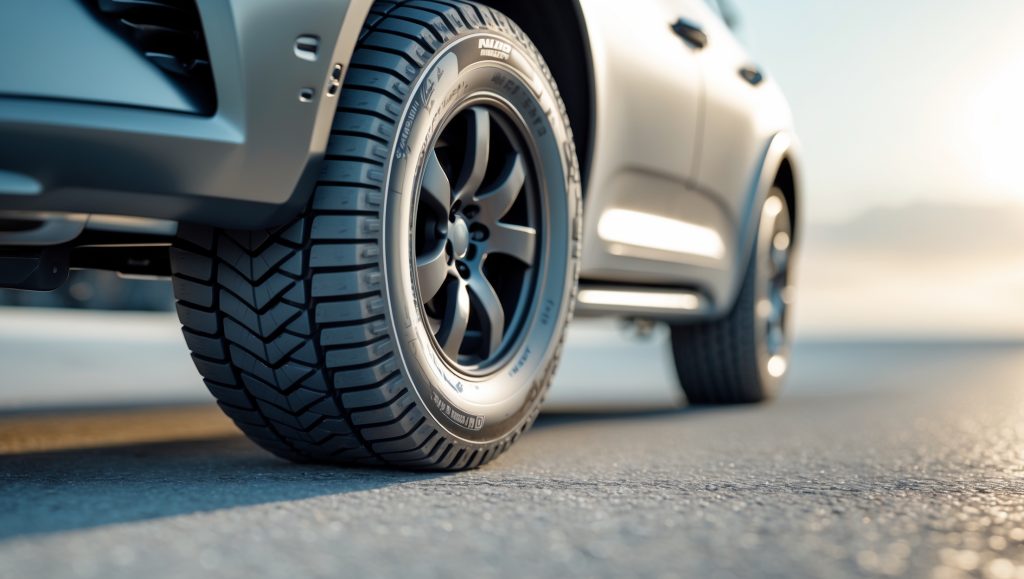
Overview
The Michelin Defender2 is a premium all-season touring tyre designed for drivers who prioritize long tread life, comfort, and year-round versatility. Aimed at owners of sedans, coupes, minivans, and crossovers, this tyre targets those who rack up high mileage or value peace of mind from a durable, low-maintenance option. Available in key US sizes such as 205/55R16 and 225/60R17, the Defender2 replaces the popular Defender T+H, promising improvements in wear, comfort, and wet grip. While not a high-performance or off-road tyre, it is engineered for daily driving, family road trips, and commuting in varied but mostly mild climates.
Key Specs
| Type | All-Season Touring |
| Available sizes range | 15″–20″ rim diameters |
| Speed rating examples | H (130 mph), V (149 mph) |
| Load index examples | 91 (1356 lbs), 99 (1709 lbs) |
| Tread pattern | Symmetric, high-sipe density, circumferential grooves |
| Technology highlights | EverTread 2.0 compound, MaxTouch Construction, Intellisipe Technology |
Performance: Dry
On dry roads, the Defender2 feels reassuring and stable, reflecting its touring focus. Steering response is measured but predictable, with a slight emphasis on comfort over razor-sharp feedback. Braking distances are competitive for the segment, and lateral grip is more than adequate for typical commuting and family driving. Enthusiasts may note a bit of softness on turn-in compared to summer or performance-focused tyres, but for the target audience, the Defender2 delivers confident, drama-free handling in everyday scenarios. Road-holding at highway speeds remains solid, and the tyre resists squirming even when loaded with passengers or cargo.
Performance: Wet
The Defender2’s updated tread compound and high-density siping enhance wet grip over its predecessor. Hydroplaning resistance is commendable, with the four circumferential grooves efficiently channeling water away. In heavy rain, the tyre maintains traction during acceleration and cornering, and braking distances remain short for the all-season touring category. While not as tenacious as a dedicated rain or ultra-high performance tyre, the Defender2 inspires confidence during summer storms and damp commutes. The balance between wet traction and low rolling resistance stands out, as some rivals sacrifice one for the other.
Performance: Snow & Ice
The Defender2 is not a winter tyre, but as a true all-season, it’s engineered to handle light snow and occasional wintry conditions. Sipes across the tread provide extra biting edges, helping the tyre maintain some traction on slushy or lightly snow-covered roads. In moderate snow, acceleration and braking are manageable if you drive conservatively, though deep snow and ice reveal the limitations of the compound and tread design. Lateral grip is modest on ice, so those in harsh winter regions should still switch to dedicated winter tyres for optimal safety and control.
Comfort & Noise
Michelin’s focus on ride quality is evident. The Defender2 absorbs small bumps and rough patches with poise, making long drives less fatiguing. Cabin noise is impressively subdued, thanks to the refined tread design and advanced rubber blends. Most road surfaces generate little more than a muted hum, and vibrations are minimal, even on rougher asphalt. This makes the Defender2 a strong choice for those seeking a serene, comfortable ride to match the quietness of modern vehicles.
Durability & Economy
Durability is a headline strength for the Defender2. Michelin claims up to 80,000 miles of tread life under optimal conditions, thanks to the EverTread 2.0 compound and MaxTouch Construction that evenly distributes forces. Real-world owner reports and early independent tests confirm the tyre wears slowly and evenly, even on heavier vehicles. The UTQG (Uniform Tire Quality Grading) for most sizes is 840 A A, putting it among the leaders for treadwear in its class. Rolling resistance is low, contributing to improved fuel efficiency—particularly valuable for high-mileage drivers and those with hybrids. Michelin’s reputation for consistent long-term performance means the Defender2 is less likely to degrade prematurely, offering lasting value over its lifespan.
Sizes & Alternatives
The Defender2 is offered in a wide range of sizes from 15″ to 20″ rim diameters, covering most popular US sedans, minivans, and crossovers. Two common fitments include:
- 205/55R16 – popular on compact sedans and hatchbacks (e.g., Honda Civic, Toyota Corolla)
- 225/60R17 – typical for midsize sedans, crossovers, and minivans (e.g., Toyota Camry, Honda CR-V, Chrysler Pacifica)
Key competitors in the US market include:
- Continental TrueContact Tour
- Goodyear Assurance MaxLife
- Bridgestone Turanza QuietTrack
- Pirelli Cinturato P7 All Season Plus II
- General Altimax RT43
All these rivals offer similar longevity and comfort claims, but Michelin’s Defender2 typically leads in treadwear warranty and real-world wear consistency.
Pros & Cons
Pros
- Exceptional tread life—among the best in class
- Quiet, comfortable ride for long journeys
- Confident wet and dry performance for everyday driving
- Low rolling resistance aids fuel economy
- Available in a wide range of popular sizes
- Strong UTQG treadwear and reputation for durability
Cons
- Not suitable for severe winter use—limited snow/ice traction
- Steering feel is less engaging than some performance-oriented tyres
- Higher price point than some rivals
- Not designed for sporty/aggressive driving styles
Verdict
The Michelin Defender2 is a top-tier all-season touring tyre that excels in durability, comfort, and all-around usability. It’s an outstanding choice for US drivers who value long tread life, quiet operation, and balanced wet/dry safety over outright sportiness. While the price is above average, the Defender2’s exceptional wear characteristics and low maintenance requirements often justify the investment over time—especially for high-mileage commuters, family haulers, and those seeking a set-it-and-forget-it tyre. However, drivers in regions with frequent snow or those looking for sharper handling should consider alternatives tailored to those needs. For most, the Defender2 delivers on its promise of dependable, economical motoring year after year.
Can you explain if the Defender2 is quiet enough for long commutes or if cabin noise is something I might notice, especially when switching from older all-season tires?
The Michelin Defender2 is designed with a focus on a quiet, comfortable ride, which makes it well-suited for long commutes. Many users report that it’s noticeably quieter than older or worn all-season tires, so you may actually experience less cabin noise after making the switch.
Does the Defender2’s EverTread 2.0 compound help reduce road noise compared to the previous Defender T+H, especially on rough pavement?
Yes, the Defender2’s EverTread 2.0 compound is designed to help reduce road noise, especially on rough pavement. Many drivers report that the Defender2 is noticeably quieter than the previous Defender T+H, thanks to both the updated tread compound and improved tread pattern that help dampen sound.
Is the Defender2 suitable for minivans used in local delivery routes, or would you recommend something more heavy-duty for occasional heavier loads?
The Michelin Defender2 is designed primarily for sedans and crossovers, but it can be a good fit for minivans used in local delivery, especially if the loads are moderate. However, if you regularly carry heavier loads, a tire specifically rated for higher load capacity, like certain commercial or reinforced van tires, would be a safer choice.
How does the Defender2 handle light snow compared to its performance in rain? I drive in the Midwest and occasional winter traction is still important for me.
The Defender2 performs very well in rain, offering strong grip and confident handling thanks to its tread design. In light snow, it provides reasonable traction for an all-season tire, but it won’t match a dedicated winter tire. For Midwest drivers facing only occasional snow, the Defender2 should be adequate, but if you regularly encounter slick or heavy snow, winter tires would be a safer choice.
For someone who lives in a region with sudden rainstorms but not a lot of snow, would the Defender2 be a smarter pick than a performance summer tire, or should I look at something else?
If you deal with frequent sudden rainstorms and little to no snow, the Defender2 is a solid choice thanks to its strong wet traction and hydroplaning resistance. While a performance summer tire may offer sharper handling, it won’t match the Defender2’s wet weather safety or durability for everyday driving in variable conditions.
Could you elaborate on the expected tread life or mileage warranty for the Defender2 in 205/55R16 or 225/60R17 sizes?
The Michelin Defender2 typically comes with an 80,000-mile limited treadwear warranty for both the 205/55R16 and 225/60R17 sizes. Actual tread life can vary based on driving habits and maintenance, but Michelin designs this tire for long-lasting durability in those fitments.
I noticed the Defender2 comes in both H and V speed ratings. For daily business use on highways, is there a significant benefit to choosing the higher V rating beyond the speed limit?
For daily highway driving within legal speed limits, the main advantage of the V rating is a slightly firmer ride and potentially improved handling at higher speeds. However, if you aren’t regularly driving above 130 mph, the H rating is perfectly adequate and may offer a bit more comfort. Both provide reliable performance for business use.
Would these tyres be a good fit for frequent long highway trips across different states, or should I look at something built more for high mileage?
The Michelin Defender2 tires are actually designed with long highway trips and high mileage in mind. They have strong tread life, provide a comfortable ride, and perform well in varied conditions. For frequent interstate driving, these should serve you well and last a long time compared to many other all-season options.
Does the Defender2’s EverTread 2.0 compound really make a noticeable difference in wet grip compared to the older Defender T+H, especially for business vehicles that see year-round use?
Yes, the EverTread 2.0 compound in the Defender2 does offer a noticeable improvement in wet grip compared to the older Defender T+H. This is especially beneficial for business vehicles used year-round, as the updated compound maintains better traction on wet roads while also providing solid longevity.
For drivers in the Midwest who see occasional snow but mostly mild weather, does the Defender2 feel secure enough in light winter conditions, or would a true all-weather tire be better?
The Defender2 handles light Midwest snow decently for an all-season tire, especially if you mostly face mild conditions. However, if you regularly encounter icy roads or want extra winter confidence, an all-weather tire typically offers better grip and safety in colder, slushier situations. Consider your specific winter driving needs before choosing.
Can you explain how the EverTread 2.0 compound actually helps with tread life or fuel economy? Is it mostly about durability, or do you see real benefits in day-to-day driving costs?
The EverTread 2.0 compound is designed to make the tire more resistant to wear, which directly improves tread life and means you won’t need replacements as often. It also helps reduce rolling resistance, so you may notice a minor boost in fuel efficiency—though the bigger benefit is definitely durability and longevity for daily driving.
Does the Defender2’s new EverTread 2.0 compound actually lead to noticeably longer tread life compared to the old Defender T+H in real-world business use?
The Defender2’s EverTread 2.0 compound is designed to improve tread life, and initial feedback from fleet and business users indicates it does last longer than the previous Defender T+H, especially under high-mileage conditions. However, actual results can vary based on driving habits and maintenance, but most report seeing a noticeable increase in usable mileage before replacement is needed.
I mostly drive my crossover on highways but occasionally go through some gravel roads—is the Defender2 durable enough for that, or should I look at something else?
The Michelin Defender2 is designed mainly for highway and city driving, but it can handle occasional gravel roads thanks to its durable construction. However, if you regularly drive on rougher or unpaved roads, you might want to consider all-terrain tires for better traction and durability. For mostly highway use with only light gravel, the Defender2 should be just fine.
Are the 205/55R16 and 225/60R17 sizes generally priced similarly, or does one tend to be more budget-friendly for sedans?
The 205/55R16 size is usually more budget-friendly compared to the 225/60R17. Smaller tires like 205/55R16 not only cost less to manufacture but are also more common on compact sedans, which helps keep prices lower. The 225/60R17, being larger and often fitted to crossovers, tends to be more expensive.
For a sedan that mostly does highway trips loaded with family and luggage, how does the Defender2 handle comfort and fuel efficiency compared to other all-season options in the 205/55R16 size?
The Defender2 performs very well in terms of comfort, offering a smooth and quiet ride even when your sedan is fully loaded. For highway trips, it stands out with its low rolling resistance, which can help improve fuel efficiency compared to many other all-season tires in the 205/55R16 size. It’s designed to keep ride quality high while maximizing mileage.
I noticed the article mentions speed ratings up to V (149 mph). For daily commuting, would there be any tangible benefit in choosing a higher speed rating, or is H sufficient for most drivers?
For daily commuting, an H speed rating (up to 130 mph) is more than sufficient for most drivers. Choosing a V rating won’t provide noticeable benefits unless you regularly drive at high speeds. H-rated tires often offer a slightly softer ride and may even last a bit longer, making them a practical choice for everyday use.
Is the Defender2 noticeably quieter on highways than the older Defender T+H, or is road noise similar in practice?
The Defender2 is a bit quieter on highways compared to the older Defender T+H, thanks to its updated tread design and rubber compounds. However, while some users notice a mild reduction in road noise, the difference in everyday driving is subtle rather than dramatic. If cabin quietness is your top priority, the improvement is present but not a huge leap.
For someone replacing the original Defender T+H, is there a noticeable difference in road noise or ride quality after switching to the Defender2?
Switching from the original Defender T+H to the Defender2, you might notice a slight improvement in both road noise and ride quality. The Defender2 is designed with updated tread patterns and a quieter rubber compound, which helps reduce cabin noise and enhances comfort, especially on long drives. Most users report the change as subtle, but generally positive.
For someone who needs to switch sizes between seasons, is there much difference in wet traction between the 205/55R16 and 225/60R17 Defender2 versions?
Between the 205/55R16 and 225/60R17 Defender2 versions, wet traction performance should be very similar since both use the same tread compound and design. The wider 225/60R17 may offer slightly more grip in some situations, but the difference is generally minor for everyday driving.
Does the Defender2 handle rougher city roads and potholes well, or should I expect to feel a lot of bumps driving my kids around town?
The Defender2 is designed with enhanced durability and comfort, so it handles rough city roads and potholes better than many standard all-season tires. While you may still feel some bumps—since no tire can eliminate them entirely—the Defender2’s construction helps absorb shocks and provide a smoother ride, making it a solid choice for driving your kids around town.
The EverTread 2.0 compound sounds promising for durability, but how does actual tread life compare to the old Defender T+H for commercial vehicles that rack up serious annual mileage?
The EverTread 2.0 compound in the Defender2 is specifically designed to outlast the previous Defender T+H, especially under high-mileage conditions. For commercial vehicles, users report noticeably improved tread life, with the Defender2 maintaining grip and wear patterns longer, even with heavy annual mileage. While real-world results can vary, most commercial operators see a tangible increase in usable tread life compared to the Defender T+H.
If I mainly drive short commutes in the city with a lot of stop-and-go traffic, will the Defender2’s comfort and braking performance still stand out, or is it better suited for longer highway trips?
The Defender2 performs very well in city driving conditions. Its comfort and braking abilities are notable even in stop-and-go traffic, thanks to its tread design and advanced rubber compound. While it’s also great for long highway trips, you’ll still notice a smooth ride and confident stopping power during your daily commutes.
For someone who drives mostly in mild climates but occasionally faces winter conditions, would the Defender2 be suitable or should I consider a dedicated winter tire for those months?
The Defender2 performs well in mild climates and can handle occasional light winter conditions like light snow. However, if you frequently encounter heavy snow or icy roads, a dedicated winter tire will offer much better traction and safety in those months. For mostly mild use with rare winter weather, the Defender2 should be sufficient.
Does the Defender2 perform noticeably better in wet conditions than the older Defender T+H, especially when it comes to braking distances and hydroplaning resistance?
Yes, the Defender2 generally shows improved wet performance compared to the older Defender T+H. Users and tests report shorter braking distances and better hydroplaning resistance thanks to its updated tread design and compound. If wet traction and safety are priorities, the Defender2 is a noticeable upgrade over the T+H.
Is the Defender2 a reasonable choice for someone putting 25,000 miles per year mostly on highways, or would another Michelin tire be more cost-effective in the long run?
The Defender2 is designed for high mileage and consistent highway use, making it a solid choice for driving 25,000 miles per year. Its long tread life helps maximize value over time. While there are other Michelin options, like the Premier A/S, the Defender2 generally offers better longevity, making it the more cost-effective option for your needs.
Is there a significant price difference between the H and V speed rating versions for the Defender2, and would choosing the lower rating impact everyday business driving safety or performance?
The price difference between the H and V speed rating versions of the Michelin Defender2 is usually small, often just a few dollars per tire. For typical everyday business driving, choosing the H rating (up to 130 mph) over the V rating (up to 149 mph) will not impact safety or performance, as both offer reliable handling and durability for normal use.
I drive about 30,000 miles a year for work—have you seen any real-world treadwear results with the Defender2 yet, especially in sizes like 225/60R17?
Drivers who rack up high annual mileage have reported positive treadwear results with the Defender2, especially in common sizes like 225/60R17. Some users are seeing wear consistent with the tire’s 80,000-mile warranty, even after 20,000 to 30,000 miles of mixed driving. Regular rotations and proper inflation help maximize the longevity.
For someone considering both the Defender2 and a performance all-season tire, how noticeable is the difference in steering feedback and turn-in during everyday driving?
When comparing the Defender2 to a performance all-season tire, you’ll likely notice that the Defender2 feels a bit softer and less responsive in terms of steering feedback and turn-in. For routine city or highway driving, this difference is mild, but if you enjoy precise handling or take corners enthusiastically, a performance all-season tire will feel sharper and more connected.
I have a sedan and do a lot of family road trips across states. Does the Defender2 hold up well over long highway drives with full loads?
The Defender2 is designed for long-lasting durability and comfort, making it a strong choice for family road trips. It handles full loads well, offers a quiet ride, and maintains good traction even during extended highway drives. Many users report reliable performance and even tread wear across thousands of miles, so it should suit your needs nicely.
Is the Defender2 suitable for someone who drives a lot of miles each year but has a limited budget, or are there other options that are more cost-effective for high mileage?
The Defender2 is designed for long tread life and performs well for high-mileage drivers, which can make it a good long-term value despite a higher upfront cost. However, if your budget is very tight, you might also consider alternative brands with lower initial prices, though they may not last as long as the Defender2.
Since my business serves clients year-round in mild but sometimes icy conditions, how does the Defender2 handle occasional light snow or freezing rain compared to other all-season options?
The Defender2 offers reliable traction and control in light snow and freezing rain, performing well for an all-season tire. While it’s not a substitute for dedicated winter tires, it compares favorably to other all-seasons in mild icy conditions, thanks to its tread design and rubber compound. For your year-round business needs in mostly mild but occasionally icy weather, the Defender2 should be a solid choice.
I see these come in 205/55R16 and 225/60R17. Has anyone noticed a big difference in ride comfort or noise when switching from a smaller rim to a larger one with this tire model?
Switching from 16-inch to 17-inch rims generally results in a slightly firmer ride and potentially more road noise, since the sidewall is shorter on the larger rim size. With the Defender2, most users report the tire stays quiet and comfortable in both sizes, but you might notice a minor increase in firmness with the 225/60R17 compared to the 205/55R16.
Does the Defender2 handle well on rough or uneven road surfaces, especially compared to the original Defender T+H? I drive a lot on older pavement and am curious about ride comfort and noise.
The Defender2 offers improved ride comfort and better handling on rough or uneven roads compared to the original Defender T+H. It absorbs bumps well and provides a quieter, smoother ride, especially on older pavement, making it a solid choice if you frequently encounter less-than-perfect road surfaces.
Is the Defender2 available for vehicles that require V-speed ratings, or are most sizes limited to H?
Most sizes of the Michelin Defender2 are limited to an H-speed rating, as the tire is primarily designed for long-lasting durability and everyday driving rather than high-performance use. If your vehicle requires V-speed-rated tires, you may want to consider other Michelin models targeted at higher speed capabilities.
For someone driving mostly in the Northeast US with occasional snow, does the Defender2 provide enough winter traction or would you recommend a dedicated winter tire?
The Defender2 offers solid all-season traction, including light snow handling, which can be suitable for occasional winter weather in the Northeast. However, if you often encounter heavy snow, ice, or prolonged cold, a dedicated winter tire will offer much better grip and safety in those conditions.
The article mentions improved wet grip compared to the Defender T+H. Can someone explain if that means the Defender2 is actually safer in heavy rain, or just slightly better?
The Defender2 offers noticeably better wet grip than the Defender T+H, which means it should provide safer handling and shorter stopping distances in heavy rain. This improvement isn’t just a minor upgrade—it’s designed to enhance safety, particularly during wet weather driving.
What is the average tread life you’ve seen for these tyres when installed on vehicles that do mostly highway miles for business purposes?
For vehicles primarily used on highways, the Michelin Defender2 typically delivers an average tread life of about 80,000 to 90,000 miles. Business users often report excellent longevity, especially with regular rotations and proper inflation. Actual results may vary slightly depending on driving habits and maintenance.
How does the Defender2 handle rough or uneven roads compared to the older Defender T+H? I commute on a lot of patched pavement and am curious if the updated tire offers a smoother ride.
The Defender2 has improved tread design and enhanced internal construction compared to the Defender T+H, which helps it better absorb bumps and patched pavement. Many drivers notice a smoother, quieter ride on rough roads, with less harshness transmitted into the cabin. It’s a solid upgrade in comfort for frequent commuters on uneven surfaces.
Is the ride comfort noticeably softer compared to other all-season tires in the same price range, or does it sacrifice any road feel for that comfort?
The Michelin Defender2 is known for its comfortable, smooth ride, offering a softer feel compared to some other all-season tires in the same price range. While it does prioritize comfort, most drivers find that it still maintains good road feel and handling, so you shouldn’t notice a significant sacrifice in feedback.
Does the new EverTread 2.0 compound lead to any noticeable increase in road noise compared to older Michelin touring tyres? My customers sometimes comment on ride quality.
The EverTread 2.0 compound in the Defender2 is designed to improve tread life and durability without significantly increasing road noise. Most users and reviews report that ride quality and noise levels remain similar to previous Michelin touring tyres, maintaining a quiet and comfortable experience for drivers.
Does the Defender2 require any special maintenance to achieve its long tread life, or is it pretty low-maintenance as mentioned?
The Defender2 is designed to be low-maintenance, but to get the best tread life, it’s important to follow basic tire care. This includes keeping tires properly inflated, rotating them regularly, ensuring proper alignment, and checking for uneven wear. No special maintenance is required beyond these standard practices.
If my crossover usually handles school drop-offs and weekend errands, is the H or V speed rating more appropriate, or does it not make much difference for typical city driving?
For typical city driving like school drop-offs and errands, both H and V speed ratings will perform well and provide similar safety and comfort. The H rating is more than sufficient for everyday use, as it supports speeds well above normal driving. You likely won’t notice a difference between them in urban conditions.
Can you clarify how the Defender2 handles in colder temperatures, especially during sudden weather changes? I live in an area where winters can be unpredictable, and I’m wondering if these all-season tires would still feel safe for daily driving.
The Michelin Defender2 maintains good traction and stability in colder temperatures, making it suitable for daily driving during unpredictable winter weather. However, like most all-season tires, its performance can decrease on icy or snow-covered roads compared to dedicated winter tires. For areas with frequent ice or heavy snow, switching to winter tires is still recommended for optimal safety.
I see sizes go up to 20-inch rims – is there a noticeable difference in tread life or comfort between the 16-inch and 17-inch options for a family sedan?
Between the 16-inch and 17-inch sizes for a family sedan, tread life and comfort are quite similar since both use the same Defender2 compound and tread pattern. Any difference is minor; the 16-inch tire may feel a touch softer due to a slightly taller sidewall, but both sizes are designed to deliver long life and a comfortable ride.
For a business that does frequent city deliveries in wet conditions, would you recommend the Defender2 given its wet grip and hydroplaning resistance mentioned?
The Defender2 is a solid choice for frequent city deliveries in wet conditions. It’s designed with improved wet grip and strong hydroplaning resistance, which helps maintain traction on rainy streets. Its long tread life also means fewer replacements for your business fleet. Just make sure the tire size matches your delivery vehicles.
Can you clarify if the Defender2’s MaxTouch Construction really makes a noticeable difference in tread life for fleet vehicles that do a lot of city driving?
The MaxTouch Construction in the Defender2 is designed to distribute acceleration, braking, and cornering forces more evenly, which can lead to slower and more uniform tread wear. For fleet vehicles that experience frequent stop-and-go city driving, this technology should help extend tread life compared to standard tires, making it a practical choice for high-mileage urban use.
If I mostly drive in mild Southern climates but occasionally hit a winter storm, would this tire still be okay, or should I be looking at something with more winter capability?
The Michelin Defender2 performs well in mild climates and can handle occasional light winter conditions, like a brief snow flurry or slush. However, if you expect to drive in frequent or severe winter storms with snow and ice, a dedicated winter tire would offer better traction and safety.
I drive mostly in mild climates, but we do get the occasional snowstorm. Does the Defender2 perform safely in light snow, or should I think about a dedicated winter tire?
The Defender2 can handle light snow reasonably well, thanks to its all-season tread design, but it isn’t a substitute for a dedicated winter tire. If you only see snow occasionally and roads are cleared quickly, it should suffice. However, for regular or heavier snow, a winter tire will give you much better traction and safety.
You mentioned the Defender2 offers improvements in wear and comfort over the Defender T+H. Is this something you’ve noticed in daily use, and how does it translate to road noise on longer highway drives?
Yes, in daily use, the Defender2 does feel more comfortable compared to the previous Defender T+H, especially over rougher pavement. The ride is smoother, and on longer highway drives, road noise is slightly reduced. You can expect a quieter cabin, particularly on fresh asphalt, and the improved tread design seems to help with both comfort and noise.
I drive mostly in the Midwest where winters can get icy but not too extreme. How does the Defender2 handle occasional light snow compared to a dedicated winter tire?
The Michelin Defender2 performs well in light snow thanks to its all-season tread design, offering decent grip and control for Midwest winters that aren’t too harsh. However, compared to dedicated winter tires, it won’t match their traction on ice or in heavy snow. For mostly light snow and occasional icy roads, the Defender2 should be sufficient, but true winter tires still offer the best performance in challenging winter conditions.
I see the Defender2 uses the EverTread 2.0 compound. How does its actual tread life compare to the older Defender T+H if I’m driving 30,000 miles a year in mixed city and highway conditions?
The Defender2’s EverTread 2.0 compound is designed to improve tread life over the older Defender T+H, especially for drivers with high mileage like yours. Many users report the Defender2 lasting closer to its 80,000-mile warranty, so at 30,000 miles per year, you could expect about 2.5 years of use—potentially a bit longer than the T+H under similar conditions.
I drive a sedan mostly in the Northeast and want something safe in the rain—how confident should I be in the Defender2’s wet braking compared to something like the older Defender T+H?
You can feel confident in the Defender2’s wet braking, as it’s been improved over the older Defender T+H. The Defender2 uses a new tread compound and updated tread pattern, which help maintain strong grip and shorter stopping distances in rainy conditions, making it a safer choice for Northeast weather.
Does the EverTread 2.0 compound actually contribute to lower maintenance costs over time for fleet owners?
The EverTread 2.0 compound is designed for longer tread life, which means tires last longer before needing replacement. For fleet owners, this reduces the frequency of tire changes and related service downtime, helping lower overall maintenance costs over time. While individual results may vary, many fleets experience savings due to fewer replacements and less frequent servicing needs.
For a daily commuter putting on high mileage each year, is the Defender2 the best choice in its price range or are there more cost-effective alternatives?
The Michelin Defender2 is excellent for high-mileage commuters because of its durability, long tread life, and all-season performance. While its upfront cost is higher, it often lasts longer than cheaper tires, which can make it more cost-effective over time. If you’re open to alternatives, some options like the Continental TrueContact Tour or General Altimax RT43 offer good value and performance, though they may not match the Defender2’s longevity.
For a business fleet, are there noticeable comfort improvements with the Defender2 over the older Defender T+H, especially for drivers doing 200+ miles daily?
The Defender2 offers a slightly quieter and smoother ride compared to the older Defender T+H, which can be noticeable for drivers covering over 200 miles daily. The updated tread design and rubber compound help reduce road noise and vibration, making long hours behind the wheel a bit more comfortable for your business fleet.
For a small business fleet that racks up high mileage, can you provide more information about expected tread life or warranty specifics for the Defender2?
The Michelin Defender2 is designed to deliver long tread life, making it a solid choice for high-mileage fleet use. Michelin typically offers a treadwear warranty of up to 80,000 miles for the Defender2, though actual mileage can vary with driving conditions and maintenance. This extended warranty reflects the tire’s durability and suitability for business fleets.
For a small fleet of sedans used primarily for local deliveries, would you recommend the Defender2 over the older Defender T+H in terms of cost-effectiveness?
For a local delivery fleet, the Defender2 could be more cost-effective in the long run due to its improved tread life and durability compared to the older Defender T+H. While the upfront price may be slightly higher, the Defender2’s longer lifespan and better resistance to wear could reduce replacement frequency and downtime, saving money over time.
I see the Defender2 is designed for mostly mild climates, but how does it perform during occasional light snow or cold snaps compared to a dedicated winter tire?
The Defender2 handles occasional light snow and cold snaps better than many standard all-season tires, thanks to its tread design and rubber compound. However, it won’t match the grip, braking, or safety of a dedicated winter tire in slippery or icy conditions. For frequent or heavy winter weather, switching to actual winter tires is still the safer choice.
Is the Defender2 noticeably quieter or smoother than other all-season options like the General Altimax RT43 on rougher highways?
The Michelin Defender2 is generally a bit quieter and smoother than the General Altimax RT43, especially on rougher highways. Users often mention less road noise and a more cushioned ride. While both are good all-season choices, the Defender2 stands out for its improved comfort and reduced noise levels on coarse pavement.
Is the Defender2 a quiet tire on the highway, even as it wears down, or does road noise increase with mileage compared to other brands?
The Michelin Defender2 is known for its quiet and comfortable ride, even at highway speeds. Users generally report that it stays quieter longer as it wears compared to many other all-season brands, thanks to its tread design and materials. However, like most tires, some increase in road noise can still occur as the tread wears down over time.
You mentioned high mileage as a strength. About how many miles can I realistically expect from a set of these if I mostly do city driving with occasional road trips?
You can typically expect around 80,000 miles from a set of Michelin Defender2 tires, according to the manufacturer’s warranty. For mostly city driving with some road trips, the actual mileage might be slightly lower—think 65,000 to 75,000 miles—since frequent stops and starts can cause more wear. Regular maintenance like tire rotation and proper inflation will help you get the most out of them.
Is the Defender2 a good option for drivers who frequently hit the mileage cap on treadwear warranties, or would another Michelin tire be better for extreme durability?
The Defender2 is one of Michelin’s top options for high-mileage drivers, offering excellent treadwear performance and a generous warranty. If you tend to reach the mileage cap on treadwear warranties, the Defender2 is specifically engineered for long-lasting durability. While Michelin does offer other all-season tires, the Defender2 is among their best choices for extreme durability and extended tread life.
With the emphasis on tread life, what kind of real-world mileage can I expect from the Defender2 before needing a replacement for typical city and suburban driving?
For typical city and suburban driving, you can expect the Michelin Defender2 to last around 70,000 to 80,000 miles before needing replacement, provided you keep up with regular tire rotations and maintenance. Actual mileage can vary depending on factors like driving habits and road conditions.
If I occasionally drive in light snow, would the Defender2 provide enough traction, or should I look for something with a more aggressive tread pattern for winter use?
The Defender2 will handle light snow reasonably well thanks to its all-season design, but it’s not a substitute for a dedicated winter tire. If you expect to encounter more frequent or heavier snow, a tire with a more aggressive tread pattern or a true winter tire would offer better traction and safety.
For a daily commuter who also takes occasional long road trips, does the Defender2 offer enough handling stability when the car is fully loaded?
The Defender2 is designed to provide stable handling even when your car is fully loaded, making it a solid choice for daily commuting and long road trips. Its reinforced construction and tread design help maintain stability and control under heavier loads, so you should feel confident in its performance during your travels.
I’m debating between the 205/55R16 and the 225/60R17 sizes for my crossover. Are there any noticeable differences in ride comfort or noise between these two on the Defender2?
The 225/60R17 size usually offers a bit more ride comfort and better absorption of bumps due to its taller sidewall, which is helpful for crossovers. The 205/55R16 might feel slightly firmer and could transmit more road noise, but the overall difference is subtle. Both sizes on the Defender2 are known for quietness and comfort, but the 225/60R17 has a slight edge for a smoother ride.
You mentioned tread life improvements over the Defender T+H—do you know roughly how many more miles I could expect to get out of the Defender2 for mostly highway use?
The Defender2 is designed to last longer than the Defender T+H, with Michelin estimating up to 6,000 to 10,000 more miles under similar conditions. For mostly highway driving, you might expect around 85,000 to 90,000 miles from the Defender2, compared to about 80,000 for the T+H, depending on your driving habits and maintenance.
For a business fleet that covers a lot of highway miles in mixed weather but not snow, would the Defender2 be a better long-term investment than the previous Defender T+H?
The Defender2 is designed with improved tread life and enhanced wet performance compared to the Defender T+H, making it a strong choice for business fleets doing high highway mileage in mixed weather. It should offer better long-term durability and value, especially if your routes don’t include snow, since that’s not its focus.
For someone living in a region that gets the occasional light snow, is this tire able to get through a couple of inches or would a dedicated winter option be a safer bet?
The Michelin Defender2 handles occasional light snow fairly well for an all-season tire, so it should get you through a couple of inches without major issues. However, if you often encounter icy roads or heavier snowfall, a dedicated winter tire would offer noticeably better traction and safety.
What kind of mileage should I expect before the tread wears out if I’m using the 225/60R17 size mostly for highway commuting?
If you’re using the Michelin Defender2 in the 225/60R17 size mainly for highway commuting, you can typically expect up to 80,000 miles before the tread wears out, provided you keep the tires properly inflated and rotate them as recommended.
Is the Defender2 a good fit for someone who drives mostly on highways in northern states where winters are mild but can still get some snow? Or should I look at a dedicated winter tire?
The Defender2 excels on highways and offers reliable all-season traction, making it a solid choice for mild winters with only occasional snow. However, if you regularly encounter icy roads or heavier snowfall, dedicated winter tires will provide better grip and safety in those conditions.
If I mostly drive my kids around town in a minivan, would I notice the softer steering feel you mention compared to my current set of all-seasons?
If you mostly drive around town with kids in a minivan, the softer steering feel of the Michelin Defender2 may be subtle and not very noticeable compared to other all-season tires. For routine city driving and family trips, the comfort and quietness are likely to stand out more than any difference in steering response.
Does the Defender2 work well in areas that get occasional snow, or would I need to swap to winter tires for a sedan in the Northeast?
The Defender2 can handle light, occasional snow thanks to its all-season design, but for the Northeast where snow and ice can be frequent or heavy, dedicated winter tires will offer better traction and safety. If you often face slick or icy roads, swapping to winter tires is strongly recommended during colder months.
Given that these are premium tires, is the extra cost justified if my main priorities are just safety and longevity on a student budget?
If safety and longevity are your top concerns, the Michelin Defender2 is a solid choice, as it offers excellent tread life and strong wet/dry traction. While the upfront cost is higher, these tires often last longer and maintain performance over time, which could save money in the long run. If your budget is tight, you might also consider reputable mid-range brands, but you may compromise on lifespan or performance.
For someone driving mostly in mild but occasionally snowy climates, is the Defender2 sufficient or would you recommend a different tire?
The Defender2 performs very well in mild climates and can handle light, occasional snow thanks to its all-season design. However, if you routinely encounter moderate or heavy snow, you might want to consider a dedicated winter tire for better traction and safety. For mostly mild weather with only rare light snow, the Defender2 should be sufficient.
I drive mostly in city traffic but occasionally do long road trips. Would the Defender2’s comfort still hold up on rougher highways, or is it best for smooth roads only?
The Defender2 is designed for both city and highway use, offering a comfortable ride even on rougher highways. Its advanced tread design and durable construction help absorb bumps and imperfections, so you should experience good comfort whether you’re driving on smooth city streets or less-than-perfect highways.
If I need to switch sizes between the 205/55R16 and 225/60R17 for fleet vehicles, is there a notable difference in wet performance or handling?
Switching from 205/55R16 to 225/60R17 will bring some differences. The wider 225 tire may offer slightly improved dry grip and stability, but the change in aspect ratio and width can also affect wet handling and hydroplaning resistance. The Defender2 performs well in wet conditions in both sizes, but the narrower 205/55R16 may disperse water a bit better, potentially reducing hydroplaning risk.
Are there any notable differences in wet braking distances between the 205/55R16 and 225/60R17 sizes of the Defender2?
The wet braking performance of the Michelin Defender2 is quite consistent across both the 205/55R16 and 225/60R17 sizes, thanks to the tire’s similar tread design and compound. Any differences in wet braking distance are minimal and usually result from vehicle weight or rim width rather than the tire size itself.
Does the Defender2’s MaxTouch Construction really make a noticeable difference in even wear, especially for vehicles carrying heavier loads or making frequent highway runs?
The MaxTouch Construction on the Defender2 is designed to distribute forces more evenly across the tire’s contact patch. This generally results in more uniform tread wear, which is especially beneficial for vehicles that are often loaded heavily or spend a lot of time on highways. Many users do notice longer-lasting, even wear under these conditions compared to standard tire designs.
For drivers who occasionally encounter light snow, is the Defender2 adequate, or would you recommend a dedicated all-weather tire instead?
The Defender2 performs reliably in light snow and is suitable for drivers who only deal with occasional wintry conditions. However, if you frequently drive in snow or need extra confidence on icy roads, an all-weather tire would offer better traction and safety throughout winter.
Is the Defender2 a good value for the price compared to something like the General Altimax RT43, especially on a tight budget for my 205/55R16 wheels?
The Michelin Defender2 generally offers better tread life and slightly improved wet traction compared to the General Altimax RT43, but it does cost more. If you’re on a tight budget, the Altimax RT43 is a strong value and still performs well for most drivers. The Defender2 is a great choice if you prioritize longevity and can stretch your budget, otherwise the Altimax RT43 is a solid, more affordable option.
For a sedan commuting in areas with occasional light snow, how does the Defender2’s all-season performance stack up against true winter tires in terms of safety?
The Defender2 handles light snow better than many all-season tires, offering reliable grip and stability for typical commutes. However, in terms of sheer safety, true winter tires still outperform it when temperatures drop or roads are icy. If your winter conditions are mild and snow is infrequent, the Defender2 should be sufficient. For frequent or heavier snow, winter tires remain the safer choice.
From a maintenance perspective, are there any specific care tips or rotation intervals recommended to maximize the Defender2’s tread life, especially for high-mileage vehicles?
To get the most tread life from your Michelin Defender2, it’s best to rotate the tires every 6,000 to 8,000 miles, or at each oil change if that’s easier to remember. Keep tire pressures at the recommended levels, check alignment regularly, and inspect for uneven wear. These steps are especially important for high-mileage vehicles.
Does the Defender2’s MaxTouch Construction translate into noticeably fewer tire replacements per year for crossovers used by small businesses, or is the upfront cost offset only after several seasons?
The Defender2’s MaxTouch Construction is designed to extend tread life, so you should see fewer tire replacements over time, especially for small business crossovers with regular use. However, the upfront cost savings become most noticeable after several seasons, as the longer lifespan offsets the higher initial price.
For those of us who do a lot of family road trips with fully loaded sedans, is there any noticeable trade-off in steering response or handling from the softer turn-in compared to performance-oriented tires?
Yes, you may notice a softer steering response and less sharp handling with the Michelin Defender2 compared to performance-oriented tires, especially during spirited driving or quick maneuvers. However, this is a trade-off for improved comfort, quieter rides, and longer tread life, which are often more valuable for family road trips with a fully loaded car.
For someone who drives in areas with occasional snow but mostly mild conditions, would the Defender2 be sufficient, or should I consider a dedicated winter tire?
The Michelin Defender2 performs well in mild conditions and can handle occasional light snow, thanks to its all-season design. However, if you regularly encounter heavy or packed snow and icy roads, a dedicated winter tire would be safer and offer better traction. For mostly mild weather with only rare snowfall, the Defender2 should be sufficient.
Could you elaborate on how the EverTread 2.0 compound actually impacts tread life in real-world US conditions like lots of stop-and-go traffic?
The EverTread 2.0 compound is designed to resist wear from repeated acceleration and braking, which are common in stop-and-go traffic. In real-world US conditions, this means the tire maintains its tread depth longer, so you get more miles before needing a replacement. The compound’s enhanced durability helps reduce premature tread loss, especially on hot pavement or in urban environments.
Is the Defender2 worth the price premium for someone mostly doing suburban driving, or are there more budget-friendly options that deliver similar comfort and longevity?
The Defender2 is praised for its comfort, quiet ride, and long tread life, making it a solid choice for mainly suburban driving. However, if you’re looking to save money, tires like the General Altimax RT43 or Cooper Endeavor provide good comfort and decent lifespan at a lower price, though they may not last quite as long as the Defender2.
Does the EverTread 2.0 compound actually help with those random sharp potholes that tend to wreck sidewalls here in the Midwest, or is it mostly about tread wear?
The EverTread 2.0 compound is mainly designed to improve tread life and maintain grip as the tire wears, but it does offer some added durability for everyday road hazards. While it may help resist damage from sharp potholes better than softer compounds, it can’t fully protect sidewalls from severe impacts, so caution is still needed on rough Midwest roads.
Is the Defender2 quiet enough for long road trips with kids, particularly in comparison to Michelin’s Primacy or other touring tires?
The Michelin Defender2 is generally considered quiet for long road trips and should keep cabin noise down, which is great for traveling with kids. However, the Primacy line and some premium touring tires are even quieter, focusing more on comfort and minimal road noise. The Defender2 balances durability and quietness well but doesn’t quite match the Primacy’s top-tier noise reduction.
I usually drive in areas that get occasional light snow but mostly rain and dry weather. Would the Defender2 provide enough traction in brief winter conditions, or should I consider dedicated winter tires?
The Michelin Defender2 offers solid traction in rain and light snow, making it a good option for areas with only occasional winter weather. However, if you often encounter icy or heavy snow conditions, dedicated winter tires will provide better grip and safety. For mostly mild winters with just brief snow, the Defender2 should suffice.
Does the Defender2 perform noticeably better in wet conditions than the old Defender T+H, especially when it comes to braking and hydroplaning in heavy rain?
The Defender2 does offer improved wet performance compared to the Defender T+H. Users and tests report that the Defender2 has shorter braking distances on wet roads and better resistance to hydroplaning, thanks to its updated tread design and rubber compound. This means you’ll likely notice a safer and more confident feel during heavy rain.
Is there any noticeable difference in ride comfort or road noise between the 205/55R16 and 225/60R17 sizes of this tire if used on the same types of vehicles?
Yes, there can be a slight difference. The 225/60R17 size usually offers a bit more ride comfort because of its taller sidewall, which helps absorb bumps better. However, it may produce a little more road noise compared to the 205/55R16. The change isn’t dramatic but can be noticeable to sensitive drivers.
For daily commuting and family trips, would the slight softness on turn-in mentioned here be noticeable to someone moving up from entry-level all-season tires?
If you’re upgrading from entry-level all-season tires, the slight softness on turn-in with the Michelin Defender2 will likely be minimal and not distracting for daily commuting or family trips. Most drivers coming from basic tires will notice the improved comfort and quiet ride more than any subtle difference in steering response.
I do a lot of highway driving and usually carry heavy loads in my sedan. Is the Defender2 a good option for longevity under these conditions, especially in the 225/60R17 size?
The Defender2 in 225/60R17 is designed for durability and longevity, making it a strong choice for frequent highway driving and heavy loads. Its reinforced construction and all-season tread are built to handle sustained use, so it should perform well and last longer under your described conditions.
How does the Defender2 compare on noise and comfort against something like the Continental TrueContact Tour, particularly for highway commuters?
The Defender2 is known for being very quiet and comfortable, making it a solid choice for highway commuters. Compared to the Continental TrueContact Tour, both offer low road noise and a smooth ride, but the Defender2 tends to be slightly quieter and better at soaking up bumps, especially as it ages. The Continental may have a slight edge in initial comfort, but both are top picks for a peaceful commute.
Do these tires maintain their comfort and noise levels as they wear down, or do they get noticeably louder past a certain mileage?
The Michelin Defender2 is known for maintaining good ride comfort and low noise even as it wears, thanks to its advanced tread design. However, like most tires, some increase in road noise and a slight reduction in comfort can occur after significant mileage, especially as the tread gets closer to its wear limits.