
Overview
The Goodyear Eagle F1 Asymmetric 6 is the latest evolution in Goodyear’s ultra-high performance (UHP) summer tyre lineup, designed for drivers seeking precise handling, strong wet braking, and dynamic road feel. This tyre targets enthusiast drivers and owners of sporty sedans, coupes, and performance-oriented crossovers. With a focus on both everyday usability and spirited driving, the Asymmetric 6 aims to deliver top-tier grip, especially in wet conditions, without sacrificing ride comfort or tread life. Popular fitments include 225/40 R18 and 245/40 R18, making it a strong choice for vehicles like the BMW 3 Series, Audi A4, and Volkswagen GTI.
Key Specs
| Type | Summer (Ultra-High Performance) |
| Available sizes range | 17″–21″ diameters, 205–315 mm widths |
| Speed rating examples | Y (186 mph), W (168 mph) |
| Load index examples | 91 (1356 lbs), 96 (1565 lbs) |
| Tread pattern | Asymmetric, advanced silica compound, wide circumferential grooves |
| Technology highlights | Wet Braking Pro compound, Adaptive Contact Patch, Noise Cancelling Technology |
Performance: Dry
On dry pavement, the Eagle F1 Asymmetric 6 showcases an impressive level of grip and steering precision. The tyre’s asymmetric tread and Adaptive Contact Patch design deliver a responsive turn-in and progressive breakaway, making it suitable for both confident daily driving and enthusiastic backroad runs. Compared to earlier generations, lateral grip is further improved, inspiring confidence when pushing through corners. Braking distances are short, and feedback through the steering wheel is notably communicative. While it’s not aimed at track-day extremes, the Asymmetric 6 balances performance with refinement, ensuring predictable behavior even under aggressive maneuvers.
Performance: Wet
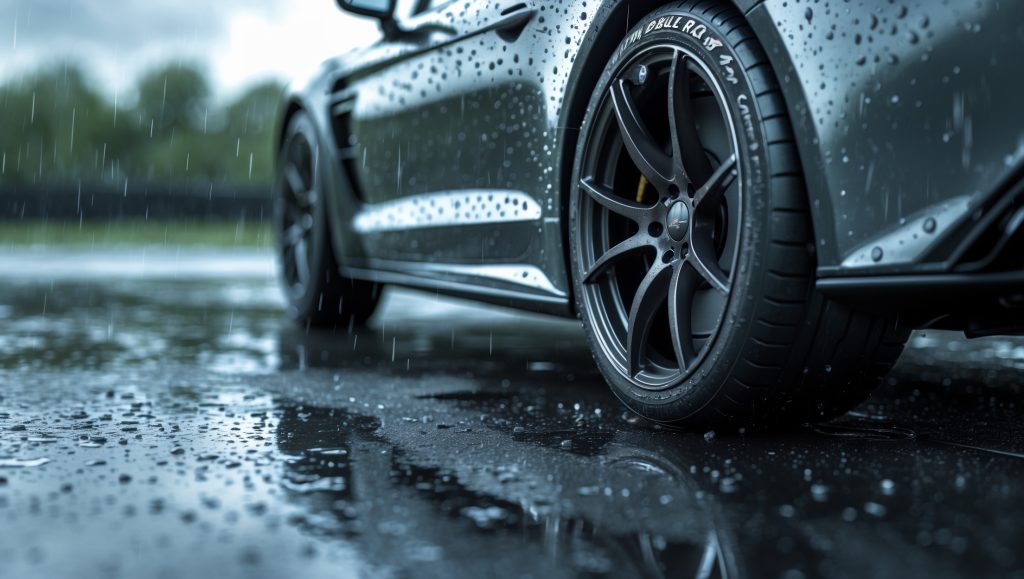
Wet weather is where the Eagle F1 Asymmetric 6 truly shines. Goodyear’s Wet Braking Pro compound, combined with optimized groove placement, ensures excellent water evacuation and high silica content for maximum adherence on slippery surfaces. In independent and enthusiast tests, the tyre consistently ranks among the top for wet braking, often outperforming rivals like the Michelin Pilot Sport 4 and Bridgestone Potenza Sport in stopping distances and cornering stability. Hydroplaning resistance is strong, with the wide circumferential channels quickly dispersing standing water, keeping the vehicle stable and controllable even in heavy rain. For US drivers who face frequent summer storms, this translates to real-world safety and confidence.
Performance: Snow & Ice
N/A — The Goodyear Eagle F1 Asymmetric 6 is a dedicated summer tyre and is not designed for use in snow, slush, or icy conditions. For winter performance, consider switching to appropriate winter or all-weather tyres.
Comfort & Noise
Despite its sporty intent, the Asymmetric 6 incorporates Goodyear’s Noise Cancelling Technology, which uses a tailored foam insert and tread block arrangement to minimize road noise. On highways, the tyre is impressively quiet for the segment, with subdued tread roar and limited harshness over minor bumps. Ride comfort is above average for a UHP tyre, with the sidewall construction providing a good compromise between support and absorption. The result is a tyre that won’t fatigue occupants on long trips, making it as suitable for daily commutes as it is for weekend drives.
Durability & Economy
For a UHP summer tyre, the Eagle F1 Asymmetric 6 offers respectable tread life, aided by an advanced silica compound designed to resist wear under spirited driving. The tyre carries a UTQG rating of 300 AA A (varies by size), indicating high traction and temperature resistance, though treadwear is typical for the class. Rolling resistance is kept moderate, supporting reasonable fuel efficiency for performance vehicles without compromising grip. While not the longest-lasting in its segment—premium touring tyres generally outlast it—the Asymmetric 6 is competitive among UHP options and represents a balanced approach to longevity and performance.
Sizes & Alternatives
The Eagle F1 Asymmetric 6 is available in a wide range of sizes, including popular fitments such as:
- 225/40 R18
- 245/40 R18
- 235/45 R17
- 255/35 R19
- 275/30 R20
Key rivals to consider in the US market:
- Michelin Pilot Sport 4
- Continental ExtremeContact Sport 02
- Bridgestone Potenza Sport
- Pirelli P Zero PZ4
- Falken Azenis FK510
Pros & Cons
Pros
- Outstanding wet braking and aquaplaning resistance
- Precise, predictable dry handling
- Low road noise for the segment
- Comfortable ride for a UHP tyre
- Wide range of sizes for modern and classic sporty cars
Cons
- Not suitable for snow or ice
- Wear rate is average for the UHP category
- Premium pricing compared to some rivals
- Real-world tread life may be shorter for aggressive drivers
Verdict
The Goodyear Eagle F1 Asymmetric 6 stands out as a top-tier choice for drivers wanting ultra-high performance in both wet and dry conditions. Its exceptional wet braking, precise steering, and refined comfort make it a compelling option for US enthusiasts and everyday drivers who value safety and road feel. While tread life and price are in line with expectations for the UHP segment, the Asymmetric 6’s strengths in wet weather and all-around balance make it a front-runner for those who prioritize confidence and control, especially in unpredictable summer conditions. If you drive a modern sedan, coupe, or performance crossover and want a tyre that performs at the limit without sacrificing daily comfort, the Asymmetric 6 deserves a top spot on your shortlist.
Is the wet performance of the Asymmetric 6 noticeably better in real-world conditions compared to the previous Asymmetric 5, specifically during heavy summer storms?
The Asymmetric 6 does offer improved wet performance over the Asymmetric 5, especially in heavy summer storms. Test results and real-world feedback highlight better grip, shorter braking distances, and enhanced resistance to aquaplaning, making it a safer choice in challenging wet conditions compared to its predecessor.
How does the ride comfort of the Eagle F1 Asymmetric 6 in 225/40 R18 compare to premium competitors like the Michelin Pilot Sport 4 on cars like the BMW 3 Series?
The Eagle F1 Asymmetric 6 in 225/40 R18 offers impressive ride comfort for a UHP tyre, generally matching the Michelin Pilot Sport 4 in this size. On cars like the BMW 3 Series, both tyres absorb bumps well and remain composed, but the Goodyear may feel slightly softer over rough surfaces, while the Michelin provides a bit more road feedback. Both are excellent choices for comfort.
I noticed the article mentioned the Asymmetric 6 isn’t aimed at track-day extremes. Would a more dedicated track tire be preferable for occasional track use, or does this still hold up okay for a beginner?
The Asymmetric 6 is designed for sporty road driving and offers good grip and balance, making it suitable for a beginner’s occasional track day. However, if you’re seeking maximum performance or planning frequent track use, a dedicated track tire will provide better heat resistance and grip. For a few introductory laps, though, the Asymmetric 6 should hold up well.
Is the Noise Cancelling Technology genuinely noticeable on rougher pavement, or is tyre noise still an issue at highway speeds?
The Noise Cancelling Technology in the Goodyear Eagle F1 Asymmetric 6 does help reduce tyre noise, especially on smoother roads. However, on rougher pavement and at highway speeds, some noise is still noticeable, though it tends to be less intrusive compared to typical UHP tyres. It won’t eliminate all road noise, but most drivers find it makes longer trips more comfortable.
I have a VW GTI and mostly commute in the city but want to try some backroad driving on weekends. Would these tyres be overkill for mostly urban use?
The Goodyear Eagle F1 Asymmetric 6 tyres are designed for sporty driving and offer excellent grip and handling, which you’ll enjoy on backroads. For mainly city commuting, they might be more performance-oriented than necessary, but they perform well in urban conditions too. If you value a sporty feel even around town and want to enjoy weekend drives, they’re a solid choice—not overkill, but perhaps more than you strictly need for city use alone.
With the focus on wet braking performance, have you found any trade-offs in dry grip or steering comfort during longer drives?
The Goodyear Eagle F1 Asymmetric 6 excels in wet braking, but there are some minor trade-offs to consider. While dry grip remains strong and consistent, a few testers noted that steering comfort can feel slightly firmer during extended drives. However, these differences are subtle and unlikely to detract from the overall balanced performance of the tyre.
Since the article mentions daily usability, would these tyres still be suitable for someone who occasionally encounters colder mornings or is it strictly for warm summer use?
The Eagle F1 Asymmetric 6 is designed as a summer ultra-high-performance tyre, optimized for warmer temperatures. While it can handle occasional colder mornings typical in spring or autumn, it’s not recommended for use in near-freezing conditions or winter weather, as grip and safety could be compromised. For frequent cold or icy mornings, an all-season or winter tyre would be safer.
Is the Adaptive Contact Patch noticeable in quick lane changes or emergency maneuvers, especially on the 245/40 R18 size?
Yes, the Adaptive Contact Patch is especially noticeable during quick lane changes or emergency maneuvers, including on the 245/40 R18 size. It helps maintain more consistent grip by optimizing the tyre’s footprint under load, resulting in more predictable handling and improved stability when making sudden directional shifts.
I have a BMW 3 Series with staggered 225/40 R18 front and 245/40 R18 rear fitment—is there any impact on tread life or rotation options with these tyres?
With staggered sizes like 225/40 R18 front and 245/40 R18 rear, tyre rotation is limited since you can’t swap front and rear tyres. This setup can lead to uneven tread wear between axles, so it’s important to monitor tread depth regularly and adjust alignment or pressures as needed to promote even wear.
Are there significant differences in performance or comfort between the 225/40 R18 and 245/40 R18 sizes mentioned in the article?
The main differences between the 225/40 R18 and 245/40 R18 sizes relate to grip and ride comfort. The 245-width tire generally offers more grip and stability due to its wider contact patch, which can slightly improve cornering performance. However, it may also transmit a bit more road noise and feel firmer compared to the 225-width version. Comfort and performance differences are noticeable but not dramatic.
Are there any noticeable differences in ride comfort between the 225/40 R18 and 245/40 R18 sizes when fitted to a car like the BMW 3 Series?
You might notice a slight difference in ride comfort between the two sizes. The 225/40 R18 usually gives a slightly softer ride due to its narrower width, while the 245/40 R18 can feel a bit firmer but may offer better grip. On a BMW 3 Series, the difference is subtle but may be felt over rougher roads.
For someone mostly driving in wet conditions, would the Wet Braking Pro compound on the Asymmetric 6 outperform similar UHP alternatives from Michelin or Continental?
The Asymmetric 6’s Wet Braking Pro compound is designed to deliver excellent wet grip and braking. In independent tests, it often matches or slightly outperforms similar UHP tyres from Michelin and Continental in wet braking, though differences can be small. You’ll likely get top-tier wet performance, but Michelin’s and Continental’s latest models are also excellent, so the difference may come down to personal preference or price.
Are there any compromises in ride comfort when opting for the 225/40 R18 size versus the 245/40 R18, or is the difference mostly about grip?
The main difference between the 225/40 R18 and the 245/40 R18 sizes is indeed grip, with the wider 245 offering more contact with the road. However, you might notice a slight compromise in ride comfort with the lower-profile 225/40, as it has a smaller sidewall compared to the 245/40. Typically, the 245/40 will provide a more cushioned ride.
For someone driving a 245/40 R18 size on a BMW 3 Series, does the Asymmetric 6 noticeably reduce road noise compared to previous generations or competitors with similar Noise Cancelling Technology?
Users with a 245/40 R18 on a BMW 3 Series often report that the Eagle F1 Asymmetric 6 is quieter than previous versions, thanks to its updated tread design and noise-reducing features. It generally matches or slightly outperforms similar tyres with Noise Cancelling Technology from competitors, leading to a smoother, quieter ride.
If I put these tyres on my BMW 3 Series, will they handle potholes and rougher city roads decently, or should I be worried about comfort and potential damage?
The Goodyear Eagle F1 Asymmetric 6 is focused on sporty performance and grip, so it may feel a bit firmer over potholes and rough city roads compared to touring tyres. While it’s durable for a UHP tyre, you’ll want to be cautious on poor surfaces as low-profile tyres can be more prone to sidewall damage. If comfort is a top priority, consider a tyre with a higher sidewall or a more comfort-oriented model.
For the 225/40 R18 size, is there any impact on fuel economy or road noise compared to a less aggressive summer tyre?
The Goodyear Eagle F1 Asymmetric 6 in 225/40 R18 may have a slight increase in road noise and rolling resistance compared to less aggressive summer tyres, which could result in a minor decrease in fuel economy. However, these differences are usually small, as the tyre is designed to balance performance with comfort and efficiency.
Is the Asymmetric 6 suitable for occasional track days, or would a different Goodyear UHP model be better for that purpose?
The Asymmetric 6 is primarily designed for high-performance road use with good grip and handling, but it’s not specifically optimized for track days. For occasional track use, you might want to consider the Goodyear Eagle F1 SuperSport, which offers better performance and durability in a track environment while still being road legal.